First Question in Ocala: Which Utility, Which Rules
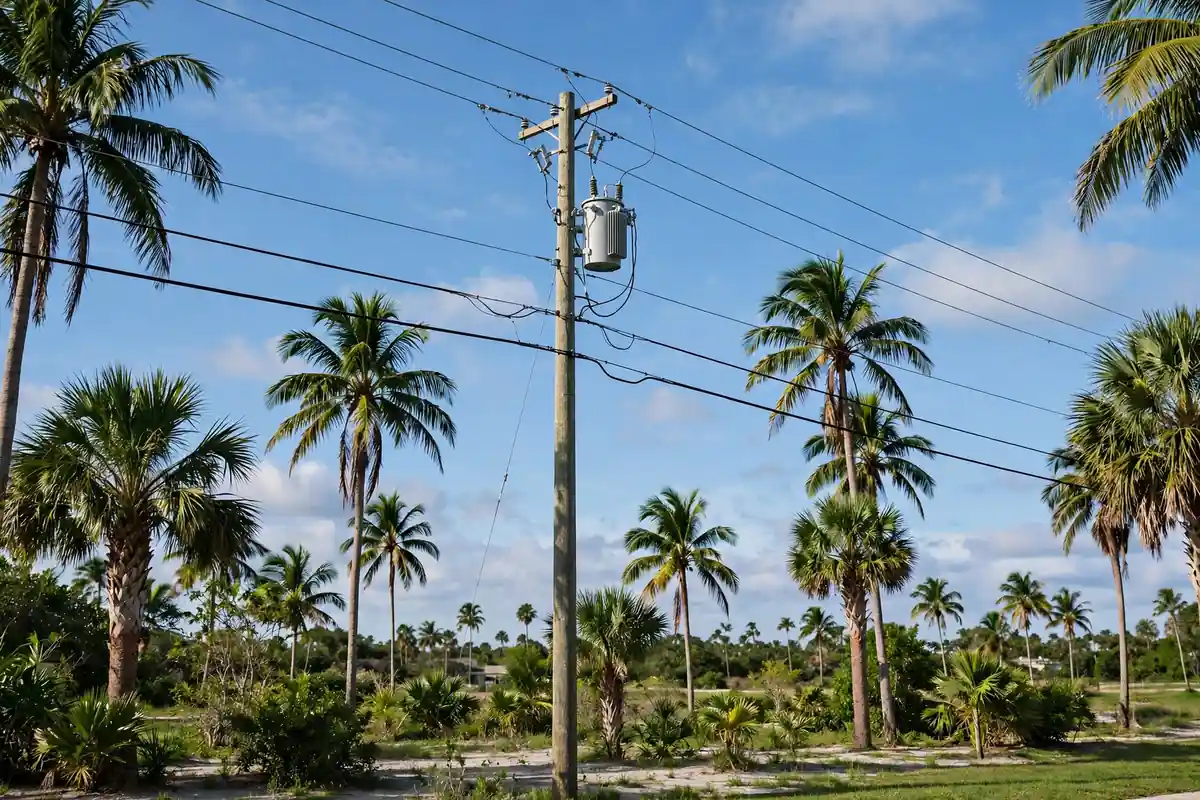
Ocala runs on a split electrical map, and pretending otherwise produces bad quotes. Inside the city, Ocala Electric Utility serves the address. It is a municipal utility, and we make no program claims for it — there is no utility charger credit we can promise on a municipal address, and the decision there is a clean ownership decision.
Outside the city, Marion County addresses fall into pockets served by SECO Energy or by Duke Energy Florida. On Duke-served addresses only, Duke's Charger Prep Credit of up to 819 dollars may apply toward qualifying preparation work, under Duke's own terms and verified at assessment. SECO-served addresses follow SECO's own arrangements, which we describe only as far as they can be confirmed for your specific service. So the first task on any Ocala assessment is verification: which utility serves this address, which permit desk covers it, and which community rules apply to it. Three short answers, checked before hardware enters the conversation, prevent nearly every expensive misunderstanding in this market.
Acreage Work: Barns, Workshops, and Long Runs
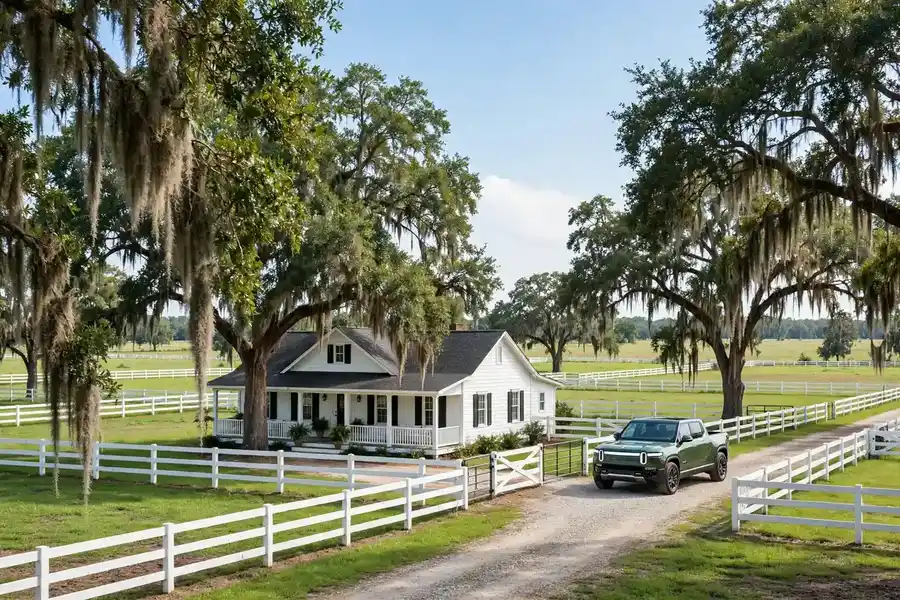
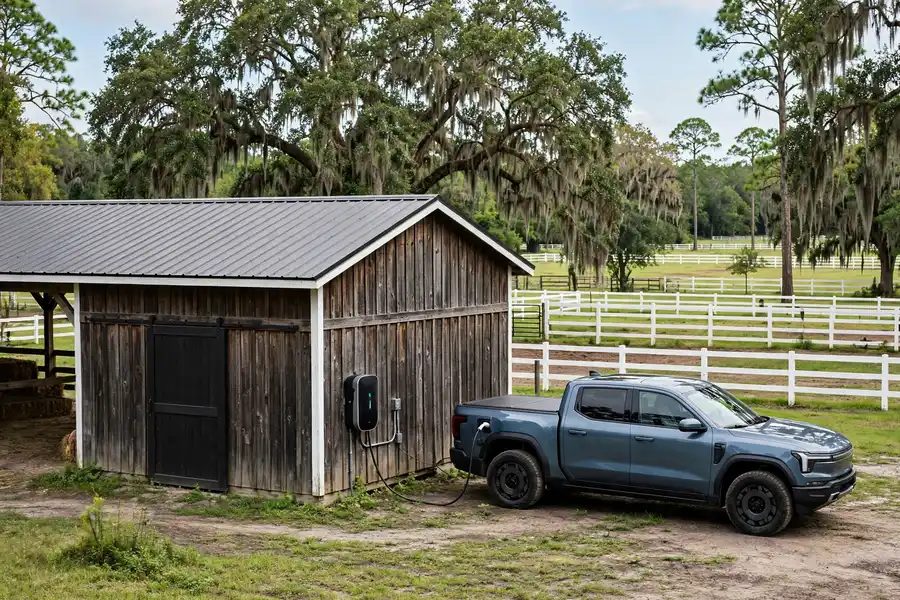
The signature Ocala install is not in a subdivision garage. It is on acreage: a farm or ranchette where the EV parks near the barn, the panel lives in the house or the workshop, and the distance between them is measured in fence lines rather than feet. Those jobs are won or lost on planning. A long conduit run has to be sized for voltage drop over distance, trenched or routed where farm traffic, trailers, and livestock will not punish it, and landed on a subpanel in the barn or workshop that is honestly rated for the load it will carry — charger, lights, well equipment, fans, and whatever else that building already runs.
Our electricians treat the barn subpanel as the center of the design, not an afterthought. The load calculation covers the building the charger actually hangs on, and the main service gets checked for what the new subpanel draw does to the whole property. Done in that order, acreage charging is unremarkable to use: drive in, plug in beside the tack room, and let the car fill overnight. Done in the wrong order, it is a charger that trips whenever the workshop wakes up. The Level 2 installation overview explains the circuit logic that sits underneath these runs.
EV Charging Services in Ocala, FL
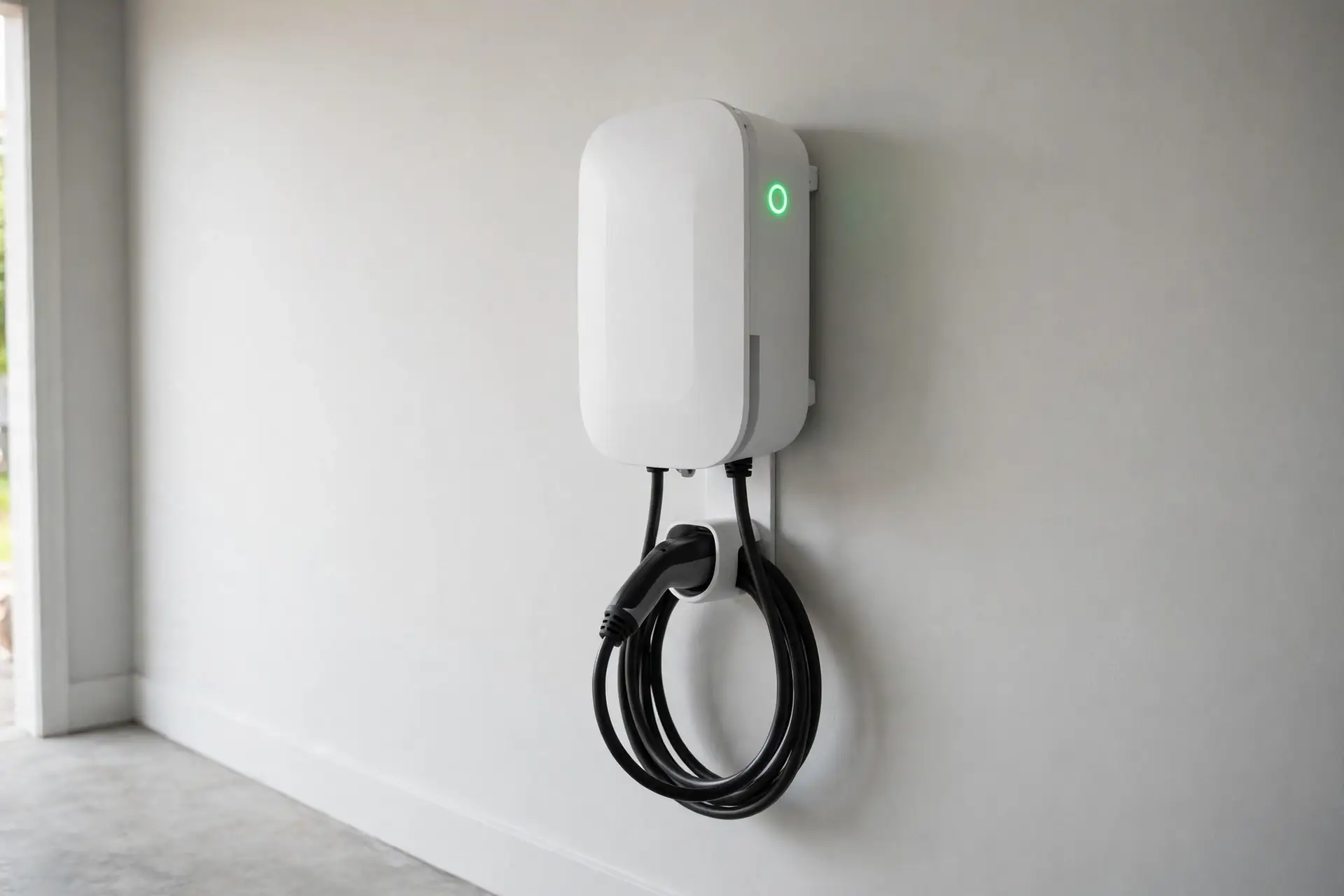
- Residential EV Charger Installation — Home Level 2 installs matched to Ocala housing, from historic downtown homes to farm properties.
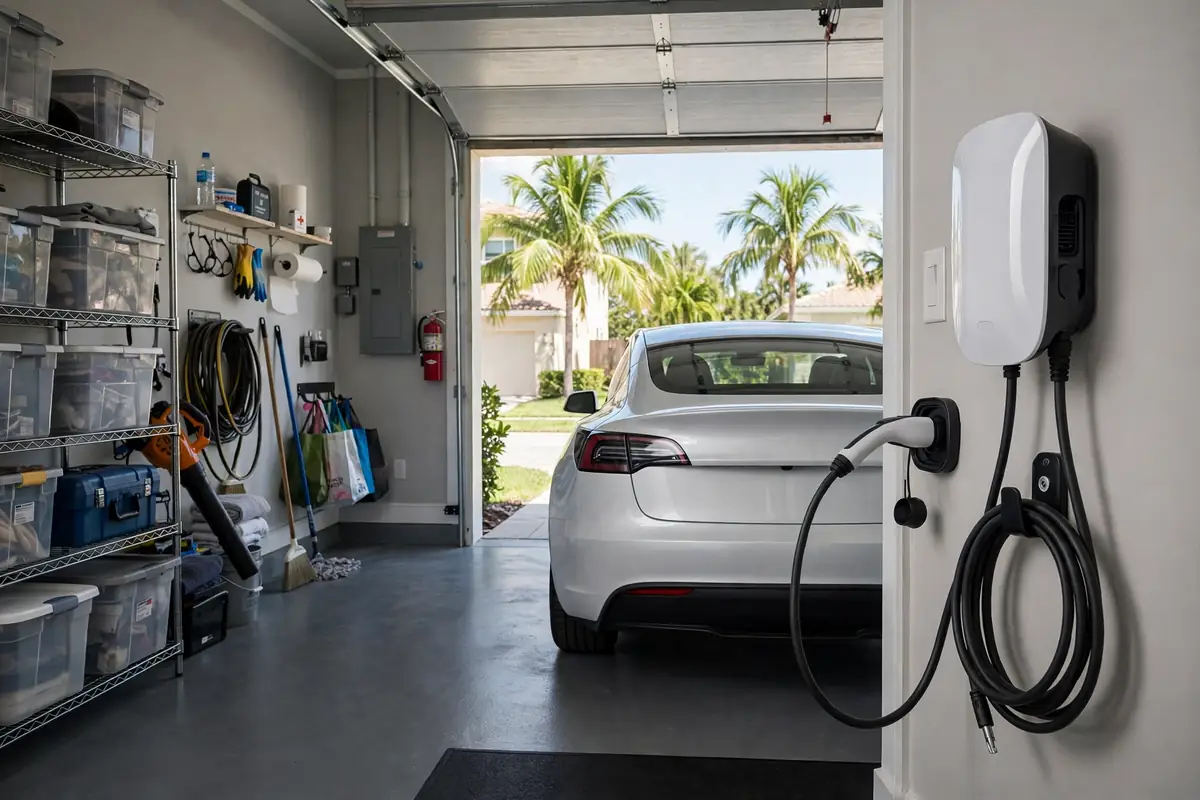
- Tesla Wall Connector Installation — Wall Connector and Universal Wall Connector installs across Ocala and Marion County.
- Level 2 EV Charger Installation — 240-volt charging for every EV make, hardwired or plug-in, including barn and workshop subpanel work.
- Panel Upgrade for EV Chargers — Capacity answers for older Ocala panels, with load management considered before replacement.
- Commercial EV Charging — Workplace, hospitality, and multifamily charging in Marion County.
- EV Charger Repair & Maintenance — Diagnostics and repair for chargers that quit, trip, or slow down.
Retirement Communities: Association Review Is Part of the Job
Ocala is home to large master-planned retirement communities, including On Top of the World, where the homes are often newer and the panels healthier than the county average — and where an association's architectural review stands between a homeowner and any exterior electrical work. That review is not an obstacle to resent. It is a step to schedule. Charger placement, visible conduit, and equipment appearance all fall inside the kind of exterior change these communities review, and an application filed with the installer's documentation in hand moves faster than one assembled after a complaint.
We build the association step into the assessment for community addresses: what the review needs, what the installer supplies, and how the install date sequences after approval. Inside the garage, most of these homes charge easily — sound 200-amp service is common in the newer stock, and dual loads like twin air conditioners and a pool are counted in the load calculation rather than discovered later. The pattern that fails in retirement communities is never the electricity. It is paperwork started too late.
Older Panels in Historic Downtown Ocala
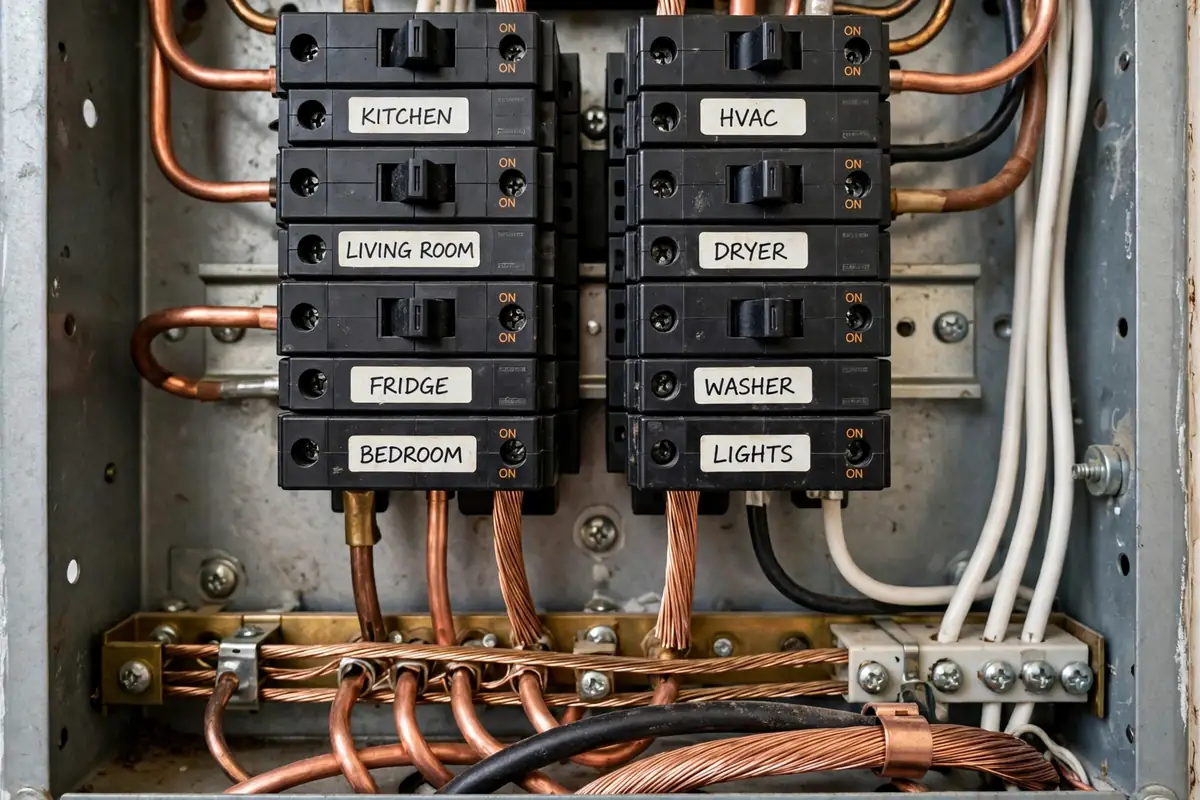
Downtown Ocala and the older neighborhoods around it hold homes from eras when a house drew a fraction of today's load. Their panels tell the familiar story: modest original service, decades of additions, and labels that no longer match the circuits behind them. The discipline is the load calculation under NEC Article 220 — air conditioning first in Florida, then range, dryer, water heater, and pool equipment where present — compared honestly against service size.
The ladder of answers stays in its order. Configure the charger to a sensible amperage and many older homes are done. Add an EV energy management system and tighter panels work too, with the charger easing back while other large loads run. Add a subpanel where layout demands it. Recommend a panel or service upgrade only when the arithmetic leaves nothing else standing — and show the arithmetic either way, because a homeowner who has seen the numbers does not need to be sold anything. If an Ocala quote reaches a full replacement before it shows you a calculation, that sequence is the tell.
Permits: City of Ocala and Marion County
Inside the city limits, charger circuits are permitted through the City of Ocala. Outside, in unincorporated Marion County, the permit runs through the county. The standard does not change with the desk: application, a circuit built to the Florida Building Code, and inspection to close.
The closed permit earns its place in your folder. It is what your insurer trusts, what a buyer's inspector accepts, and what the next electrician on the property — on a farm, there is always a next electrical project — starts from. On acreage, where subpanels and outbuildings accumulate over years, that documented baseline is worth more than it costs every single time. We file at the desk your address belongs to and hand over the record at the end. The wider network is mapped on our locations page, and pre-booking questions are welcome via contact.
Weather and Distance: The Marion County Details
Marion County is inland, so the coastal salt-air specification relaxes — but two local facts take its place. The first is lightning. Central Florida's summer storms are frequent and severe, and a charger is a piece of electronics wired directly to your panel; panel-level surge protection is part of every Ocala assessment conversation, and it matters doubly on farms, where a strike has long runs of wire to travel. The second is heat and exposure on outdoor mounts: weather-rated equipment, sealed fittings, and shade-aware placement keep an outdoor charger honest through a Florida summer.
Distance shapes the rest. Properties here spread out — house, barn, workshop, gate — and the charger belongs where the car actually sleeps, which is not always the closest wall to the panel. Planning the run properly, once, is what separates an install that disappears into the routine from one that generates a nuisance trip every rainy season. The outdoor installation guide covers the exposure details in depth.
How It Works
Step 1: Recon over the phone
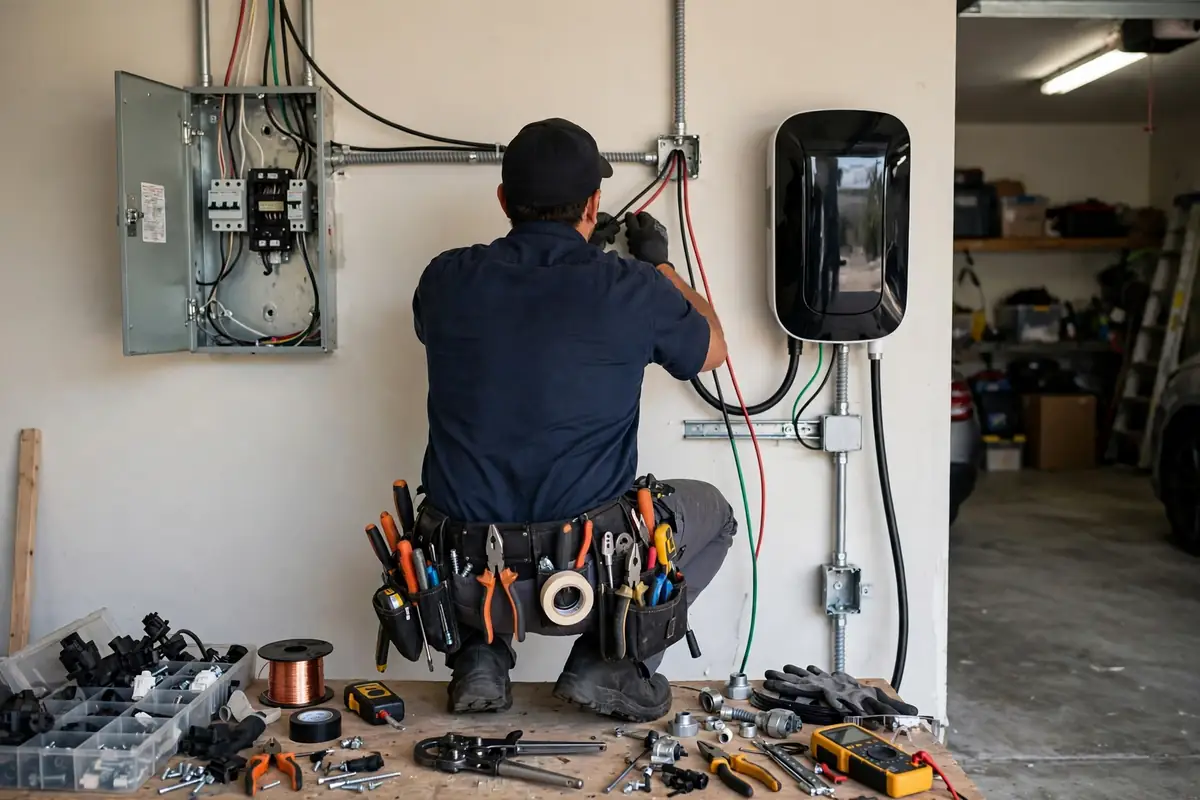
EV model, where it parks — house garage, barn, or workshop — what you know about the panel, and which utility serves the address. A panel photo sorts most installs before anyone drives out.
Step 2: The panel gets its say
Load calculation first, hardware second. You see the spare capacity as a number, and every option traces back to it — including any subpanel or long-run work.
Step 3: Install day
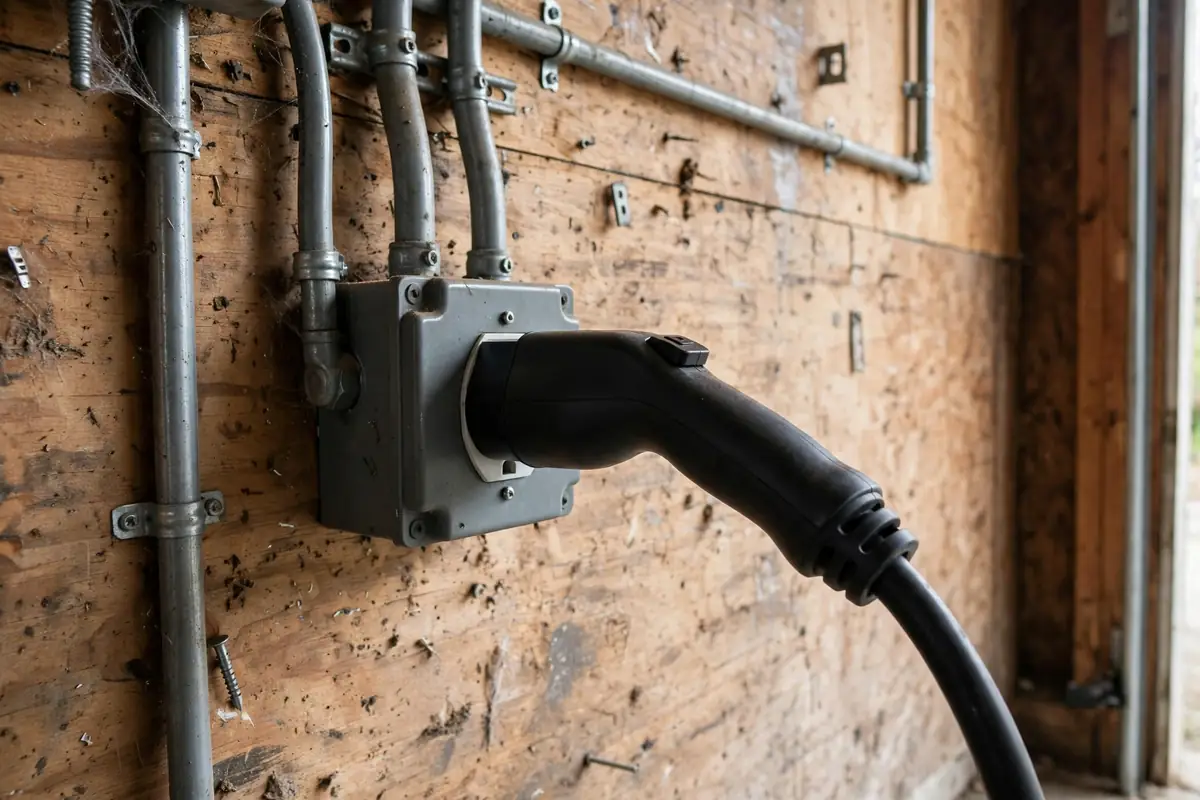
Permit in hand, circuit in, charger mounted, configuration set to the circuit — then proven with your car plugged in.
Step 4: Paperwork and goodbye
Inspection closes the permit. Your folder gets the permit record, the charger configuration, and updated panel labeling — plus any association documentation your community required.
On the Ground in Ocala
Ocala installs cluster where Ocala life clusters: historic streets near downtown, family neighborhoods in the southwest and along Maricamp, retirement communities on the State Road 200 corridor, and farm properties spreading toward McIntosh Road and the county's horse country. The constants are a utility answer verified per address, city or county permitting on the same line, and driving shaped by I-75, US-27, and US-441. That is the real specification sheet for an Ocala charger — the one we work from on every assessment, rather than a generic national checklist.
Questions to Ask Any Ocala Installer
Five questions separate electricians from dabblers anywhere in Marion County: Which utility serves my address, and how did you verify it? Will you run a load calculation — including my barn or workshop loads — before quoting? Who pulls the permit, and will I get the closed permit record? If my community requires architectural review, who prepares that paperwork and when? How are long conduit runs sized and protected on acreage? A qualified installer answers all five without blinking, because they are the job.
Frequently Asked Questions
Can a charger be installed in a barn or workshop on Ocala acreage?
Yes — it is one of the most common Marion County jobs. The design centers on the building's subpanel: its rating, the loads it already carries, and the distance back to the main service, which drives wire sizing and trenching. Planned in that order, a barn charger behaves like any garage charger, just farther from the house.
I live in On Top of the World. What approval do I need before installing?
Expect an association architectural review for the exterior elements of the work — charger placement and any visible conduit — alongside the electrical permit. The sequence that works is review first, install second, with the installer's documentation supporting the application. We identify your community's requirements at the assessment so the install date is set after approval, not before it.
Does Duke's Charger Prep Credit apply to my Ocala home?
Only if Duke Energy Florida serves your address, and only under Duke's terms, verified at assessment — the credit is up to 819 dollars toward qualifying preparation work. Inside the city, Ocala Electric Utility addresses are not eligible, and SECO Energy addresses follow a different arrangement entirely. That is why utility verification is step one here, not a footnote.
My downtown Ocala home is older. Will it need a new panel for a charger?
Not automatically. A load calculation decides: many older homes support a charger at a configured amperage, and load management extends that to tighter panels by pausing charging while other large loads run. A panel upgrade is recommended only when those steps cannot produce an honest answer, and you see the numbers behind whichever conclusion we reach.
Which office permits a charger on unincorporated Marion County land?
Marion County handles permits outside the city limits; the City of Ocala permits work inside them. Farm and acreage installs follow the same route — the permit covers the circuit and any subpanel work, and closes with an inspection. We file at the desk your address dictates.
How far can a charger be from the main panel on a farm property?
There is no single fixed distance — the run is engineered. Wire size grows with distance to manage voltage drop, conduit is routed and protected for the traffic it will live with, and the subpanel at the far end is sized for everything that building runs. Long runs are routine work when they are planned as runs, rather than treated as a garage install stretched thin.
Get Your Charger Installed in Ocala
Permitted, inspected, and sized to your panel — one call gets the assessment booked in Ocala.
(407) 557-4153 · Mon–Fri 7:00 AM – 10:00 PM · Sat 8:00 AM – 10:00 PM · Sun 7:00 AM – 9:00 PM ET