Design Starts With Dwell Time
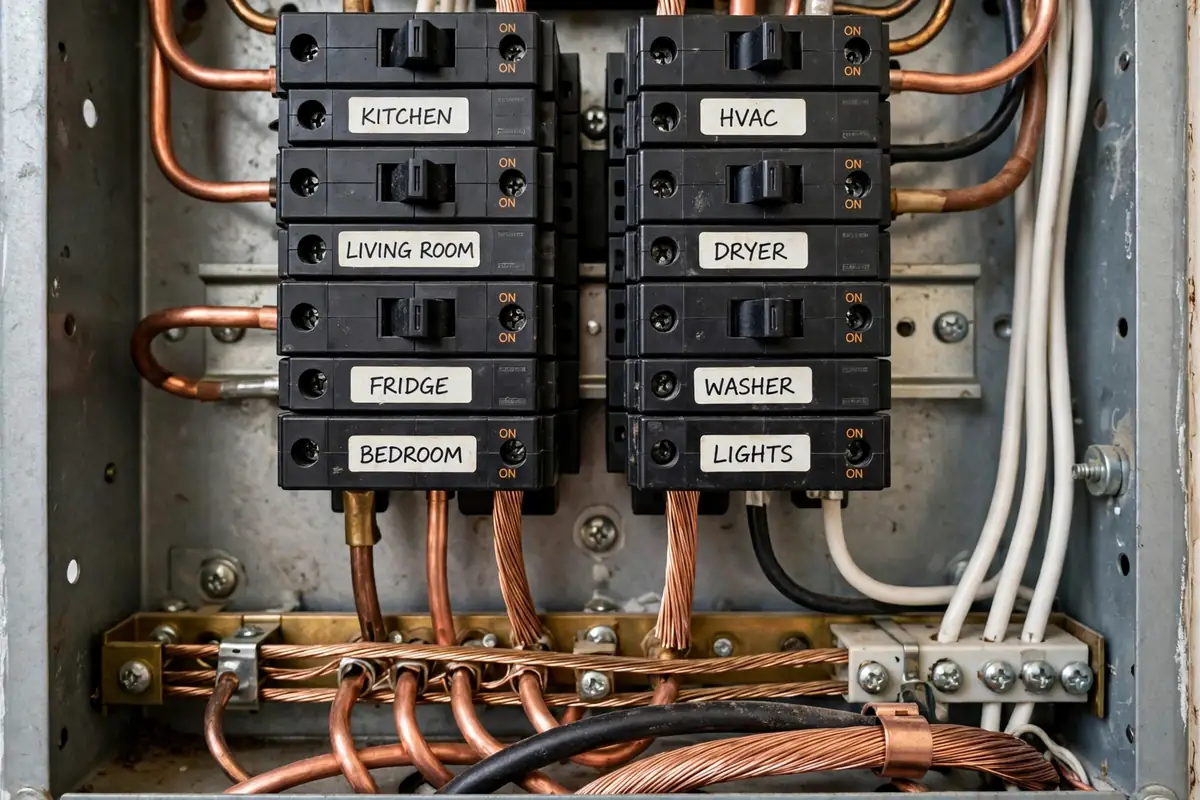
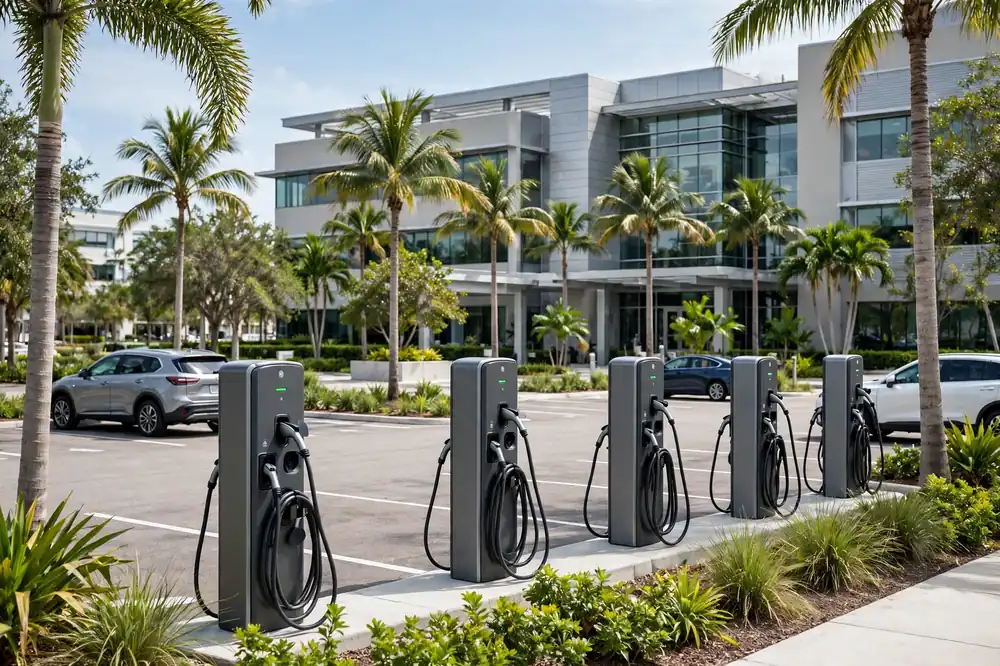
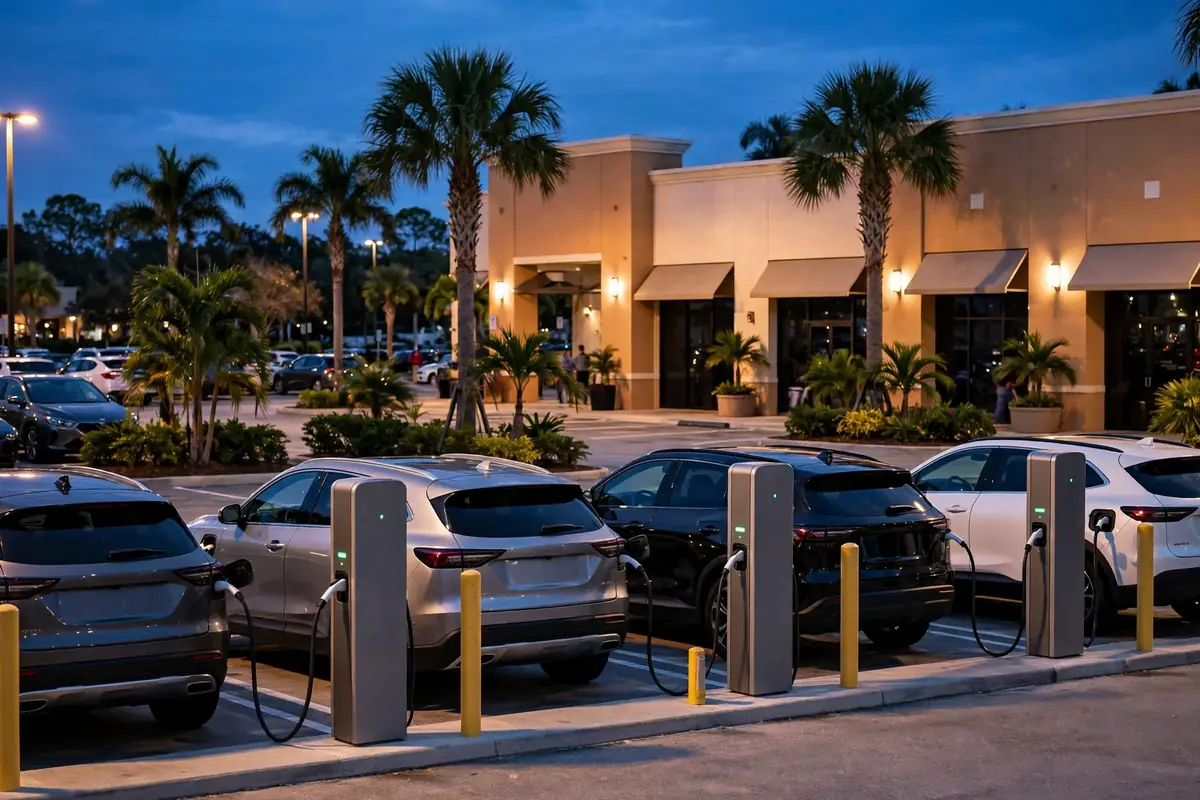
The right station count comes from how long cars sit, not from how fast you wish they charged. Employees park for eight hours; hotel guests for ten; retail customers for one. We model your users first, then size the electrical work — which is how properties avoid both the empty-station problem and the breaker-tripping problem.
Load Management Makes the Math Work
Few Florida commercial services have spare capacity for a row of full-speed circuits. Load management shares a fixed pool of power across every station, shifting amperage to the cars that need it. It routinely doubles or triples the station count a property can support without a service upgrade — the single biggest cost lever in commercial charging.
Utilities, Ownership, and Honest Advice
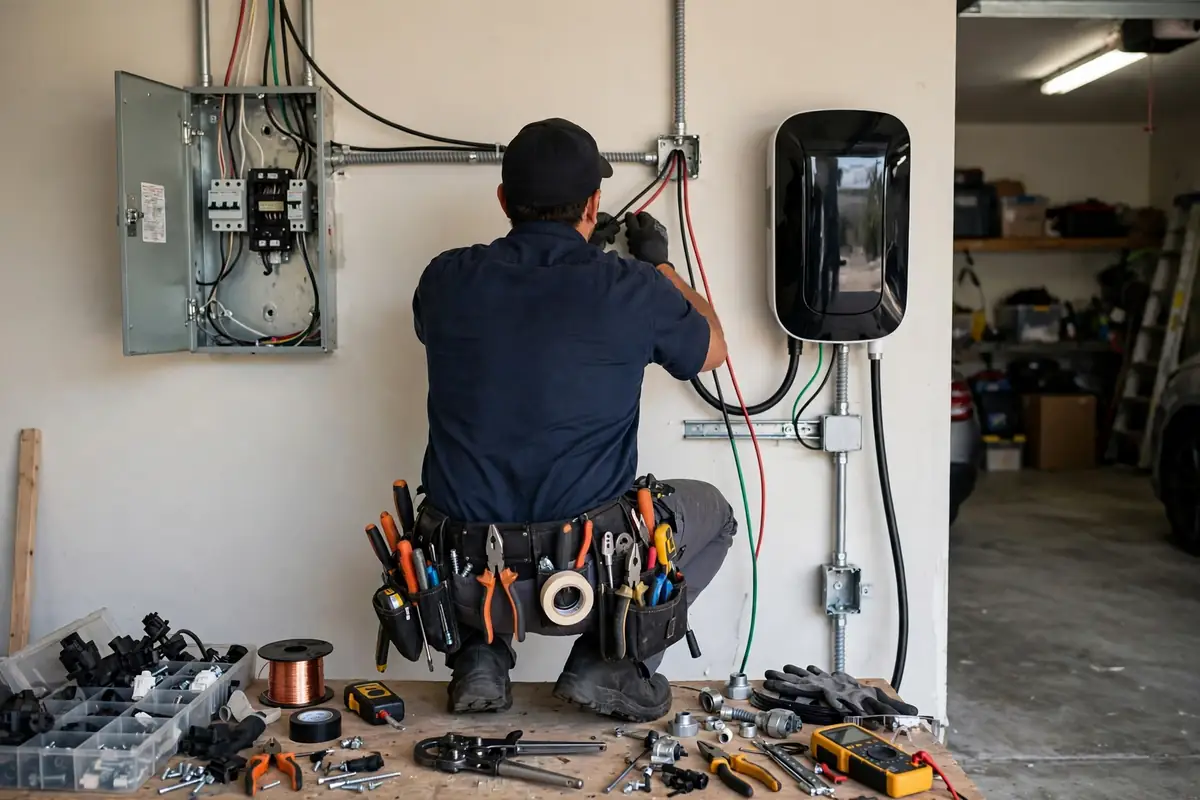
Florida utilities run their own commercial charging programs — TECO's Drive Smart in Tampa, FPL EVolution's business offerings in the southeast — generally structured so the utility owns and maintains the equipment. Owning your stations instead keeps the branding, the billing, and the asset yours. We install owned infrastructure and will compare the structures with you openly, because the right answer depends on your property, not on our preference.
How It Works
Step 1: Call and describe your setup
Your EV model, where you park, and what you know about your panel. Photos of the panel help us prepare before anyone visits.
Step 2: Load calculation and site assessment
A qualified electrician checks your panel's real capacity, measures the circuit run, and confirms the charger location. You get a clear scope of work — no surprises mid-job.
Step 3: Permit and installation

We pull the electrical permit, run the dedicated circuit, mount the charger or outlet, and configure it to the circuit it is actually on.
Step 4: Inspection and walkthrough
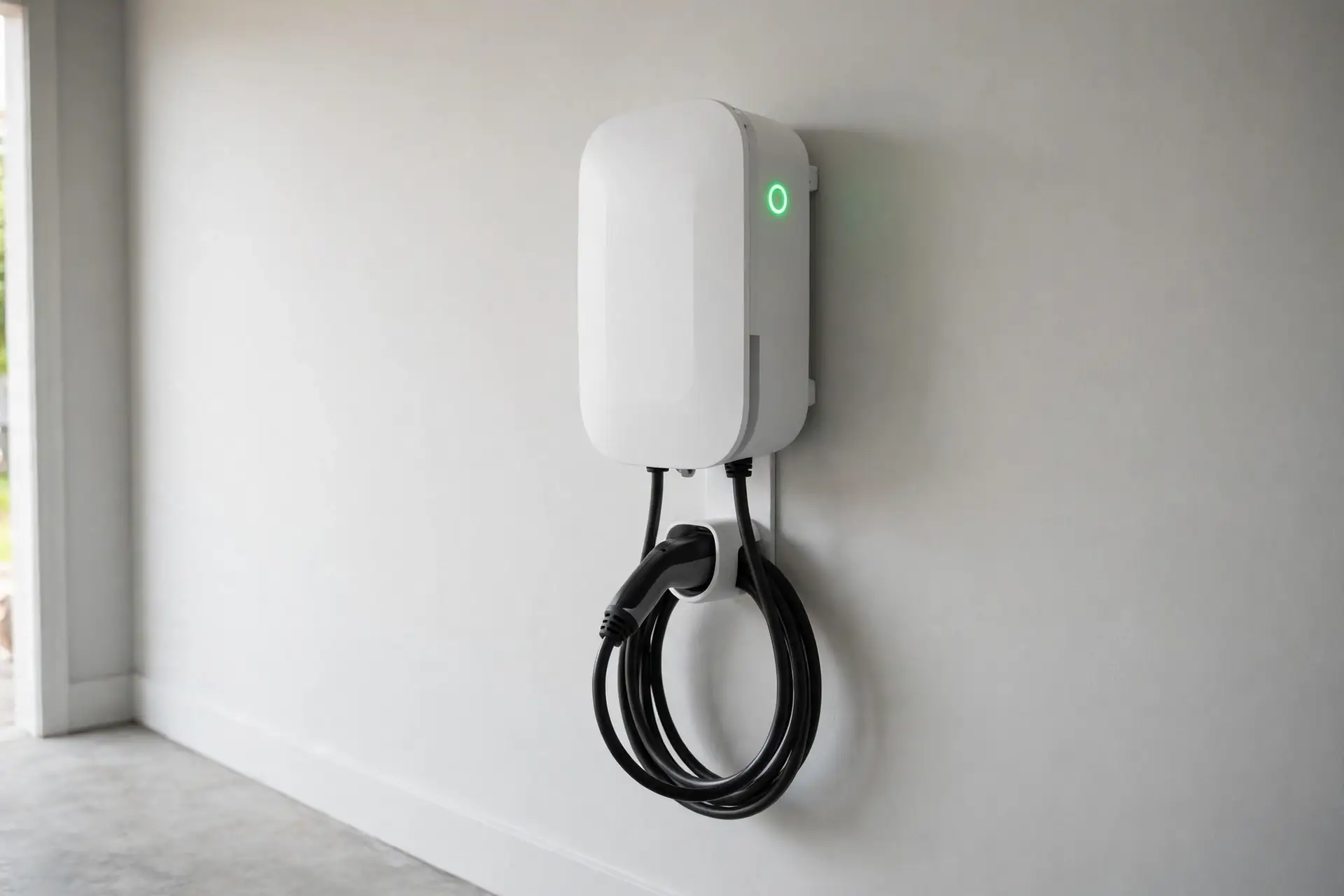
The city or county inspection closes the permit. Then we test-charge your car together and walk through the charger's app and scheduling features.
Where We Install
Our launch coverage runs across Southeast Florida and Tampa Bay — West Palm Beach, Boca Raton, Tampa, St. Petersburg, Clearwater, and Fort Lauderdale. In the Orlando area, our sister site Orlando EV Charger covers Central Florida.
The Business Case, Without Fairy Dust
Commercial charging pays in four currencies: tenant retention in multifamily and office properties, dwell time in retail and hospitality, recruiting in tight labor markets, and direct session revenue where billing makes sense. It does not pay in magic. Properties that model their actual users — how many EVs today, how fast the count is growing, how long they park — size systems that look smart in year three. Properties that install for a press release install twice. Our scoping process is built around the first kind of math, including the utility program structures (TECO Drive Smart, FPL's commercial offerings) that can carry part of the load.
What Charging Actually Costs to Run
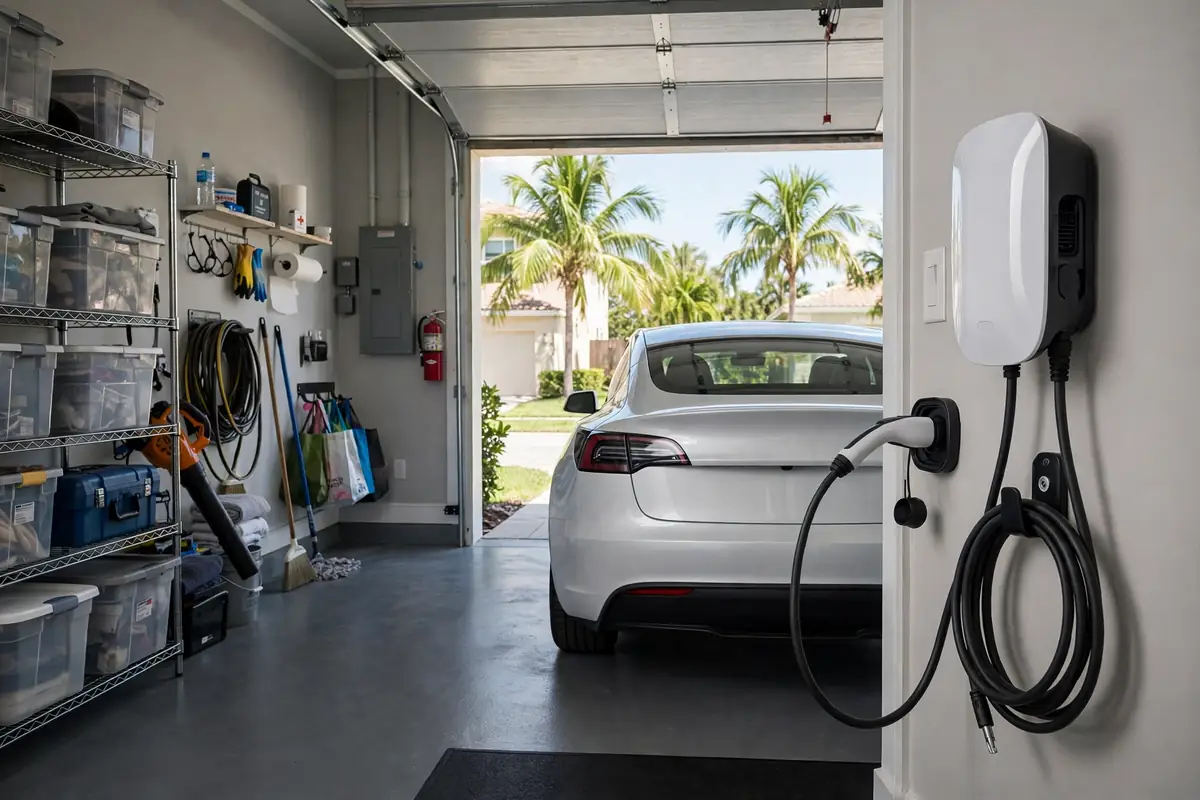
The install is the one-time number; the electricity is the subscription you barely notice. A typical Florida EV driven about 12,000 miles a year uses roughly 3,000 to 3,600 kilowatt-hours annually — at residential rates, a modest monthly line that undercuts the gasoline it replaces by a wide margin, and shrinks further on time-of-use rates with scheduled overnight charging. Your utility's rate structure decides the details, which is why the walkthrough includes setting the charging schedule, not just bolting the unit to the wall.
Storm Season Readiness
Every Florida electrical install should answer one question: what happens in the third week of September? For chargers, the answers are a surge protective device at the panel, sealed outdoor fittings, a homeowner who knows which breaker feeds the charger, and equipment inspected before re-energizing after any flooding. None of this is exotic or expensive at install time. All of it is dramatically more expensive as a repair. We build storm readiness into Florida installs by default rather than selling it as an upgrade.
Florida Code Specifics That Shape This Work
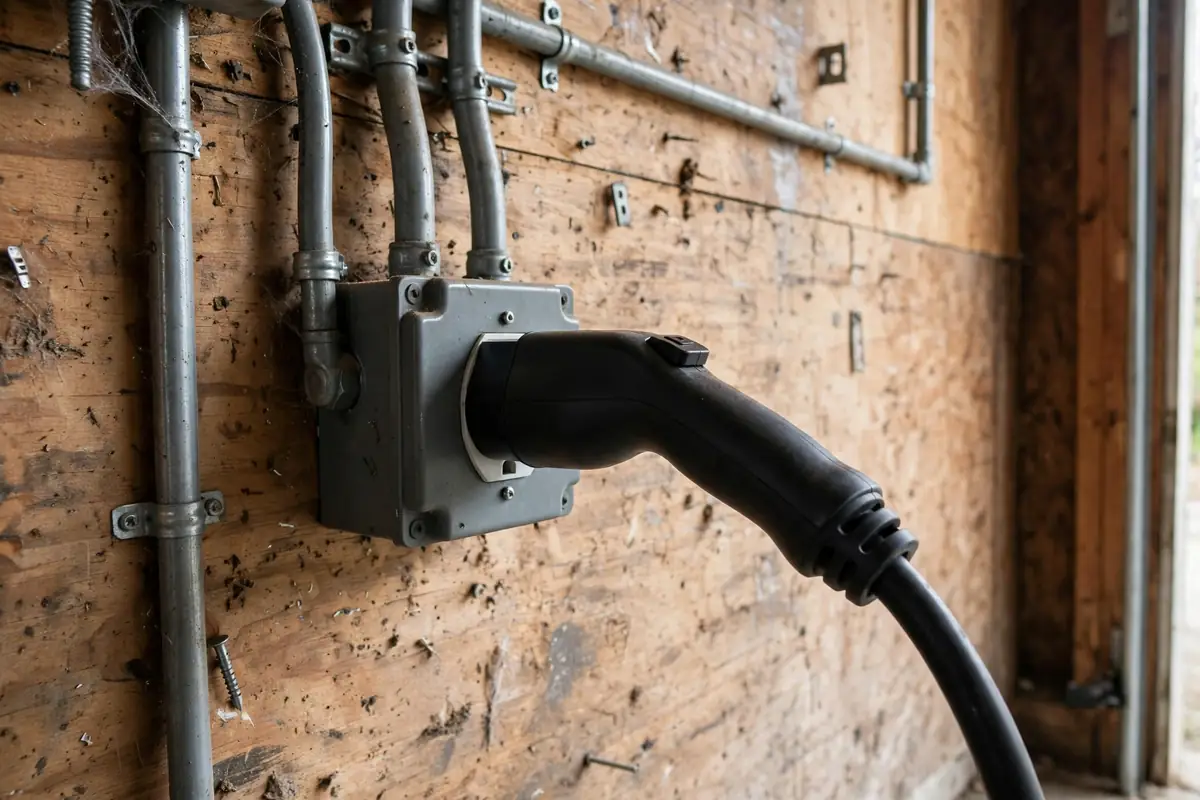
EV charging has its own article of the National Electrical Code — Article 625 — layered on the general rules Florida builds from. The practical consequences: charger loads are treated as continuous, so circuits are sized at 125 percent of the charging current; energy management systems are expressly recognized as a way to serve a charger on a panel that could not otherwise carry it; garage outlets need GFCI protection under the current code cycle; and the charger's configured amperage, its breaker, and its wire must form a matched set. These are not bureaucratic garnish. They are the difference between an installation an inspector signs and a hazard with a warranty card.
Phasing: Conduit Is Cheap, Regret Is Not
The smartest commercial installs oversize everything that is expensive to revisit and stage everything that is cheap to add. Trench and conduit for the full future station count during phase one — the ground is already open. Panel and load-management capacity for the end state, or a documented path to it. Then stations in tranches as demand proves out. The pattern fails in reverse: properties that install exactly today's stations with exactly today's capacity return to construction for every growth step, paying mobilization and trenching three times. When we scope a Florida property, the phasing plan is drawn on day one, even if only the first tranche is funded.
This Service, Metro by Metro
One service, six local versions. In West Palm Beach and Boca Raton, it means workplace, hospitality, and multifamily systems designed around each property's service capacity and users under FPL service and Palm Beach County permitting. In Tampa, the same work runs through TECO territory and Hillsborough permitting, with Ybor-era housing on one side of the river and new suburbs on the other. St. Petersburg and Clearwater add Pinellas' historic housing stock and Duke Energy's charger programs to the equation. And Fort Lauderdale brings Broward's canal homes and condo towers — the multifamily capital of this site. The standards never change: load calculation, permit, matched configuration, inspection. The local facts do, and the local pages on this site carry them city by city.
What the Assessment Decides
For a commercial project, the assessment is a load study and a user census: your service capacity, your parking counts, and who exactly will charge. The site plan that follows is the document your board, your city, and your future self will all read. You leave the assessment with a scope that names the circuit, the equipment, the permit path, and the schedule — the four facts every honest installation shares. If the scope cannot be stated that plainly, the assessment is not finished, and neither is our work that day.
Frequently Asked Questions
What kinds of Florida properties add commercial charging?
Office parks, hotels, retail centers, multifamily and condo communities, municipal fleets, car dealerships, and mixed-use developments. If cars sit on your property for hours, charging belongs in the conversation.
Can drivers be billed for charging?
Yes — networked stations bill per kilowatt-hour or per session and handle payment, access, and reporting. We set up the network configuration during commissioning if you choose a networked system.
Do commercial stations need permits in Florida?
Yes. Commercial electrical work is permitted and inspected in every Florida jurisdiction we serve, and public-facing installs can also involve ADA placement and local parking rules, which we scope in the site plan.
How many stations should my property start with?
Enough for today's drivers plus conduit capacity for tomorrow's. We typically oversize the underground and panel work — the cheap part to expand later is the stations themselves.
What maintenance do commercial stations need?
Networked stations report their own faults; physically, cables, connectors, and bollards take the wear. Our repair and maintenance service covers commercial stations, including ones installed by others.
Can charging help with Florida's multifamily rules and resident demand?
Resident demand is the driver: properties that offer charging keep EV-driving residents longer. Florida law also protects individual condo owners installing in assigned spaces, and a property-wide system is often the cleaner answer for the association.
Book Your Installation
Qualified electricians, permitted work, and straight answers about your panel and your options.
(407) 557-4153 · Mon–Fri 7:00 AM – 10:00 PM · Sat 8:00 AM – 10:00 PM · Sun 7:00 AM – 9:00 PM ET