Why Florida Permits Charger Circuits
An EV charger is a continuous load — hours at full current, every night. Florida's building code, built on the National Electrical Code, treats that seriously: the circuit must be sized for continuous duty (the 80 percent rule), protected correctly, and installed by a licensed electrician. The permit is the mechanism that checks all three, and the closed permit is your proof — for your insurer today and a buyer's inspector at resale — that the work was done right.
Skipping it is the classic false economy: unpermitted electrical work is the first thing flagged in a home inspection and the awkward question in an insurance claim involving anything electrical.
How the Process Runs
- Load calculation and scope — your electrician confirms the panel can carry the circuit (or what must change first).
- Application — filed with your city or county electrical desk, usually through an online portal, with the circuit details.
- Installation — the permitted work itself.
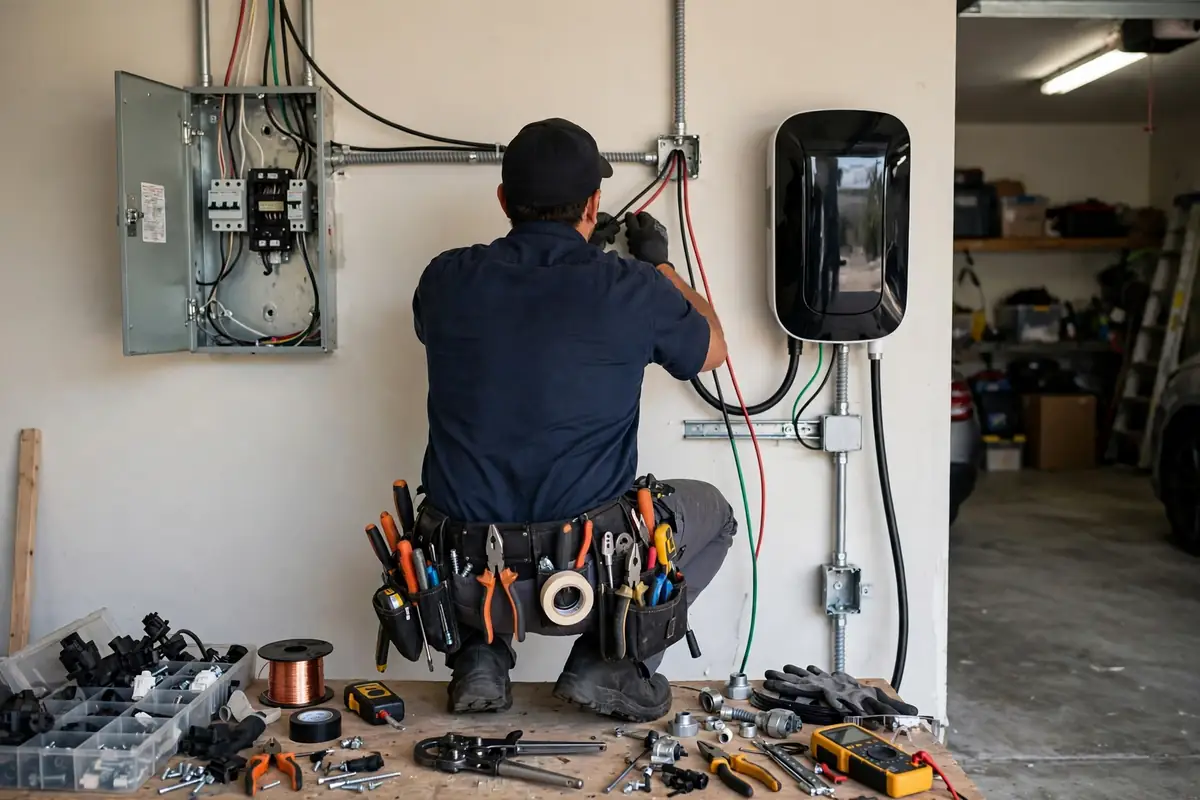
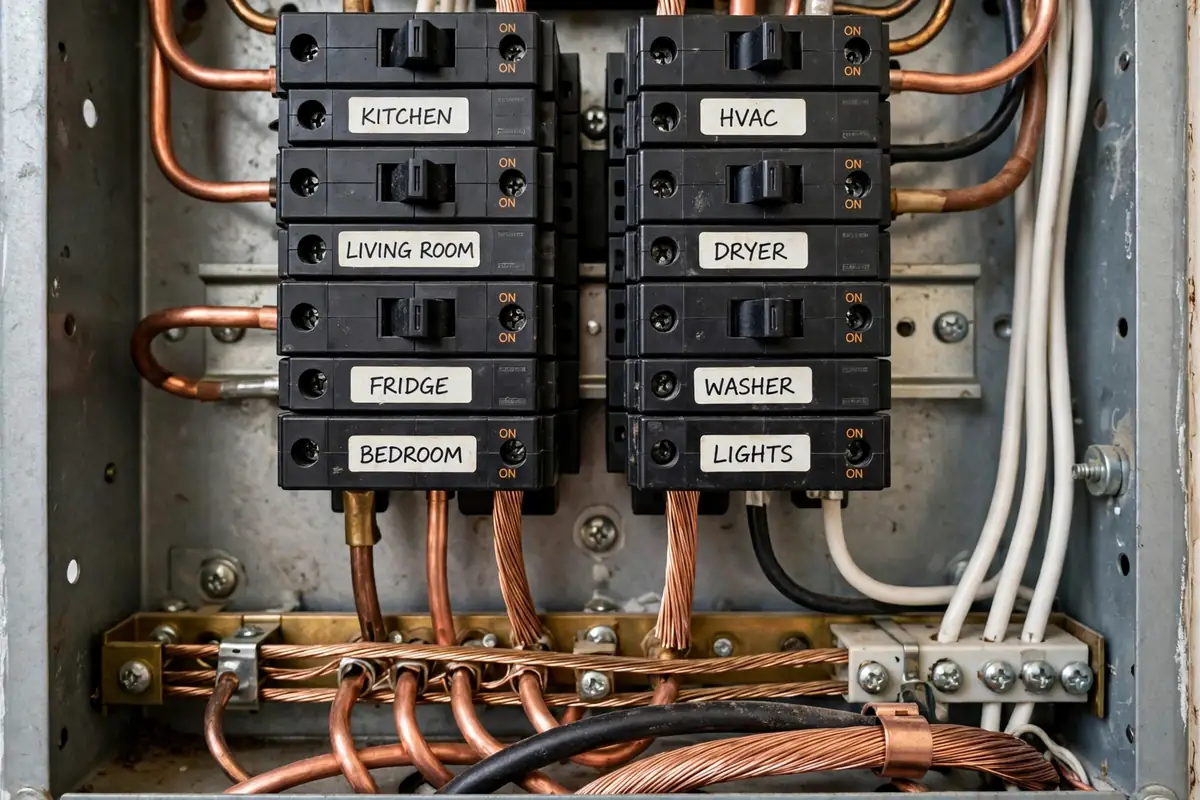
- Inspection — an inspector verifies breaker size versus charger setting, wire gauge, GFCI protection where required, labeling, and workmanship.
- Close-out — the permit closes and the record stays with the property.
Timelines vary by desk and season; a good installer quotes you the current local expectation at assessment, not a statewide guess.
City by City: Our Six Launch Metros
West Palm Beach
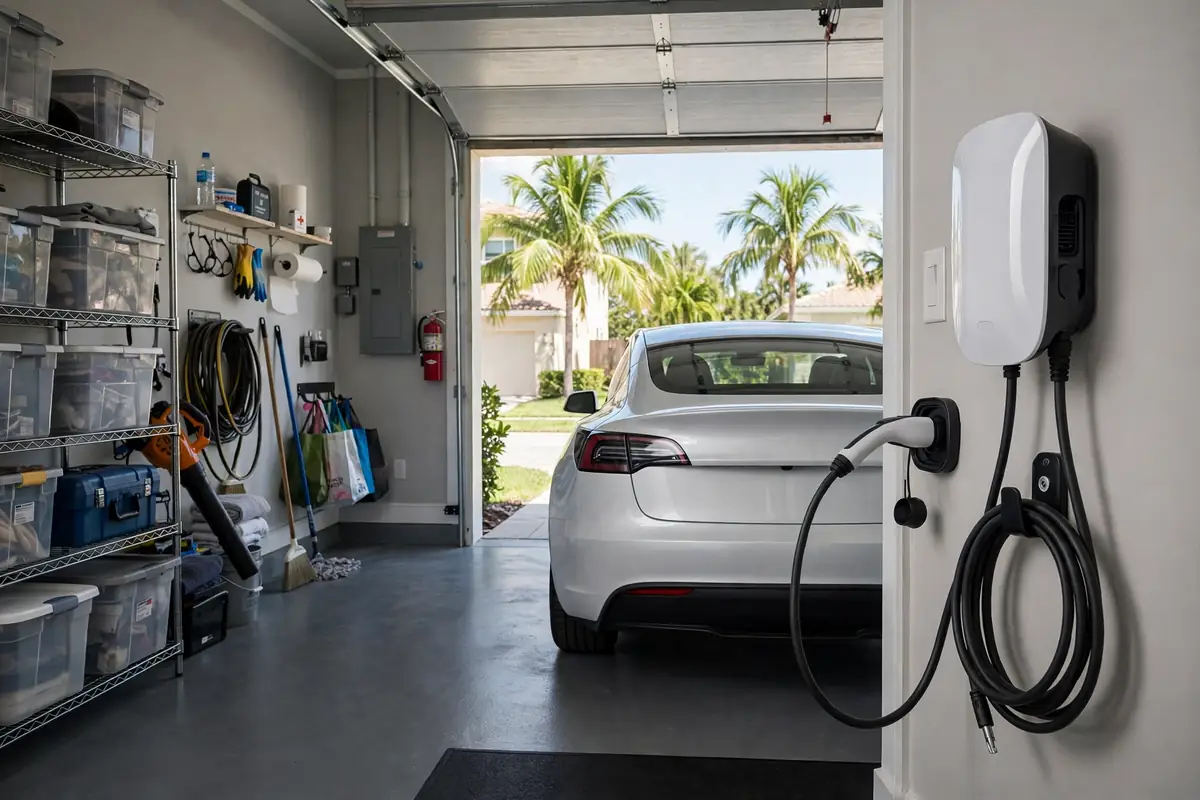
Permits run through the City of West Palm Beach Development Services for city addresses, and Palm Beach County for unincorporated ones. Historic-district properties (El Cid, Flamingo Park) may add a review layer for anything visible from the street — garage-interior work rarely triggers it, but exterior pedestals can.
Boca Raton
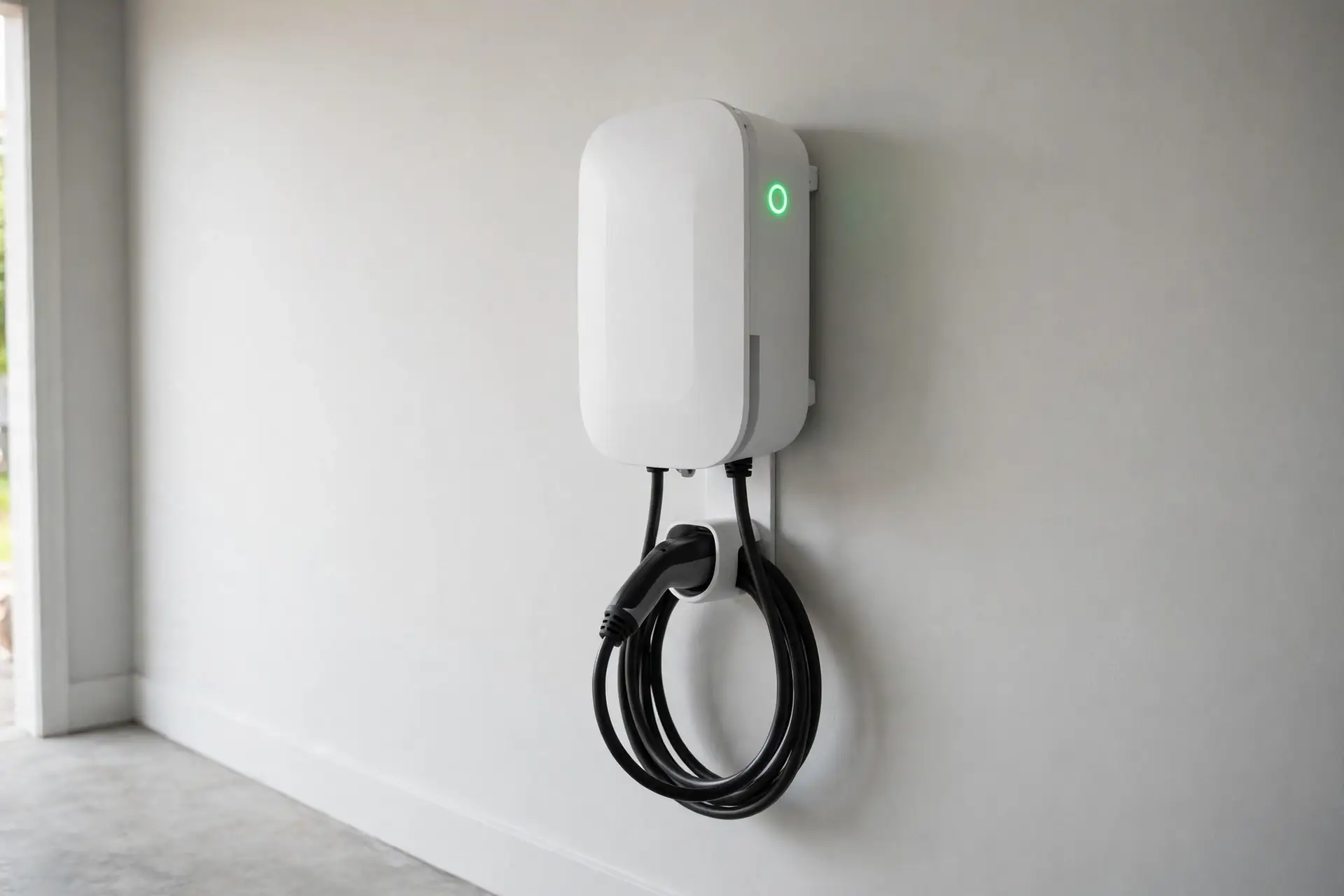
The City of Boca Raton's Development Services issues the electrical permit. Boca's distinctive layer is upstream of the city: most communities require HOA architectural approval before the city application makes sense. Sequence matters — association first, permit second, install third.
Tampa
City of Tampa Construction Services handles city addresses; Hillsborough County covers unincorporated ones. TECO coordination only enters the picture if service or meter work is involved (panel upgrades), which your electrician schedules.
St. Petersburg
The City of St. Petersburg's Construction Services desk issues permits, and the historic districts (Old Northeast, Kenwood) can add a design review for visible exterior equipment. Duke Energy's Charger Prep Credit paperwork rides alongside — keep the itemized invoice for the credit application.
Clearwater
The City of Clearwater's Planning and Development Department handles city permits; Pinellas County covers unincorporated addresses. The condo stock on Sand Key and Island Estates means the association layer is often the long pole: metering plans for assigned spaces are the item associations ask about most.
Fort Lauderdale
The City of Fort Lauderdale's Development Services issues permits; Broward County covers unincorporated addresses. Canal-front and high-rise properties add their own reviews — marinas and shared garages each have a process, and starting the association conversation early keeps the city permit from expiring mid-approval.
What Inspectors Actually Check
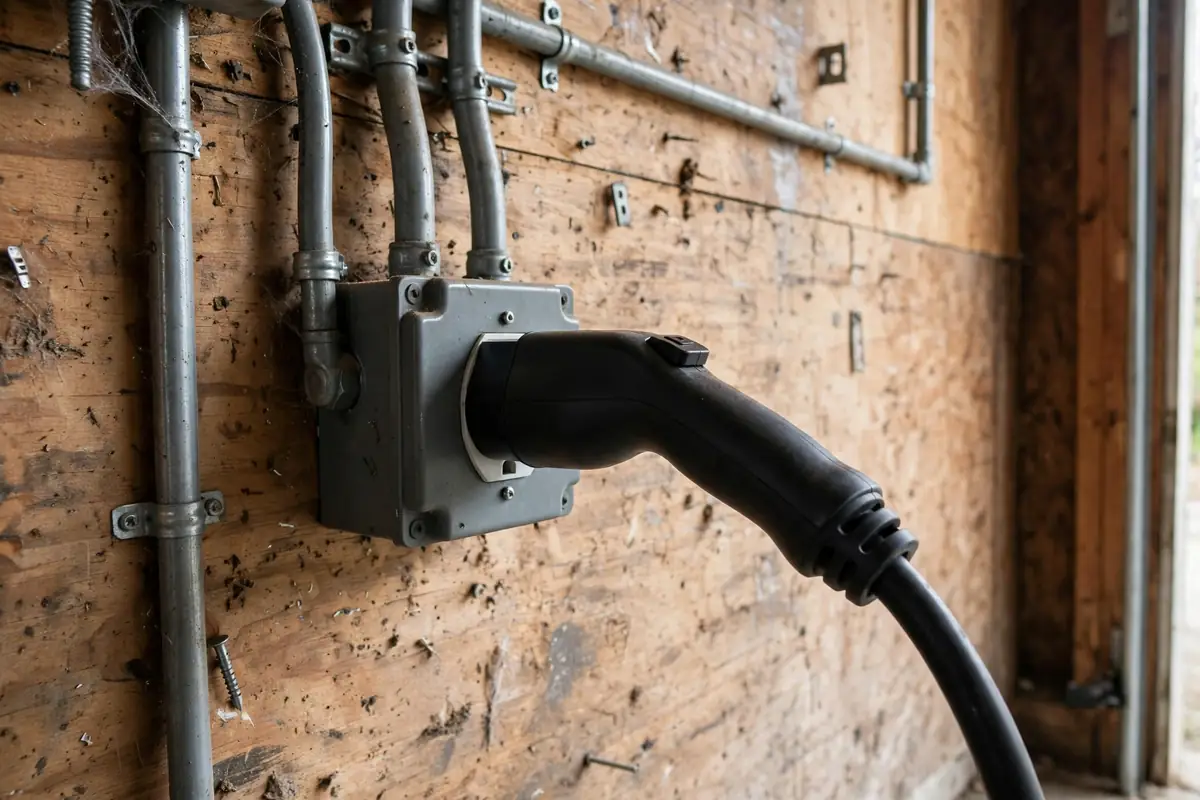
- Breaker size against the charger's configured amperage (they must match)
- Wire gauge against the circuit
- GFCI protection where current code requires it (garage outlets especially)
- Disconnect and labeling requirements
- Workmanship: terminations, conduit, weather sealing outdoors
Condos, HOAs, and the Florida Statute
Section 718.113 of the Florida Statutes protects a condo unit owner's right to install a charging station in their assigned or limited-common-element parking space. The association may impose reasonable conditions — an application, insurance, a licensed and insured installer, and a plan for metering the electricity you use — but it cannot simply prohibit the installation. HOAs operate under different statutes and their own documents; approvals are nonetheless routine when the application is complete. Our condo and HOA rights guide unpacks both.
Permits and Your Home Sale
Florida buyers' inspectors have learned to look for EV work specifically, because it is new, high-amperage, and frequently DIY'd by the previous owner's optimism. A closed permit turns the charger into a selling feature with paperwork. An unpermitted one turns into a negotiation credit, a removal demand, or a retroactive-permit errand at the worst possible moment in a closing timeline. The permit you pull today is best understood as a document you are preparing for a stranger in seven years — and strangers trust documents, not explanations.
When the Answer Is 'It Depends on the Address'
Florida's permit map is genuinely local: city desks inside city limits, county desks outside them, community development districts and historic commissions layered by neighborhood. Two houses a mile apart can file in different offices under different checklists. This is why installers ask for your address before your charger model — the jurisdiction is a design input, not a formality. It is also why statewide 'average permit time' statistics are useless; your desk, your timeline.
Keep the Paper: A Homeowner's Filing Habit
Make a folder — paper or scanned — the day your permit closes: permit record, final inspection sign-off, itemized invoice, load calculation if one was performed, charger manual and configuration notes. That folder answers the insurer's underwriting question, the buyer's inspector, the association's reviewer, and the next electrician's diagnostic, each in about ninety seconds. Florida homes change hands and carriers often; the houses whose electrical stories are documented are simply easier to own. The permit system's deepest benefit is not the inspection — it is this folder.
A Permit Is Also a Mirror
There is a quieter reason to love the permit system: it forces the load calculation into the open. The application describes the circuit; the circuit must match the panel's arithmetic; the inspector verifies the match in person. Every failure mode of the unpermitted install — the oversized configuration, the undersized wire, the imaginary spare capacity — is a failure the permit process is specifically shaped to catch. Homeowners sometimes experience permits as the city taxing their project. Electricians experience them as the cheapest second opinion in construction. Both can be true; only one of them protects your house.
Frequently Asked Questions
Do I really need a permit for a home EV charger in Florida?
Yes, if a new 240-volt circuit is being installed — which is nearly every Level 2 install. The permit and inspection are also your documentation for insurance and resale.
Who pulls the permit — me or the electrician?
Your electrician. A licensed electrical contractor files as the permit holder; homeowner-pulled permits for this class of work create liability and insurance complications we advise against.
How long does a Florida charger permit take?
It varies by city desk and workload — days for straightforward residential electrical permits is common, longer when association or historic reviews stack on top. Your assessment includes the current local expectation.
What happens if a previous owner installed a charger without a permit?
It surfaces at resale inspections and can complicate insurance. An electrician can evaluate the existing work; in some cases a retroactive permit path exists. Ask during any assessment — it is a common Florida inheritance.
Does the permit cover the charger itself or the circuit?
The permitted work is the electrical installation — circuit, breaker, protection, and the charger connection as part of that system. The inspection verifies the whole installation, including the charger's configured amperage.
Are permits different for commercial charging stations?
Yes — commercial permits add plan review, and public-facing installs can involve ADA placement and local parking rules. The sequence is the same (apply, install, inspect), the paperwork is thicker.