Design Around the Route Sheet
A delivery van that runs 90 miles and parks for 10 hours needs a different charger plan than a pool vehicle that turns around in two. We start with your routes, dwell times, and growth plans, then size the charging — most fleets discover they need far less peak power than they feared, spread across far more hours than they expected.
Managed Charging Is the Whole Game
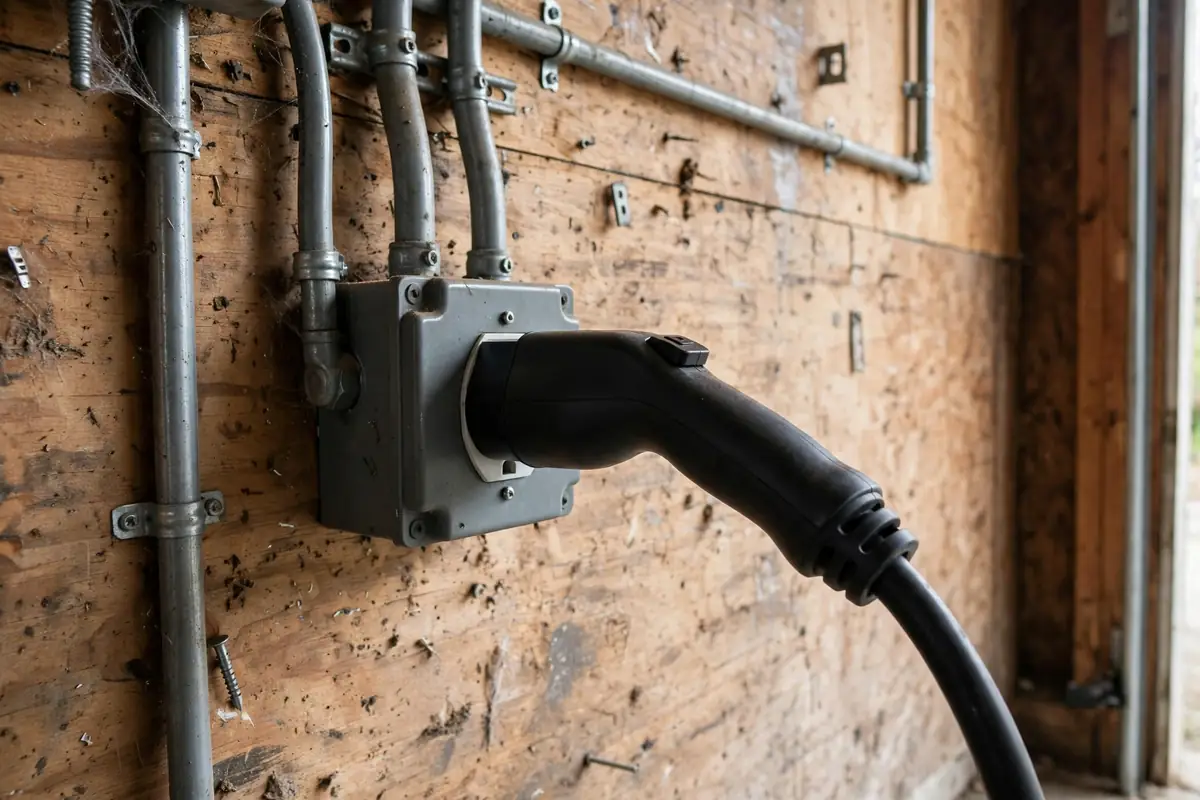
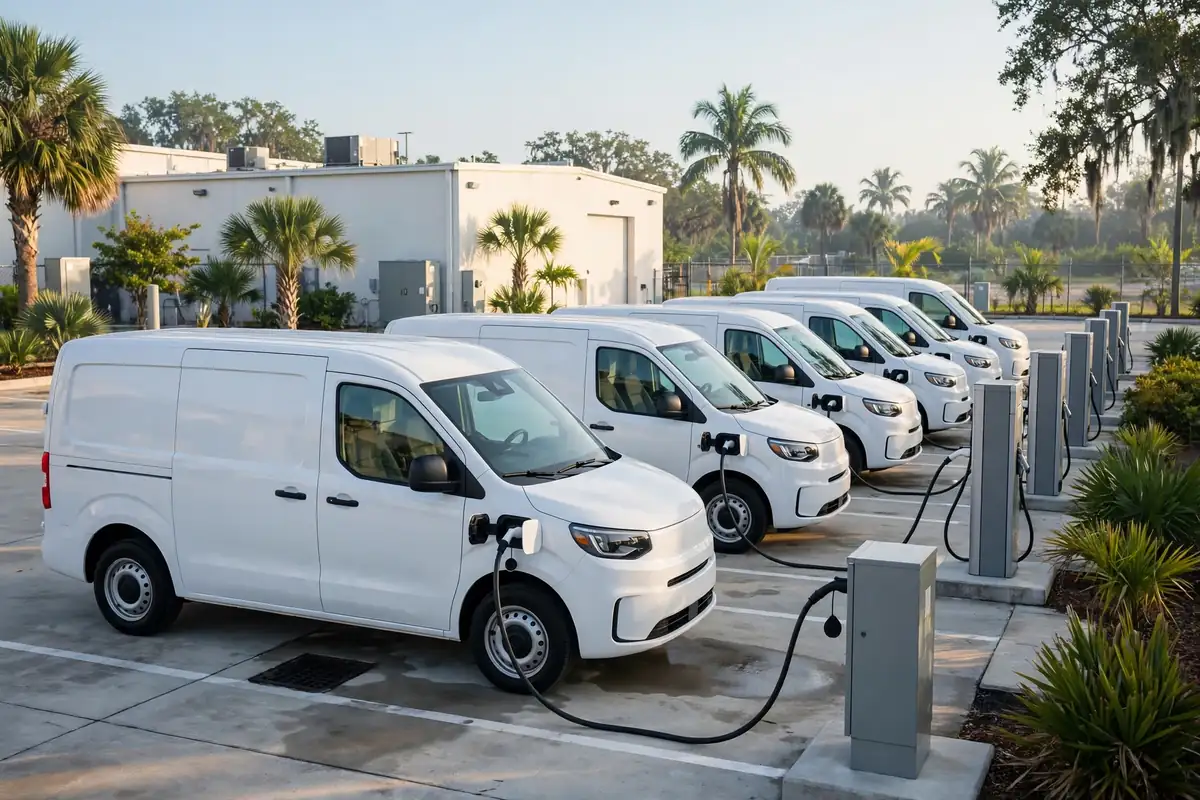
Unmanaged, twenty vans plugging in at 6 p.m. is a demand spike your utility bill will remember. Managed charging staggers and throttles the fleet across the night, filling every vehicle by its departure time inside a fixed capacity pool. It is the difference between a depot that needs a new service and one that runs on the service it has.
Built to Phase
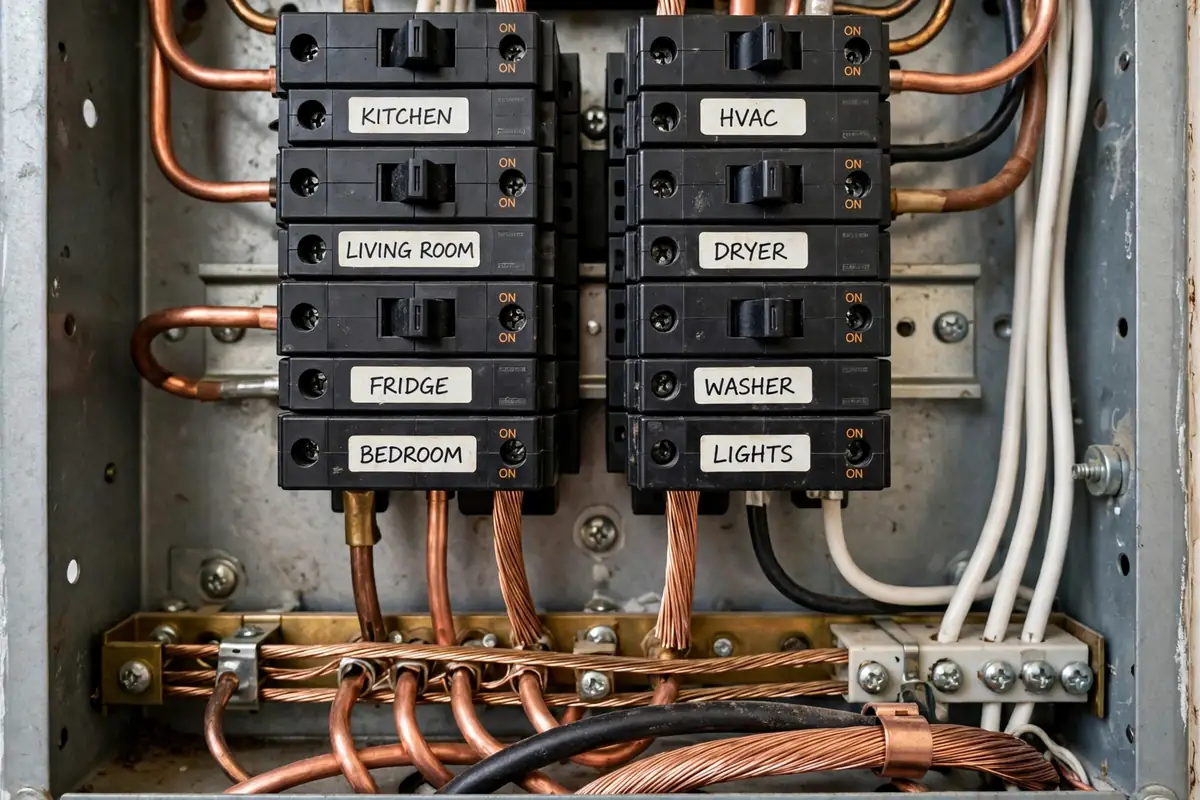
Fleets electrify in waves. We build the electrical backbone — service capacity, conduit runs, panel space — for the fleet you plan to have, then install stations in step with vehicle deliveries. Your second wave should be a station order, not a construction project.
How It Works
Step 1: Call and describe your setup
Your EV model, where you park, and what you know about your panel. Photos of the panel help us prepare before anyone visits.
Step 2: Load calculation and site assessment
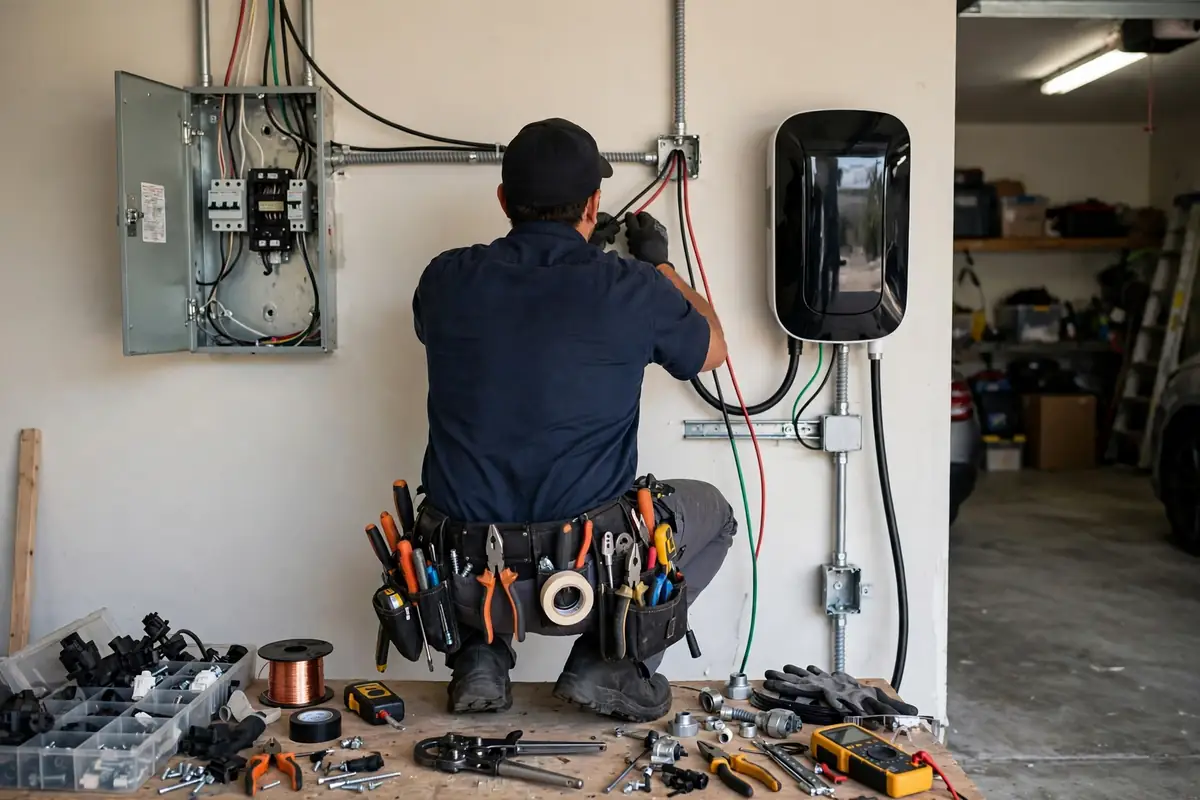
A qualified electrician checks your panel's real capacity, measures the circuit run, and confirms the charger location. You get a clear scope of work — no surprises mid-job.
Step 3: Permit and installation

We pull the electrical permit, run the dedicated circuit, mount the charger or outlet, and configure it to the circuit it is actually on.
Step 4: Inspection and walkthrough
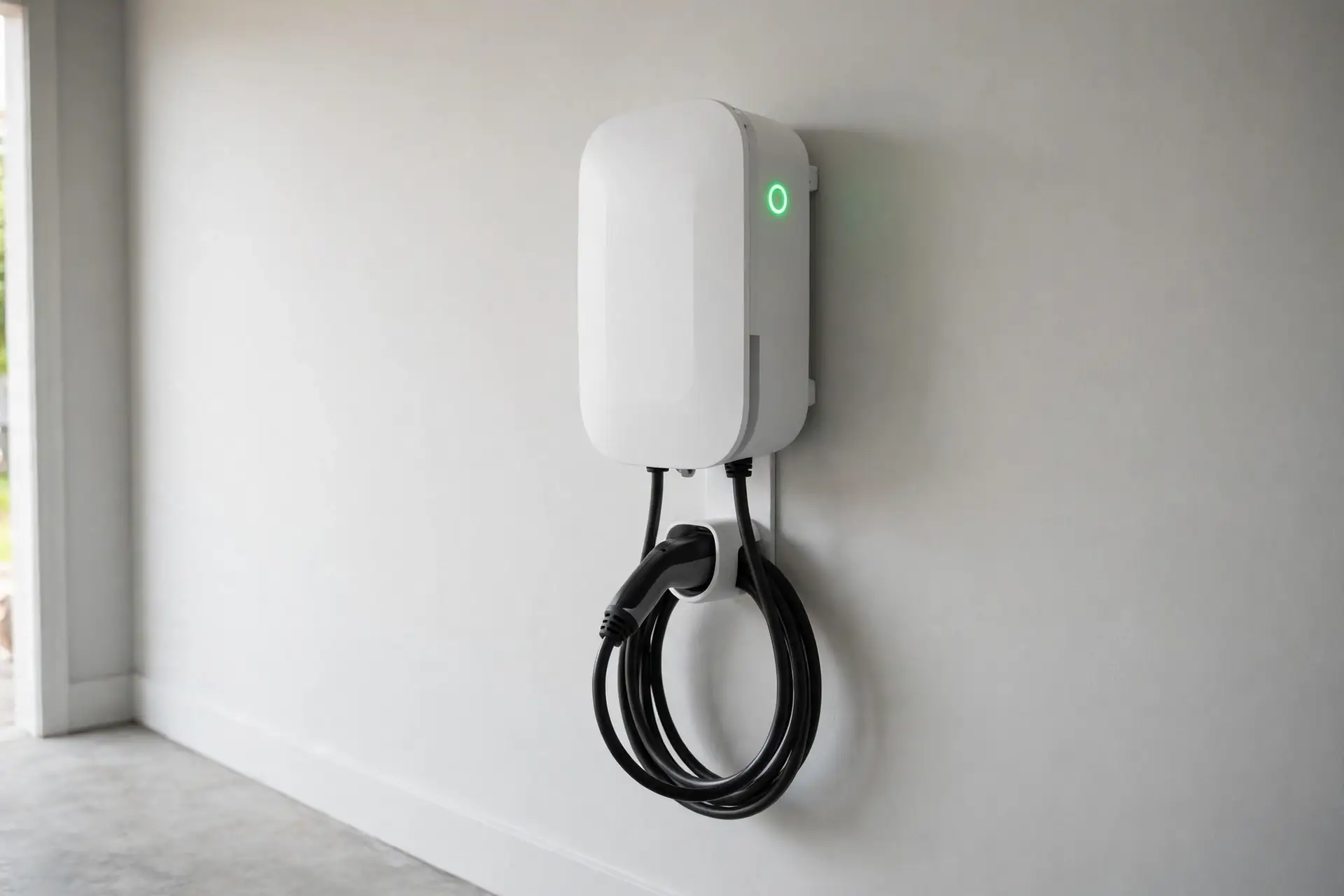
The city or county inspection closes the permit. Then we test-charge your car together and walk through the charger's app and scheduling features.
Where We Install
Our launch coverage runs across Southeast Florida and Tampa Bay — West Palm Beach, Boca Raton, Tampa, St. Petersburg, Clearwater, and Fort Lauderdale. In the Orlando area, our sister site Orlando EV Charger covers Central Florida.
Depot Discipline: The 6 A.M. Rule
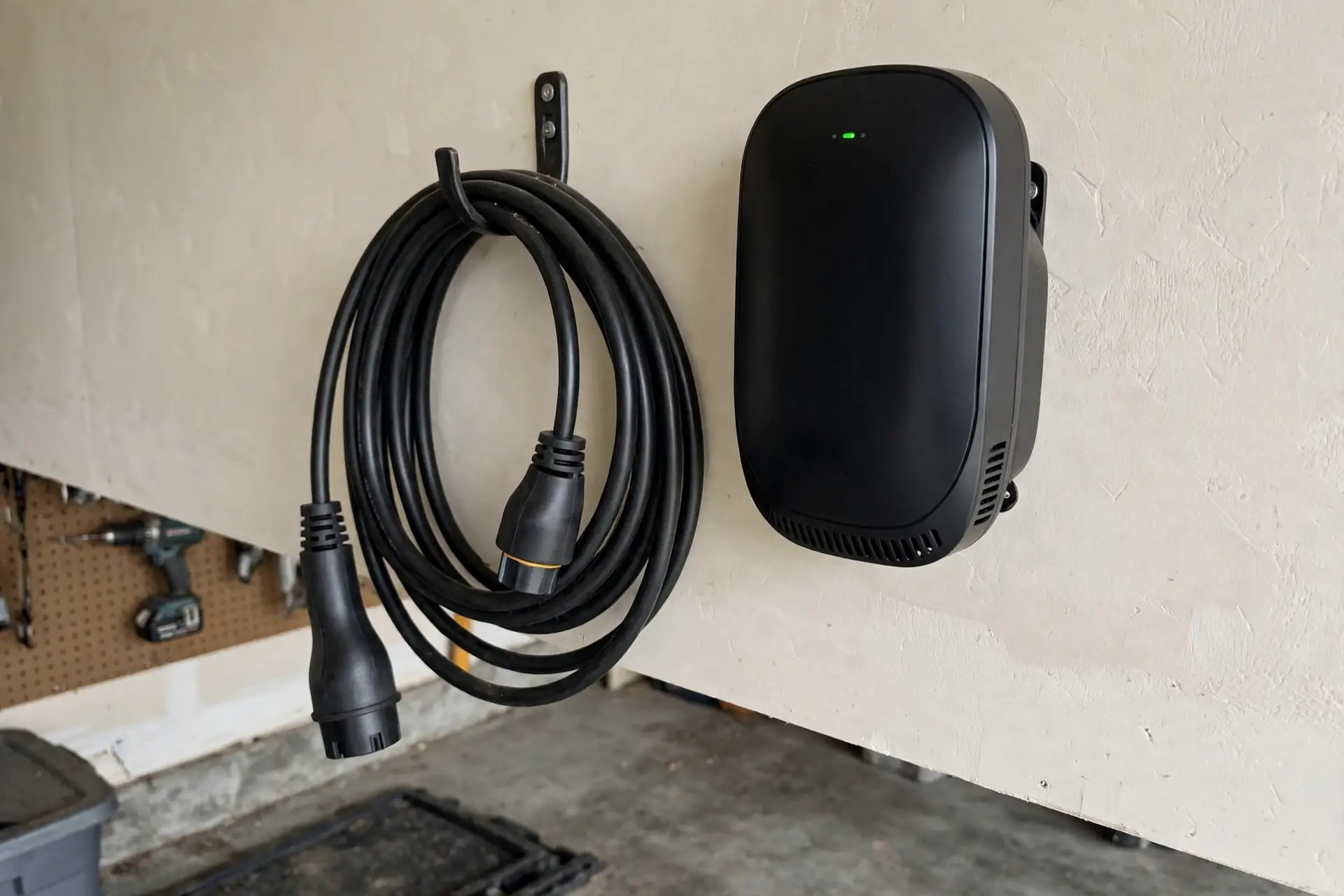
A fleet depot succeeds or fails at 6 a.m., when every vehicle either leaves full or starts the day as a problem someone has to solve by hand. Designing for that moment means departure-time scheduling, priority queues for the earliest routes, fault alerts that reach a human before the drivers do, and spare capacity that absorbs a vehicle swap without a spreadsheet. It also means physical discipline: cable management that survives daily commercial use, bollards where bumpers actually travel, and lighting where the night crew plugs in. The electrical design is half of fleet charging; the operational design is the other half, and we scope both.
Equipment Selection Without the Upsell
Charger marketing runs on amperage envy: the biggest number wins the cart. Your car disagrees — its onboard charger caps what it can accept, and a unit configured beyond that cap buys speed that exists only in the brochure. The honest selection order is: your car's acceptance rate, your panel's spare capacity, your connector needs today and at the next car, and only then brand and features. App quality, cable length, and outdoor rating are real differences worth paying for. Amperage you cannot use is not.
What Charging Actually Costs to Run
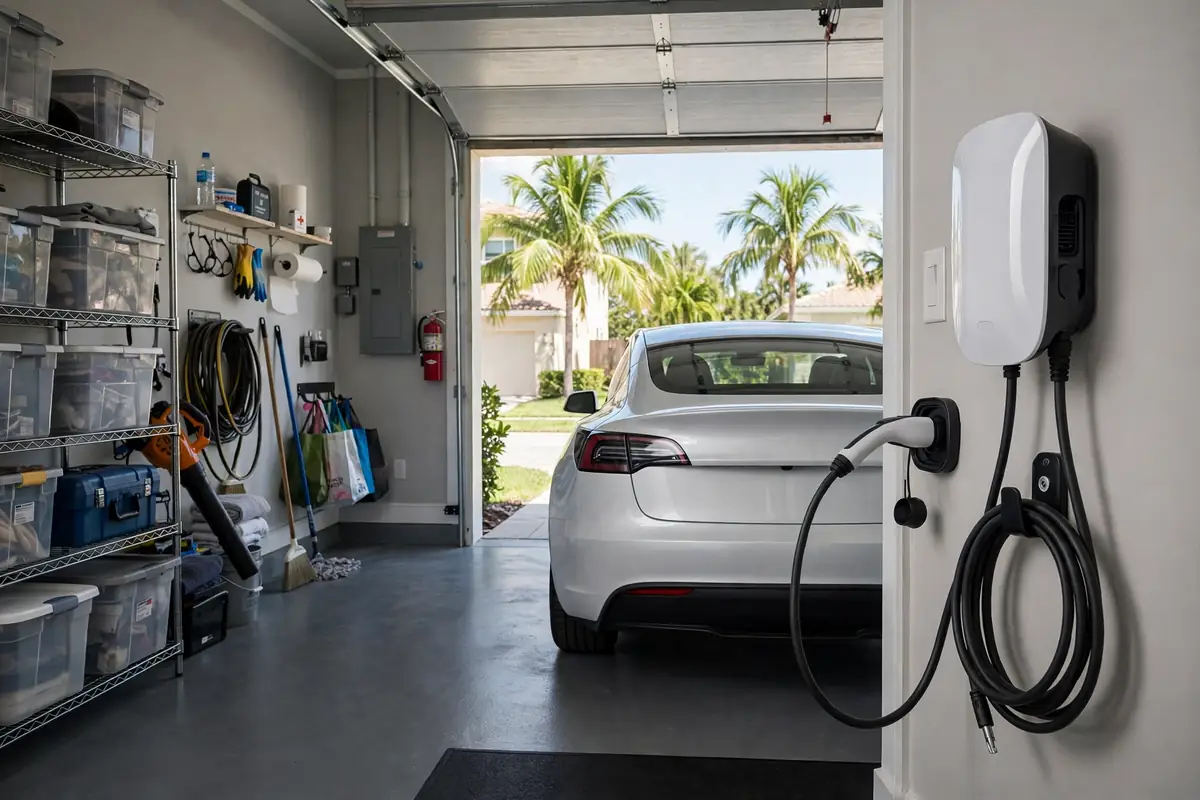
The install is the one-time number; the electricity is the subscription you barely notice. A typical Florida EV driven about 12,000 miles a year uses roughly 3,000 to 3,600 kilowatt-hours annually — at residential rates, a modest monthly line that undercuts the gasoline it replaces by a wide margin, and shrinks further on time-of-use rates with scheduled overnight charging. Your utility's rate structure decides the details, which is why the walkthrough includes setting the charging schedule, not just bolting the unit to the wall.
Florida Code Specifics That Shape This Work
EV charging has its own article of the National Electrical Code — Article 625 — layered on the general rules Florida builds from. The practical consequences: charger loads are treated as continuous, so circuits are sized at 125 percent of the charging current; energy management systems are expressly recognized as a way to serve a charger on a panel that could not otherwise carry it; garage outlets need GFCI protection under the current code cycle; and the charger's configured amperage, its breaker, and its wire must form a matched set. These are not bureaucratic garnish. They are the difference between an installation an inspector signs and a hazard with a warranty card.
Driver Take-Home Programs: The Other Depot
Many Florida fleets — field service, sales, inspection — send vehicles home with drivers, which moves the charging problem into twenty garages instead of one depot. Take-home programs work when they are boring: a standard charger model installed to a standard spec at each home, a simple reimbursement method for the electricity (flat rate or metered through the charger's app), and clear rules for what happens when a driver moves. We install and document these programs alongside depot work, so the fleet's charging story is one system with two addresses, not two improvisations.
This Service, Metro by Metro
One service, six local versions. In West Palm Beach and Boca Raton, it means depot and take-home charging programs phased with vehicle deliveries under FPL service and Palm Beach County permitting. In Tampa, the same work runs through TECO territory and Hillsborough permitting, with Ybor-era housing on one side of the river and new suburbs on the other. St. Petersburg and Clearwater add Pinellas' historic housing stock and Duke Energy's charger programs to the equation. And Fort Lauderdale brings Broward's canal homes and condo towers — the multifamily capital of this site. The standards never change: load calculation, permit, matched configuration, inspection. The local facts do, and the local pages on this site carry them city by city.
What the Assessment Decides
For a fleet, the assessment starts with the route sheet and the departure board. Dwell time is the design variable; everything electrical follows from it. You leave the assessment with a scope that names the circuit, the equipment, the permit path, and the schedule — the four facts every honest installation shares. If the scope cannot be stated that plainly, the assessment is not finished, and neither is our work that day.
Frequently Asked Questions
How many chargers does a fleet depot need?
Roughly one port per vehicle that parks overnight is the planning baseline, adjusted by route length and turnaround. Managed power sharing lets ports outnumber the capacity that feeds them.
Can fleet charging run on our existing electrical service?
Frequently, yes — overnight dwell plus managed charging fits surprising fleet sizes into existing services. A load study gives the real answer for your site before any commitment.
Do depot installs need permits?
Yes — commercial electrical permits and inspections in your jurisdiction, plus utility coordination if a service upgrade is involved. We manage that sequence.
What about charging drivers at home instead?
Take-home fleets often pair depot charging with reimbursed home charging. We install residential chargers for fleet drivers under the same program so the equipment and documentation stay consistent.
Can the system prioritize vehicles?
Yes. Managed platforms schedule by departure time and state of charge, so the 5 a.m. van is full first. We configure the priorities with your operations team at handover.
What maintenance do fleet chargers need?
Networked stations self-report faults; cables and connectors are the wear items. Our maintenance service covers fleet depots, including stations installed by others.
Book Your Installation
Qualified electricians, permitted work, and straight answers about your panel and your options.
(407) 557-4153 · Mon–Fri 7:00 AM – 10:00 PM · Sat 8:00 AM – 10:00 PM · Sun 7:00 AM – 9:00 PM ET