The Garage Holds Two Fleets Here
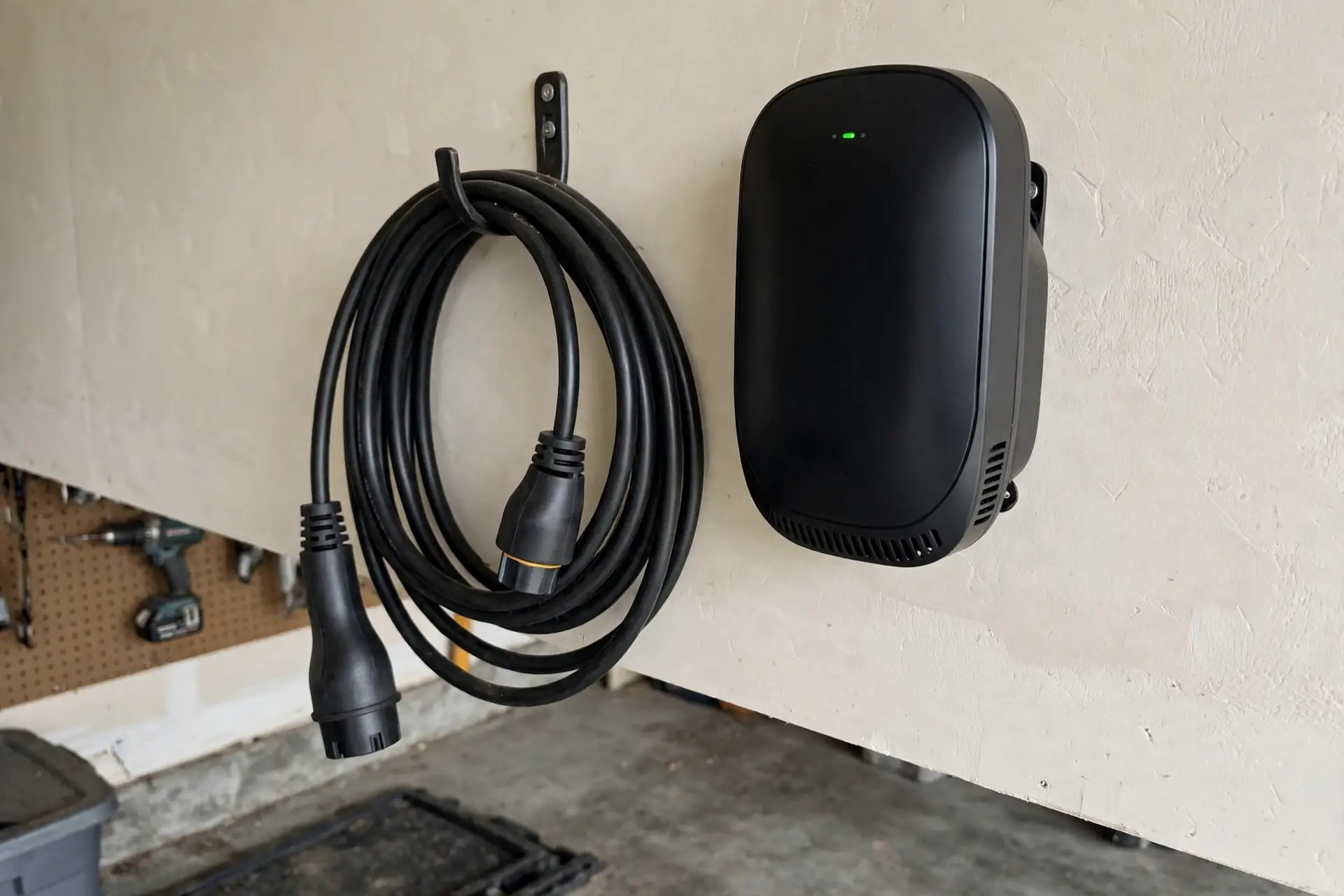
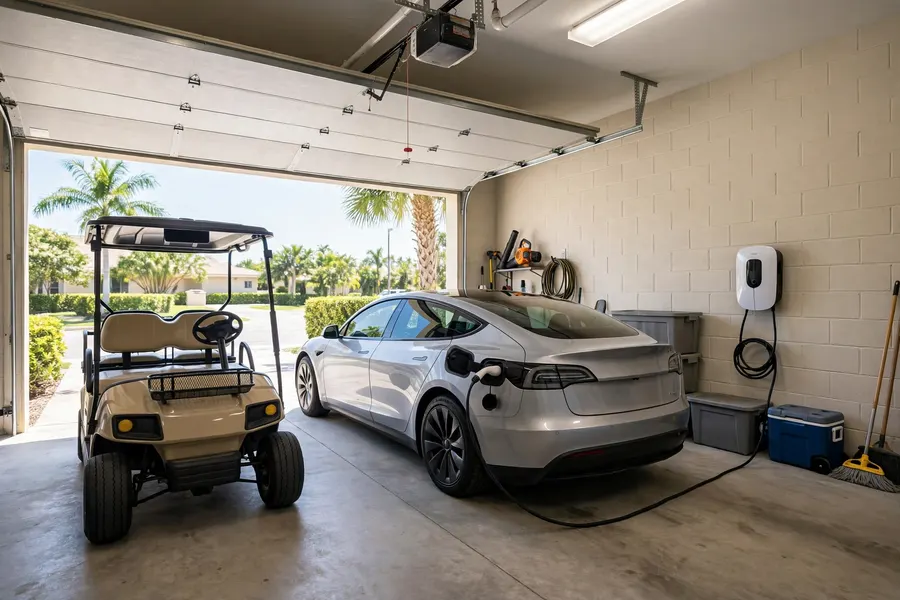
In most Florida suburbs, a garage plan is simple: car inside, charger on the wall beside it. In The Villages, the garage is a two-fleet building. The family car shares the space with one or two golf cars, often a workbench, storage for seasonal decorations, and the chargers the golf cars already use. Wall space is spoken for, floor space is choreographed, and the route the car's charging cable takes has to cross none of the paths the golf cars roll through daily.
That layout question comes before any equipment choice. Where does the EV actually park — left bay, right bay, or the driveway on mild nights? Which wall keeps the cable off the floor where carts pass? Is there a golf-car charging outlet already on the circuit path, and what does adding a 240-volt car circuit do to the panel's remaining room? Villages homes were built across several decades and several builders' habits, so two houses on the same street can answer these questions differently. The site visit in The Villages is therefore mostly a measuring and listening exercise: garage geometry first, panel second, charger model last.
Done well, the result feels invisible — the car plugs in where it parks, the carts keep their corner, and nobody steps over a cable with morning coffee in hand.
Seasonal Homes Have to Wake Up Ready
A large share of Villages homes are seasonal. Owners arrive in the fall, leave in the spring, and expect the house to behave in between — and on arrival day, they expect the car to charge that first night, not after a troubleshooting session. An EV charger in a seasonal home has a specific job description: sit idle and powered for months, ride out summer storms while the house is empty, restart cleanly after any outage, and work the evening the owners roll in.
That job description drives three planning choices. First, surge protection moves from optional to central — The Villages sits in some of the most lightning-active country in Florida, and an empty house cannot unplug anything when a storm cell parks overhead. Second, charger configuration favors simplicity: a unit that reconnects on its own and needs no app ritual after a power blink. Third, the walkthrough happens with your seasonal calendar in mind, so whoever checks the house knows what the charger lights should look like and what a tripped breaker would mean.
If your home sits empty for months, say so on the first call. It changes the install plan in small ways that matter a great deal in August.
EV Charging Services in The Villages, FL
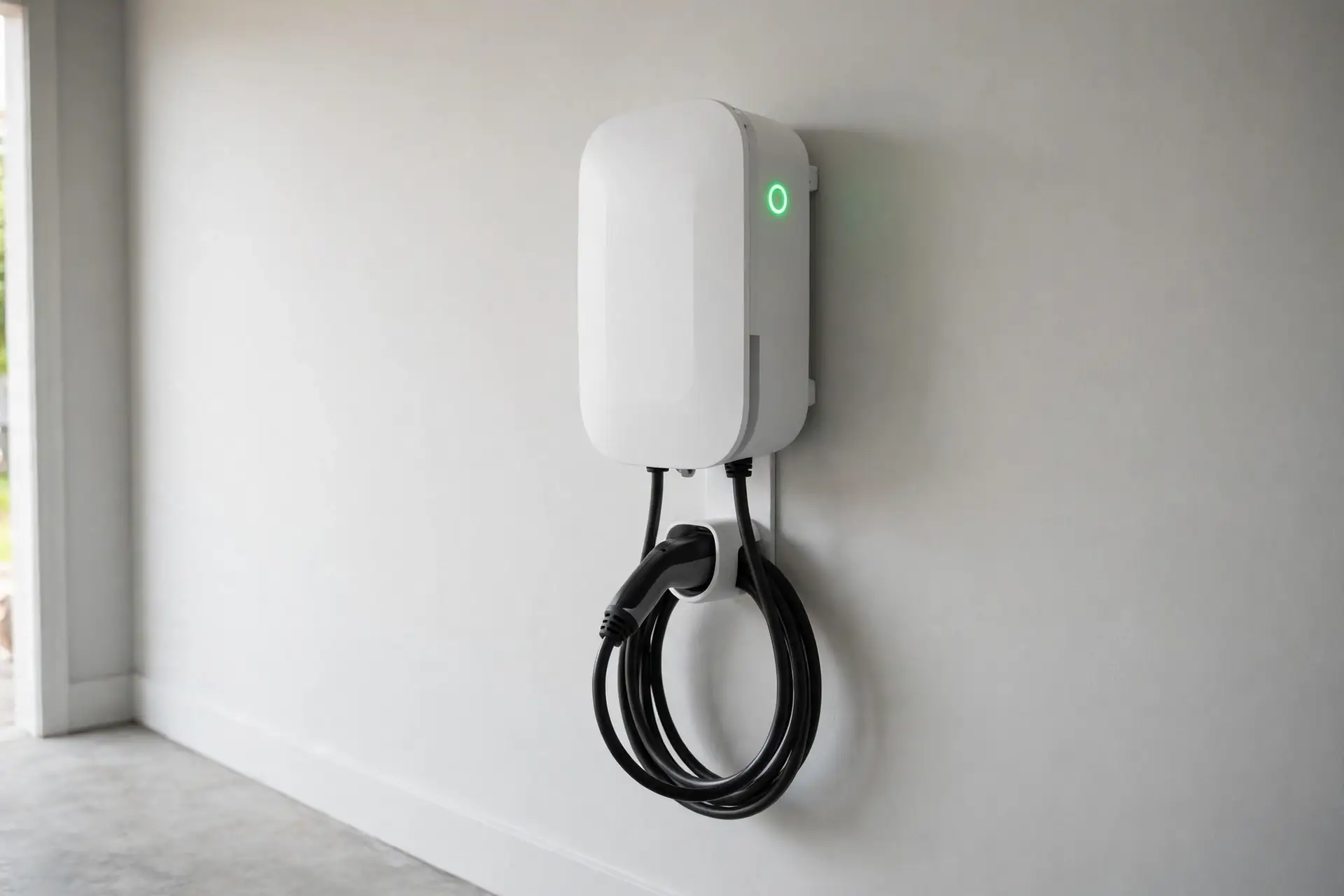
- Residential EV Charger Installation — Home Level 2 installs planned around combined car and golf-car garages.
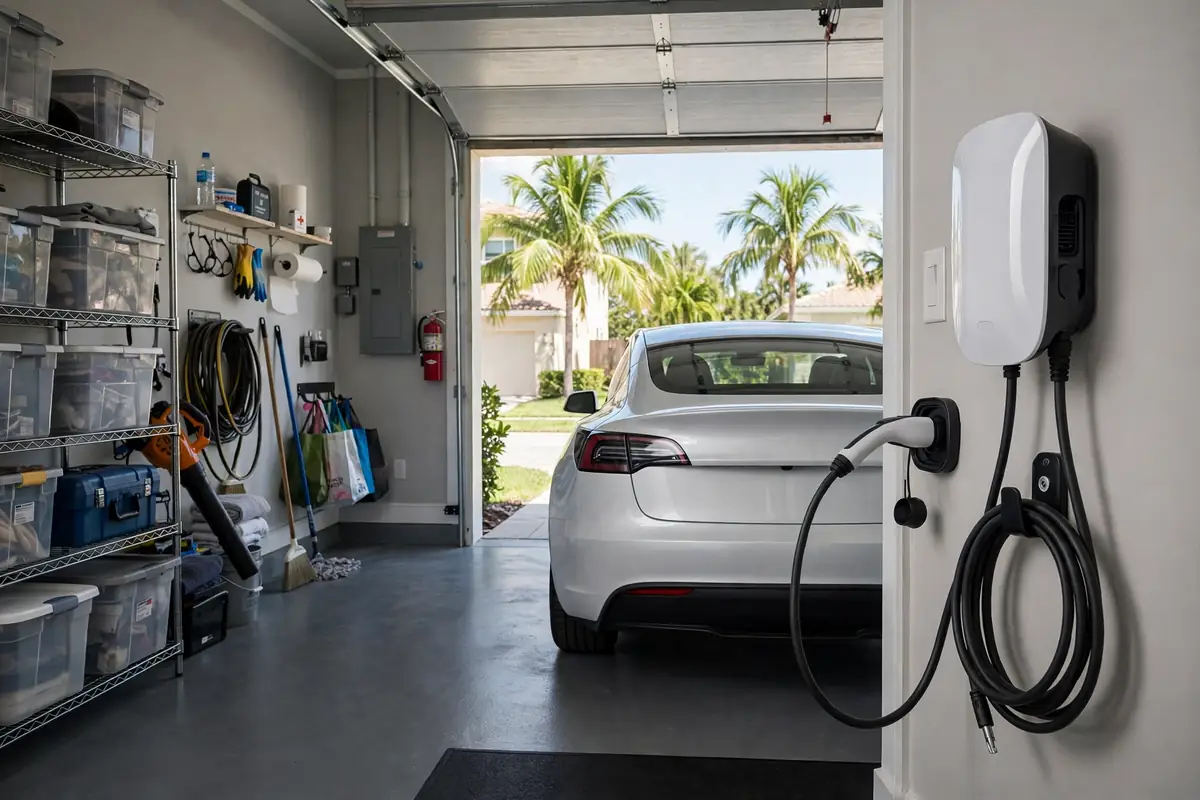
- Tesla Wall Connector Installation — Wall Connector installs for Tesla households and homes hosting visiting family EVs.
- Level 2 EV Charger Installation — 240-volt charging for every EV make, configured to your panel and parking layout.
- Electrical Panel Upgrade for EV Chargers — Capacity answers with load management considered before any panel replacement.
- Commercial EV Charging Station Installation — Charging for clubs, care facilities, and commercial properties in and around the community.
- EV Charger Repair and Maintenance — Diagnostics and repair for chargers that trip, fault, or stop after storms.
Community Standards Are Part of the Planning
Life in The Villages includes deed compliance and community standards, and exterior changes are part of that system. An interior garage charger, mounted inside with no exterior alteration, is the straightforward case for most homes. The moment a plan touches the outside of the house — an exterior-mounted charger, a driveway pedestal, visible conduit runs — checking the community standards and any deed-compliance review for your district before the work is scheduled stops being optional.
Our advice is plain: plan the install inside the garage where possible, and where an exterior element is genuinely the better engineering answer, confirm the review path first, while the plan is still pencil rather than concrete. We raise the question during assessment rather than after a compliance letter arrives, and homeowners who have lived here a while will recognize why — The Villages works because the standards are actually applied, and working with them early is simply faster than working around them later. Village district offices and the community's own published standards are the authority here; an electrician's job is to design an install that fits inside them.
Panels, Load Math, and Homes Built for Comfort Loads
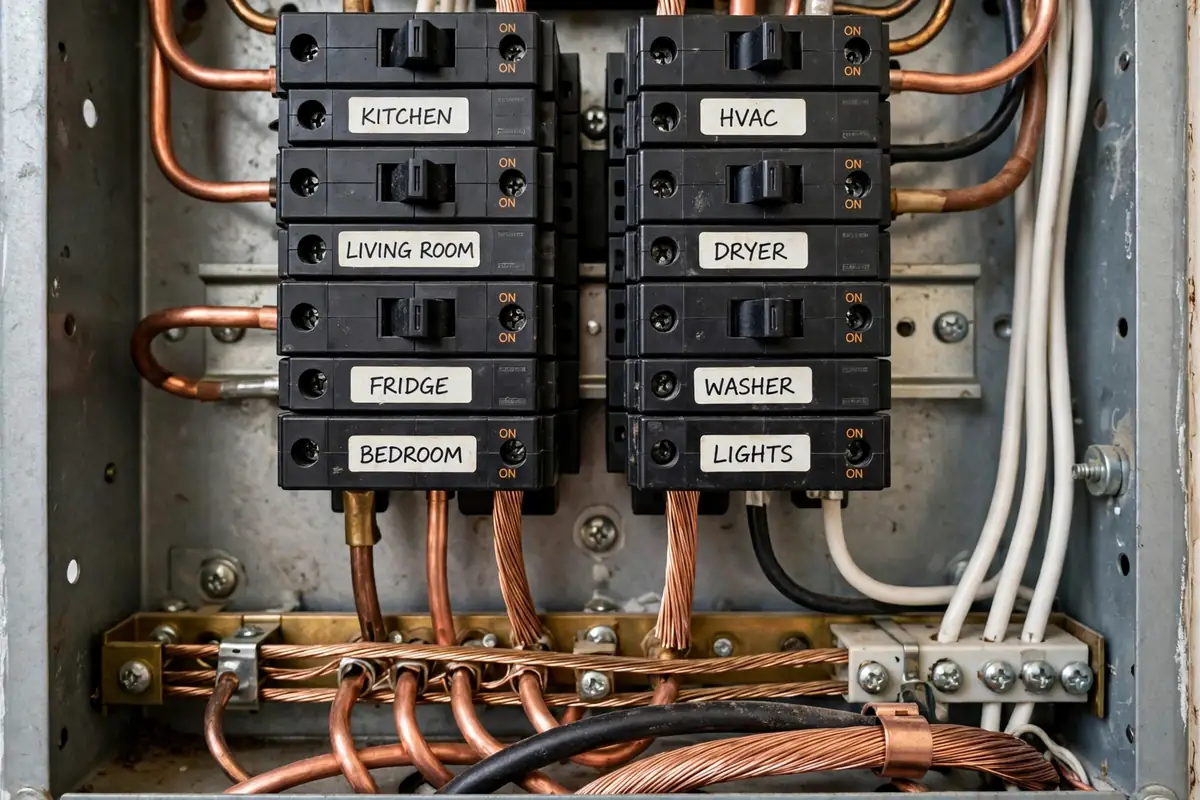
Villages homes were built for comfort: air conditioning sized for Florida summers, often a pool or spa at the lanai, electric everything in the kitchen, and in many homes a golf-car charger already drawing on the system nightly. Adding a car charger is a load question before it is a shopping question. A load calculation under NEC Article 220 totals the existing demand and compares it with service size, and many Villages homes on modern 200-amp service have honest room for a full-rate charger circuit.
Where the arithmetic is tight, the steps run in order: configure the charger to a moderate amperage that still fills the car overnight — most daily driving in and around The Villages is short-hop, so overnight charging at moderate rates covers real use easily — then consider an energy management system that throttles charging while the air conditioning and range peak together, and only then discuss panel work. A quote that opens with a panel replacement and never shows a calculation has skipped the engineering. Ours shows the numbers first, and the panel upgrade page explains each rung of that ladder.
SECO Energy Country: Owning Your Charger Is the Route
Most Villages homes are served by SECO Energy, the electric cooperative for this part of Sumter County, with the community's edges reaching toward Lady Lake and Wildwood and into neighboring counties. We make no program or rebate claims on SECO's behalf — the honest picture is simple: your route to home charging here is a privately owned, professionally installed charger on your own panel, drawing power at SECO's standard service like every other appliance in the house.
That simplicity has real advantages. You choose the charger, the amperage, and the placement that fits your two-fleet garage. Nothing about the arrangement changes if you sell the home — the charger conveys like any other fixture, and the closed permit record documents it for the buyer's inspector. And because so much Villages driving is short daily hops — town squares, recreation centers, medical appointments, grocery runs — even a moderately configured charger keeps the car comfortably ahead of the week's driving. The locations overview shows how this page fits the wider Florida service area.
Lightning Country Rules: Surge Protection Is Not an Upgrade Pitch
Central Florida's lightning is a documented feature of life in The Villages, not a sales line. A home charger is a connected electronic device wired into your panel around the clock, including every afternoon storm of a summer when you may be a thousand miles away. Whole-home surge protection at the panel, correctly grounded and paired with the charger circuit, is the proportionate answer, and in a seasonal home it is close to non-negotiable.
Beyond surge, storm-season planning here means checking the small things at install time: GFCI protection where the code requires it, conduit and fittings sealed against driven rain for any lanai-adjacent runs, and a charger position that stays dry when the garage takes wind-blown water. None of it is exotic. All of it is cheaper designed in than retrofitted after the first fault.
How It Works
Step 1: The garage conversation
EV model, golf-car layout, seasonal pattern, panel location. Tell us how the garage actually lives before we propose where anything mounts.
Step 2: Load calculation on paper
We total the home's demand and show the spare capacity as a number. Amperage and charger choice follow the arithmetic.
Step 3: Install day

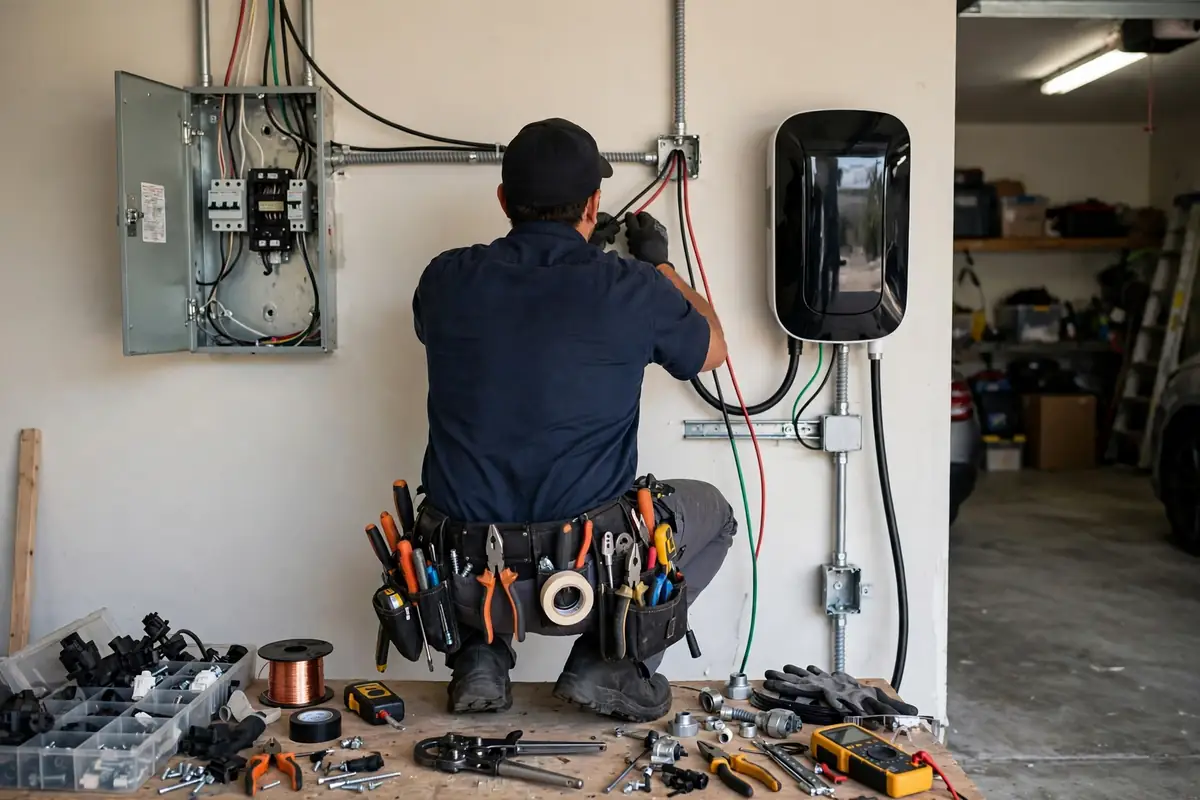
Permit filed, circuit run, charger mounted clear of cart paths, configured to the circuit, and proven with your car plugged in.
Step 4: Inspection and seasonal handover
Inspection closes the permit. Your folder gets the permit record, configuration notes, and what the house checker should look for while you are away.
On the Ground in The Villages
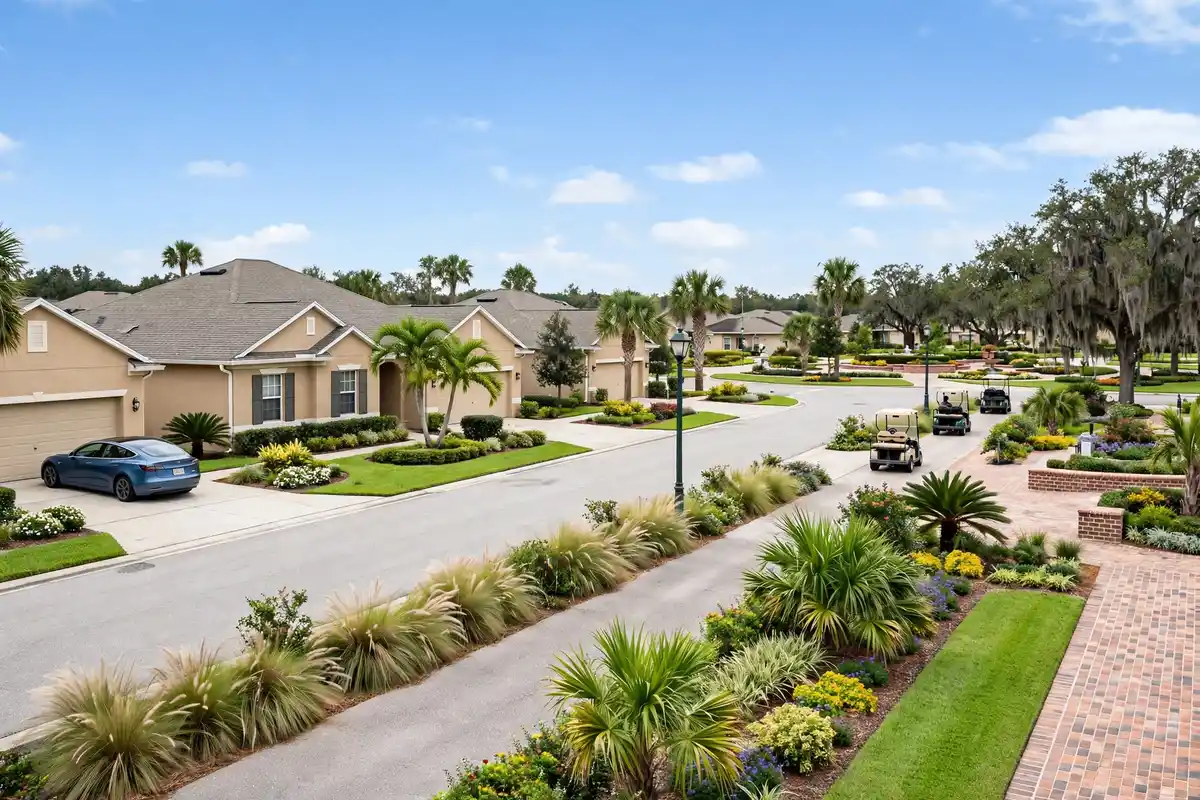
Installs here follow the community's own geography: villages old and new across Sumter County, with Lady Lake at one edge and Wildwood at another, town squares anchoring each day's driving, and golf cars outnumbering cars on the paths by mid-morning. The constants are SECO Energy service for most homes, garages shared with carts, a large seasonal population, and summer lightning. That is the specification sheet we work from — a charger in The Villages succeeds when it fits the garage, respects the standards, and wakes up ready in October. If your home has a stretched garage, a cart barn, or a lanai-side parking pad, describe it on the first call through the contact page and the plan will start from the real layout.
Questions to Ask Any The Villages Installer
Ask five things of anyone quoting here, including us: Will you run a load calculation before recommending panel work? How will the charger placement work around my golf cars and their chargers? Who files the permit, and will I receive the closed permit record? What surge protection are you including for a home that sits empty in storm season? If any part of the install is exterior, have we checked community standards first? An installer who has worked in this community answers all five fluently. One who has not will hesitate on at least two.
Frequently Asked Questions
Where does a charger go when the garage also holds golf cars?
Usually on the wall nearest the car's charge port, positioned so the cable never crosses the golf cars' path. In stretched Villages garages that can mean the side wall or a ceiling-routed run. The layout is settled at the site visit with your actual carts in place — bring the real parking pattern, not the tidy one.
My Villages home is seasonal — what should the install include?
Surge protection at the panel, a charger that restarts cleanly after outages without app steps, and a simple status guide for whoever checks the house. The install itself is standard; the configuration and handover are built around the months you are away.
Does SECO Energy offer a charger program I should use instead?
Most Villages homes are served by SECO Energy, and we make no program claims on its behalf. The established route here is owning your charger through a permitted private install. If SECO's offerings ever change, owning your equipment still leaves every option open to you.
Do I need community approval to install a charger?
An interior garage install with no exterior change is the straightforward case. Anything exterior — outside mounting, visible conduit, a driveway pedestal — should be checked against community standards and deed-compliance review for your district first. We flag it during assessment so approval runs ahead of the work, not behind it.
Will my panel handle a charger alongside air conditioning and a pool?
Often yes. Many Villages homes carry 200-amp service with real headroom, and a load calculation settles the question with numbers. Where capacity is tight, configuring the charger to a moderate amperage or adding load management usually answers it before panel work enters the discussion.
How much charging do Villages drivers actually need?
Less than most people expect. Daily driving here is short hops between villages, squares, and appointments, so overnight charging at moderate rates replaces the week's miles with room to spare. Longer trips to Ocala, Orlando, or the coast start full from your own garage instead of depending on public stations along the way.
Get Your Charger Installed in The Villages
Permitted, inspected, and planned around your garage, your carts, and your seasons — one call books the assessment.
(407) 557-4153 · Mon–Fri 7:00 AM – 10:00 PM · Sat 8:00 AM – 10:00 PM · Sun 7:00 AM – 9:00 PM ET