A Planned City With Unplanned Electrical Loads
Most Coral Springs homes were built between the 1980s and the early 2000s, a period when a house was expected to run one air conditioning system, a dryer, a range, and a water heater without much argument. Florida living has added to that list. Many homes here now run dual air conditioning systems through the long warm season, and heated pools stay in use well beyond summer. Neither addition was in the original electrical plan for the house, and together they change what a new 240-volt charger circuit can safely ask from the panel.
That is why an assessment in Coral Springs starts with arithmetic rather than hardware. A load calculation under NEC Article 220 adds the existing demand — cooling first, then cooking, laundry, water heating, and pool equipment — and compares it with the service size stamped on the panel. Only after that number is known does it make sense to talk about charger amperage, circuit size, or placement. Families who skip that step often get one of two bad outcomes: a charger set higher than the house can comfortably carry, or a panel replacement sold before anyone checked whether it was needed.
Two EVs in One Garage Is the Normal Question Now
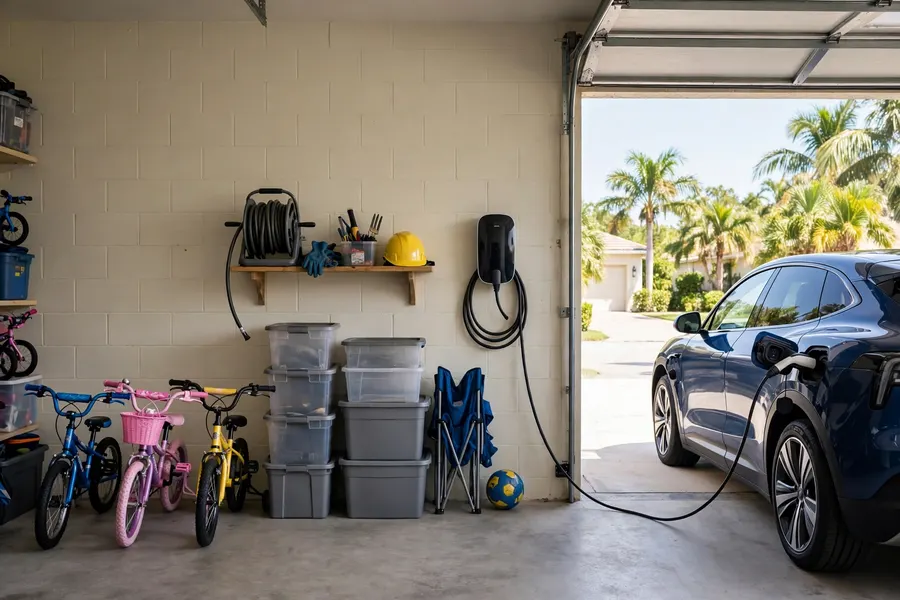
The most common Coral Springs conversation is no longer about a first charger. It is about a second one. One parent charges a commuter car that leaves early for the Sawgrass Expressway, the other charges a family vehicle that spends its day on school runs, practices, and errands between University Drive and Sample Road. Both cars need to be ready in the morning, and both park in the same garage or on the same driveway.
Two chargers do not automatically mean two full-size circuits running at full draw all night. Modern charging equipment can share power intelligently: two units on a shared circuit divide the available current when both cars are plugged in, then give the full amount to whichever car remains. Other homes do better with two separate circuits at moderate amperage, or with scheduled charging that staggers the heavy draw across the night. The right answer depends on the panel, the daily miles each car drives, and how much charge each one truly needs before morning. We walk through those miles honestly during the assessment, because a commuter who drives 30 miles a day and a commuter who drives 80 miles a day need very different overnight plans, even if their cars sit side by side.
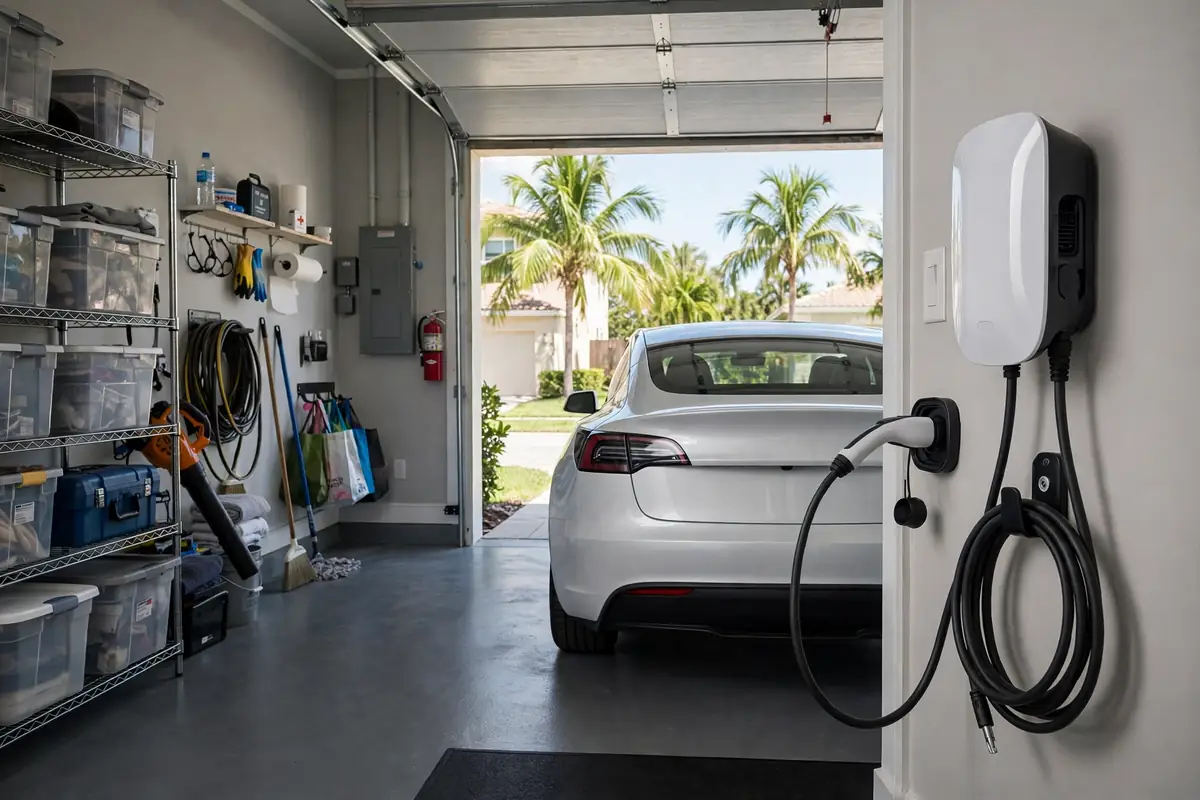
Cable reach matters too. Charge ports sit in different corners on different models, so placement planning looks at where each car parks, which direction it pulls in, and where the cable will rest during the day.
Load Management Before Panel Replacement
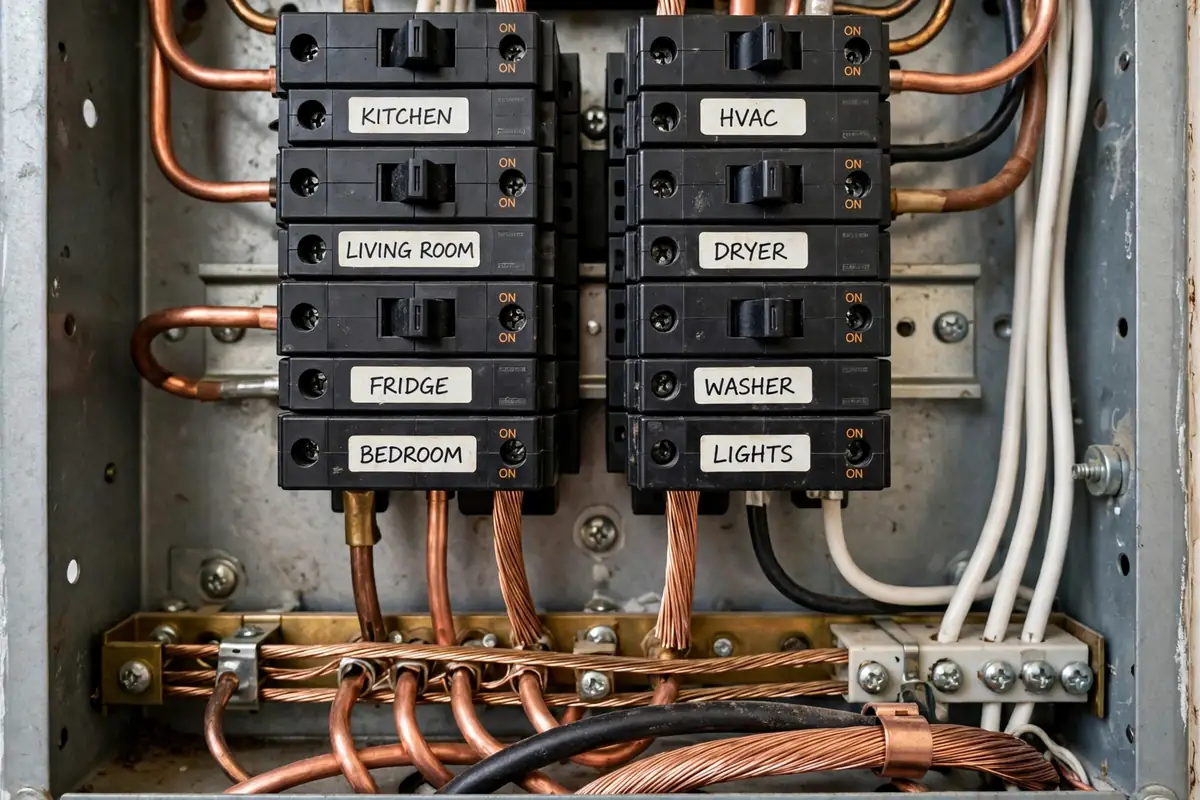
When a Coral Springs load calculation comes back tight — and with dual cooling and a heated pool, some do — a full panel replacement is the last option we discuss, not the first. The ladder in between has several useful rungs.
The first rung is configured amperage. A Level 2 charger does not have to run at its maximum rating to be useful. Setting a charger to 32 or 40 amps instead of 48 often still fills a typical battery overnight, while asking considerably less from the service. The second rung is an EV energy management system, often called load management, which watches the home total draw and pauses or reduces charging while the range, dryer, and both air conditioners run at once, then restores charging when the peak passes. The third rung is targeted electrical work: a subpanel for the garage, or service work where the numbers genuinely require it.
If another quote for your home jumps straight to panel replacement without showing a load calculation, ask to see the numbers. Our panel upgrade guide for EV charging explains what a proper assessment includes, and our assessment shows you the arithmetic for your own panel before any hardware is recommended.
EV Charging Services in Coral Springs, FL
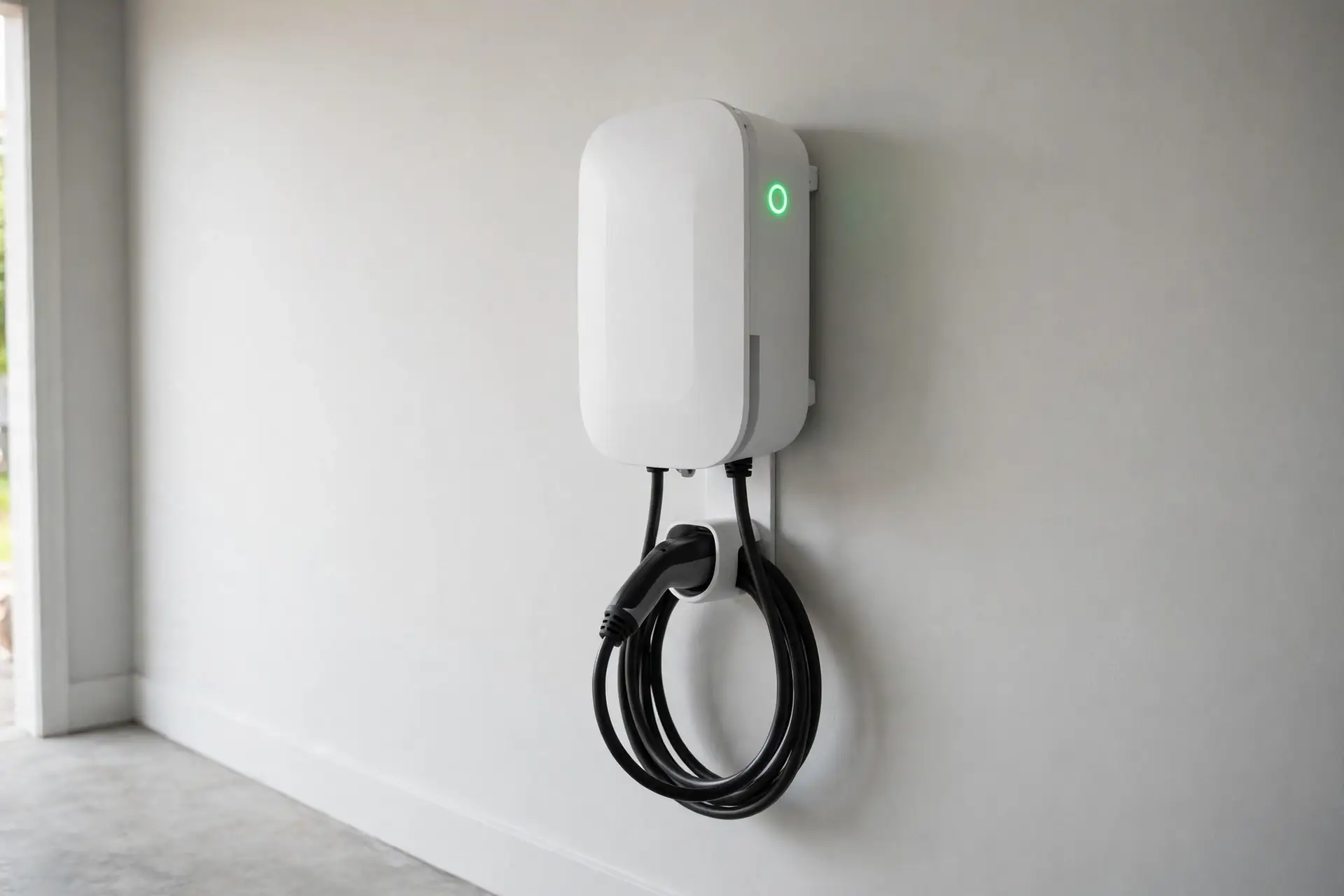
- Residential EV Charger Installation — Home Level 2 installs planned around Coral Springs family garages and driveway parking.
- Tesla Wall Connector Installation — Wall Connector and Universal Wall Connector installs, including power sharing for two-vehicle homes.
- Level 2 EV Charger Installation — 240-volt charging for every EV make, hardwired or plug-in, configured to the circuit.
- Electrical Panel Upgrade for EV Chargers — Load calculations, load management, and panel work where the numbers call for it.
- Commercial EV Charging Station Installation — Workplace, retail, and community charging around Coral Springs commercial areas.
- EV Charger Repair and Maintenance — Diagnostics for chargers that trip, slow down, lose connection, or stop mid-session.
Living With an HOA in Coral Springs
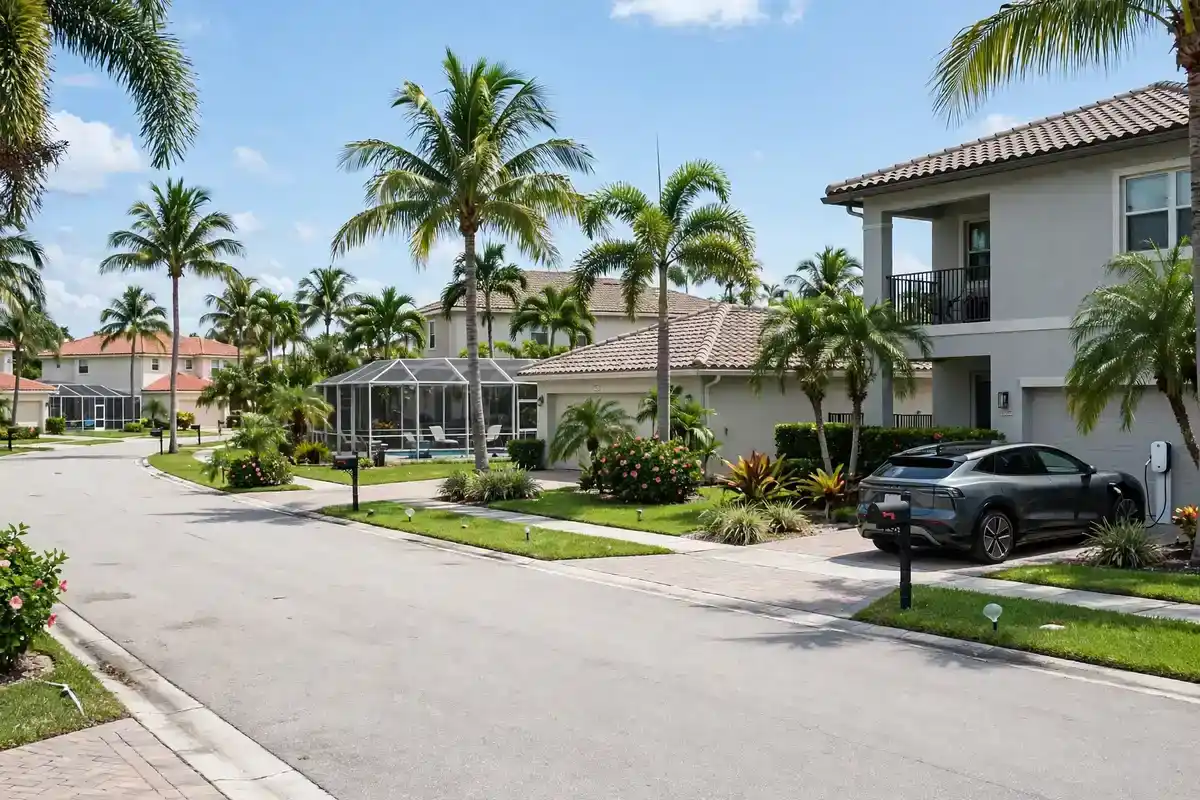
Many Coral Springs neighborhoods have homeowners associations, and exterior electrical work is one of the places their rules show up. A charger inside a closed garage rarely raises questions. A charger mounted on an exterior wall, a conduit run visible from the street, or a pedestal near the driveway often does. Associations commonly ask about equipment appearance, conduit color and routing, and placement relative to the front of the home.
Florida law protects a homeowner ability to install charging within their own property, while still allowing associations to set reasonable conditions on how exterior work looks. Our Florida condo and HOA EV charger rights guide covers that balance in plain language. In practice, the smooth path is paperwork before installation: a short description of the equipment, a sketch or photo of the planned location, and the permit information, submitted while there is still time to adjust routing if the association asks. We flag review requirements during the assessment so an approval letter never becomes a surprise after the work is done.
FPL and the EVolution Decision in Coral Springs
Coral Springs is Florida Power and Light territory, so homeowners here hear about FPL EVolution Home: a subscription where FPL installs and owns the charger at your home. The full-service version is 36 dollars a month, the equipment-only version is 27 dollars a month, and the agreement runs 10 years. The program includes unlimited charging during off-peak windows rather than at all hours, and FPL retains ownership of the charger itself.
Two limits matter for Coral Springs families. EVolution is not open to solar net-metering customers, and it is not offered for condos and apartments. For a single-family home without rooftop solar, it can be one valid route to consider. For households planning solar, running two EVs with a sharing setup, or wanting equipment they control outright, owning the charger is usually the more flexible path. Our FPL EVolution versus buying your own charger guide compares the two side by side, including what happens at the end of the agreement. Either way, the underlying electrical questions stay the same: what the panel can carry, where the charger belongs, and how the permit gets closed.
Permits Through the City of Coral Springs
Charger circuits in Coral Springs are permitted through the City of Coral Springs. The sequence is straightforward: application for the electrical work, installation built to the Florida Building Code, and an inspection that closes the permit. That closed record matters beyond the install day. It is the document an insurer can rely on, the answer a future buyer home inspector looks for, and the baseline the next electrician uses when your panel needs other work.
A charger circuit added without a permit leaves no verified record that wire size, breaker selection, and grounding were checked. We treat the permit as part of the job itself, and the Florida EV charger permit guide explains the statewide pattern.
Heat, Rain, and Garage Reality
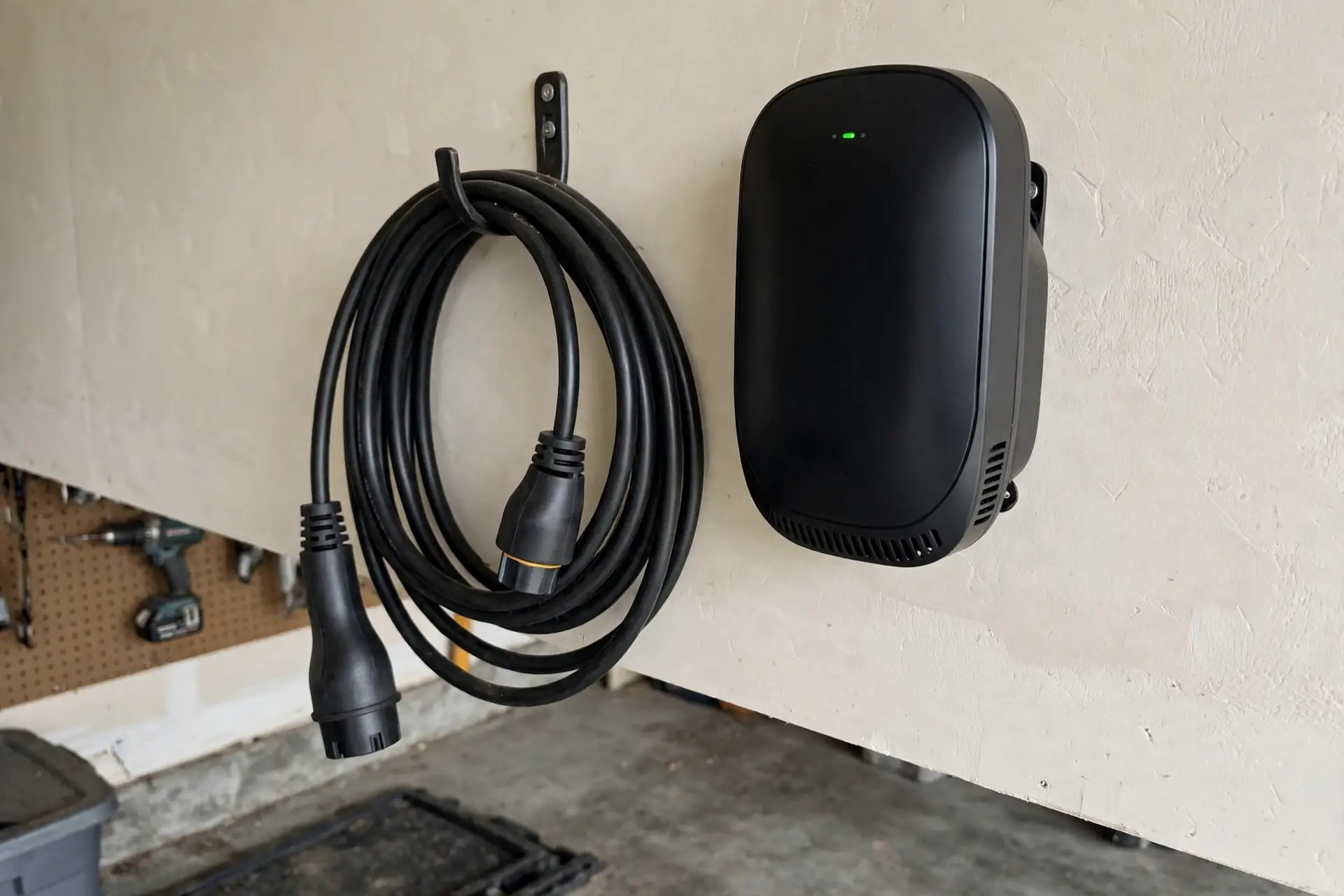
Coral Springs garages are warm for much of the year and double as storage and laundry space. Chargers need clearance, protection from stored items pressing against cables, and mounting that keeps equipment out of standing water during heavy rain. Outdoor installs need weather-rated enclosures and sealed fittings. Panel-level surge protection is also worth discussing in Broward County, where summer thunderstorms are routine.
How It Works
Step 1: Start with the household routine
Tell us the EV models, where each car parks, and roughly how far each one drives in a day. A photo of your electrical panel helps sort most questions before a visit.
Step 2: The load calculation decides the options
We add up cooling, pool, cooking, laundry, and water heating demand against your service size, then show you the charger settings and circuit choices that fit that number.
Step 3: Permit and installation
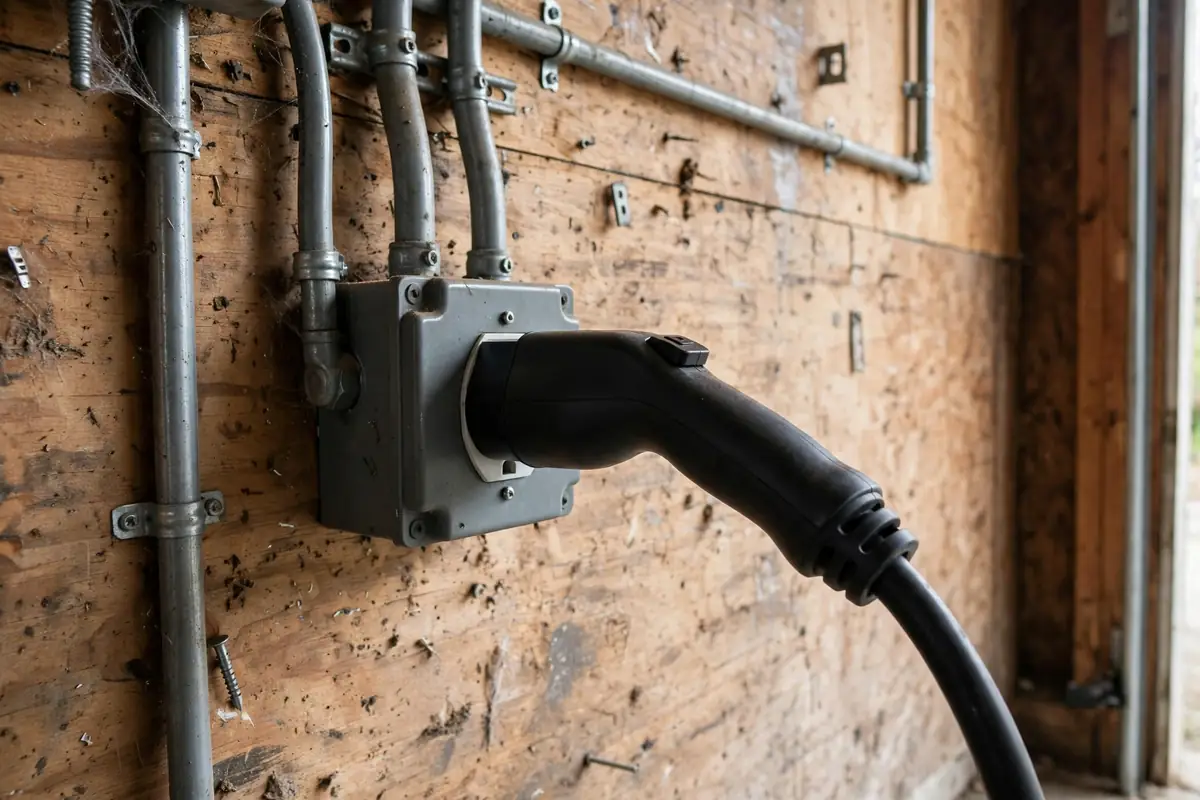
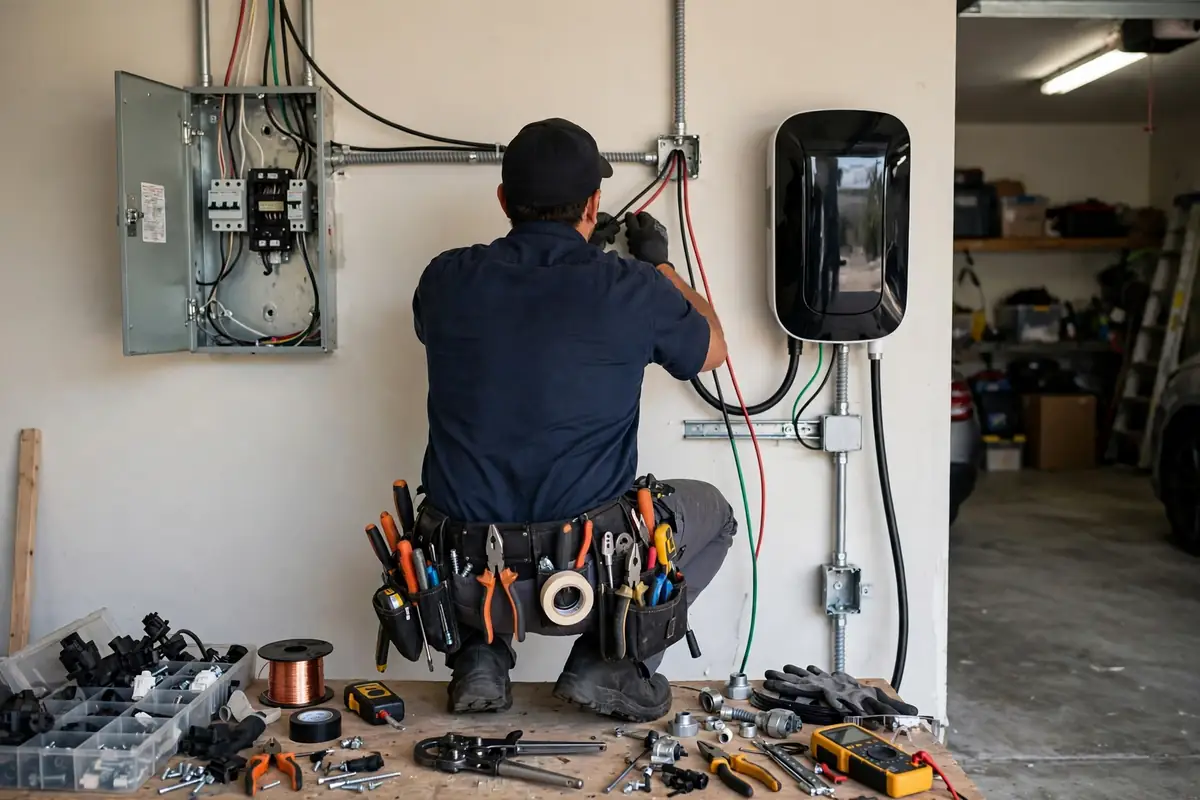
With the permit filed through the City of Coral Springs, we run the circuit, mount the charger, configure its amperage to the circuit, and test it with your vehicle plugged in.
Step 4: Inspection and handover
The inspection closes the permit. You keep the permit record, the charger configuration notes, and updated panel labeling for future reference.
On the Ground in Coral Springs
Daily life here runs between Eagle Trace and the neighborhoods around The Walk, along University Drive and Sample Road, with the Sawgrass Expressway carrying commuters east and west. Pool pumps running into the evening and two air conditioners cycling on a humid night are the actual electrical environment a charger joins, and our assessments are built around it.
Questions to Ask Any Coral Springs Installer
Ask to see the load calculation for your home, including how dual air conditioning and pool equipment were counted. Ask who files the permit with the City of Coral Springs and whether you will receive the closed permit record. Ask what amperage the charger will be configured to, and what breaker and wire size support that setting. Ask how a second charger would share power if your household adds another EV next year. Ask what the plan is if your association requires exterior review. An installer who works in this city regularly will answer each question with specifics about your panel and your street, not generalities.
Frequently Asked Questions
Can one circuit handle two EVs in a Coral Springs family garage?
Often, yes. Two chargers with power-sharing capability can divide one properly sized circuit, giving each car less current when both are plugged in and full current when only one remains. Whether that fits your household depends on daily miles and overnight hours, which we review during the assessment.
Will a heated pool and two AC systems force a panel upgrade in Coral Springs?
Not automatically. Those loads make the calculation tighter, but configured amperage or a load management system often creates a workable path without replacing the panel. The load calculation for your specific home decides, and we show you that calculation before recommending panel work.
Does my Coral Springs HOA need to approve a charger on the outside of my garage?
Possibly. Exterior mounts and visible conduit often fall under association architectural rules, even though Florida law supports home charging on your own property. Submitting a brief equipment and placement description before installation avoids most delays.
Why does FPL EVolution not fit some Coral Springs homes?
The program is not open to solar net-metering customers and is not offered for condos and apartments. It also involves a 10-year agreement where FPL owns the charger, with unlimited charging limited to off-peak windows, so households wanting owned equipment or a two-charger sharing setup often choose a private install.
How long will a Coral Springs charger sit unused during the school day, and does that matter?
It does not harm the equipment for a charger to sit idle during the day. What matters is the overnight window: most family vehicles are parked for eight hours or more, which is enough time for a properly configured Level 2 charger to replace a typical day driving.
What should I photograph before calling about a Coral Springs install?
Photograph the electrical panel with the door open so breaker labels and the main breaker rating are readable, plus the garage wall where you imagine the charger and the spot where each car parks. Those three photos answer most first questions.
Get Your Charger Installed in Coral Springs
Sized to your panel and permitted through the city — one call starts the assessment in Coral Springs.
(407) 557-4153 · Mon–Fri 7:00 AM – 10:00 PM · Sat 8:00 AM – 10:00 PM · Sun 7:00 AM – 9:00 PM ET