In Weston, the Paperwork Starts Before the Drill

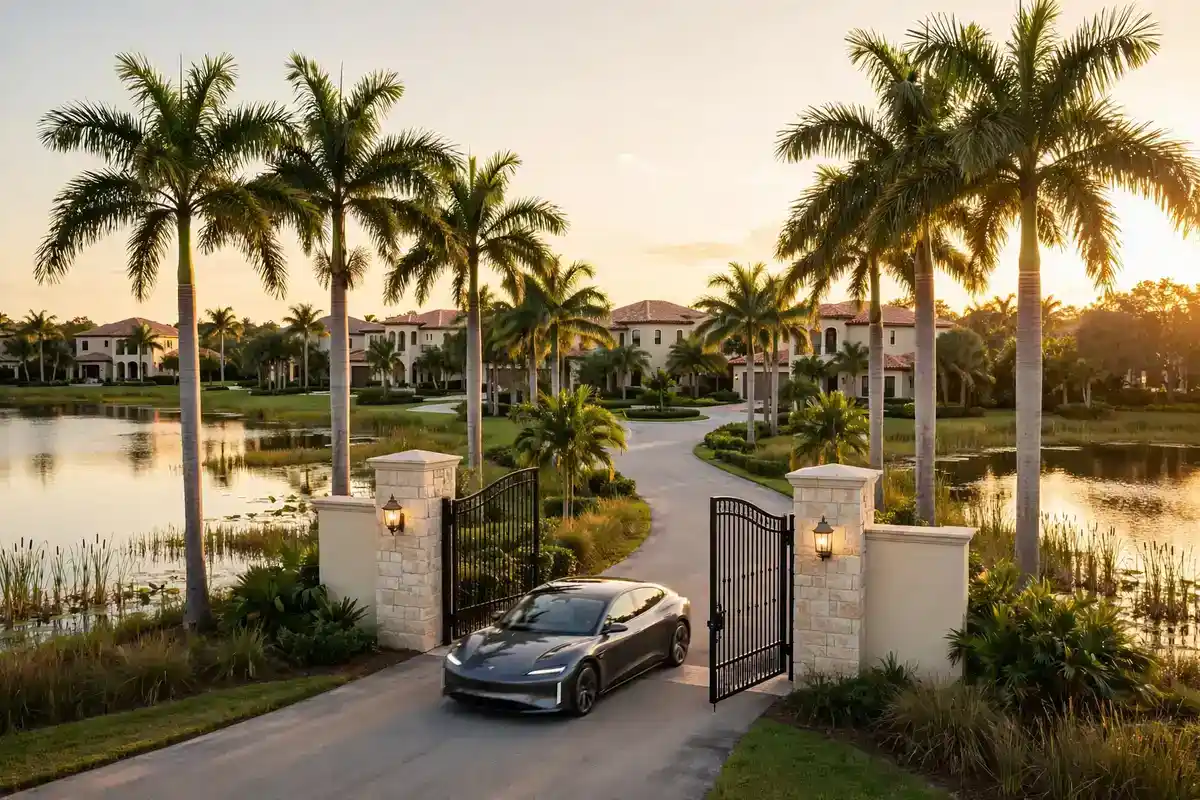
Many Weston homes sit inside gated communities where an architectural review committee oversees exterior changes. A charger mounted inside a garage usually draws little attention. Conduit running across an exterior wall, equipment visible from the street, or a driveway pedestal almost always needs review first. Committees in Weston commonly ask for the equipment model, a photo or sketch of the exact location, conduit routing and color, and confirmation that a licensed electrician will do the work under permit.
That review is not an obstacle so much as a sequence. Submit a clean, specific packet before installation and most committees respond to facts. Submit nothing and install first, and the same committee becomes a problem to unwind. We help assemble the packet during the assessment — equipment details, placement notes, and permit information — so approval and installation move in the right order. Florida law supports home charging on your own property while allowing associations reasonable conditions on appearance and process, a balance explained in our Florida condo and HOA EV charger rights guide.
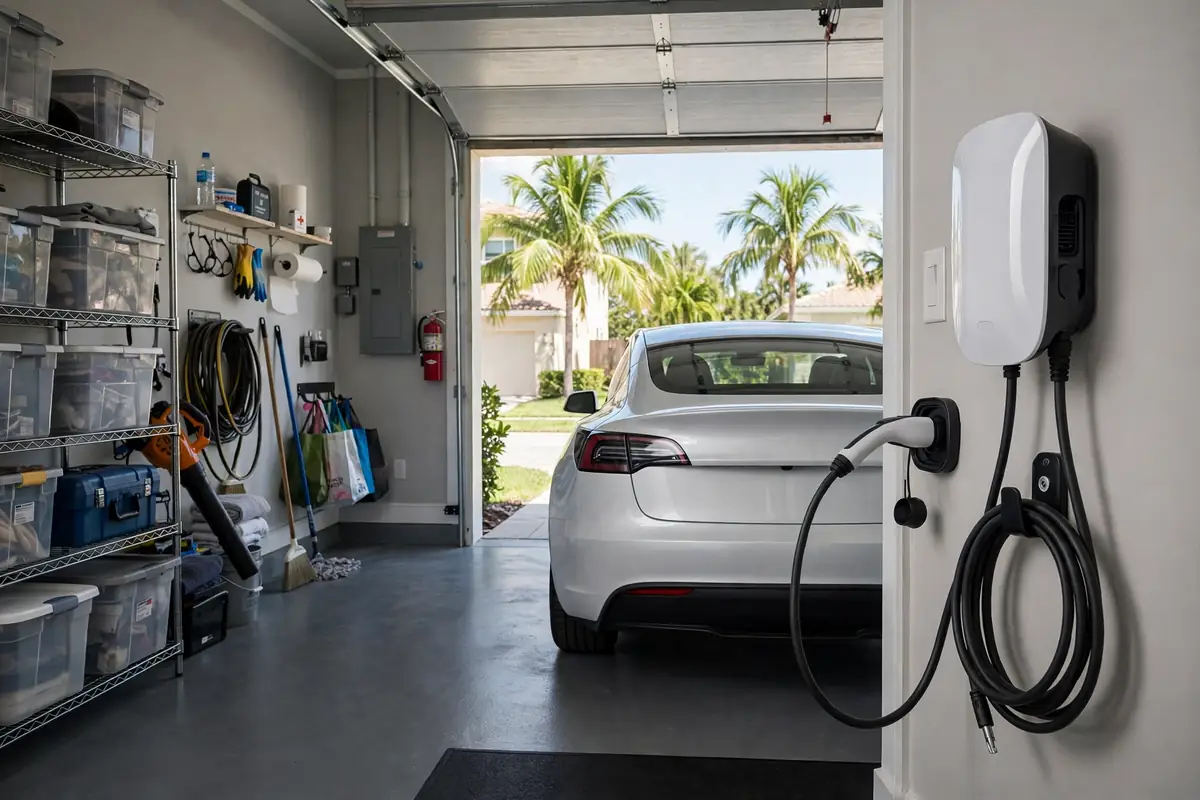
Inside the garage, Weston homes offer a useful advantage. Newer construction here commonly has 200-amp service with the panel located inside the garage itself. Short conduit runs, a panel steps from the parking spot, and honest capacity on paper make many Weston installs straightforward — once the load calculation confirms what the label suggests.
Tidy Conduit Is a Specification Here, Not a Preference
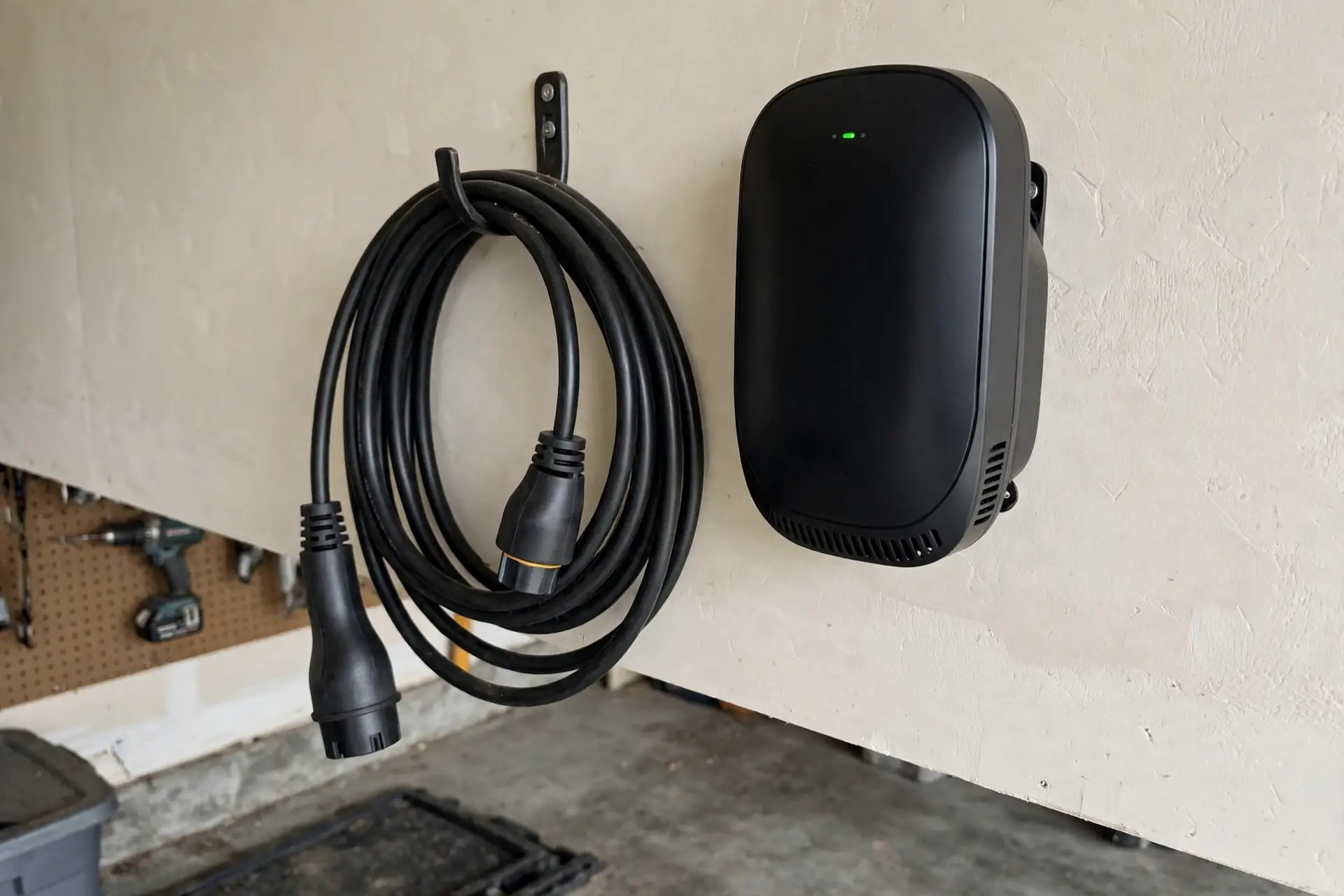
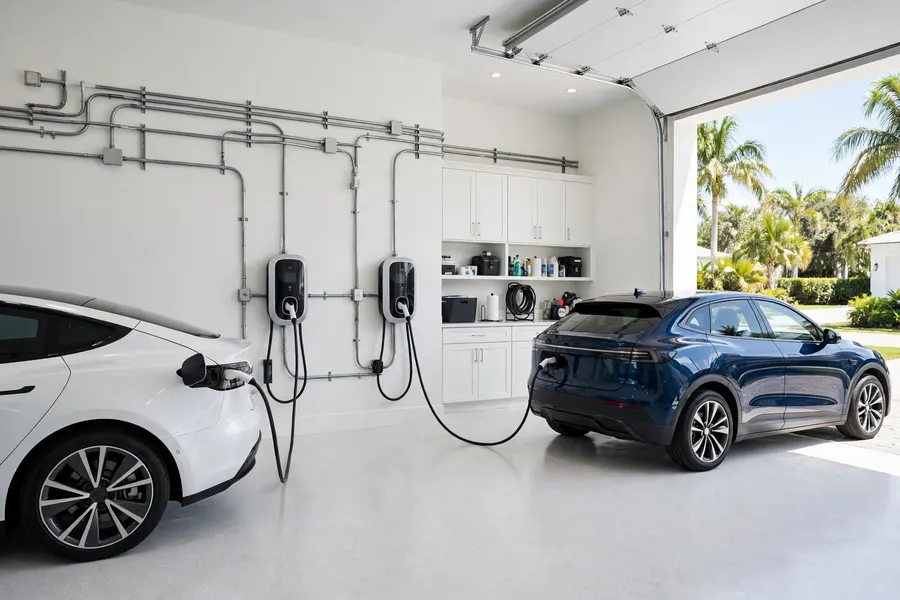
In a city where hedges are trimmed to a line, sloppy electrical work stands out. Weston homeowners and their review committees care about how a charger install looks: conduit run straight and tight to the wall, penetrations sealed, equipment mounted level, and cable storage that keeps the cord off the floor and out of the walkway.
Those details are also practical. Straight, well-supported conduit is easier to inspect and less likely to be damaged by ladders, bicycles, and storage bins. A charger placed at a considered height keeps the connector within easy reach without letting the cable pool where tires roll over it. Charge port location varies by model — front fender on some cars, rear quarter on others — so we plan placement around the actual vehicles and the direction each one parks, rather than centering the charger on a wall and hoping the cable reaches.
For homes where the car sits on the driveway instead of inside, outdoor-rated equipment, sealed fittings, and a mounting plan that respects community appearance rules all come into the same conversation. Our outdoor EV charger installation guide covers the weather side of that planning.
Two Chargers Sharing Power in a Weston Garage
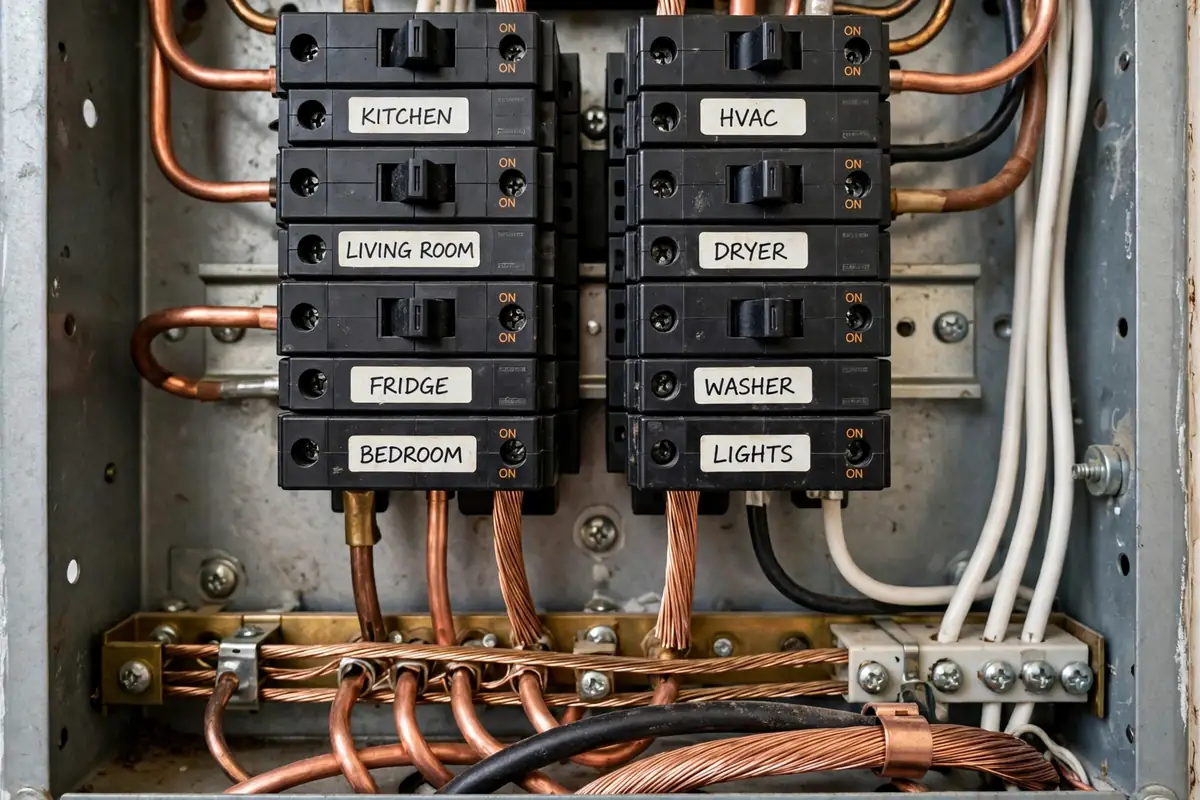
Weston households often arrive at charging with two EVs at once, or with a second one already on order. Running two independent full-power circuits is one option when the panel supports it. In many 200-amp Weston homes, a cleaner answer is power sharing: two chargers on one appropriately sized circuit communicate and divide the available current when both cars are plugged in, then return full current to a single car when the other finishes or leaves.
The math that decides between those layouts is daily driving, not charger marketing. A car that covers 35 miles on school and errands needs a fraction of the overnight energy of a car that commutes to downtown Fort Lauderdale or Miami. If both cars are home by early evening and leave after seven in the morning, a shared circuit at moderate draw will refill both on most nights. We map that schedule with you during the assessment and configure charging windows so the heavier session runs while the house is quiet.
EV Charging Services in Weston, FL
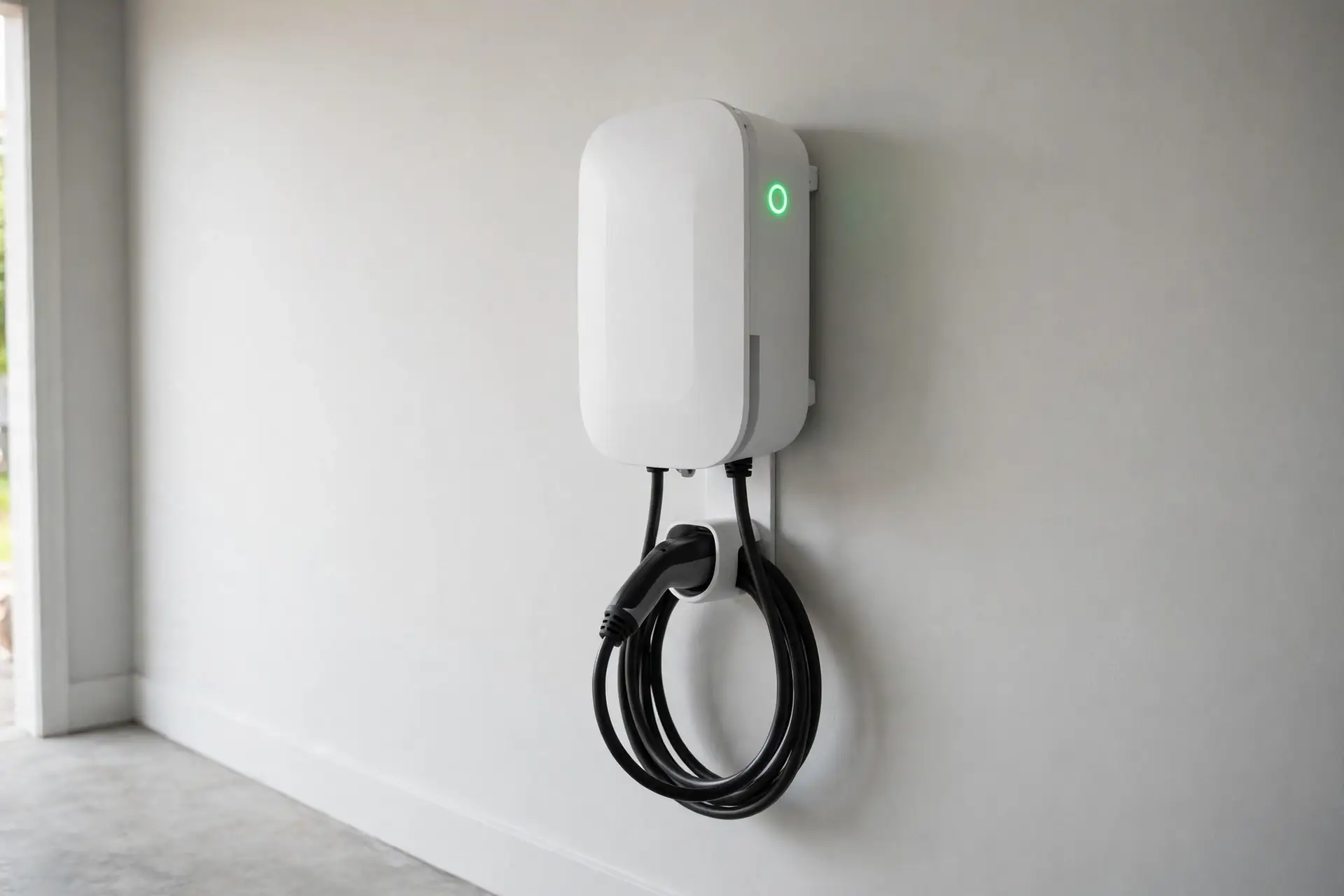
- Residential EV Charger Installation — Home Level 2 installs planned for Weston garages, panels, and community standards.
- Tesla Wall Connector Installation — Wall Connector and Universal Wall Connector installs, including paired units with power sharing.
- Level 2 EV Charger Installation — 240-volt charging for every EV make, hardwired or plug-in, configured to its circuit.
- Electrical Panel Upgrade for EV Chargers — Capacity checks first, load management second, panel work only where the numbers require it.
- Commercial EV Charging Station Installation — Charging for Weston offices, clubs, and community facilities.
- EV Charger Repair and Maintenance — Troubleshooting for chargers that trip breakers, drop offline, or charge slowly.
What a 200-Amp Panel Does and Does Not Promise
A 200-amp service label is a good starting point, not a conclusion. A load calculation under NEC Article 220 still decides how much room a Weston home has, because the total depends on what else the house runs: air conditioning through the warm months, a pool pump and heater, the range, dryer, and water heater. Two homes with identical panels can land on different answers if one runs a heated pool every evening and the other does not.
When the calculation leaves room, we size the charger circuit to that room and configure the charger to match. When it comes back tight, the options before panel work are configured amperage — a charger set to 32 or 40 amps still refills most cars overnight — and an EV energy management system that reduces or pauses charging during short household peaks. Our electrical panel upgrade page walks through that ladder. Weston newer housing stock means full panel replacement comes up less often here than in older Broward cities, but we let your numbers say so rather than assuming it from the build year.
FPL EVolution, Read Carefully in Weston
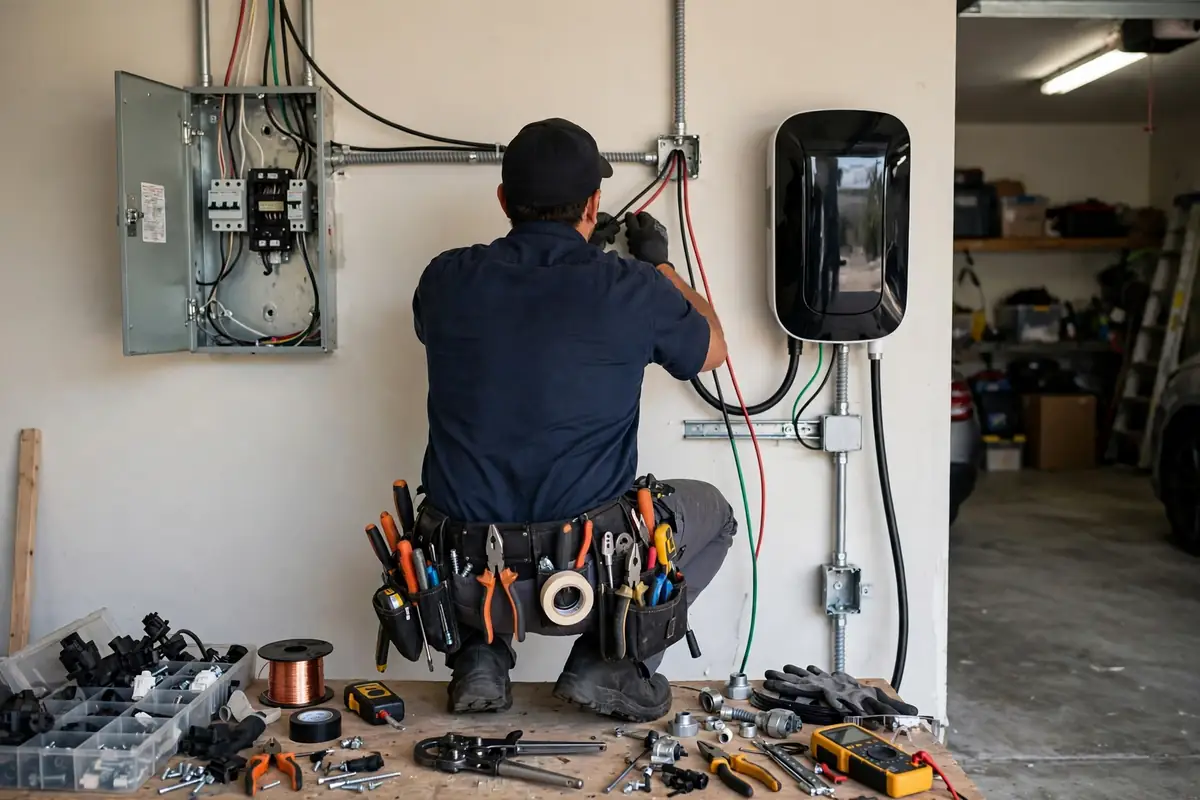
Weston is Florida Power and Light territory, and FPL markets its EVolution Home subscription here: FPL installs and owns a charger at the home for 36 dollars a month in the full-service version or 27 dollars a month for equipment only, under a 10-year agreement. Unlimited charging under the program applies during off-peak windows, not around the clock.
For Weston households, three facts tend to decide the comparison. The program is not open to solar net-metering customers. It is not offered for condos and apartments. And the charger remains FPL property for the life of the agreement, which matters in communities where homeowners prefer to control equipment attached to the house and documented with their architectural approvals. Homeowners who want paired chargers with power sharing, or who plan rooftop solar later, generally find that owning the equipment fits Weston life more cleanly. Our FPL EVolution versus buying your own charger guide sets the two routes side by side so you can compare terms before anyone files paperwork with your committee.
Permits Through the City of Weston
Electrical permits for charger circuits in Weston run through the City of Weston. The permit application describes the circuit and equipment, the work is built to the Florida Building Code, and an inspection closes the file. That closed permit joins your architectural review approval as the paper trail for the install: the documents a future buyer, an insurer, or the community itself can check when questions come up years later.
We file at the city desk, coordinate the inspection, and leave you the closed record along with the charger configuration and updated panel labeling. The broader statewide pattern is explained in our Florida EV charger permit guide, but the Weston version is refreshingly predictable — a planned city tends to run a planned permit desk.
Storm Season Details for Weston Homes
Weston sits inland compared with Broward beach cities, which softens salt exposure but not storm exposure. Summer thunderstorms bring the same lightning risk here as anywhere in South Florida, and garages flood at the margins during extreme rain even in well-drained communities. Charger mounting keeps equipment above floor level, exterior fittings are sealed, and panel-level surge protection belongs in the assessment conversation. We explain what surge devices actually do — limit voltage spikes reaching equipment — and where their protection stops, so the decision is informed rather than fear-driven.
How It Works
Step 1: The review packet and the panel photo
Send your EV model, parking setup, and a readable panel photo. Tell us your community name early — its review requirements shape the schedule from the start.
Step 2: Numbers before hardware
We complete the load calculation, confirm placement and cable reach, and prepare the architectural review information alongside the charger plan.
Step 3: Approved, permitted, installed
Once review and permit are in motion, we run the circuit, mount the charger neatly, configure its amperage, and prove the setup with your car charging.
Step 4: Inspection closes the file
The city inspection closes the permit. You receive the permit record, review paperwork, and configuration notes in one folder.
On the Ground in Weston
Weston daily driving runs along Weston Road, Royal Palm Boulevard, and Bonaventure Boulevard, out to Interstate 75 and the Sawgrass Expressway for commutes east. Evenings mean practices at Weston Regional Park, dinners in Town Center, and two cars returning to the same garage within an hour of each other. That pattern — predictable hours, shared parking, community standards — is exactly what our Weston assessments are designed around: charging that is ready every morning and paperwork that satisfies the committee without a second round.
Questions to Ask Any Weston Installer
Ask whether they have prepared architectural review packets for Weston communities before, and what those committees typically request. Ask who files the permit with the City of Weston and whether you will hold the closed permit record afterward. Ask how conduit will be routed and finished on any wall visible from outside. Ask what amperage the charger will be configured to and how that number came from your load calculation. Ask how the plan changes if a second EV joins the garage next year. Specific answers about your community and your panel are the sign of an installer who knows this city.
Frequently Asked Questions
What does a Weston architectural review committee usually want to see for a garage charger?
Most committees ask for the charger model, its exact mounting location, conduit routing and finish, and confirmation of licensed, permitted work. Interior garage installs often need only a brief submission, while anything visible from the street gets closer review.
If my Weston panel is inside the garage, does that shorten the installation?
It often simplifies it. A garage panel usually means a shorter conduit run and easier placement choices, though the load calculation still decides circuit size and charger settings. Shorter runs do not change the permit or inspection steps.
Can two Wall Connectors share one circuit in a Weston home?
Yes, compatible units can be configured for power sharing on a single circuit sized for the combined limit. The chargers divide current while both cars charge and restore full current to one car when the other finishes.
Does FPL EVolution work for a Weston home planning rooftop solar later?
The program is not open to solar net-metering customers, so a home that adds net-metered solar later runs into that limit. Homeowners expecting solar usually choose to own their charger from the start and keep both systems independent.
My Weston community restricts driveway parking overnight. Does that affect charger placement?
It can. If both cars must be garaged, placement has to serve two vehicles inside a fixed footprint, which makes cable reach and parking direction part of the plan. Tell us the rule during the assessment so the layout respects it.
How far ahead should I start a Weston install if my committee meets monthly?
Start at least one review cycle before you need the charger. Gathering the packet takes days, committee calendars set the pace after that, and the permitted installation follows approval. A car arriving next month is a comfortable timeline if the packet goes in now.
Get Your Charger Installed in Weston
Permitted, neatly finished, and documented for your community — one call starts the Weston assessment.
(407) 557-4153 · Mon–Fri 7:00 AM – 10:00 PM · Sat 8:00 AM – 10:00 PM · Sun 7:00 AM – 9:00 PM ET