Why Level 2 Is the Sweet Spot
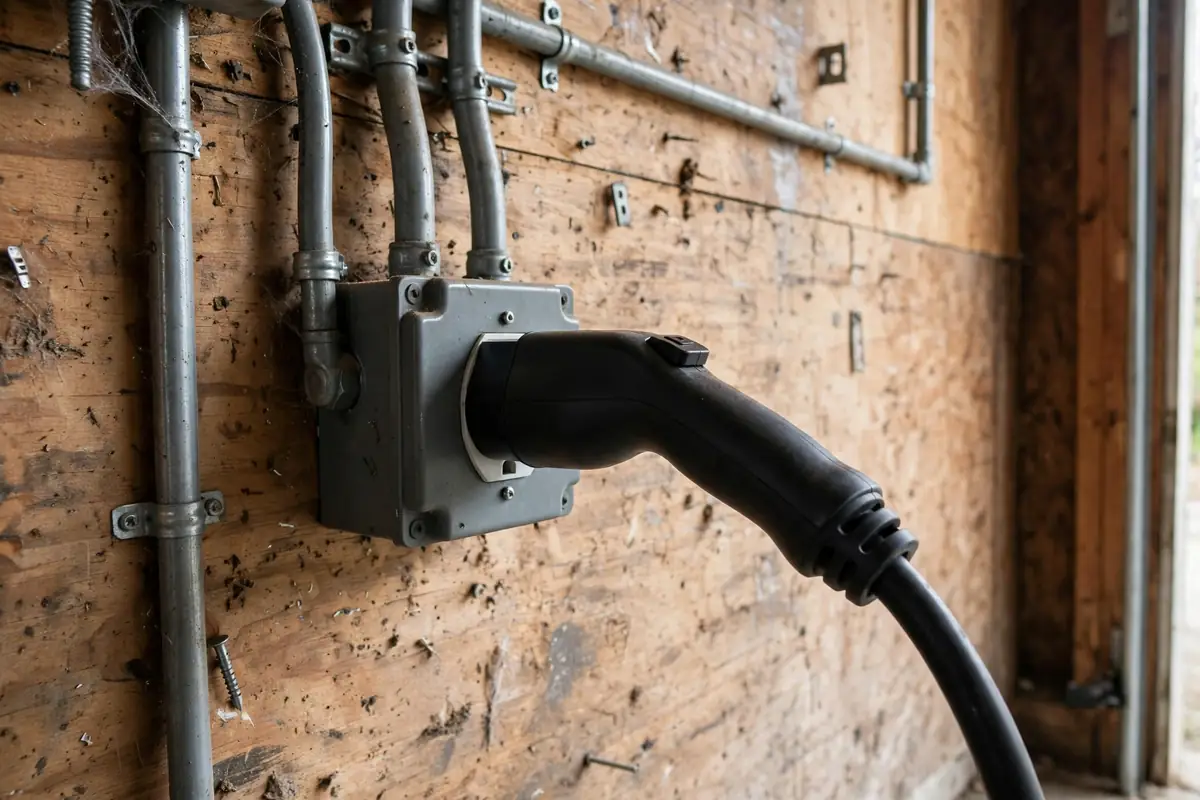
Level 1, the outlet cord, adds 3 to 5 miles per hour — adequate for a plug-in hybrid, a slow drip for a full EV. Level 3 DC fast charging is commercial infrastructure. Level 2 sits exactly where homes live: fast enough that the car is always ready, gentle enough to run on ordinary residential electrical service, and cheap to operate on overnight rates.
Pick the Circuit Your Panel Supports
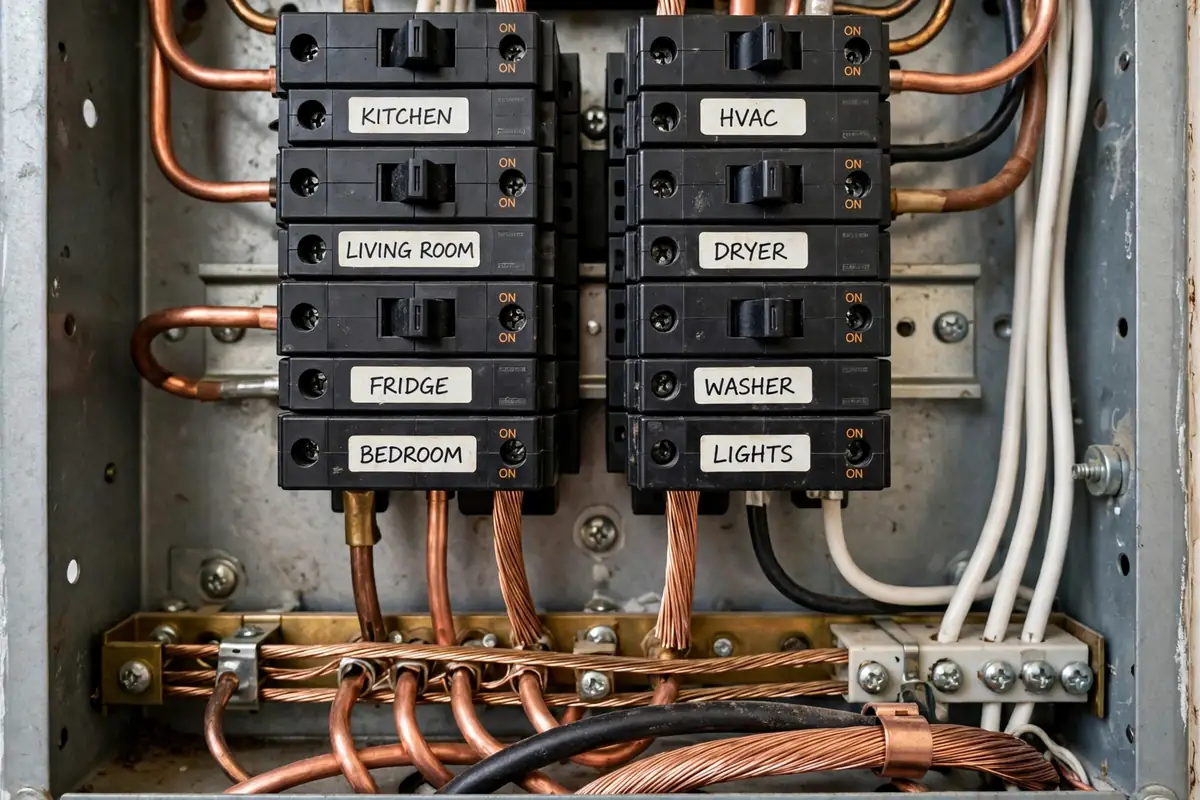
Level 2 installs land on 40-, 50-, or 60-amp circuits. Bigger is not automatically better: your car's onboard charger caps the speed it can accept, and your panel's load calculation caps what the house can give. We match all three — car, charger, panel — so you pay for the speed you will actually use.
Every Brand, One Standard
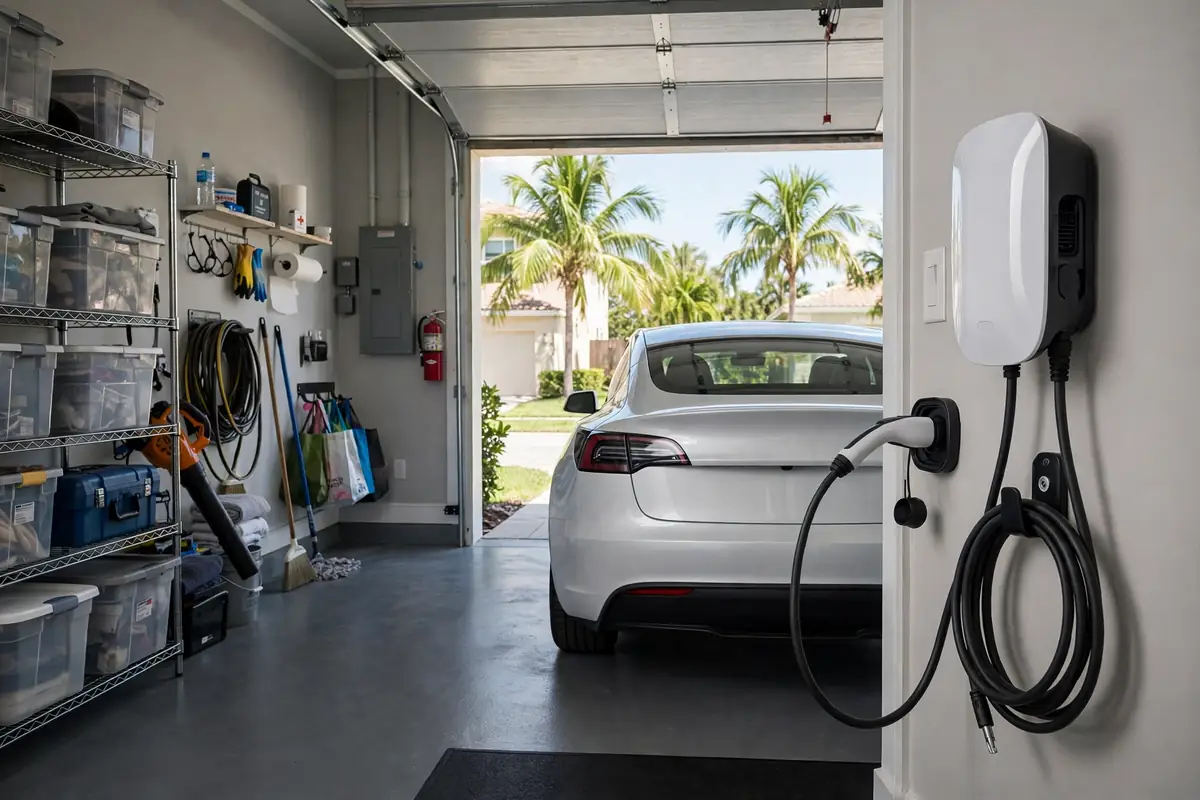
J1772 and NACS are the two connector families on Florida roads, and modern Level 2 units cover both. Ford, Chevy, Hyundai, Kia, Rivian, Tesla, and the rest all charge at Level 2 through the car's onboard charger. A properly installed universal unit future-proofs the garage for the next car, whatever badge it wears.
How It Works
Step 1: Call and describe your setup
Your EV model, where you park, and what you know about your panel. Photos of the panel help us prepare before anyone visits.
Step 2: Load calculation and site assessment
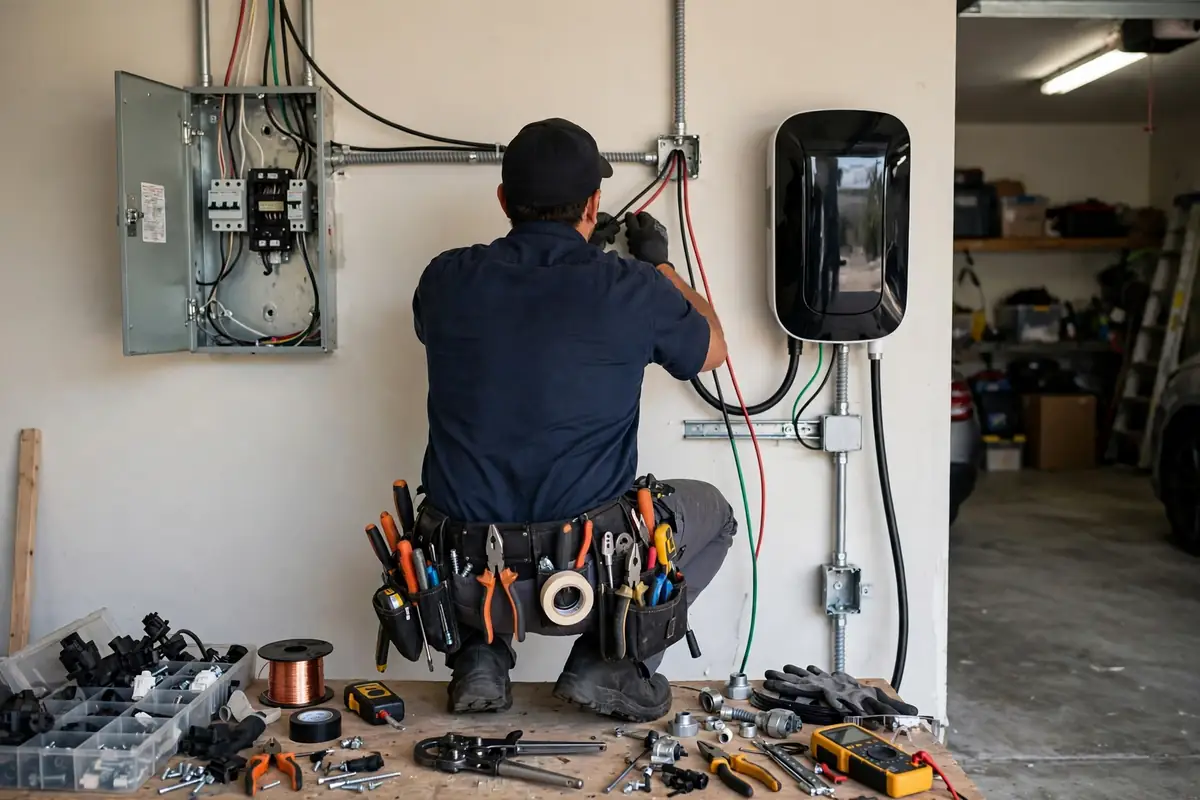
A qualified electrician checks your panel's real capacity, measures the circuit run, and confirms the charger location. You get a clear scope of work — no surprises mid-job.
Step 3: Permit and installation

We pull the electrical permit, run the dedicated circuit, mount the charger or outlet, and configure it to the circuit it is actually on.
Step 4: Inspection and walkthrough
The city or county inspection closes the permit. Then we test-charge your car together and walk through the charger's app and scheduling features.
Where We Install
Our launch coverage runs across Southeast Florida and Tampa Bay — West Palm Beach, Boca Raton, Tampa, St. Petersburg, Clearwater, and Fort Lauderdale. In the Orlando area, our sister site Orlando EV Charger covers Central Florida.
Level 2 and Florida's Summer Range Reality
Heat taxes EV range: air conditioning loads and battery thermal management mean a Florida summer mile costs more energy than a spring mile, and range estimates shrink accordingly. That is a Level 2 argument, not a problem — a car that leaves full every morning absorbs the summer penalty invisibly, while a car depending on public charging feels every lost mile as another stop. When we size a Level 2 circuit, we size it against August driving, not January driving, so the overnight refill keeps its promise in the months you lean on it hardest.
Florida Code Specifics That Shape This Work
EV charging has its own article of the National Electrical Code — Article 625 — layered on the general rules Florida builds from. The practical consequences: charger loads are treated as continuous, so circuits are sized at 125 percent of the charging current; energy management systems are expressly recognized as a way to serve a charger on a panel that could not otherwise carry it; garage outlets need GFCI protection under the current code cycle; and the charger's configured amperage, its breaker, and its wire must form a matched set. These are not bureaucratic garnish. They are the difference between an installation an inspector signs and a hazard with a warranty card.
Storm Season Readiness
Every Florida electrical install should answer one question: what happens in the third week of September? For chargers, the answers are a surge protective device at the panel, sealed outdoor fittings, a homeowner who knows which breaker feeds the charger, and equipment inspected before re-energizing after any flooding. None of this is exotic or expensive at install time. All of it is dramatically more expensive as a repair. We build storm readiness into Florida installs by default rather than selling it as an upgrade.
Equipment Selection Without the Upsell
Charger marketing runs on amperage envy: the biggest number wins the cart. Your car disagrees — its onboard charger caps what it can accept, and a unit configured beyond that cap buys speed that exists only in the brochure. The honest selection order is: your car's acceptance rate, your panel's spare capacity, your connector needs today and at the next car, and only then brand and features. App quality, cable length, and outdoor rating are real differences worth paying for. Amperage you cannot use is not.
Charging Etiquette at Home: The Battery's Perspective
Level 2's gentleness invites good habits that cost nothing: keep the car plugged in during extreme heat so thermal management can run on house power; use the car's charge limit (most owners park it at 80 or 90 percent for daily use) and let the charger be the always-ready servant rather than the boss; and schedule the session to finish near departure in winter — less relevant in Florida — or simply after midnight here, when rates and grid load are lowest and the garage is coolest. None of this is required. All of it is the difference between a battery that ages gracefully and one that merely ages.
This Service, Metro by Metro
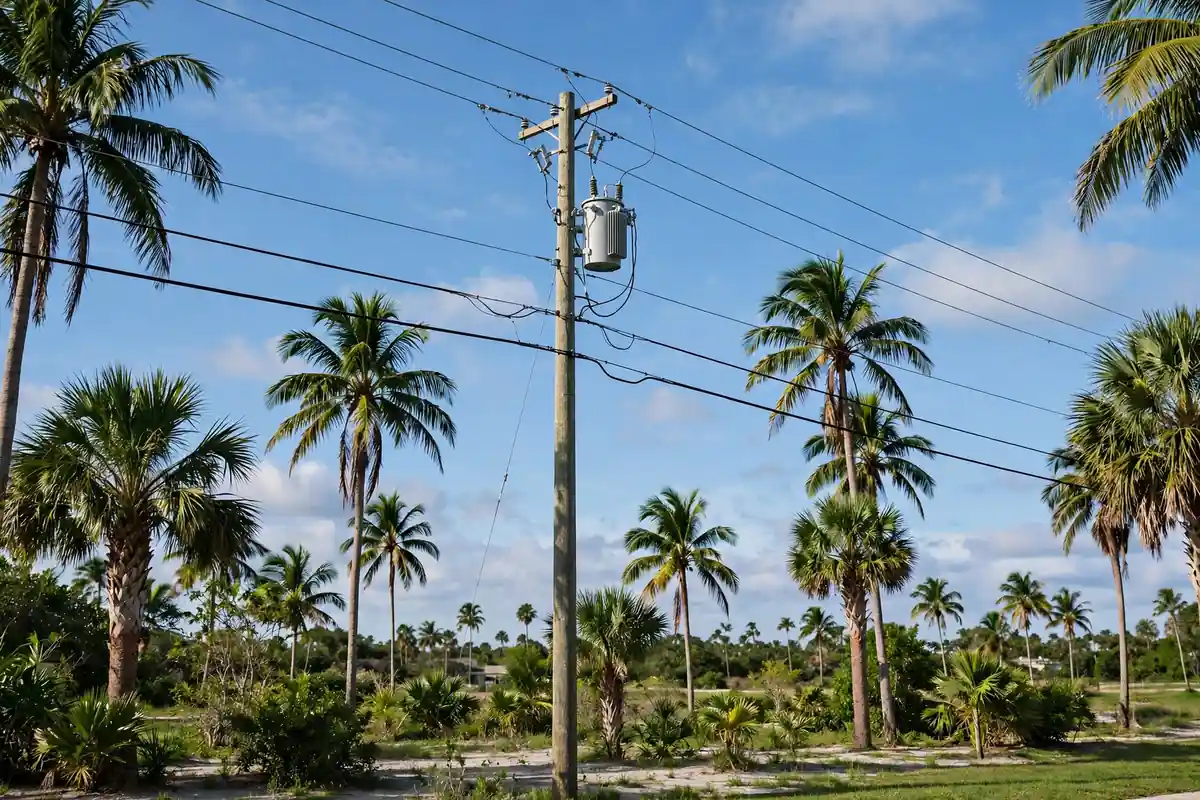
One service, six local versions. In West Palm Beach and Boca Raton, it means 240-volt charging matched to each home's panel and each driver's real commute under FPL service and Palm Beach County permitting. In Tampa, the same work runs through TECO territory and Hillsborough permitting, with Ybor-era housing on one side of the river and new suburbs on the other. St. Petersburg and Clearwater add Pinellas' historic housing stock and Duke Energy's charger programs to the equation. And Fort Lauderdale brings Broward's canal homes and condo towers — the multifamily capital of this site. The standards never change: load calculation, permit, matched configuration, inspection. The local facts do, and the local pages on this site carry them city by city.
What the Assessment Decides
For Level 2, the assessment matches three numbers: your car's acceptance rate, the charger's output, and the panel's spare capacity. The smallest of the three is your real charging speed, and the design respects it. You leave the assessment with a scope that names the circuit, the equipment, the permit path, and the schedule — the four facts every honest installation shares. If the scope cannot be stated that plainly, the assessment is not finished, and neither is our work that day.
Frequently Asked Questions
How much range does Level 2 add per hour?
Roughly 25 to 45 miles per hour of charging, depending on the circuit size and the car's onboard charger. Overnight — 10 to 12 hours plugged in — even the smaller circuits refill any normal day's driving several times over.
Is Level 2 hard on my EV's battery?
No. Level 2 AC charging is the gentle, everyday method manufacturers design home charging around. The car manages its own charging curve; heat and ultra-fast DC charging are the stresses, not overnight Level 2.
What is the difference between Level 2 and a dryer outlet?
A dryer outlet is a 30-amp circuit for an appliance that cycles. An EV charger is a continuous load for hours, which is why it gets its own dedicated, correctly sized circuit with the right breaker and, where required, GFCI protection.
Can Level 2 work on a 100-amp panel?
Often, yes — at 32 or 40 amps, or with a load-management device watching the house total. The load calculation gives the verdict for your specific home.
Should my Level 2 charger be hardwired or plug-in?
Hardwired for full 48-amp speed and the cleanest outdoor installs; plug-in (NEMA 14-50) for 40 amps and portability. Both are code-compliant when installed properly — the FAQ on our NEMA page compares them in depth.
Do Level 2 chargers need Wi-Fi?
No, but connected chargers earn their keep: scheduling into off-peak rate windows, usage tracking, and firmware updates. We set the app up with you during the walkthrough.
Book Your Installation
Qualified electricians, permitted work, and straight answers about your panel and your options.
(407) 557-4153 · Mon–Fri 7:00 AM – 10:00 PM · Sat 8:00 AM – 10:00 PM · Sun 7:00 AM – 9:00 PM ET