An EV Outlet Is Not a Dryer Outlet
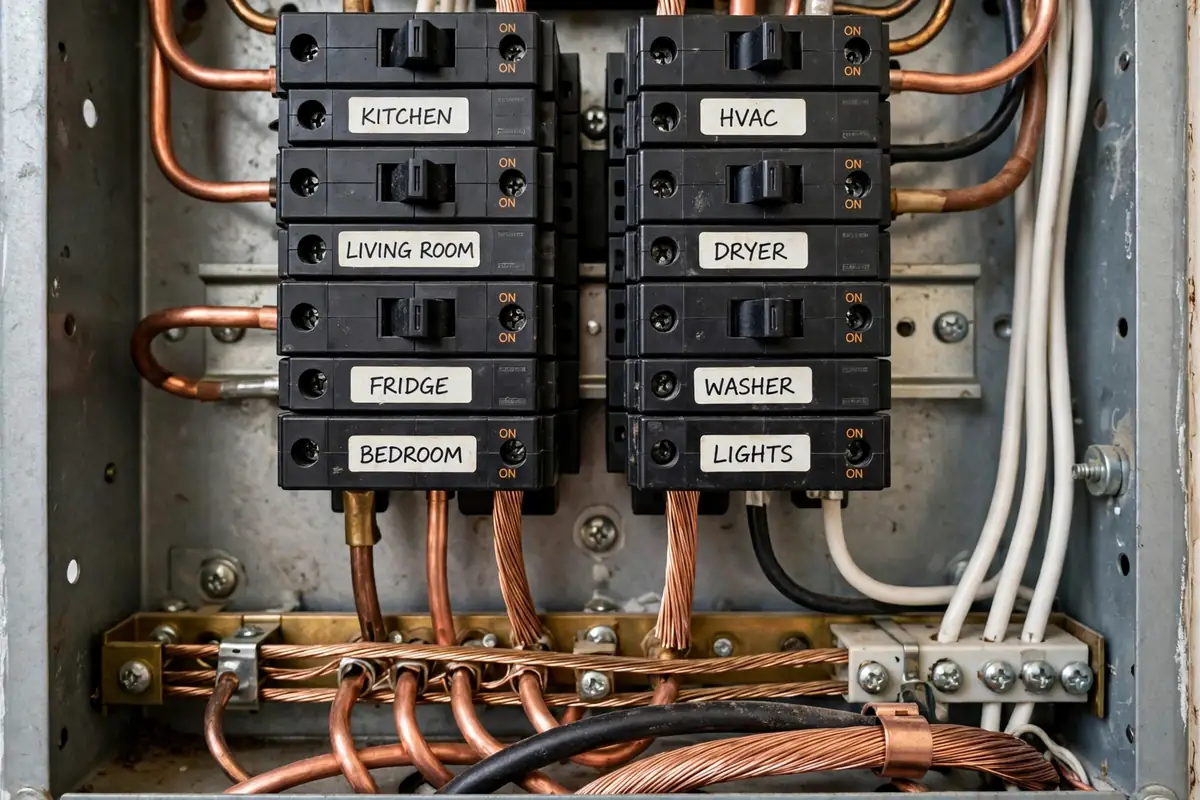
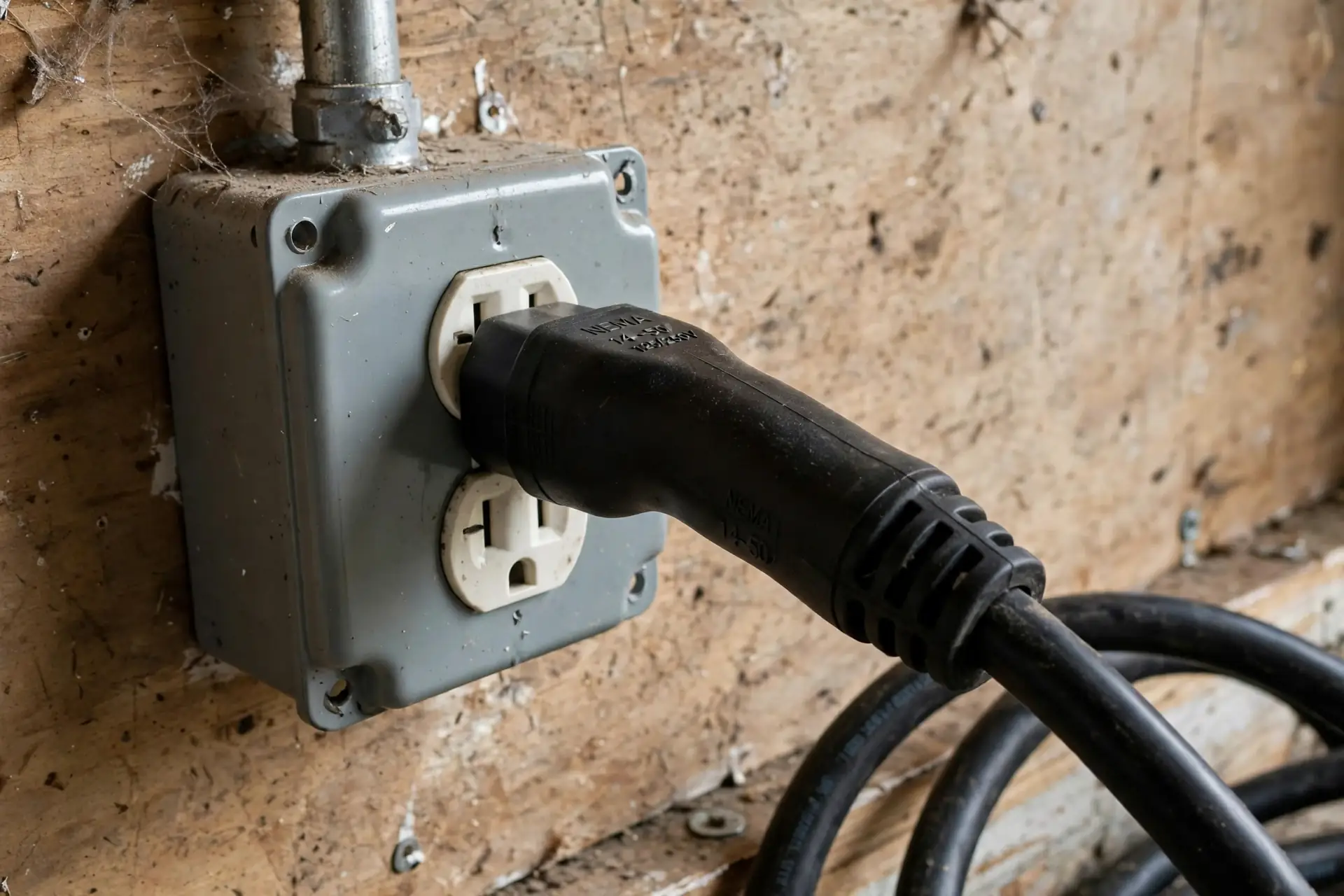
EV charging is a continuous load — hours at full draw, every night. That duty cycle is hard on cheap outlets: residential-grade 14-50 receptacles loosen and overheat under EV use. We install industrial-grade outlets, torque the connections to spec, and use the GFCI breaker protection current code requires for garage EV outlets.
Outlet or Hardwired? The Honest Comparison
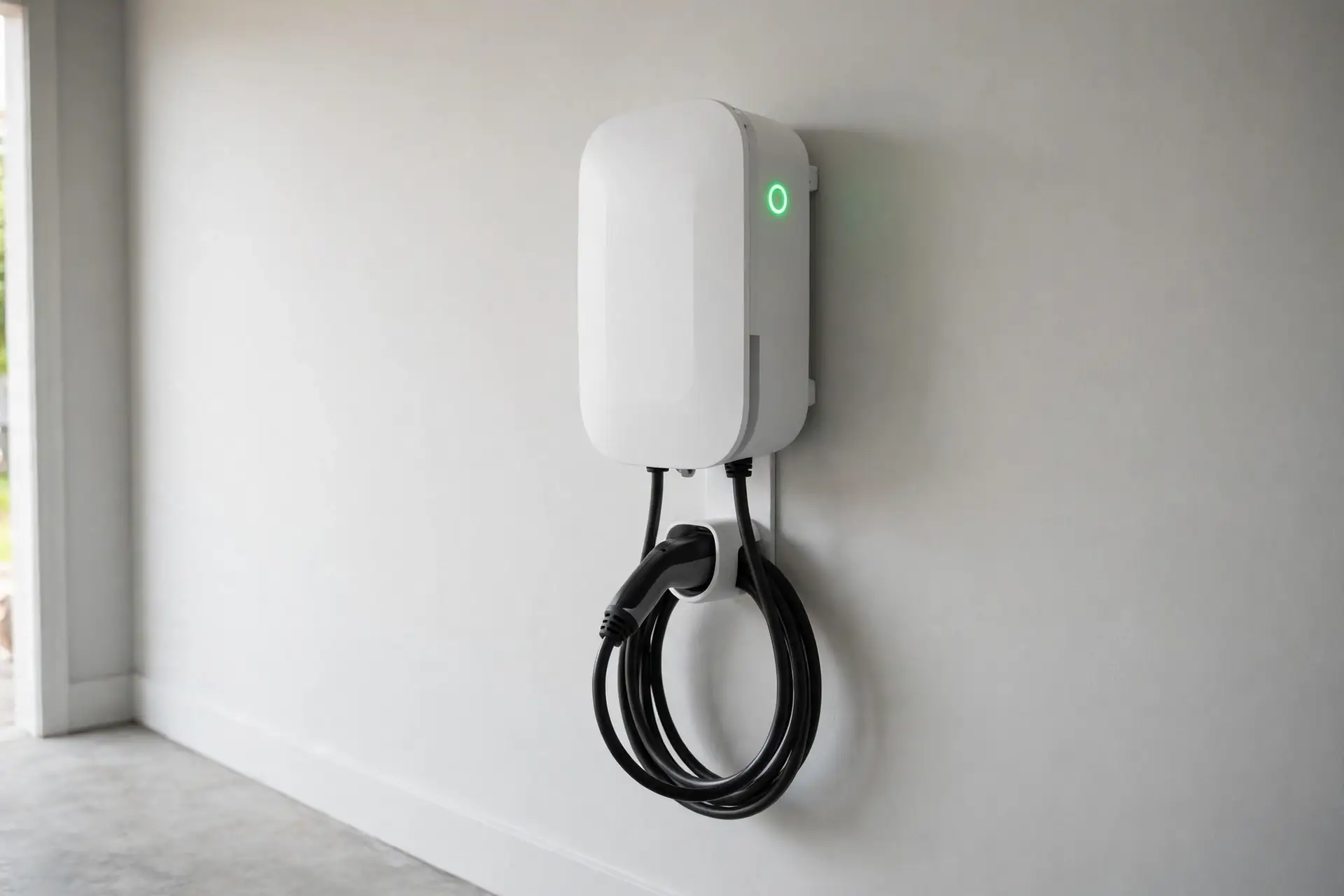
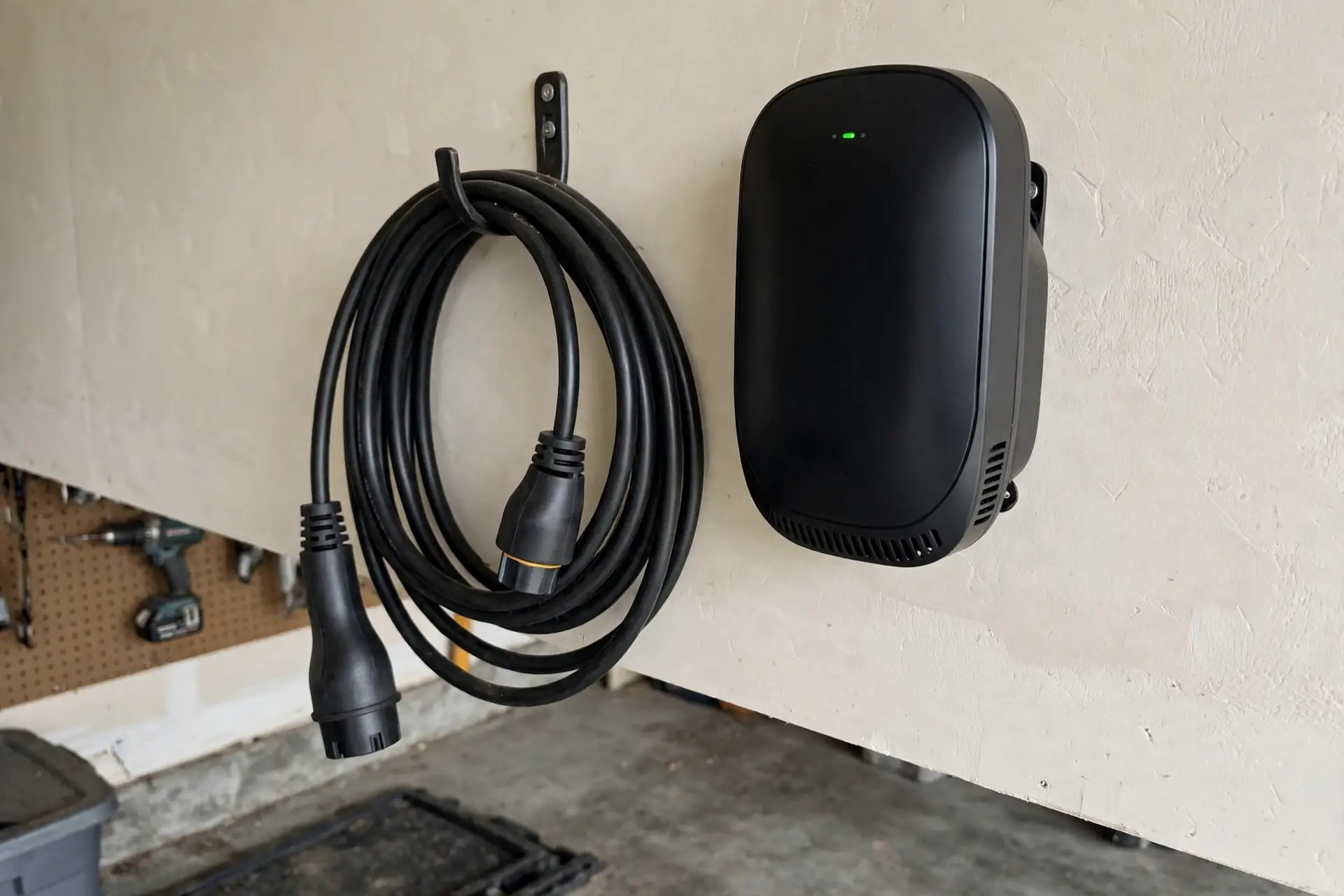
Choose the outlet when you want portability (renters, future moves, one circuit serving a charger today and something else tomorrow) or when your car's mobile cord is your charger. Choose hardwired when you want the full 48 amps, the cleanest outdoor install, or power sharing between two chargers. Plenty of Florida homes do the outlet first and hardwire later — the circuit work overlaps.
Placement Decides Everything
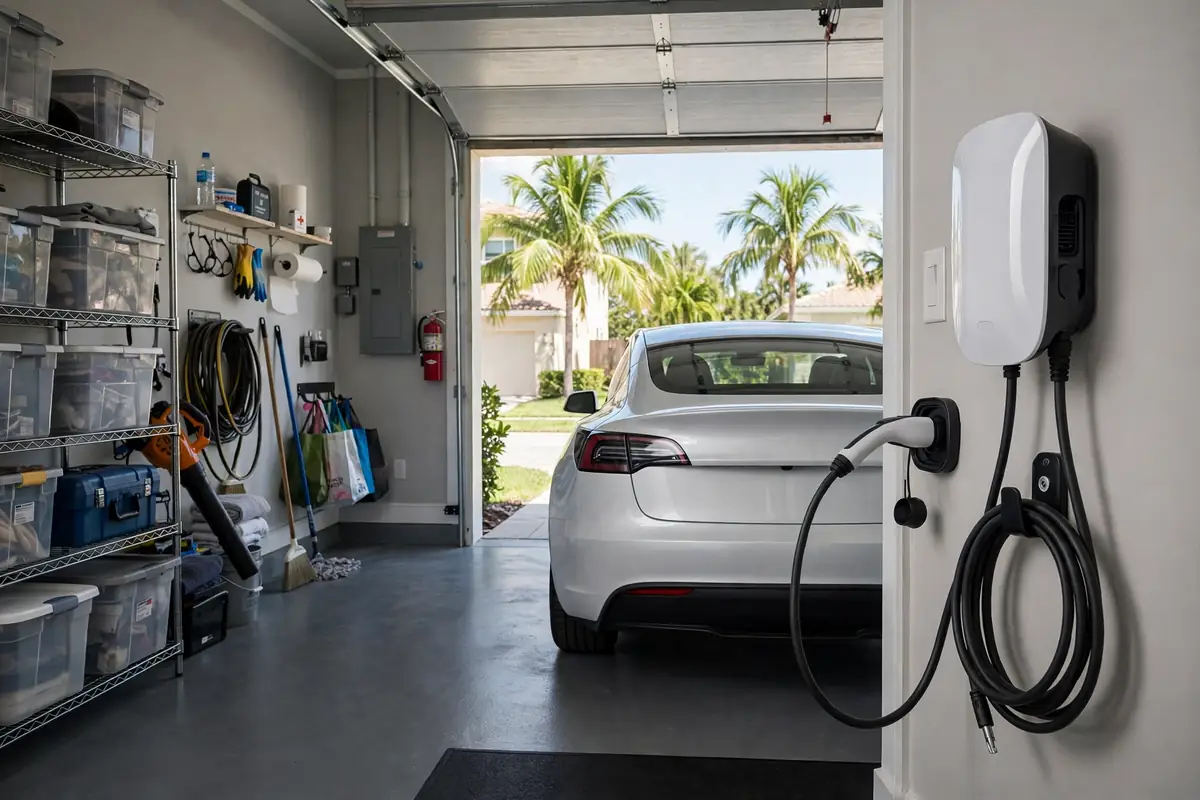
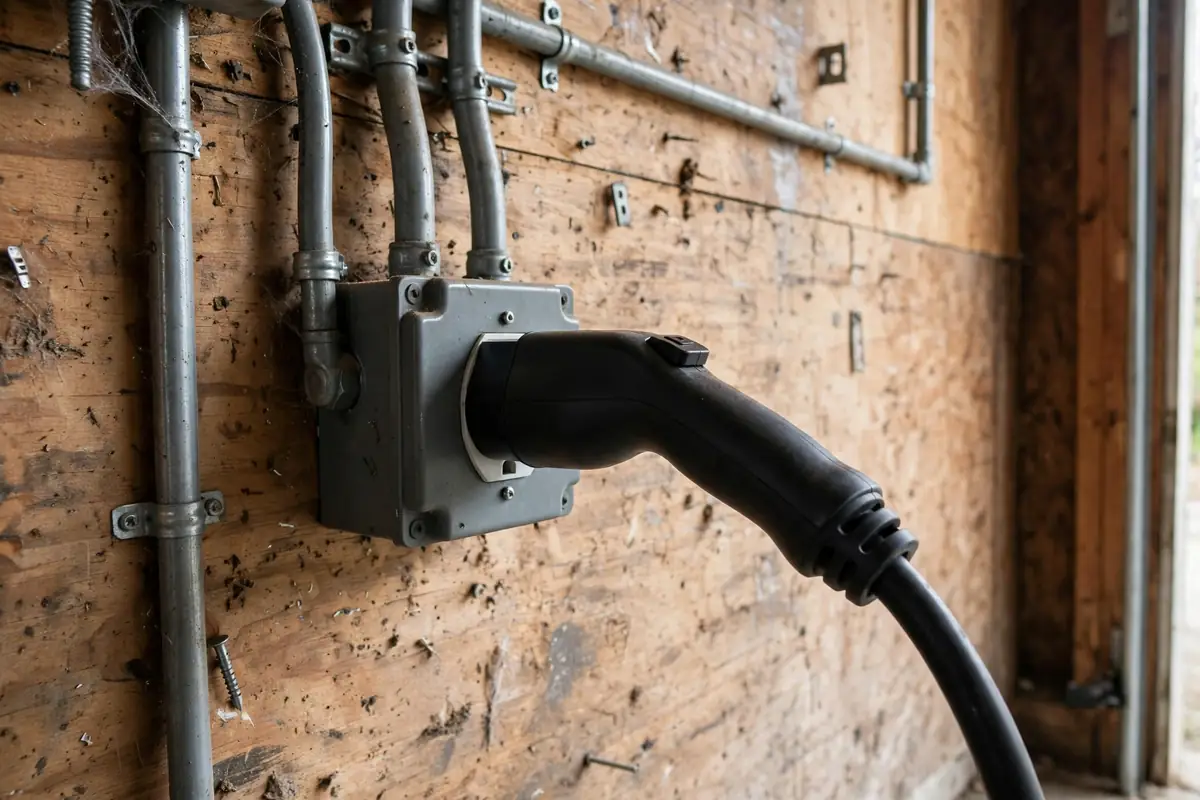
The outlet belongs within the charger's cord reach of your charge port, on the wall the car actually faces, at a height that keeps the plug clear of garage clutter and any water the floor ever sees. In coastal and flood-aware installs we mount higher and seal the box. Five minutes of planning here saves years of cable gymnastics.
How It Works
Step 1: Call and describe your setup
Your EV model, where you park, and what you know about your panel. Photos of the panel help us prepare before anyone visits.
Step 2: Load calculation and site assessment
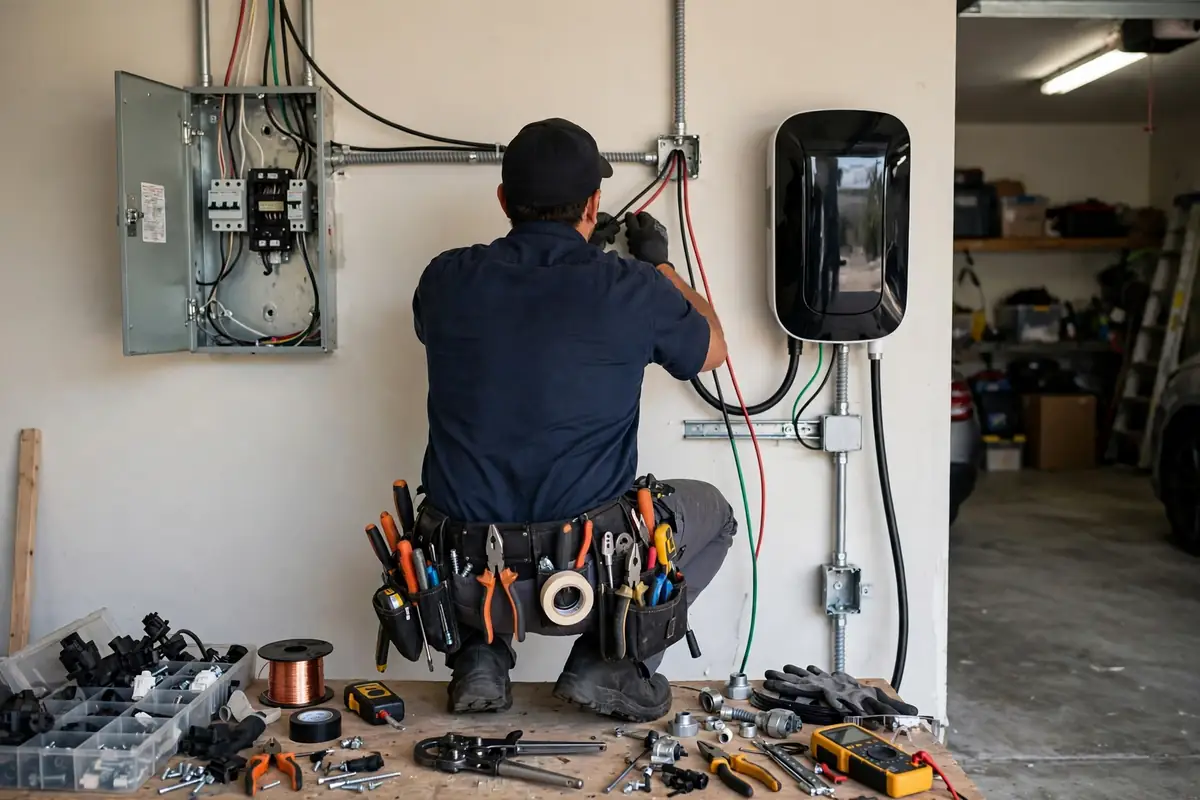
A qualified electrician checks your panel's real capacity, measures the circuit run, and confirms the charger location. You get a clear scope of work — no surprises mid-job.
Step 3: Permit and installation

We pull the electrical permit, run the dedicated circuit, mount the charger or outlet, and configure it to the circuit it is actually on.
Step 4: Inspection and walkthrough
The city or county inspection closes the permit. Then we test-charge your car together and walk through the charger's app and scheduling features.
Where We Install
Our launch coverage runs across Southeast Florida and Tampa Bay — West Palm Beach, Boca Raton, Tampa, St. Petersburg, Clearwater, and Fort Lauderdale. In the Orlando area, our sister site Orlando EV Charger covers Central Florida.
The Outlet as Infrastructure, Not Accessory
Think of a 14-50 installation as building a small piece of infrastructure rather than plugging in an appliance. The circuit, breaker, wire, enclosure, and receptacle are a system rated for a decade of continuous nightly duty — closer kin to your water heater circuit than to a kitchen outlet. That framing explains our choices: industrial-grade receptacle, torqued terminations, GFCI breaker protection, and a permit with an inspection. It also explains the outlet's longevity advantage: chargers will come and go across the next decade of EV ownership, and the infrastructure underneath them should not have to.
Storm Season Readiness
Every Florida electrical install should answer one question: what happens in the third week of September? For chargers, the answers are a surge protective device at the panel, sealed outdoor fittings, a homeowner who knows which breaker feeds the charger, and equipment inspected before re-energizing after any flooding. None of this is exotic or expensive at install time. All of it is dramatically more expensive as a repair. We build storm readiness into Florida installs by default rather than selling it as an upgrade.
Equipment Selection Without the Upsell
Charger marketing runs on amperage envy: the biggest number wins the cart. Your car disagrees — its onboard charger caps what it can accept, and a unit configured beyond that cap buys speed that exists only in the brochure. The honest selection order is: your car's acceptance rate, your panel's spare capacity, your connector needs today and at the next car, and only then brand and features. App quality, cable length, and outdoor rating are real differences worth paying for. Amperage you cannot use is not.
Florida Code Specifics That Shape This Work
EV charging has its own article of the National Electrical Code — Article 625 — layered on the general rules Florida builds from. The practical consequences: charger loads are treated as continuous, so circuits are sized at 125 percent of the charging current; energy management systems are expressly recognized as a way to serve a charger on a panel that could not otherwise carry it; garage outlets need GFCI protection under the current code cycle; and the charger's configured amperage, its breaker, and its wire must form a matched set. These are not bureaucratic garnish. They are the difference between an installation an inspector signs and a hazard with a warranty card.
One Outlet, Many Tenants: RVs, Welders, and Guests
A pleasant surprise of the 14-50 circuit: it is the same receptacle pattern as RV shore power and many welders and kilns. The EV owns it nightly, but the circuit moonlights — a visiting RV, a workshop tool, a second EV on a mobile cord — without any additional electrical work. We mention it because it changes the value conversation for households on the fence: this is not a single-purpose install. It is a 50-amp utility point in the garage, permitted and documented, whose first job happens to be charging the car.
This Service, Metro by Metro
One service, six local versions. In West Palm Beach and Boca Raton, it means industrial-grade 50-amp outlets for plug-in charging, RV guests, and workshop duty under FPL service and Palm Beach County permitting. In Tampa, the same work runs through TECO territory and Hillsborough permitting, with Ybor-era housing on one side of the river and new suburbs on the other. St. Petersburg and Clearwater add Pinellas' historic housing stock and Duke Energy's charger programs to the equation. And Fort Lauderdale brings Broward's canal homes and condo towers — the multifamily capital of this site. The standards never change: load calculation, permit, matched configuration, inspection. The local facts do, and the local pages on this site carry them city by city.
What the Assessment Decides
For a 14-50 install, the assessment checks the continuous-duty details other quotes skip: receptacle grade, GFCI protection strategy, and a mount point that respects both the car's port and the garage's water history. You leave the assessment with a scope that names the circuit, the equipment, the permit path, and the schedule — the four facts every honest installation shares. If the scope cannot be stated that plainly, the assessment is not finished, and neither is our work that day.
Frequently Asked Questions
How fast can I charge on a NEMA 14-50 outlet?
Up to 40 amps of charging on a 50-amp circuit — roughly 30 to 37 miles of range per hour depending on the car. That fills any normal Florida driving day overnight.
Can I use my existing dryer outlet for my EV?
We advise against it as a permanent setup: dryer outlets are 30-amp circuits with residential-grade receptacles, and splitter devices create real risks. A dedicated EV circuit is the safe, code-compliant answer.
Does a 14-50 installation need a permit in Florida?
Yes — it is a new 240-volt circuit, permitted and inspected in every jurisdiction we serve. The permit record also documents the work for insurance and resale.
What outlet brand or grade do you install?
Industrial-grade 14-50 receptacles from major electrical manufacturers — the class built for continuous duty — torqued to specification. The bargain-bin outlet is the false economy of EV charging.
Can a 14-50 outlet go outdoors?
Yes, in a weatherproof in-use enclosure with sealed entries — common for Florida carports and driveway installs. Surge protection at the panel is a smart companion for any outdoor circuit here.
Will a 14-50 work with a Tesla?
Yes — Tesla's mobile connector offers a 14-50 plug, and plug-in universal chargers serve NACS and J1772 cars alike. It is the most brand-agnostic install we offer.
Book Your Installation
Qualified electricians, permitted work, and straight answers about your panel and your options.
(407) 557-4153 · Mon–Fri 7:00 AM – 10:00 PM · Sat 8:00 AM – 10:00 PM · Sun 7:00 AM – 9:00 PM ET