Every Home Is a Different Job
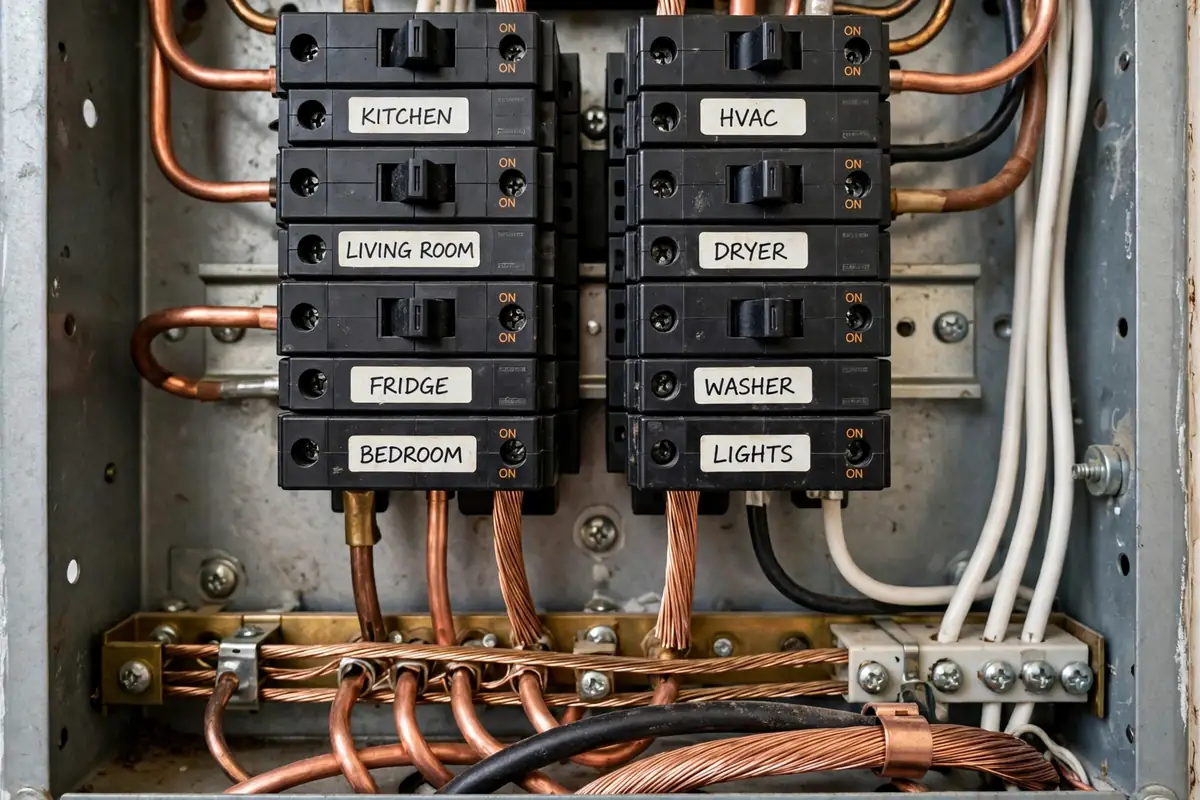
A 1920s St. Petersburg bungalow with a detached garage, a Boca country-club home with a finished three-car garage, and a Clearwater condo with an assigned space share almost nothing electrically. That is why residential installs start with the property: panel capacity and location, the route the circuit will take, where the car actually parks, and how the cable will live day to day. The charger model is honestly the easiest decision in the whole job.
What a Residential Install Includes

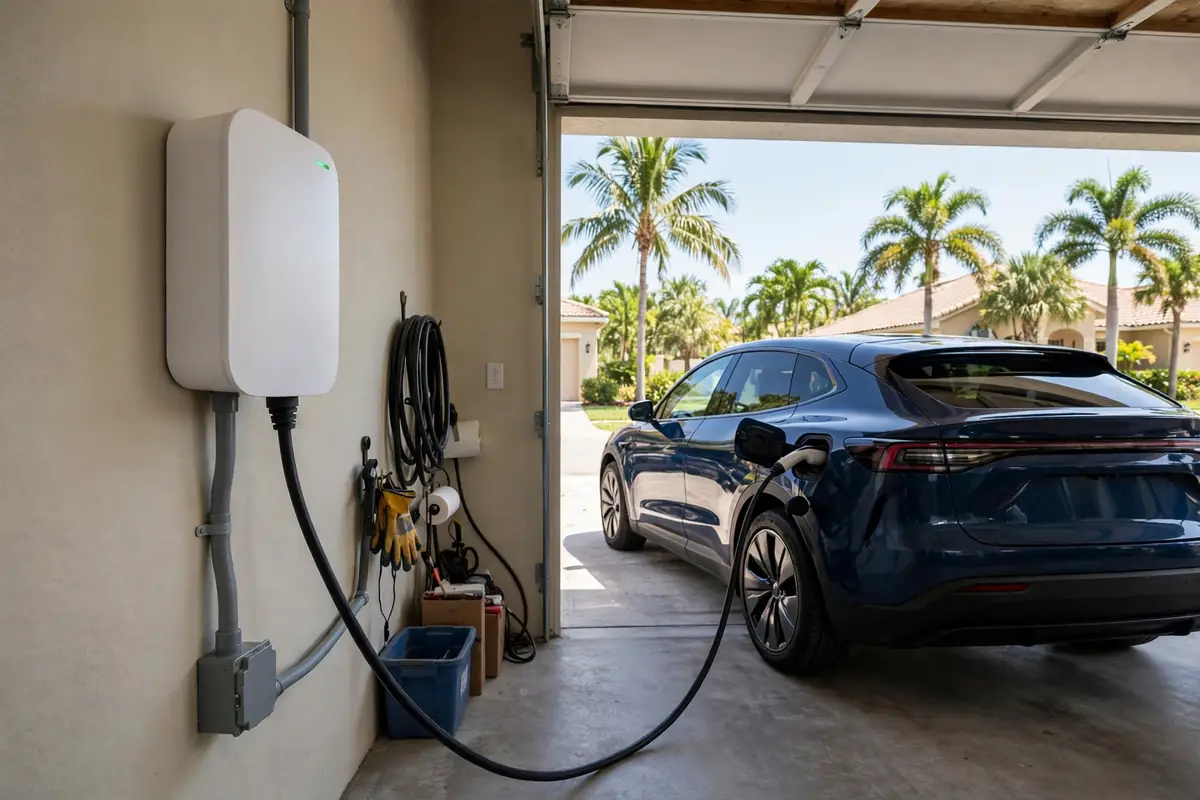
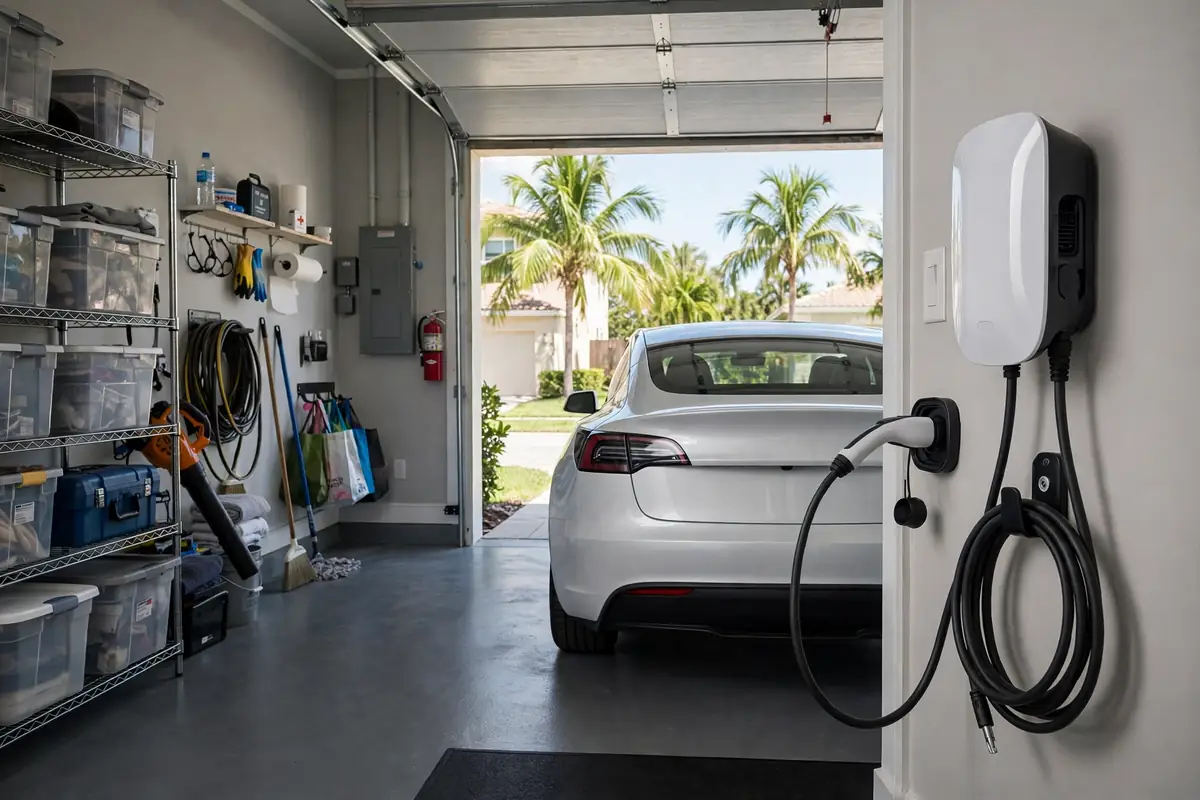
A dedicated 240-volt circuit sized by a real NEC load calculation; the charger or NEMA 14-50 outlet mounted where your charge port lands; GFCI protection where code requires it; the electrical permit and final inspection in your city or county; and a walkthrough where we test-charge your car and set up scheduled overnight charging in the app. You finish the visit with a working charger and the permit paperwork in hand.
Florida Homes, Florida Details
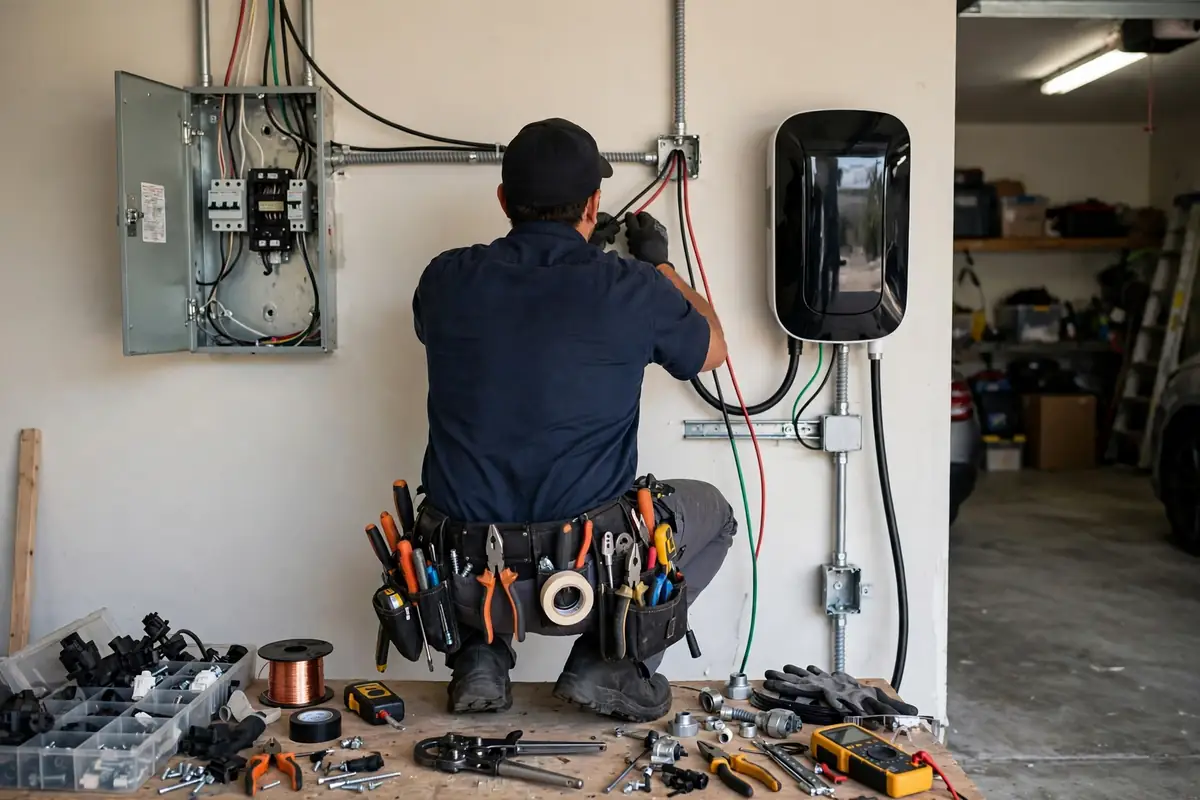
Our residential work plans for the state you live in: surge protection for lightning season, sealed fittings and weather-rated gear for outdoor and carport installs, corrosion-aware hardware near the coast, and mounting heights that keep equipment clear of garage flooding in low-lying neighborhoods. None of that is exotic — it is just what a Florida install should include by default.
How It Works
Step 1: Call and describe your setup
Your EV model, where you park, and what you know about your panel. Photos of the panel help us prepare before anyone visits.
Step 2: Load calculation and site assessment
A qualified electrician checks your panel's real capacity, measures the circuit run, and confirms the charger location. You get a clear scope of work — no surprises mid-job.
Step 3: Permit and installation
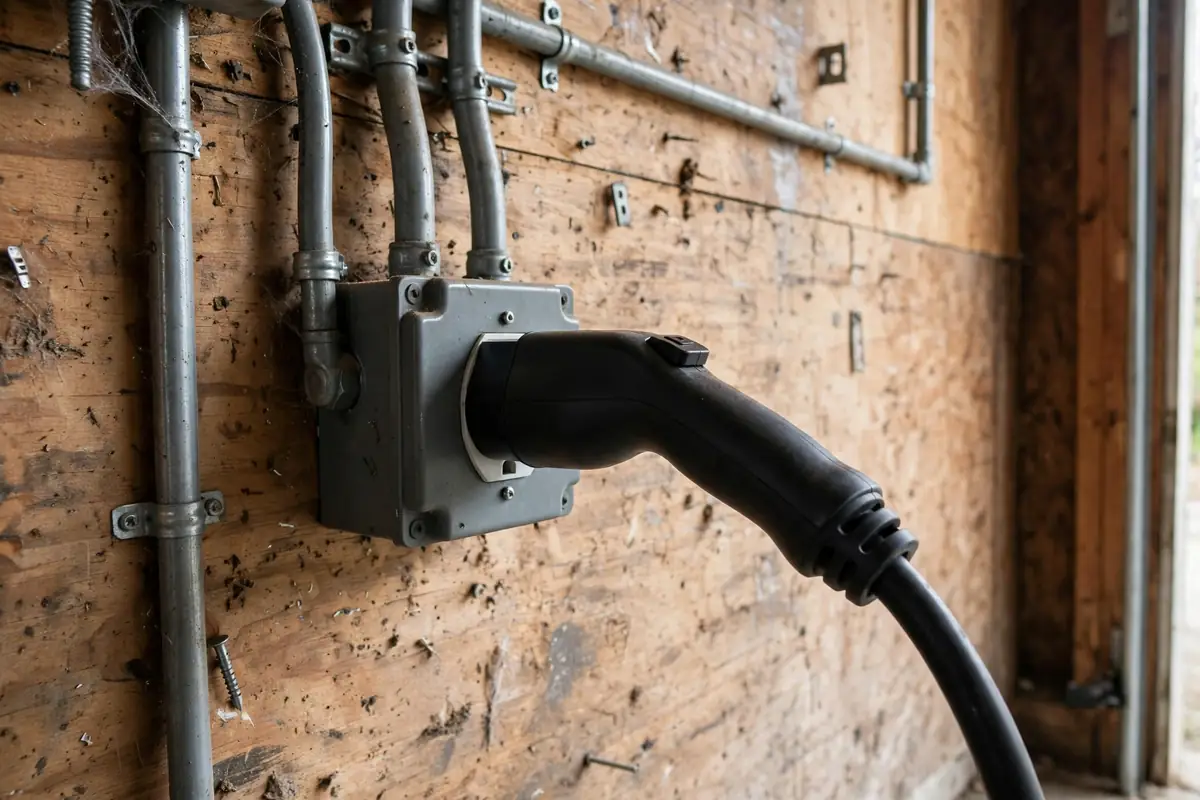
We pull the electrical permit, run the dedicated circuit, mount the charger or outlet, and configure it to the circuit it is actually on.
Step 4: Inspection and walkthrough
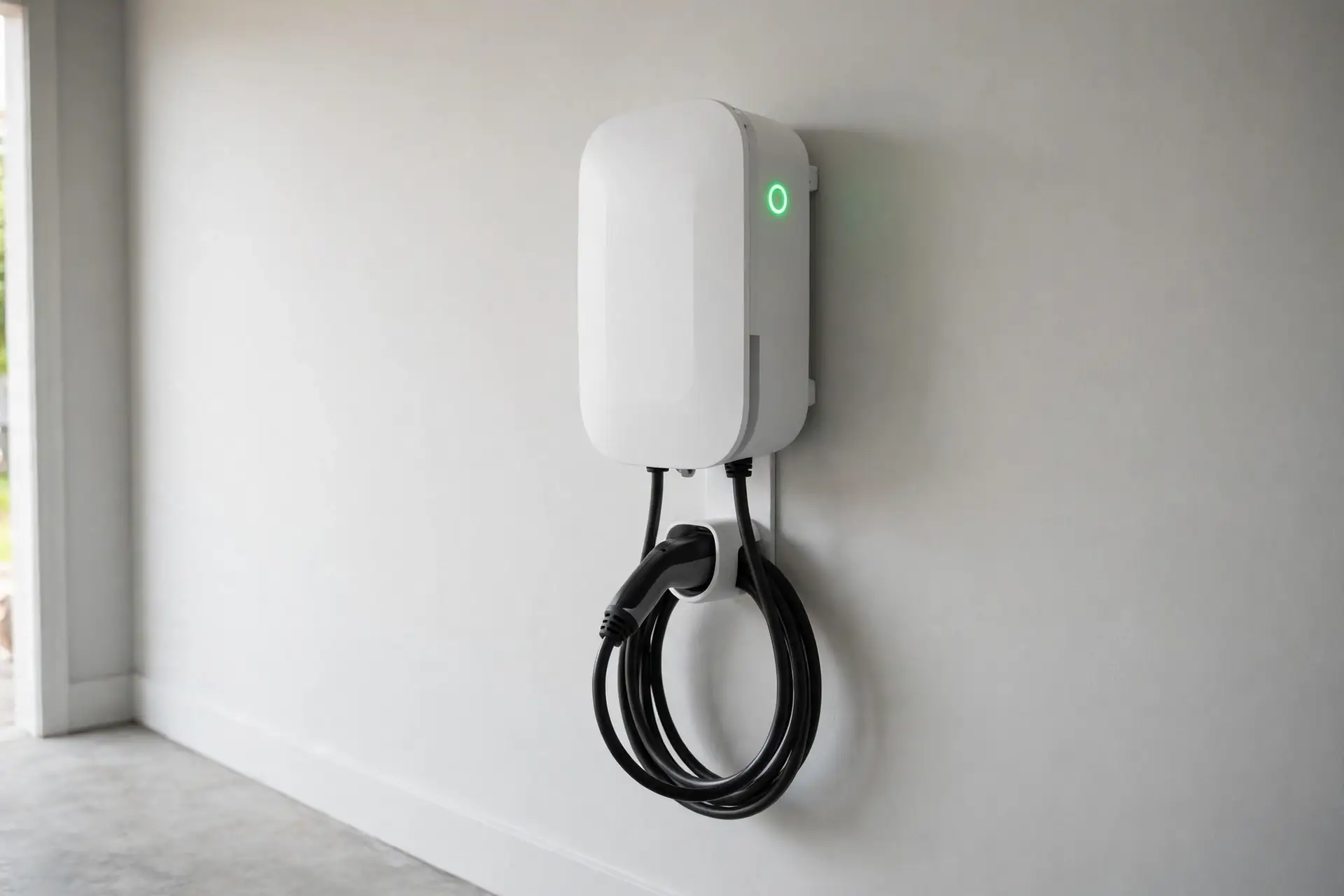
The city or county inspection closes the permit. Then we test-charge your car together and walk through the charger's app and scheduling features.
Where We Install
Our launch coverage runs across Southeast Florida and Tampa Bay — West Palm Beach, Boca Raton, Tampa, St. Petersburg, Clearwater, and Fort Lauderdale. In the Orlando area, our sister site Orlando EV Charger covers Central Florida.
Garages, Carports, and Driveways: Three Different Installs
Florida's 'home charger' phrase hides three distinct jobs. The garage install is the classic: short runs, protected equipment, the car steps from house-power to car in one motion. The carport install — a St. Petersburg and Tampa staple — adds weather exposure on one open side, which changes enclosure and sealing choices. The driveway or pedestal install is the fully outdoor job: trenching or a mounted post, the strictest weather detailing, and placement planned around where the car actually stops, not where the blueprint wishes it did. Naming which of the three you own is the first thing an assessment does, because quoting one as another is how surprises are manufactured.
Florida Code Specifics That Shape This Work
EV charging has its own article of the National Electrical Code — Article 625 — layered on the general rules Florida builds from. The practical consequences: charger loads are treated as continuous, so circuits are sized at 125 percent of the charging current; energy management systems are expressly recognized as a way to serve a charger on a panel that could not otherwise carry it; garage outlets need GFCI protection under the current code cycle; and the charger's configured amperage, its breaker, and its wire must form a matched set. These are not bureaucratic garnish. They are the difference between an installation an inspector signs and a hazard with a warranty card.
Equipment Selection Without the Upsell
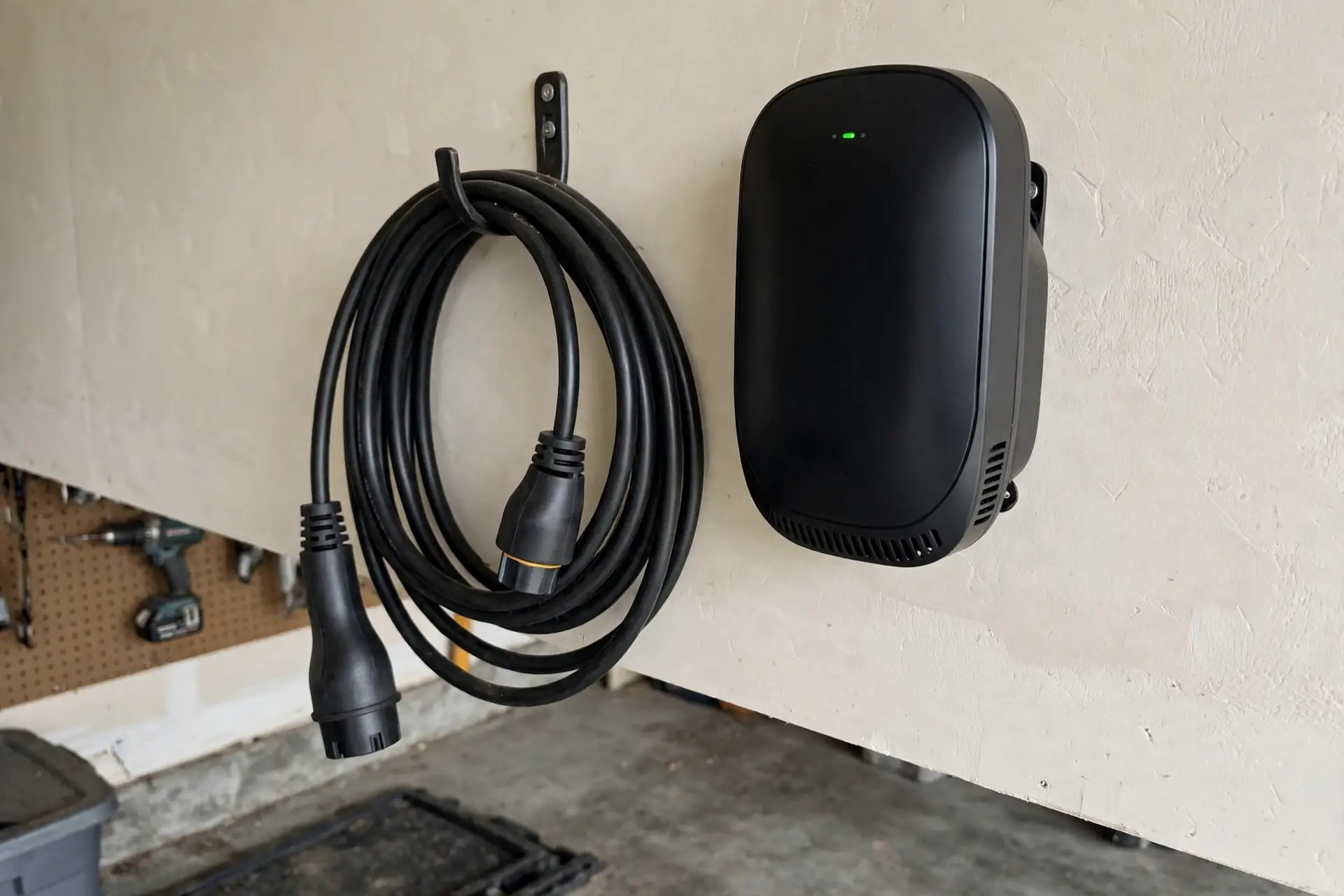
Charger marketing runs on amperage envy: the biggest number wins the cart. Your car disagrees — its onboard charger caps what it can accept, and a unit configured beyond that cap buys speed that exists only in the brochure. The honest selection order is: your car's acceptance rate, your panel's spare capacity, your connector needs today and at the next car, and only then brand and features. App quality, cable length, and outdoor rating are real differences worth paying for. Amperage you cannot use is not.
What Charging Actually Costs to Run
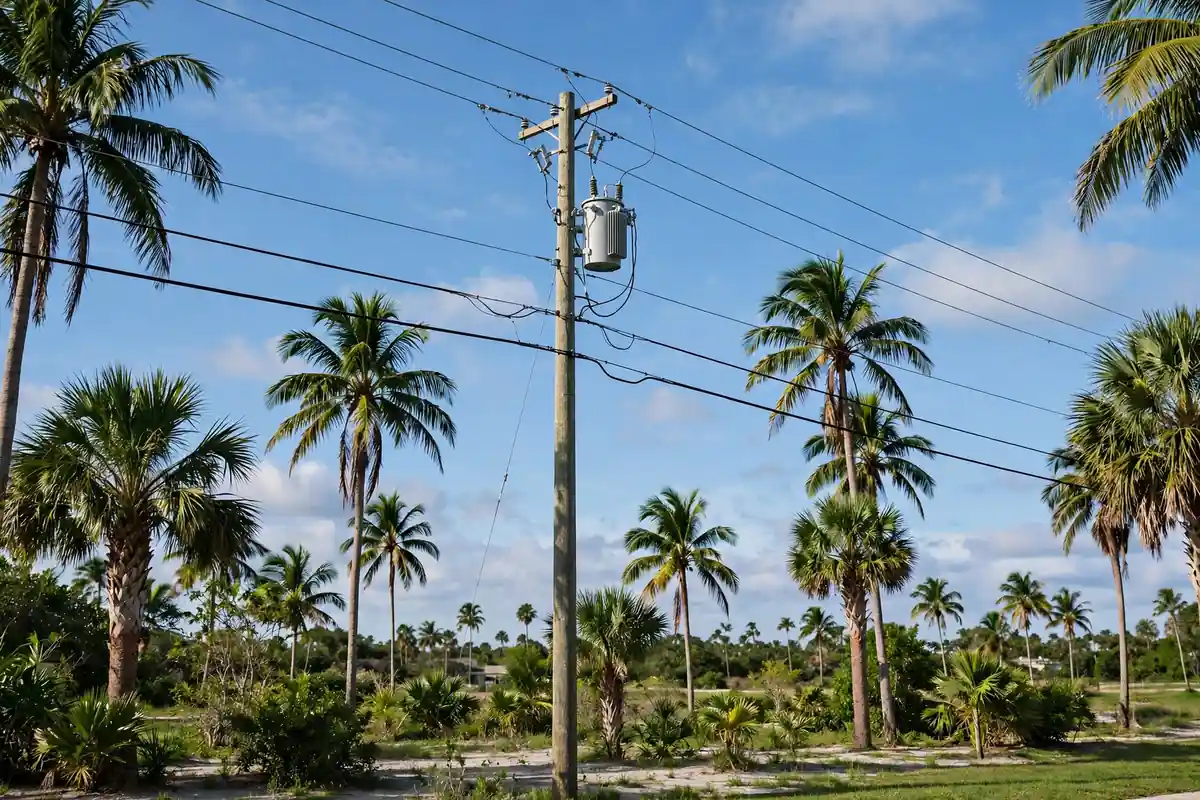
The install is the one-time number; the electricity is the subscription you barely notice. A typical Florida EV driven about 12,000 miles a year uses roughly 3,000 to 3,600 kilowatt-hours annually — at residential rates, a modest monthly line that undercuts the gasoline it replaces by a wide margin, and shrinks further on time-of-use rates with scheduled overnight charging. Your utility's rate structure decides the details, which is why the walkthrough includes setting the charging schedule, not just bolting the unit to the wall.
New Construction and Renovations: Wire It While the Walls Are Open
If you are building or gutting a Florida home, the cheapest EV charger is the one roughed in before the drywall closes: a charger circuit — or at minimum conduit and a panel position reserved — costs a fraction during construction of what the same work costs as a retrofit. Production builders across Tampa Bay and Southeast Florida increasingly offer an 'EV-ready' garage option; if yours does, take the version with the actual circuit and breaker, not just the empty conduit, and have the load calculation documented. Renovating owners should treat the panel conversation the same way: any project that opens the panel is the moment to make the home charger-ready, even if the EV itself is a year away.
This Service, Metro by Metro
One service, six local versions. In West Palm Beach and Boca Raton, it means garage and carport installs sized to each housing era, from 1920s bungalows to this year's subdivisions under FPL service and Palm Beach County permitting. In Tampa, the same work runs through TECO territory and Hillsborough permitting, with Ybor-era housing on one side of the river and new suburbs on the other. St. Petersburg and Clearwater add Pinellas' historic housing stock and Duke Energy's charger programs to the equation. And Fort Lauderdale brings Broward's canal homes and condo towers — the multifamily capital of this site. The standards never change: load calculation, permit, matched configuration, inspection. The local facts do, and the local pages on this site carry them city by city.
What the Assessment Decides
For a home install, the assessment lingers on parking reality: which side the charge port is on, how the cable will live, and where the household's second car sleeps. Those answers set the mount point before any wire is pulled. You leave the assessment with a scope that names the circuit, the equipment, the permit path, and the schedule — the four facts every honest installation shares. If the scope cannot be stated that plainly, the assessment is not finished, and neither is our work that day.
Frequently Asked Questions
How long does a residential charger installation take?
Once the permit is issued, most garage installs finish in a single visit of a few hours. Longer circuit runs, detached garages, and panel work add time; your assessment gives you the real schedule for your home.
Can I install a home charger myself in Florida?
Florida homeowners can legally do some electrical work on their own homes in some jurisdictions, but a 240-volt continuous-load circuit is where DIY gets dangerous and where unpermitted work creates insurance and resale problems. Insurers and buyers' inspectors both ask questions. A permitted professional install is the defensible route.
Which charger should I buy for my home?
Match the charger to your car's onboard charging speed and your panel's capacity — a 48-amp unit on a car that accepts 32 amps buys you nothing. Universal-connector units suit mixed households. We will tell you which size your home and car actually justify before you spend.
Do you install chargers I already bought?
Yes. Bring the unit you purchased; we handle the circuit, mounting, permit, configuration, and inspection. If the unit turns out to be wrong for your panel, we will show you the load calculation that says so.
What if I rent my Florida home?
With the landlord's written permission, a NEMA 14-50 plug-in setup is usually the renter-friendly route — the charger unplugs and leaves with you. We document the permitted work for the property file.
Will home charging work during Florida storm season?
The charger works whenever your power is on. For outage-prone areas, ask us about surge protection and about which chargers and cars support vehicle-to-home backup — a growing option we cover in our guides.
Book Your Installation
Qualified electricians, permitted work, and straight answers about your panel and your options.
(407) 557-4153 · Mon–Fri 7:00 AM – 10:00 PM · Sat 8:00 AM – 10:00 PM · Sun 7:00 AM – 9:00 PM ET