The Load Calculation Comes First
The NEC load calculation adds your home's existing demand — AC, range, dryer, water heater, pool equipment — against its rated capacity. What remains is what a charger may use. Florida's older housing stock (and its very Florida habit of panel-adjacent pool equipment) makes that leftover smaller than many homeowners expect. The calculation is quick, it is honest, and it decides everything downstream.
Three Ways to Get There
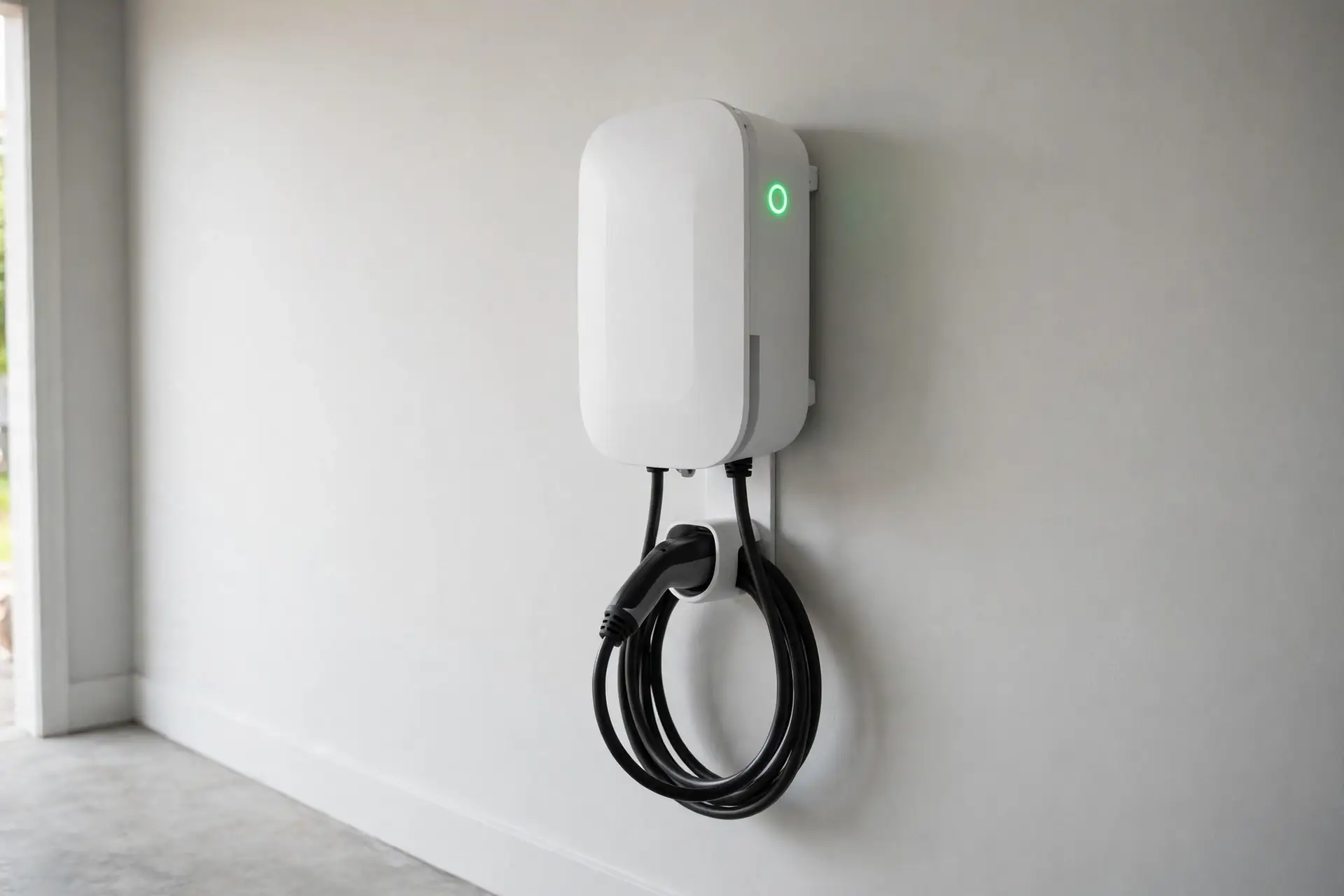
First, configure the charger to the capacity that exists — many homes charge happily at 32 amps. Second, add an energy management system that throttles charging when the house peaks. Third, upgrade the panel — usually to 200 amps — which buys capacity for the charger and for the heat pump, induction range, or second EV behind it. We recommend in that order and upgrade only when the math says to.
What the Upgrade Involves
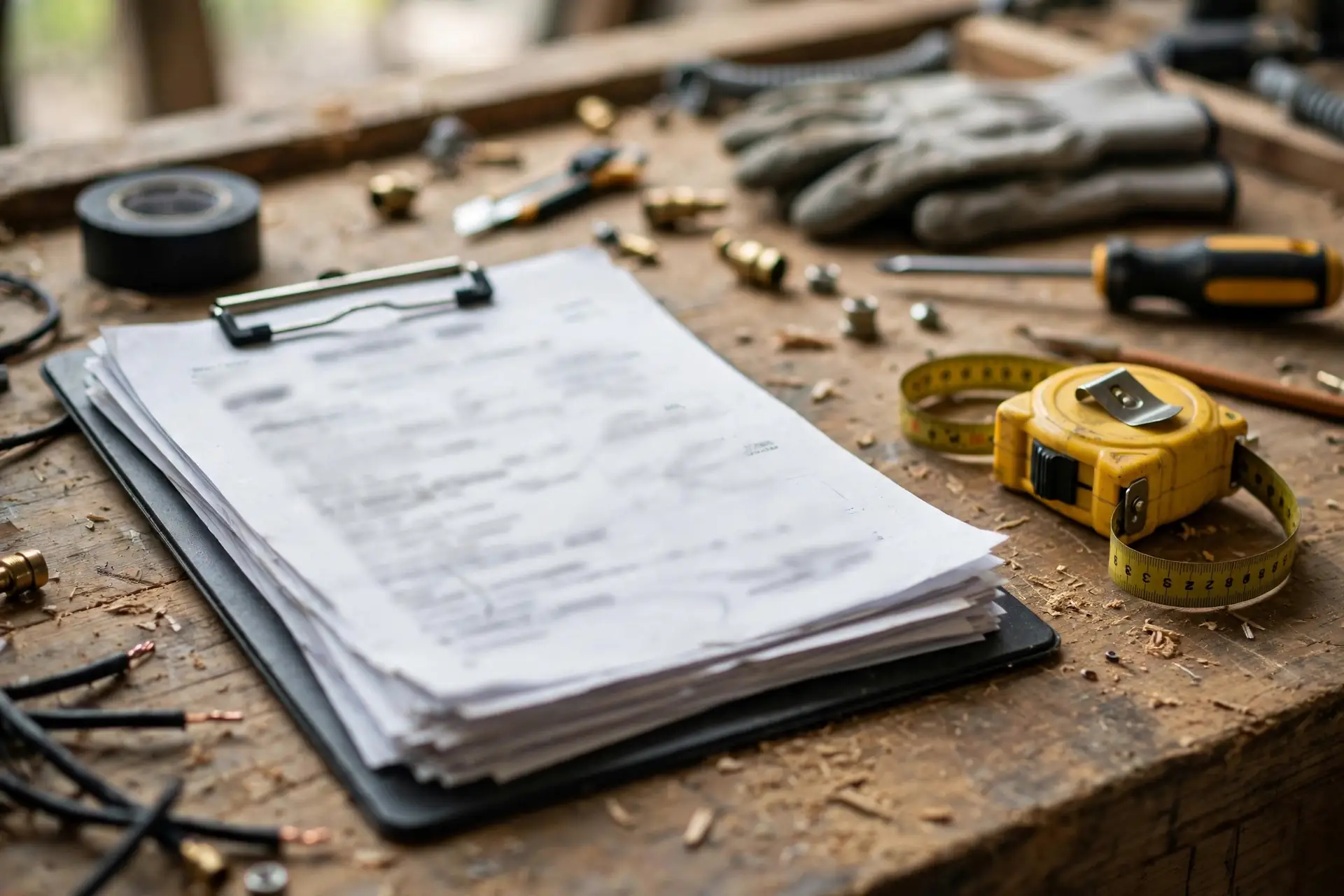
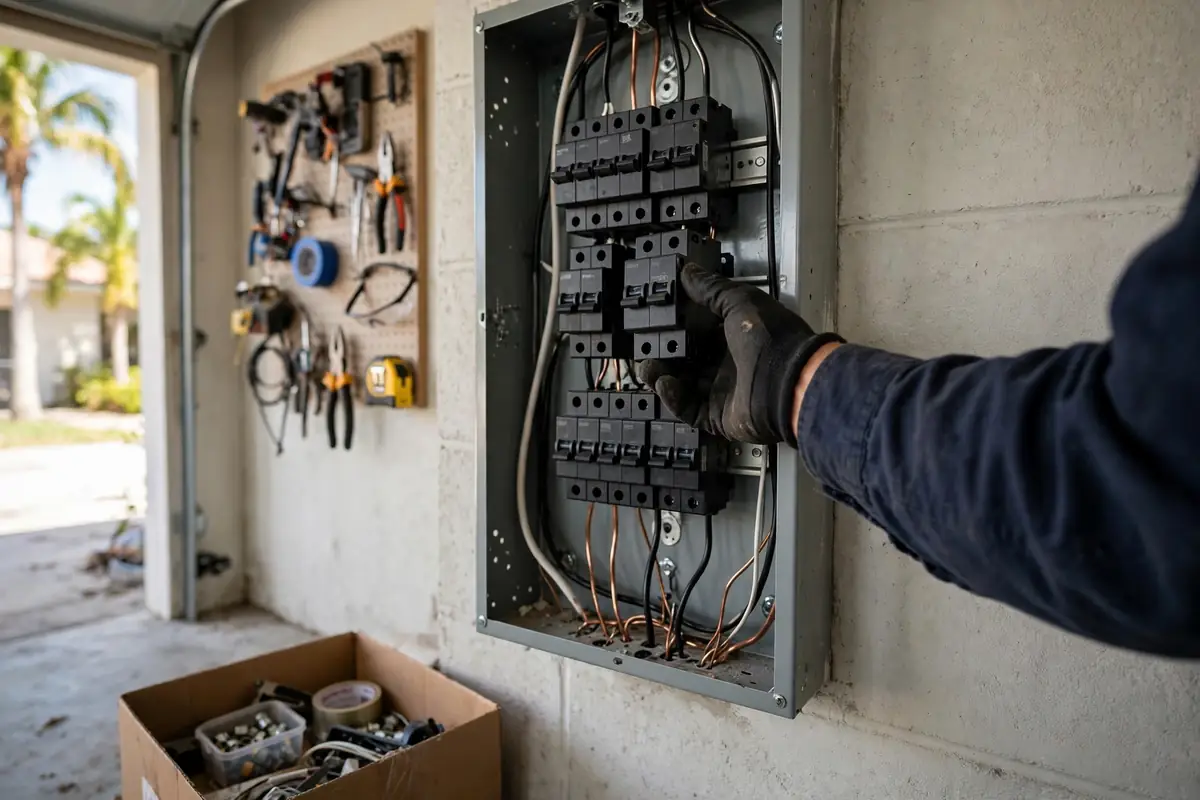
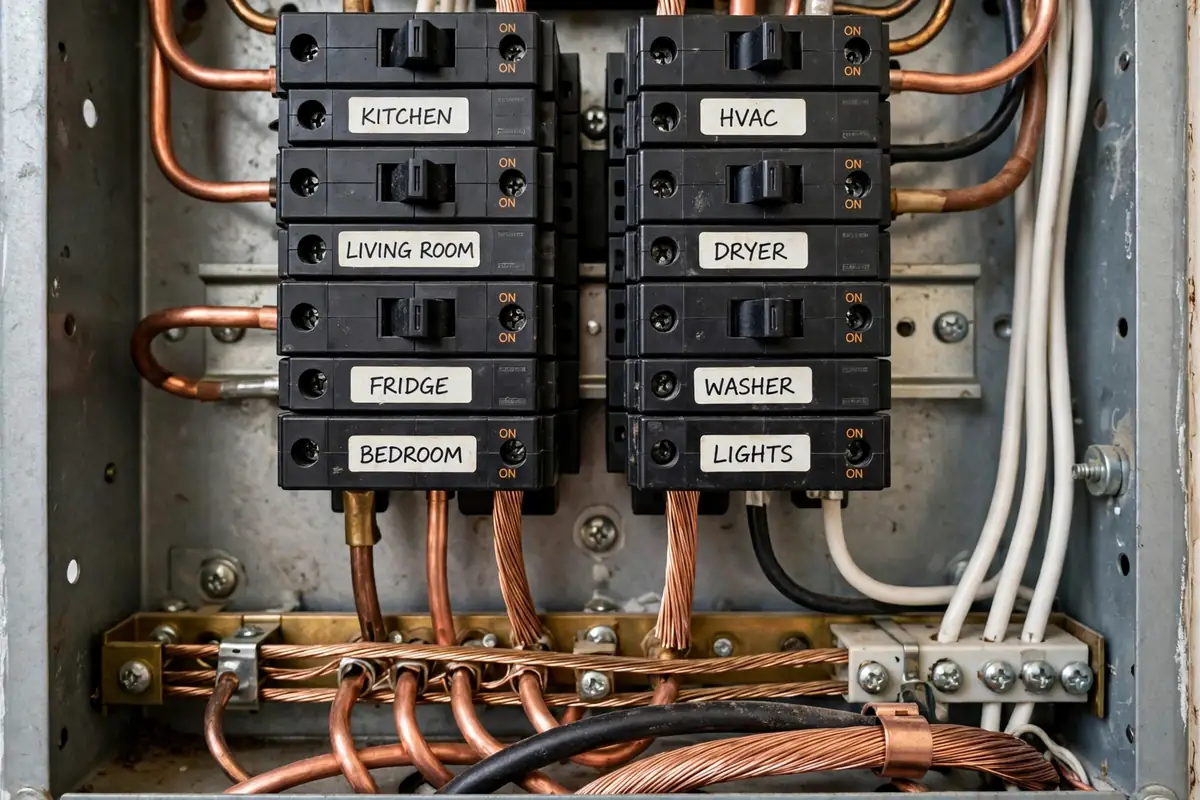
A panel upgrade is a coordinated day: utility disconnect, panel (and sometimes meter base and service conductors) replaced, circuits re-landed and labeled, utility reconnect, and a city or county inspection to close the permit. In coastal Florida we also inspect the existing gear for corrosion before reusing any of it — upgrading capacity on corroded bus bars helps no one.
How It Works
Step 1: Call and describe your setup
Your EV model, where you park, and what you know about your panel. Photos of the panel help us prepare before anyone visits.
Step 2: Load calculation and site assessment
A qualified electrician checks your panel's real capacity, measures the circuit run, and confirms the charger location. You get a clear scope of work — no surprises mid-job.
Step 3: Permit and installation
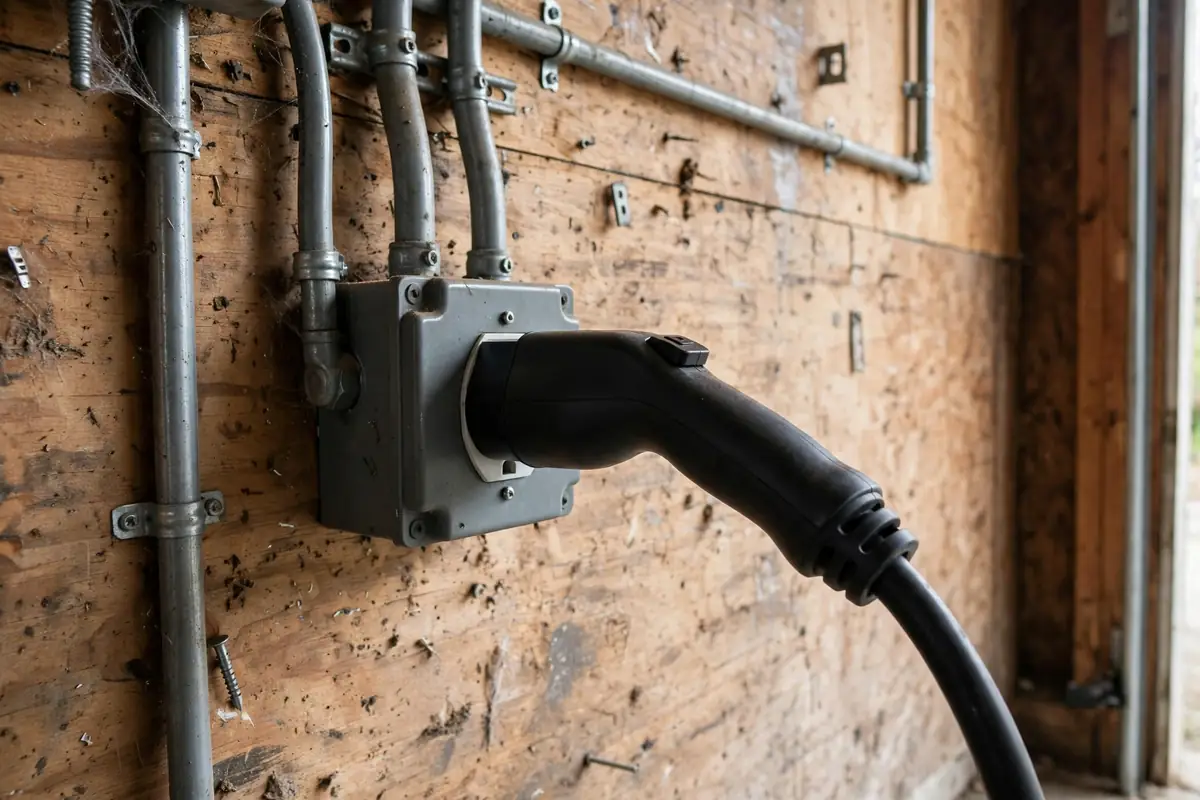
We pull the electrical permit, run the dedicated circuit, mount the charger or outlet, and configure it to the circuit it is actually on.
Step 4: Inspection and walkthrough
The city or county inspection closes the permit. Then we test-charge your car together and walk through the charger's app and scheduling features.
Where We Install
Our launch coverage runs across Southeast Florida and Tampa Bay — West Palm Beach, Boca Raton, Tampa, St. Petersburg, Clearwater, and Fort Lauderdale. In the Orlando area, our sister site Orlando EV Charger covers Central Florida.
Reading an Old Florida Panel Like a Biography
Panels remember everything: the breaker added for the pool in 1998, the tandem breakers squeezed in for the lanai, the corroded lug from the decade the sprinkler hit the meter wall. Our assessments read that biography before recommending anything, because an upgrade plan that ignores the panel's history repeats it. Sometimes the finding is reassuring — a healthy 200-amp panel mislabeled by a worried homeowner. Sometimes it is a federal-Pacific-era box that was already living on borrowed time before the EV arrived, and the honest sentence is that the charger is the excuse, not the cause. Either way, you hear it with the evidence open in front of you.
The Paper Trail Is Part of the Product
Years from now, this installation will be judged by people who were not in the room: a buyer's home inspector, an insurance adjuster, an association's reviewer, the next electrician. What persuades all of them is paper — the closed permit, the itemized invoice, the load calculation, the configuration record. We treat documentation as a deliverable of the job, on the same list as the charger itself. It costs nothing extra and it is the part of the install whose value only grows.
Storm Season Readiness
Every Florida electrical install should answer one question: what happens in the third week of September? For chargers, the answers are a surge protective device at the panel, sealed outdoor fittings, a homeowner who knows which breaker feeds the charger, and equipment inspected before re-energizing after any flooding. None of this is exotic or expensive at install time. All of it is dramatically more expensive as a repair. We build storm readiness into Florida installs by default rather than selling it as an upgrade.
What Charging Actually Costs to Run
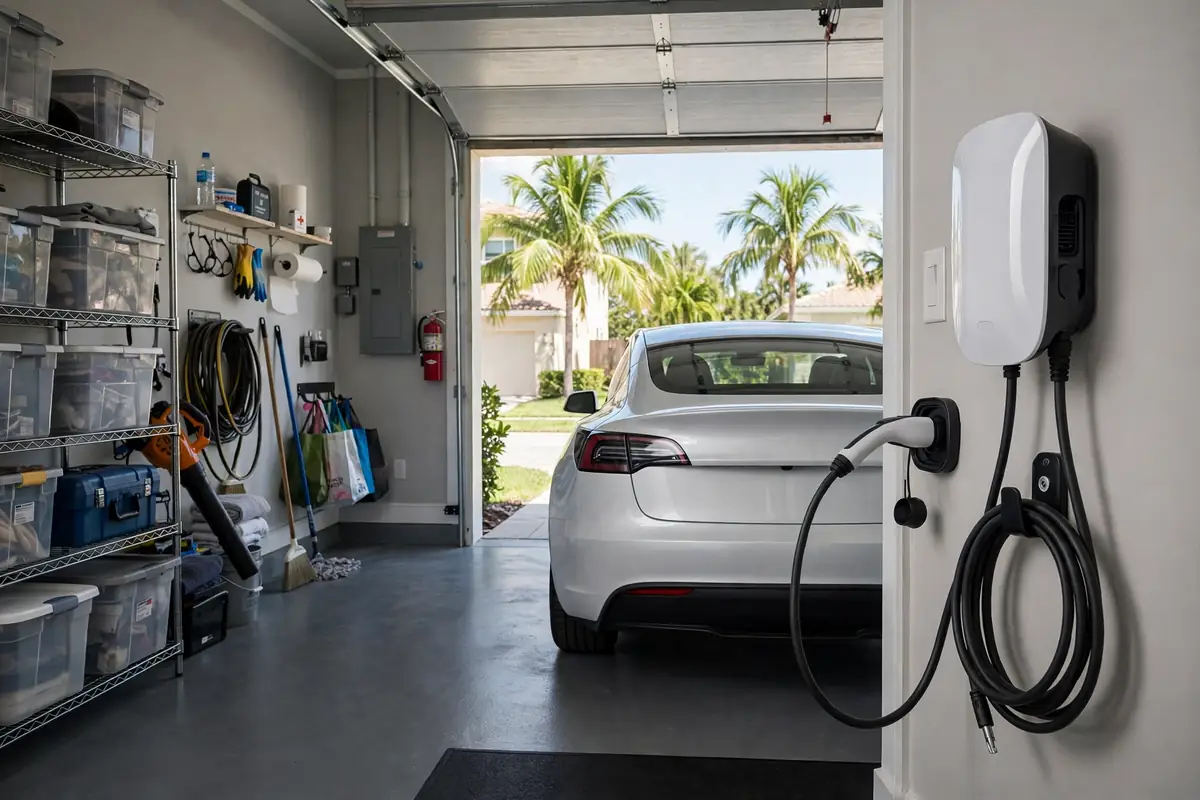
The install is the one-time number; the electricity is the subscription you barely notice. A typical Florida EV driven about 12,000 miles a year uses roughly 3,000 to 3,600 kilowatt-hours annually — at residential rates, a modest monthly line that undercuts the gasoline it replaces by a wide margin, and shrinks further on time-of-use rates with scheduled overnight charging. Your utility's rate structure decides the details, which is why the walkthrough includes setting the charging schedule, not just bolting the unit to the wall.
Insurance, Disclosure, and the Upgraded Panel
An undocumented panel is a recurring villain in Florida insurance conversations: carriers ask about electrical updates at underwriting, and a modern, permitted 200-amp service is the answer they like. At sale, a permitted upgrade with paperwork is a feature; an unpermitted one is a defect to be cured. This is the unglamorous reason we insist on permits for panel work even where a shortcut is physically possible. The upgrade's capacity serves your charger today; its documentation serves your wallet at every transaction the house ever sees again.
This Service, Metro by Metro
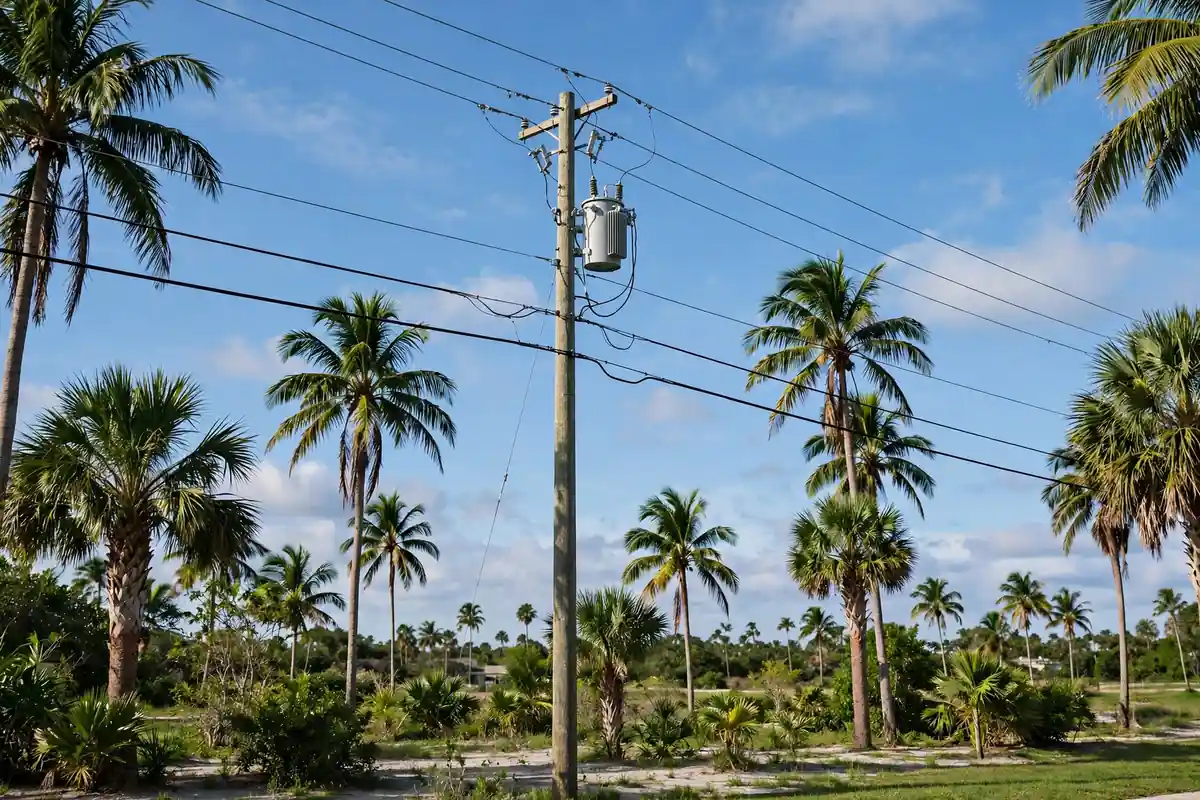
One service, six local versions. In West Palm Beach and Boca Raton, it means load calculations, upgrades, and load management for the state's deep stock of older panels under FPL service and Palm Beach County permitting. In Tampa, the same work runs through TECO territory and Hillsborough permitting, with Ybor-era housing on one side of the river and new suburbs on the other. St. Petersburg and Clearwater add Pinellas' historic housing stock and Duke Energy's charger programs to the equation. And Fort Lauderdale brings Broward's canal homes and condo towers — the multifamily capital of this site. The standards never change: load calculation, permit, matched configuration, inspection. The local facts do, and the local pages on this site carry them city by city.
What the Assessment Decides
For panel work, the assessment is the load calculation itself, plus a condition report on the existing gear. Utility coordination and the inspection sequence are scheduled as part of the job, not left as errands for you. You leave the assessment with a scope that names the circuit, the equipment, the permit path, and the schedule — the four facts every honest installation shares. If the scope cannot be stated that plainly, the assessment is not finished, and neither is our work that day.
Frequently Asked Questions
How do I know if I need a panel upgrade for an EV charger?
Only the load calculation knows. Warning signs: a 100-amp panel, a breaker box with no free spaces, tandem breakers everywhere, or a home that already trips breakers when big appliances coincide.
Is load management safe and legal?
Yes — energy management systems for EV charging are recognized in the NEC and permitted like any other part of the install. They monitor the home's total draw and slow the charger automatically when the house needs the power.
How long is the power off during an upgrade?
Typically part of one day. We sequence the work so refrigeration and essentials are planned for, and the inspection and reconnect are scheduled as tightly as the utility and city allow.
Does Duke Energy's Charger Prep Credit apply to panel work?
Duke Energy Florida's Charger Prep Credit (up to 819 dollars) covers preparation work including wiring and panel-related prep in Duke territory — Pinellas County is the heart of it. Permit fees are excluded. Our incentives guide has the current details.
Will a 200-amp upgrade raise my home's value?
Appraisers and buyers treat modern electrical capacity as infrastructure, like a newer roof: it removes an objection rather than adding a feature. For Florida's older homes it is one of the upgrades buyers' inspectors notice approvingly.
Can you add a subpanel instead of upgrading the main?
Often. A subpanel in the garage fed from a healthy main panel can be the cleanest route for detached garages and long runs. The load calculation still governs the total — a subpanel organizes capacity, it does not create it.
Book Your Installation
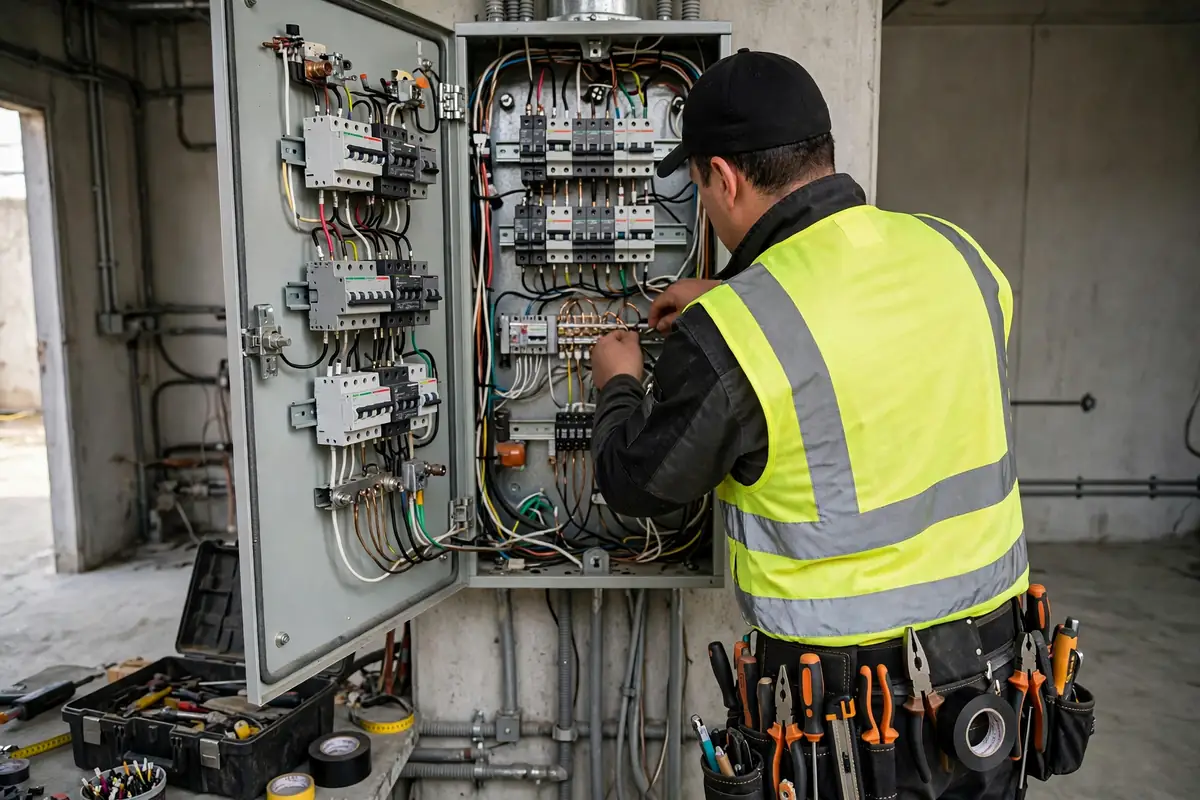
Qualified electricians, permitted work, and straight answers about your panel and your options.
(407) 557-4153 · Mon–Fri 7:00 AM – 10:00 PM · Sat 8:00 AM – 10:00 PM · Sun 7:00 AM – 9:00 PM ET