Two Miamis, Two Kinds of Install
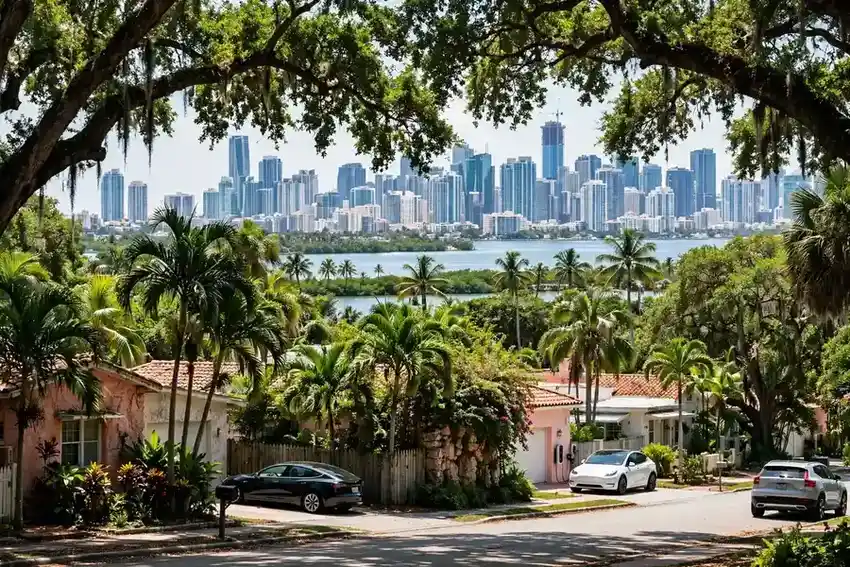
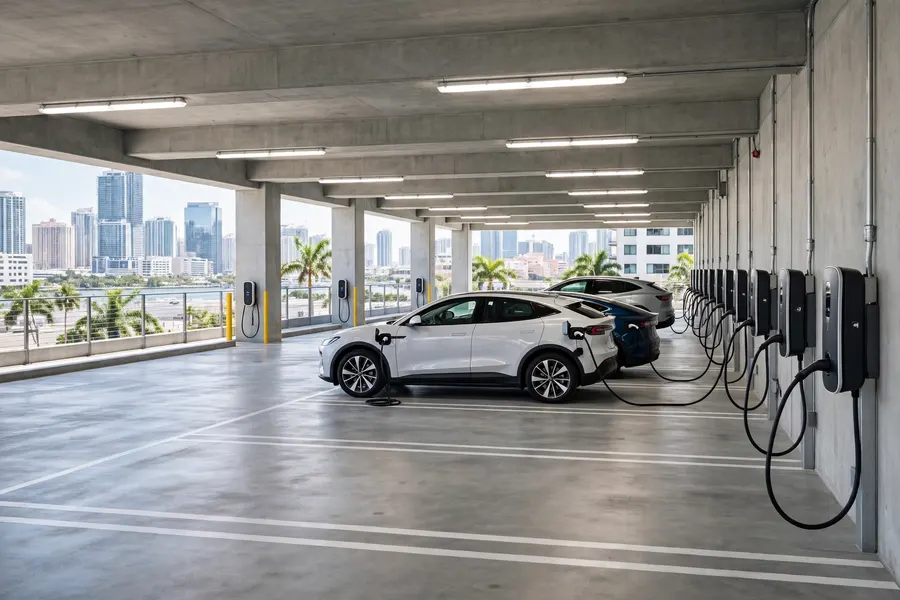
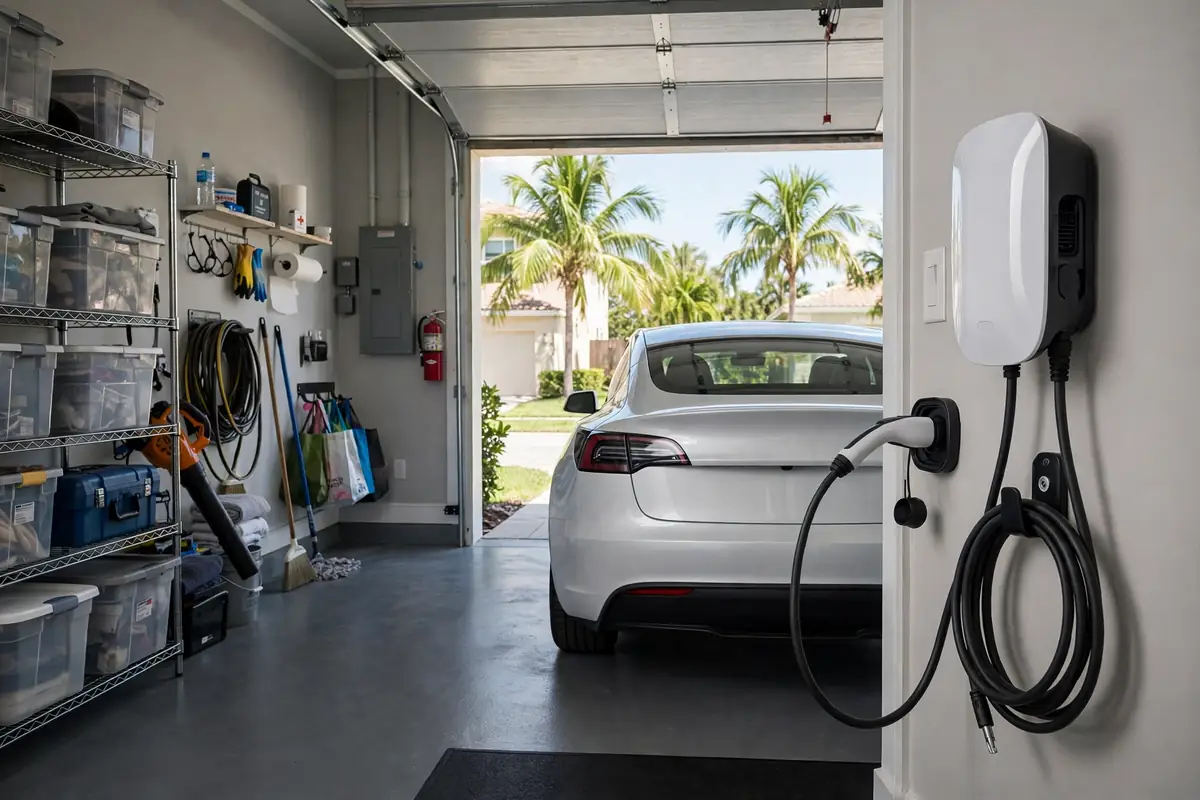
Half of this page is about vertical Miami: Brickell and Edgewater high-rises where the car sleeps in a shared garage, the space is assigned, and the electrical room may sit several floors from the parking level. The other half is horizontal Miami: single-family streets in Coconut Grove, Shenandoah, Little Havana, and Allapattah, where the garage is attached, the driveway is short, and the panel tells a long story of additions. Suburban garages on the Kendall and Doral side of the wider service area add a third pattern — newer construction, larger service, and a simpler run.
Each pattern has its own first question. In a tower, the first question is approval. In an older house, it is capacity. In a newer suburb, it is often just routing. An assessment that starts with the wrong question wastes everyone's week, so we sort out which Miami you live in during the first call.
For Spanish-Speaking Households

A large share of Miami homes run their daily life in Spanish, and an electrical project is easier when the explanation lands the first time. If your household prefers to talk through the load calculation, the permit steps, or the association paperwork in Spanish, say so when you call and we will handle the conversation that way — no gimmicks, just the same arithmetic in the language your family uses at home.
EV Charging Services in Miami, FL
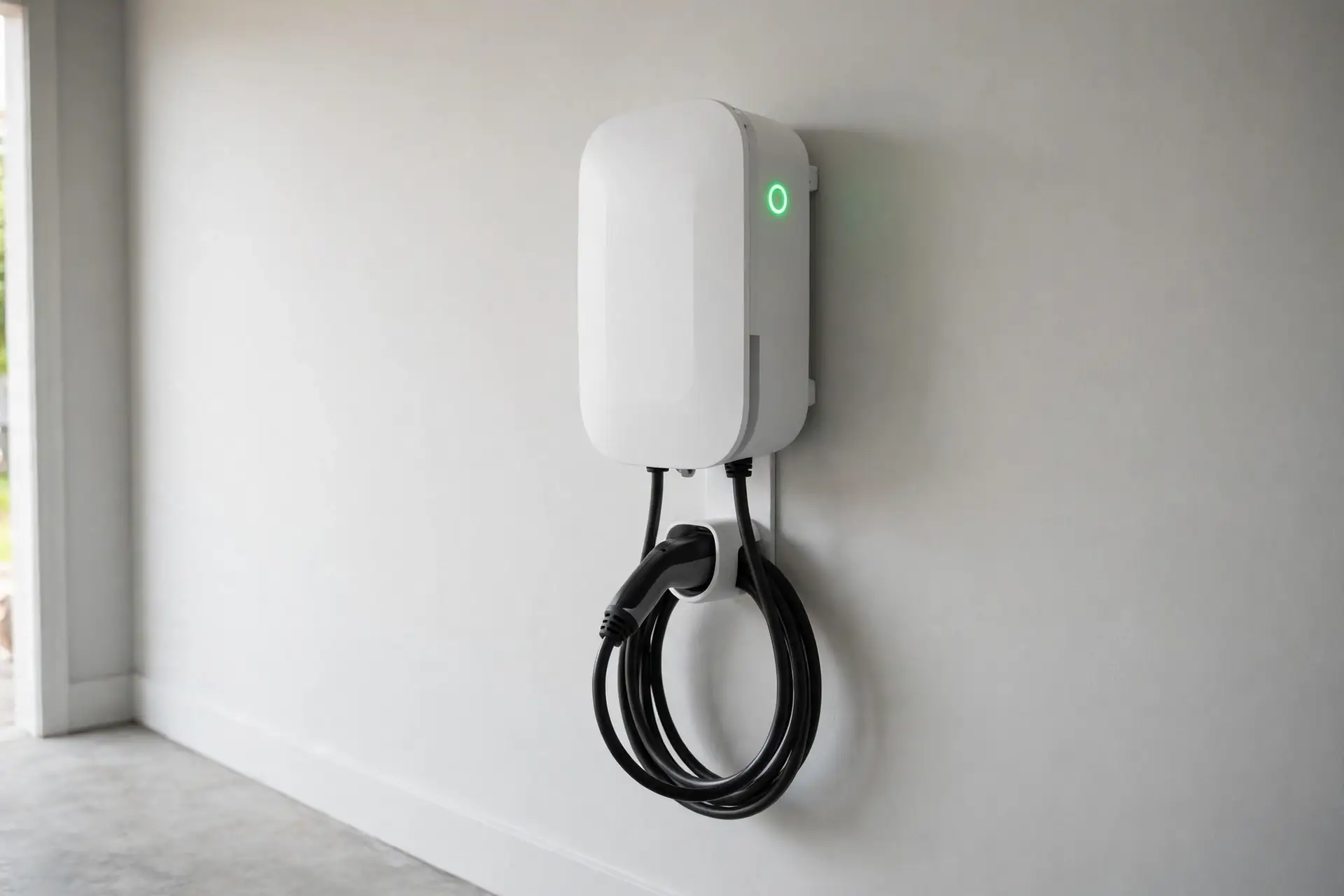
- Residential EV Charger Installation — Home Level 2 installs matched to Miami housing, from high-rise assigned parking to older single-family garages.
- Tesla Wall Connector Installation — Wall Connector and Universal Wall Connector installs across Miami, including condo garage work.
- Level 2 EV Charger Installation — 240-volt charging for every EV brand, hardwired or plug-in.
- Panel Upgrade for EV Chargers — Capacity answers for older Miami panels, with load management considered before replacement.
- Commercial EV Charging — Workplace, hospitality, and multifamily charging in Miami-Dade County.
- EV Charger Repair & Maintenance — Diagnostics and repair for chargers that trip, slow down, or stop responding.
The Condo Route: Approval First, Always
Miami's condo weight is the defining fact of charging here. Florida Statute 718.113(8) gives a unit owner the right to install a charger in a limited-common-element or exclusively assigned parking space — and it also gives the association real authority over how that happens. The association can require an application, architectural review, proof of a licensed installer, and insurance documentation, and the owner carries the cost of the installation and its upkeep.
The order of operations is not negotiable: approval first, drilling second. Owners who install first and ask later can end up removing work at their own expense, and towers in Brickell and Edgewater enforce their rules. Our condo work starts with the packet — drawings, charger specification, circuit route, installer credentials — prepared so a board or manager can actually say yes to it. Our Florida condo and HOA charger rights guide walks through the statute in plain language before you start.
Assigned parking brings one more practical point: the distance between the electrical source and your space decides the shape of the job. A space near the garage panel can be a short, clean run. A space three levels away becomes a routing and metering conversation. Both are doable; they are simply different projects, and the assessment prices them as what they are.
FPL EVolution in Miami: Read the Eligibility Lines
Miami is Florida Power & Light territory, so the EVolution Home offer reaches most mailboxes here eventually: FPL supplies, installs, and owns the charger for 36 dollars a month on the full-service version, or 27 dollars a month for the equipment-only version, on a 10-year agreement, with charging described as "unlimited" during off-peak hours. For an eligible single-family household that expects to stay put, that trade can make sense on its own terms.
The eligibility lines decide the matter for much of Miami. The program is limited to single-family and townhouse homes with an attached garage. It is not available to condo or apartment residents — which removes a large share of Miami drivers at the first line. It is also not open to solar net-metering customers, and the charger remains FPL property throughout the agreement. If you live in a Brickell or Edgewater tower, EVolution was never an option on the table; your route is the association process above and a charger you own. Our FPL EVolution versus buying your own charger guide sets the comparison out in full.
Older Panels in the Grove, Shenandoah, and Allapattah
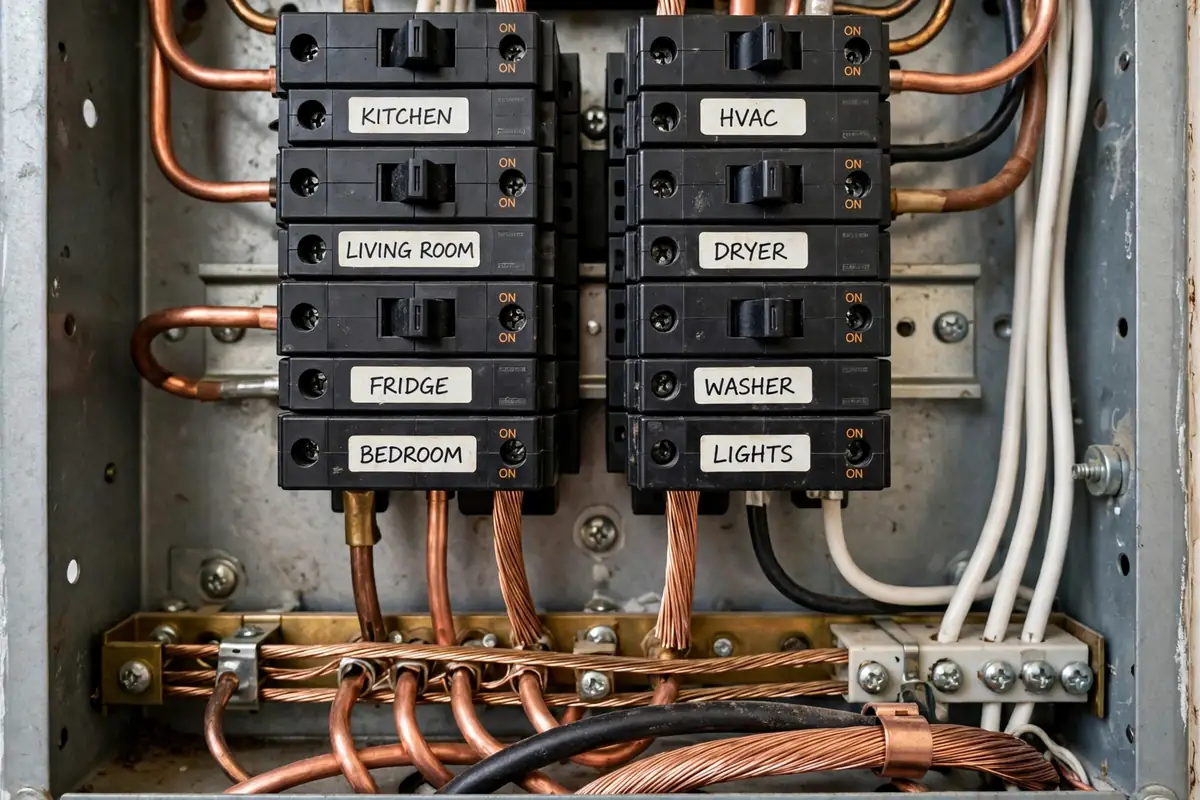
Drive the older single-family streets and the panel story repeats: a 100-amp service that once ran lights and a refrigerator now carries central air, an electric range, a dryer, a water heater, and sometimes a pool. Adding a 40- or 50-amp charger circuit to that stack without arithmetic is how breakers learn to trip at dinner.
The honest sequence starts with a load calculation under NEC Article 220. Many 150-amp homes have real headroom once the numbers are written down. Tight 100-amp homes often still charge well with the charger configured to a lower amperage, or with an energy management system that eases the charger back while the oven and air conditioning peak together. A full service upgrade is the last step on that ladder, not the opening suggestion. The Miami panel upgrade page lays out the rungs in order, and every quote we write traces back to a calculation you can read.
Permits: Two Desks in One Service Area
Inside the city limits, charger circuits are permitted through the City of Miami building department. In unincorporated Miami-Dade — which covers many addresses on the Kendall side and other county pockets near the city — the permit runs through Miami-Dade County's own portal instead. The desk changes; the discipline does not: application, circuit built to the Florida Building Code, inspection to close the permit.
That closed permit record does quiet work for years. It is the document an insurer asks about, the answer a buyer's inspector accepts, and the baseline the next electrician in the house will trust. Our Florida EV charger permit guide explains what inspectors look for and why unpermitted circuits surface at resale. We file at the desk your address belongs to — checking which side of the city line you sit on is part of the assessment, not an errand we hand back to you.
Hurricane Season and the Charged Car
A Miami charger earns its keep in June through November. When a storm enters the cone, a full battery is options: the option to leave early, to run errands without queueing at a busy public charger alongside everyone else who waited, and to arrive home after a short evacuation with charge to spare. The practical habits are simple — charge to a higher level when a warning is posted rather than after, keep the usual overnight routine during storm watches, and never count on public charging in the forty-eight hours before landfall, when demand spikes across the county.
The install itself is built for the same season: weather-rated hardware where the charger lives outdoors or in an open garage, sealed conduit, mounting placed with flood awareness in low-lying streets, and a standing conversation about surge protection at the panel, because Miami's summer lightning does not ask permission either. Our outdoor charger installation guide covers the hardware side in detail.
A Note on the Federal Credit, in Past Tense
Homeowners sometimes ask about the federal alternative fuel refueling credit, Section 30C, which for a time covered a share of home charger installation cost in qualifying census tracts. That credit ended on June 30, 2026. It is not available for a charger installed today, and any quote that quietly assumes it is working from an old calendar. Our Florida incentives and rebates guide keeps the current picture in one place.
Neighborhoods We Serve in Miami
We install across the City of Miami and nearby unincorporated Miami-Dade, including Brickell, Edgewater, downtown, Coconut Grove, Shenandoah, Little Havana, Allapattah, Flagami, West Miami, and the suburban streets toward Kendall — ZIP codes 33101, 33130, 33132, 33135, 33142, and 33155 among them. See our full service locations or reach us through the contact page.
How It Works
Step 1: Start with the building
Condo tower, older house, or newer suburb — plus the EV model, where it parks, and what you know about the panel. A panel photo and, for condo owners, a copy of your association's application requirements move the conversation forward quickly.
Step 2: Approval and arithmetic
For condo installs, the association packet goes in first. For every install, the load calculation runs before hardware is chosen, and you see the headroom as a number.
Step 3: Permit, then install day
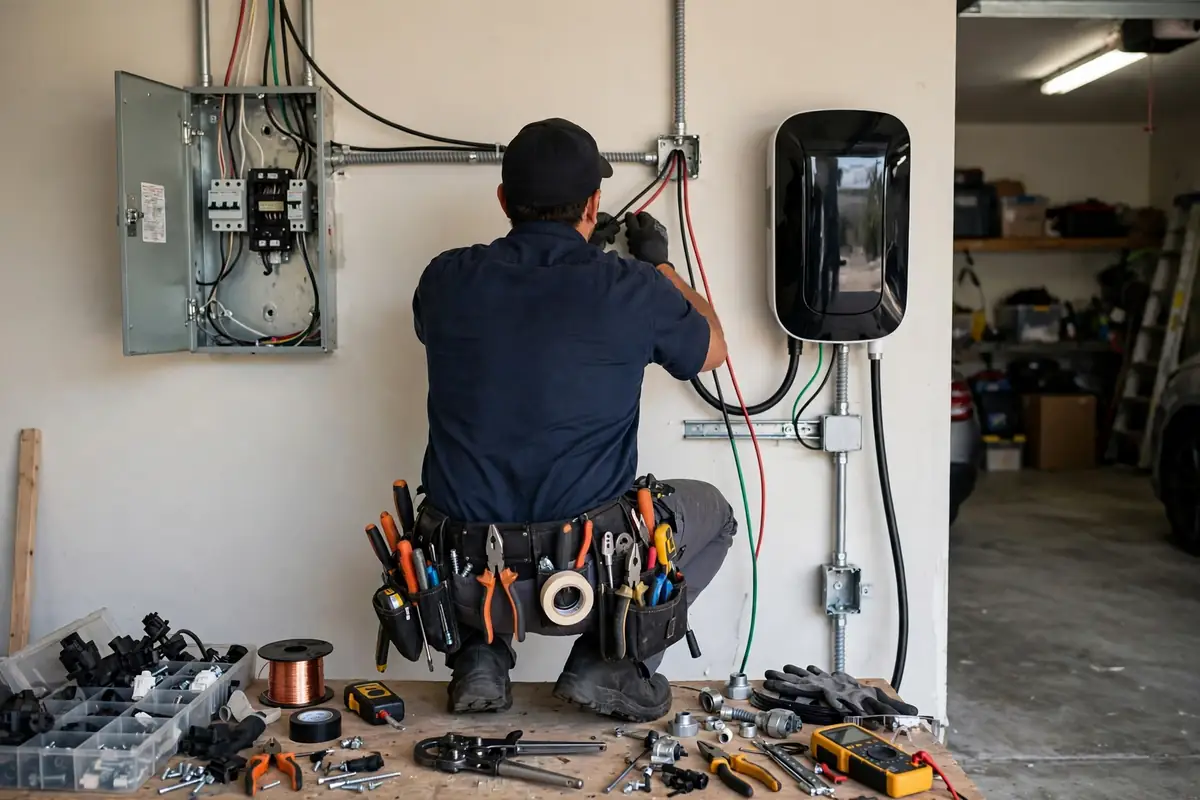
We file at the City of Miami or Miami-Dade County desk your address belongs to, run the circuit, mount and configure the charger, and prove it with a test charge on your car.
Step 4: Inspection and records
The inspector closes the permit, and your records hold the permit documentation, the charger configuration, and the updated panel labeling.
Frequently Asked Questions
What does Florida Statute 718.113(8) require before a Brickell condo owner books a charger install?
Written association approval comes first. The statute gives you the right to install in your assigned space, and it lets the association require an application with plans, a licensed installer, and insurance documentation — with installation and upkeep costs on the owner. We prepare that packet with you, and no drilling is scheduled until the approval is in hand.
Why does FPL EVolution exclude a Miami condo household even when the building has assigned parking?
Because the program's own eligibility is written for single-family and townhouse homes with an attached garage, and it does not extend to condo or apartment residents at all. Assigned parking does not change the housing category. The condo route is the statute process above and a charger you own outright.
My Coconut Grove house still runs a 100-amp panel with window units replaced by central air — where does the charger fit?
Usually at a configured amperage, often with load management behind it. Central air is the load that changed the math in older Grove homes, so the calculation counts it honestly, then sizes the charger to the headroom that remains. Many 100-amp homes charge overnight without a service upgrade; the calculation, not a guess, draws the line for yours.
Which office takes the permit when my address sits in unincorporated Miami-Dade near Kendall rather than inside Miami city limits?
Miami-Dade County's permitting portal, not the City of Miami building department. County pockets sit between city neighborhoods all over this service area, so we confirm the jurisdiction from your address at assessment and file at the correct desk from the start.
How should a Miami driver set charging ahead of a hurricane warning when evacuation is possible?
Charge earlier and higher than your routine: top the car up when a warning is posted, keep it plugged in during the watch, and treat public chargers as unavailable in the last two days before a storm, when queues form county-wide. A full battery at home is the version of preparation you control completely.
Can a Little Havana duplex owner share one charger circuit between two units?
One circuit can serve one charger, and two households can share that charger by schedule — but the electrical and billing questions need settling first: which panel feeds it, how the cost of power is divided, and what the permit shows. Duplex installs are common in Little Havana; we scope them as shared arrangements on paper before any wire is run.
Get Your Charger Installed in Miami
Condo packet, load calculation, permit, and install — one call starts the assessment in Miami.
(407) 557-4153 · Mon–Fri 7:00 AM – 10:00 PM · Sat 8:00 AM – 10:00 PM · Sun 7:00 AM – 9:00 PM ET