Quick Answer: What Exists Right Now?
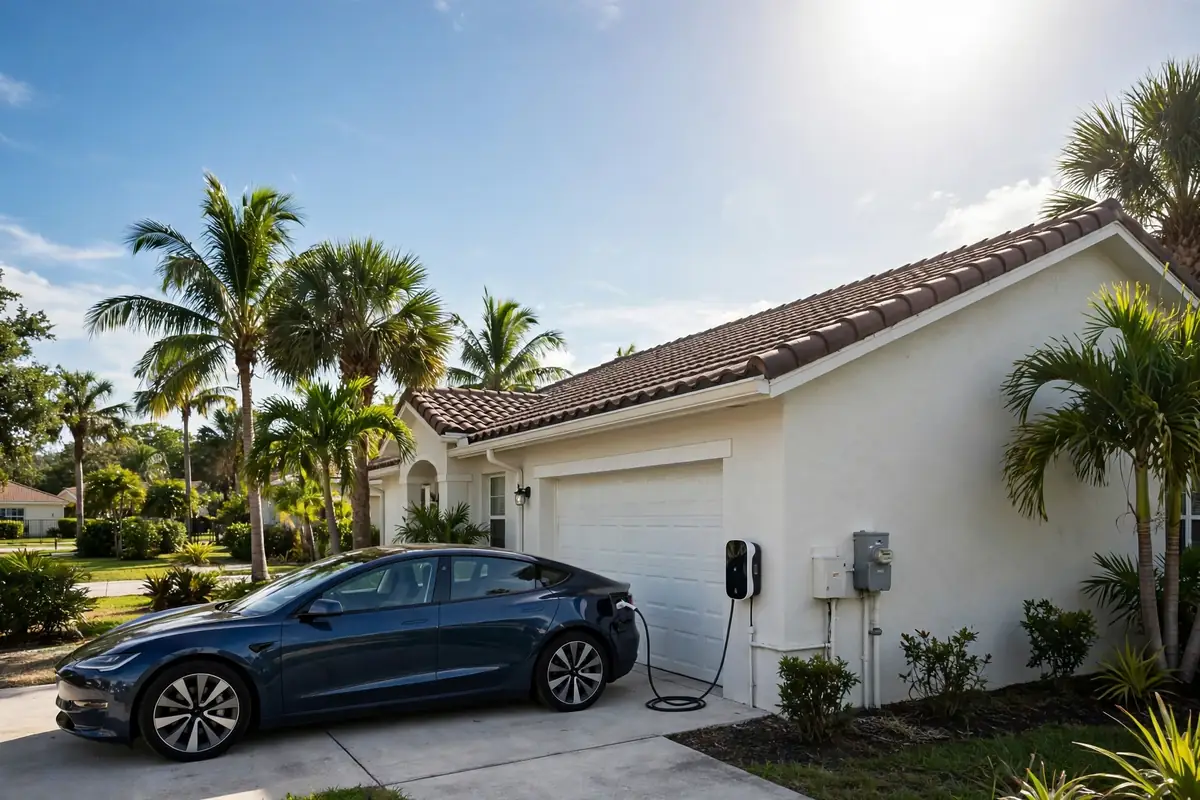
If you install a home EV charger in Florida today, the incentive landscape is: no federal credit, no state rebate, and whatever your electric utility offers. That makes your utility the whole game — and Florida has three very different utility answers depending on your address. This guide walks each one, with the fine print that matters.
1. The Federal 30C Credit: Ended June 30, 2026
The Alternative Fuel Refueling Property Credit (section 30C) once covered 30 percent of a home charger's cost, equipment and installation, up to a cap, for homes in eligible census tracts. It terminated for property placed in service after June 30, 2026. A charger installed today does not qualify — full stop.
Two practical notes. First, if your charger was installed and placed in service on or before June 30, 2026 and your home sits in an eligible tract, the credit may still be claimable on your 2026 return — talk to your tax professional. Second, beware stale content: plenty of installer pages still headline the 30C credit because nobody updated them. If a quote leans on it, ask for the program that actually applies to your address.
2. Duke Energy Florida: Charger Prep Credit up to 819 Dollars

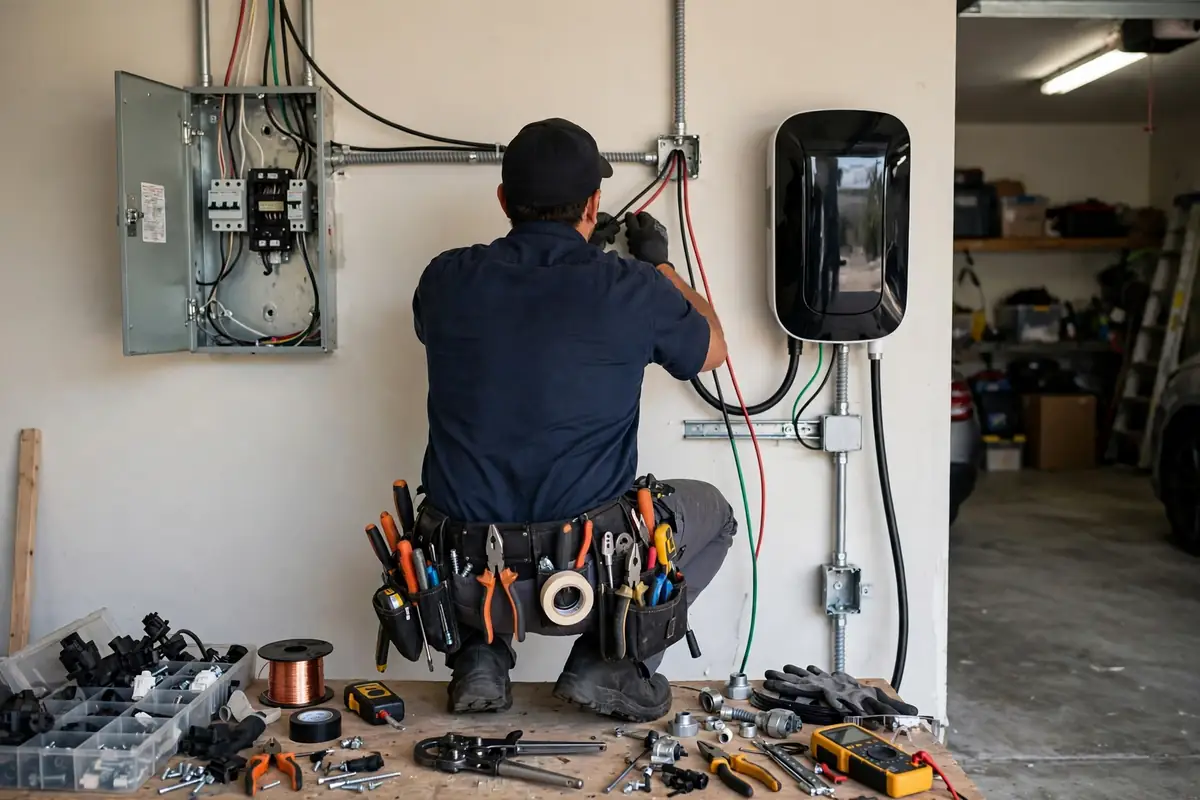
Duke territory — Pinellas County is its heartland, including St. Petersburg and Clearwater — has the most useful residential program in the state. The Charger Prep Credit pays up to 819 dollars toward the preparation behind a home install: the wiring, panel work, and charger readiness. Permit fees are not covered, and the charger hardware itself is yours to buy.
Duke also offers an Off-Peak Charging Credit — 7 dollars 50 cents a month — for charging during off-peak windows, which any modern charger's scheduler captures automatically. Stacked over years of ownership, the prep credit plus the monthly credit is real money toward exactly the work our panel upgrade page describes.
3. FPL EVolution Home: A Subscription, Not a Rebate
In FPL territory — West Palm Beach, Boca Raton, Fort Lauderdale and most of the southeast — the headline program is EVolution Home: 36 dollars a month for a full-service arrangement (charger, installation, and maintenance included) on a 10-year agreement, or 27 dollars a month for equipment only.
Understand what that is: a rental. You do not own the charger, the agreement runs a decade, and early exit has terms. For some households — renters with long leases, anyone who hates owning hardware — it can make sense. For most homeowners, buying a charger outright costs less over the agreement's life and leaves the equipment, and the choice of installer, yours. Our FPL EVolution vs buying your own charger guide runs the comparison properly.
4. TECO: Commercial Money, No Residential Rebate
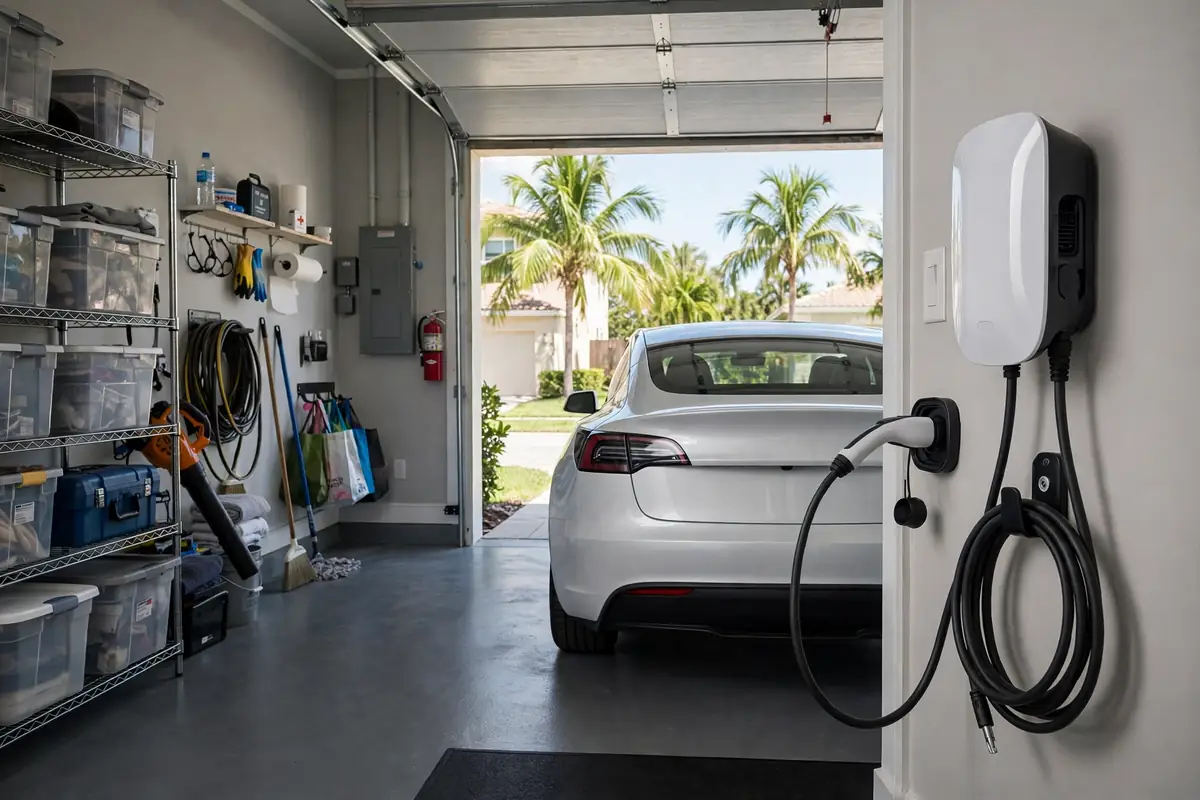
Tampa Electric offers no residential charger rebate — if a Tampa installer quotes you one, ask them to name it. TECO's EV money is commercial: the Drive Smart program supports workplace and public charging ports, with TECO owning and maintaining the equipment. For homeowners, the useful TECO tool is the optional Energy Planner time-of-use rate, which makes scheduled overnight charging cheaper.
5. What Florida Does NOT Have
No state rebate for home chargers. No state tax credit. No statewide grant program for residential installs. Florida's EV policy support runs through the utilities and through law — notably the condo charging rights in section 718.113 — rather than through checks to homeowners. Anyone who tells you otherwise is selling something.
6. Commercial and Multifamily Incentives
Businesses have a different stack: TECO Drive Smart in Tampa, FPL's commercial EVolution offerings in the southeast, and Duke's commercial programs in its territory. Multifamily properties should also know that utility programs change frequently — the assessment stage of a commercial install includes a current-program check for your exact address.
7. How to Actually Claim What's Available
- Duke customers: confirm your address is in Duke Energy Florida territory, keep your electrician's itemized invoice for the prep work, and follow Duke's current application steps — we flag eligibility during your assessment.
- FPL customers: decide subscription versus ownership first (guide linked above); there is nothing to "claim" on the ownership route — the choice itself is the decision.
- Everyone: keep the permit record and invoices. Programs open and close; documentation is what lets you use the next one.
Key Takeaways
The honest Florida stack in late 2026 is: Duke's prep credit where you can get it, a clear-eyed FPL decision in the southeast, time-of-use rates everywhere, and no federal or state rebate to wait for. The charger decision should be made on electrical fit and ownership preference — not on a credit that no longer exists.
How to Verify Any Incentive Claim in Two Minutes
Incentive misinformation survives because checking feels like homework. It is two minutes: search the program name on the utility's own domain — not an installer's blog — and look for an expiration or 'as of' date. If the only sources promoting a credit are companies that profit from your install, treat the claim as advertising. The federal 30C pages still ranking today are a museum of this failure mode: accurate once, abandoned since, and quietly costing homeowners real expectations. Our rule on this site: every program we name carries its current status, and when one changes, the guide changes.
Should Incentives Change WHEN You Install?
Programs reward the prepared, not the patient. Duke's credit applies to work done under its current terms; FPL's subscription is a standing offer; the expired federal credit rewards nobody new. The homeowners who lose money to incentives are the ones who install the wrong equipment chasing a program, or delay a needed install waiting for a rumored one. Fit the charger to the house and the car first. Then collect whatever your address legitimately offers. That order has never been wrong yet.
A Word on Timing: Programs as of November 2026
Everything in this guide is stated as of November 2026, and utility programs are living documents — Duke, FPL, and TECO each revise terms, amounts, and eligibility on their own calendars. When your installation is assessed, the program check is re-run against the utility's current pages for your exact address, because the gap between a guide's publication and your permit is exactly where stale claims breed. If a program named here has closed by the time you read this, the structure of the decision — own versus subscribe, credit versus rate — survives it, and your assessment will carry the current numbers.
Incentives for the Next Purchase: Cars vs Chargers
A final distinction that saves real confusion: this guide covers charger incentives, and they are not car incentives. Vehicle-side programs — manufacturer offers, dealer discounts, occasional utility EV programs — live and die on their own calendars and do nothing for the electrical work in your garage. When a salesperson bundles the two into one breath ('there are big incentives right now'), separate them on paper: what applies to the car, what applies to the charger, and who is offering each. For chargers in Florida in late 2026, the answer is the short list this guide opened with — and short lists are exactly the kind worth trusting.
Frequently Asked Questions
Are there federal tax credits for home EV charger installation in Florida?
Not anymore. The section 30C credit ended for chargers placed in service after June 30, 2026. Installations completed by that date in eligible census tracts may still be claimed on a 2026 return — confirm with your tax professional.
Does FPL offer EV charger rebates?
FPL offers EVolution Home, a subscription program (36 dollars a month full-service, 27 equipment-only, 10-year agreement) — not a rebate. The charger remains FPL's under the full-service plan.
What is the Duke Energy charger credit in Florida?
Duke Energy Florida's Charger Prep Credit pays up to 819 dollars toward wiring and preparation work for a home charger install (permit fees excluded), and Duke also offers a 7-dollar-50-cent monthly off-peak charging credit.
Are there any Florida state rebates for EV chargers?
No. Florida has no state-level rebate or tax credit for residential charger installation. Support comes from utility programs and from laws like the condo charging rights in section 718.113.
Does TECO give Tampa homeowners a charger rebate?
No. Tampa Electric's EV programs are commercial (Drive Smart). For homeowners, TECO's relevant offer is the optional Energy Planner time-of-use rate for cheaper overnight charging.
Should I wait for new incentives before installing?
There is no announced successor to 30C and no Florida program in the pipeline that we can point to. If a charger fits your life now, the utility programs above are the stack to use — waiting buys you more months of public-charging detours, not a bigger check.