What Level 2 Actually Buys a Sarasota Driver
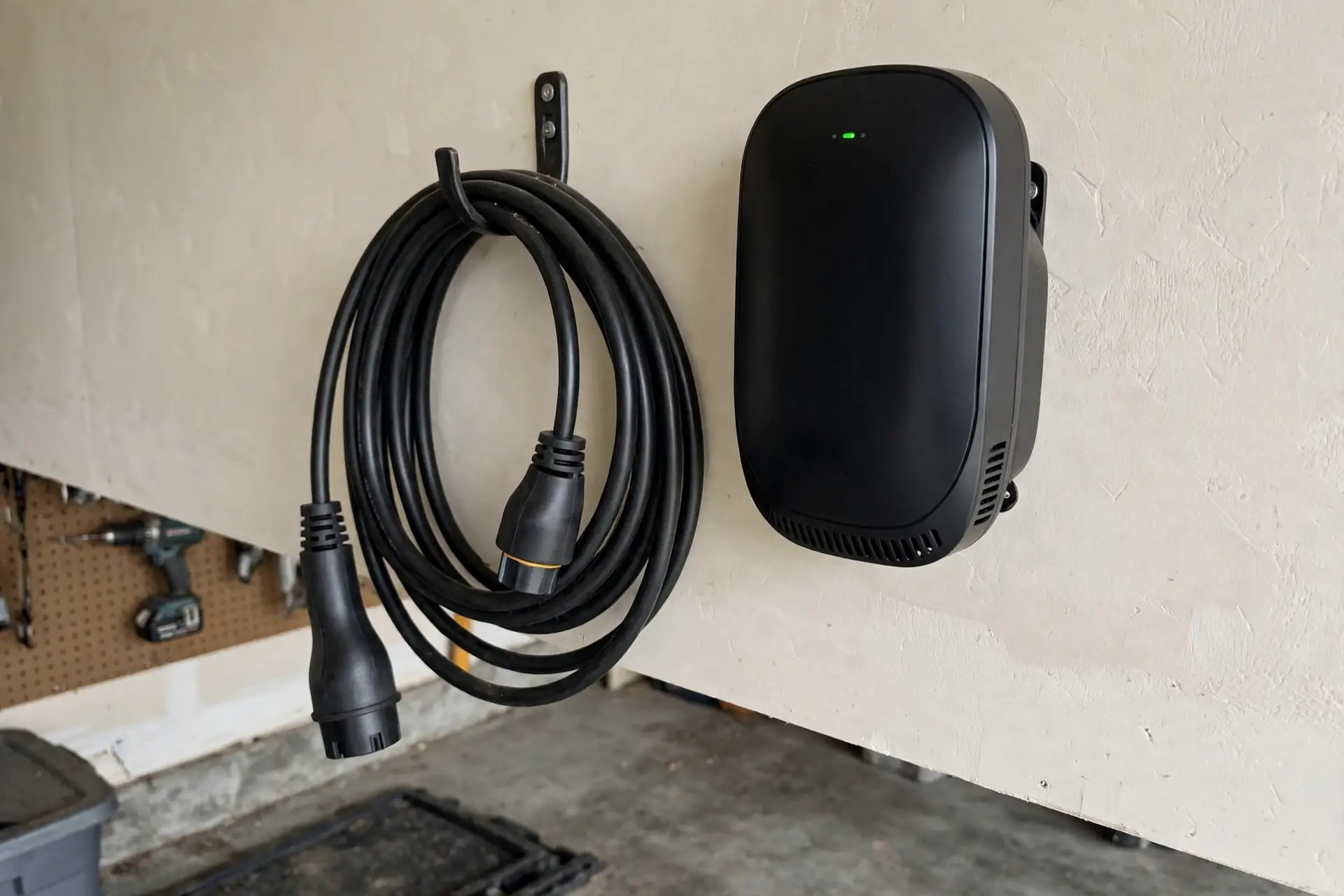
The Level 1 cord that came with the car adds 3 to 5 miles of range an hour — a Siesta Key round trip takes all night to repay. Level 2 adds 25 to 45 miles an hour depending on the circuit. The week that follows from that arithmetic: the I-75 commute, the school run, the bridge traffic, the Fort Myers day trip — all of it silently refilled while you sleep. Level 3 DC fast charging is highway equipment; no Sarasota home needs it, and anyone who tries to sell you a home version is selling you a story.
Hardwired or Plug-In: The Sarasota Answer
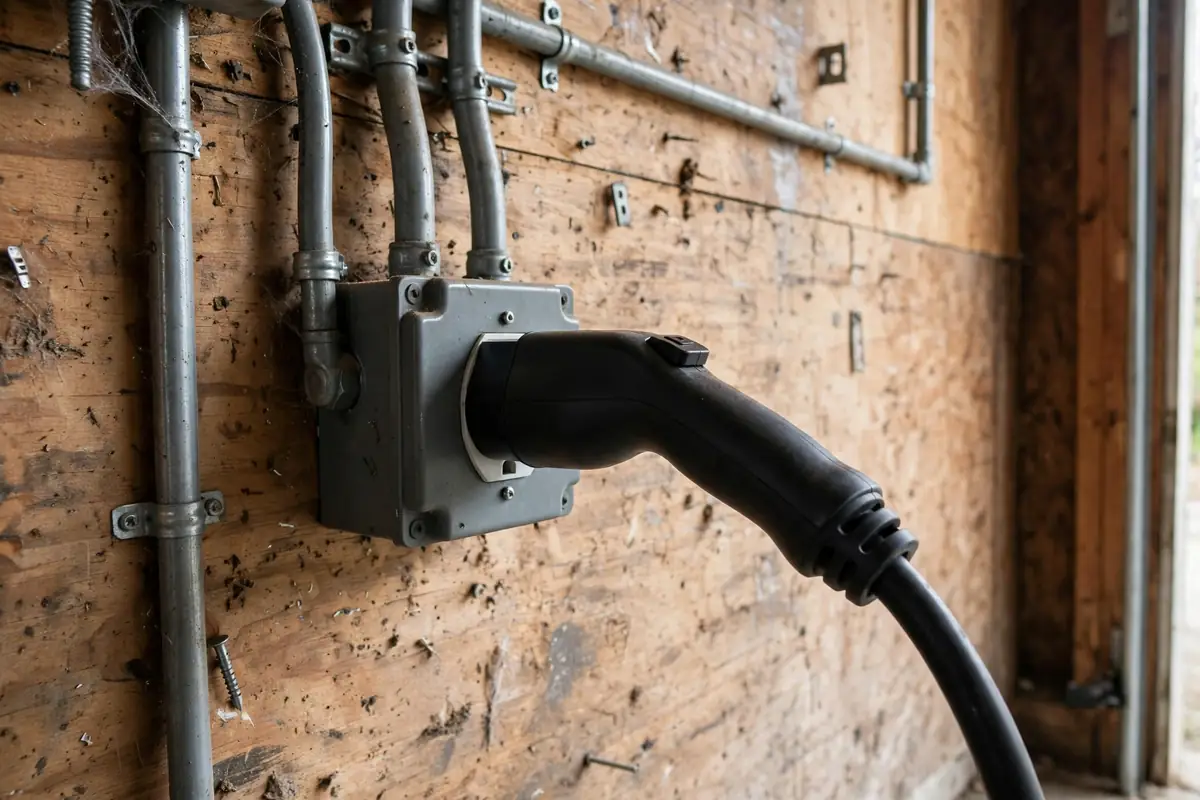
Hardwired units mount permanently, reach the highest amperages (48 amps on a 60-amp circuit), have no receptacle to wear under continuous load, and are the default for outdoor and island installs where weather sealing matters.
Plug-in units on an industrial-grade NEMA 14-50 outlet trade a little top speed (40 amps maximum) for portability — the charger unplugs and goes with you at a move, which seasonal and renting households genuinely value. The non-negotiable either way: the outlet, if there is one, is commercial-grade, because a builder-grade receptacle under eight hours of nightly continuous load is a known failure story.
We install both, we explain both at the assessment, and the load calculation — not habit — decides the circuit size behind them.
Brand by Brand, Honestly
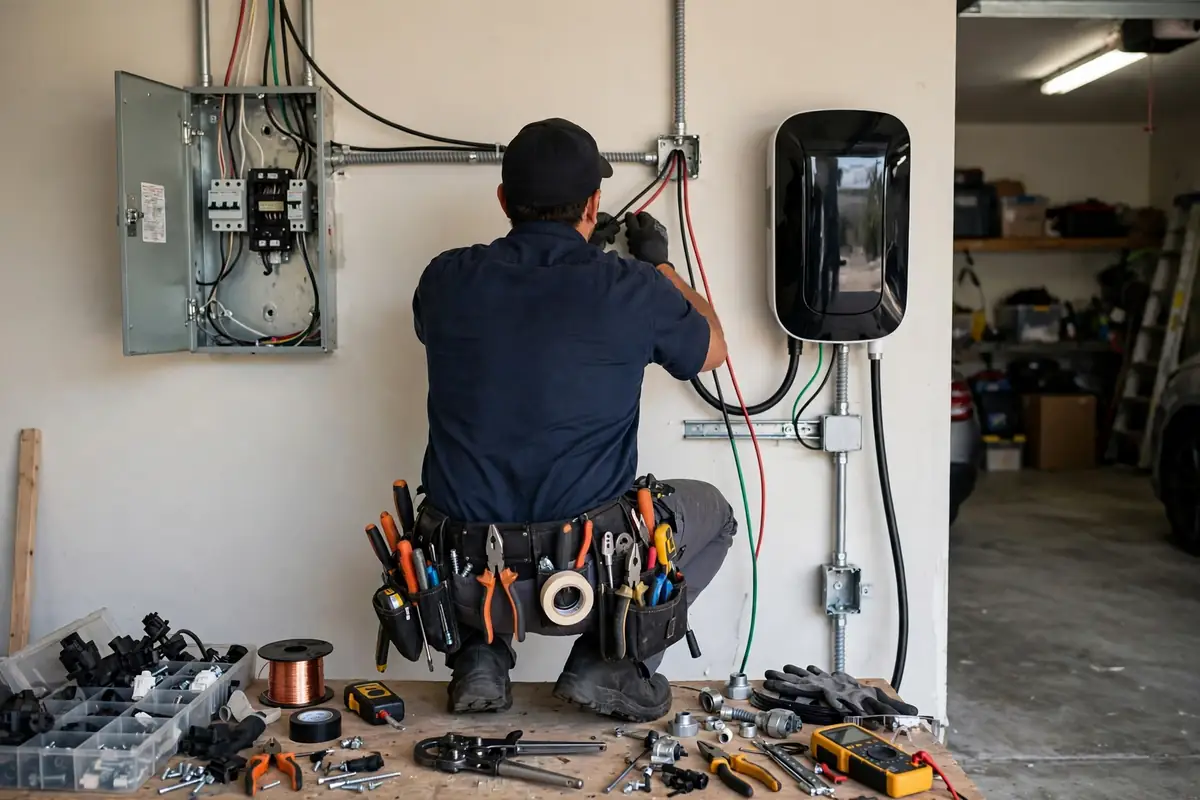
Every modern EV charges happily on a properly installed Level 2 circuit; the differences live in connectors and apps. Tesla's native connector is NACS; most other brands on Sarasota roads still carry J1772 ports, with NACS adapters and native ports spreading model year by model year. Universal units with built-in adapters end the question. Charger brands our Sarasota customers choose most — Tesla, ChargePoint, Emporia, Wallbox, Grizzl-E — all commission the same way: circuit first, configuration matched to the breaker, test charge on your car. Emporia and Wallbox units add solar-aware modes Sarasota's rooftop-solar homes ask about; we set those up as part of commissioning where the home's system supports them.
Circuits, Translated
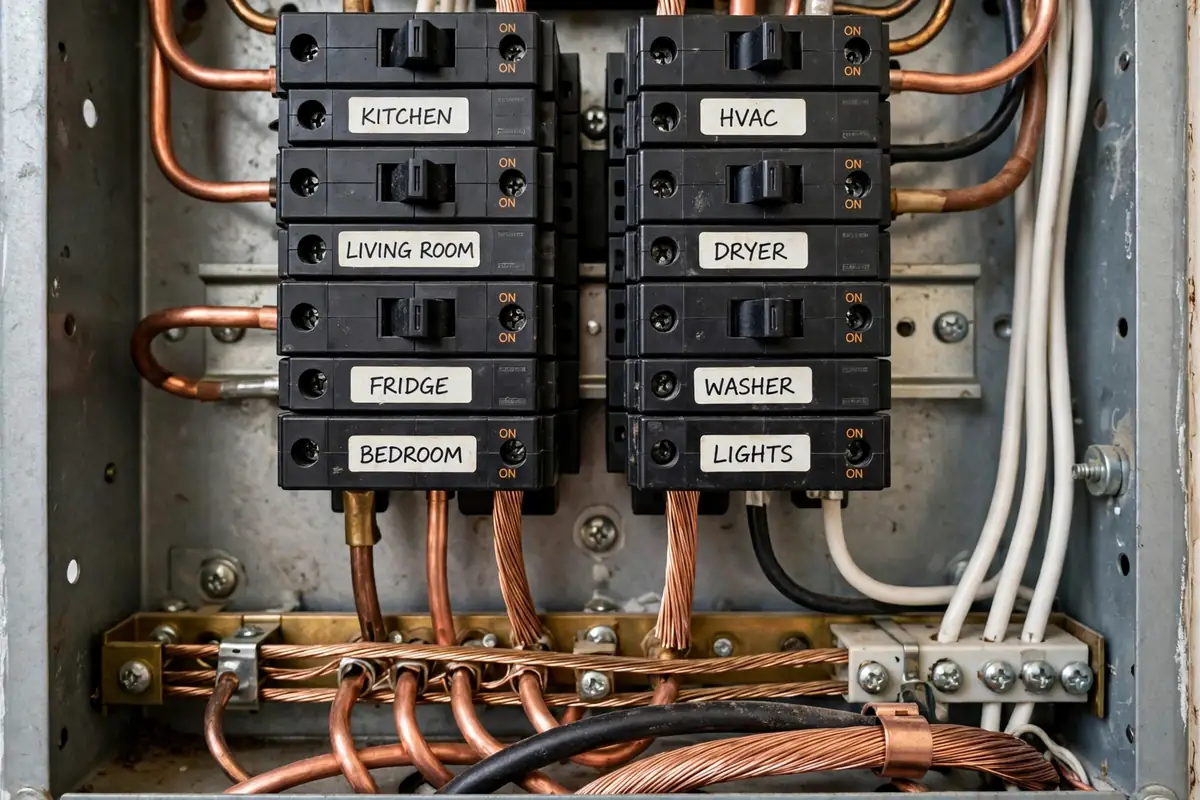
- 60-amp circuit, 48-amp charging: the full-speed setup, roughly 44 miles of range per hour for most EVs.
- 50-amp circuit, 40-amp charging: the workhorse — a full battery overnight for essentially every Sarasota routine.
- 40-amp circuit, 32-amp charging: the older-panel answer, usually with load management behind it, still several times faster than the wall cord.
The right number is the largest one your panel's calculation honestly supports — bigger is not better when it is not honest.
Sarasota Specifics

Seasonal homes: plug-in units travel; hardwired units wait. Either way, surge protection and a clean restart after outages are in the plan, and the charging schedule is set before we leave.
Islands and outdoors: Siesta Key, Lido Key, and Bird Key installs get weather-rated hardware, sealed conduit, and corrosion-resistant fittings as the baseline, not the upgrade.
Condos and associations: assigned-space installs run on Florida's right-to-charge framework — the association can set reasonable conditions, and the paperwork is part of our scope. Our condo and HOA guide explains the state's rules in plain language.
Solar homes: FPL's EVolution program excludes net-metering customers, so Sarasota solar households install privately — and often ask the charger to favor midday production when the car is home. Our solar charging guide covers what that can and cannot do.
Permits in Sarasota
A Level 2 circuit is permitted electrical work — City of Sarasota building services within the city, Sarasota County planning and development services beyond it, including Palmer Ranch and Gulf Gate. We pull the permit, build to the Florida Building Code, and close with the inspection. The permit record follows the house, and it is the difference between an install and an improvement when the home sells.
How It Works
Step 1: The call
Car, parking, panel basics. A panel photo gets most Sarasota installs scoped before a visit.
Step 2: Load calculation
The panel's real headroom, as a number. Circuit size follows from it — not the other way around.
Step 3: Install and commission
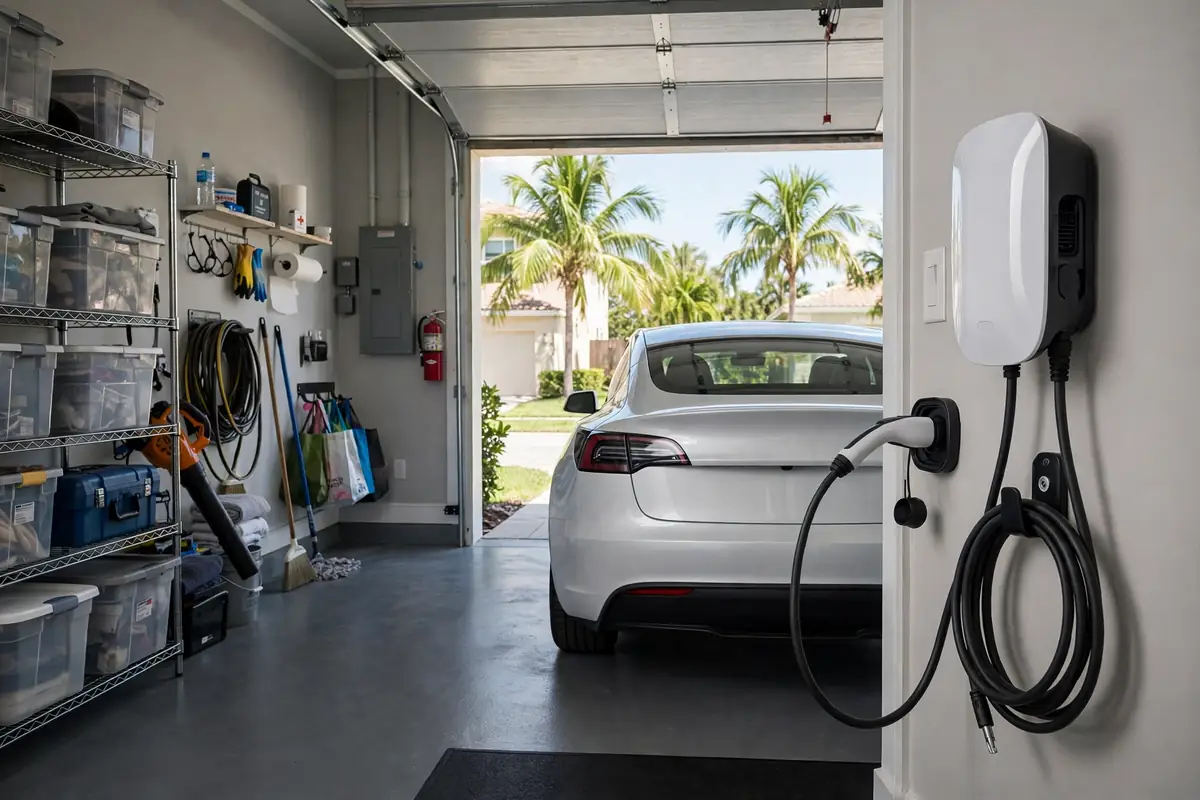
Circuit, charger, configuration matched to the breaker, test charge on your car, schedule set for FPL's overnight hours.
Step 4: Inspection and folder
The permit closes; you keep the record, the configuration, and the labeled panel.
Frequently Asked Questions
Which Level 2 charger should a Sarasota home buy first — the car or the charger?
The car decides the connector; the panel decides the circuit; the charger is the easy middle. Buy the car you want, then let the assessment match the charger to both. Choosing a charger before the load calculation is the one ordering mistake we unwind most.
Can a plug-in Level 2 charger in Sarasota really not use a standard outlet?
It can plug into one — that is exactly the problem. Standard receptacles are not built for eight-plus hours of continuous nightly load, cycle after cycle. The industrial-grade 14-50 costs a little more and is the difference between an outlet and an appliance connection.
How does Level 2 charging fit a Sarasota snowbird's season?
Perfectly, and it is the most common Sarasota pattern we install: charger commissioned in the fall, car full every morning of the season, and a home that sits on surge protection through the summer. Plug-in units can travel north with you if the season runs both ways.
Will a Level 2 install in Sarasota work for my next EV too?
Yes — that is the point of installing the circuit properly once. Connectors evolve (the J1772-to-NACS shift is the current example), adapters bridge them, and a honestly sized 240-volt circuit outlives several cars.
Do Sarasota renters have a Level 2 option?
Often, with the landlord's written permission — most cleanly as a plug-in install on a permitted outlet, where the charger leaves with you. The assessment call sorts out which version your lease and panel allow.
Get Level 2 Charging Installed in Sarasota
Permitted, load-calculated, and proven with your car — one call starts it.
(407) 557-4153 · Mon–Fri 7:00 AM – 10:00 PM · Sat 8:00 AM – 10:00 PM · Sun 7:00 AM – 9:00 PM ET