The First Fact: Your Charger Draws Grid Power, Timed Your Way
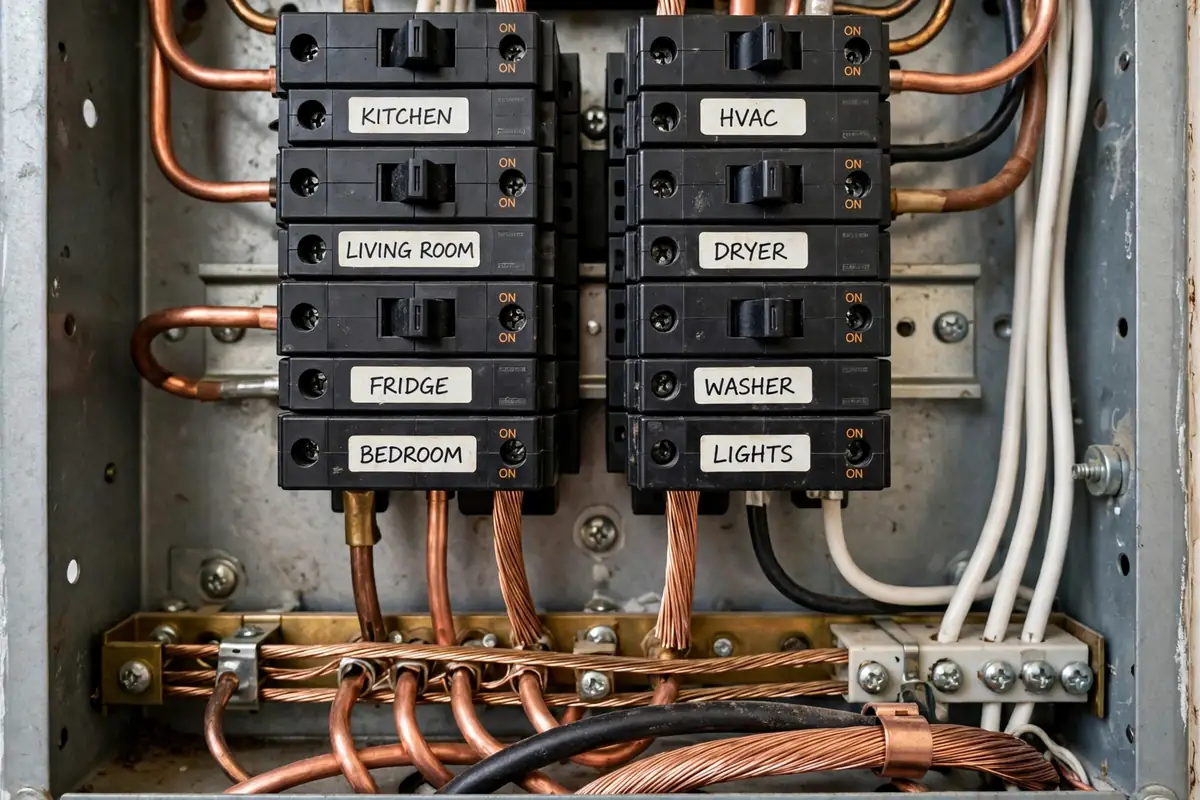
A standard home charger does not drink directly from your panels. It draws from your home's electrical system, which blends panel production and grid power moment by moment, with your meter settling the difference. That sounds like a disappointment until you understand what it actually buys you, which is control over timing — and timing, under Florida net metering, is where the money and the satisfaction both live.
When your array produces more than the house uses, the surplus flows to the grid and your meter credits it. When the car charges at night, it draws power the meter charges you for. A solar-aware charging setup narrows the gap between those two events: it leans charging sessions toward the hours your roof is producing, so more of your car's miles are quite literally made of your own sunshine and fewer credits change hands at retail-versus-export rates.
Net Metering: The Florida Rules That Shape Everything
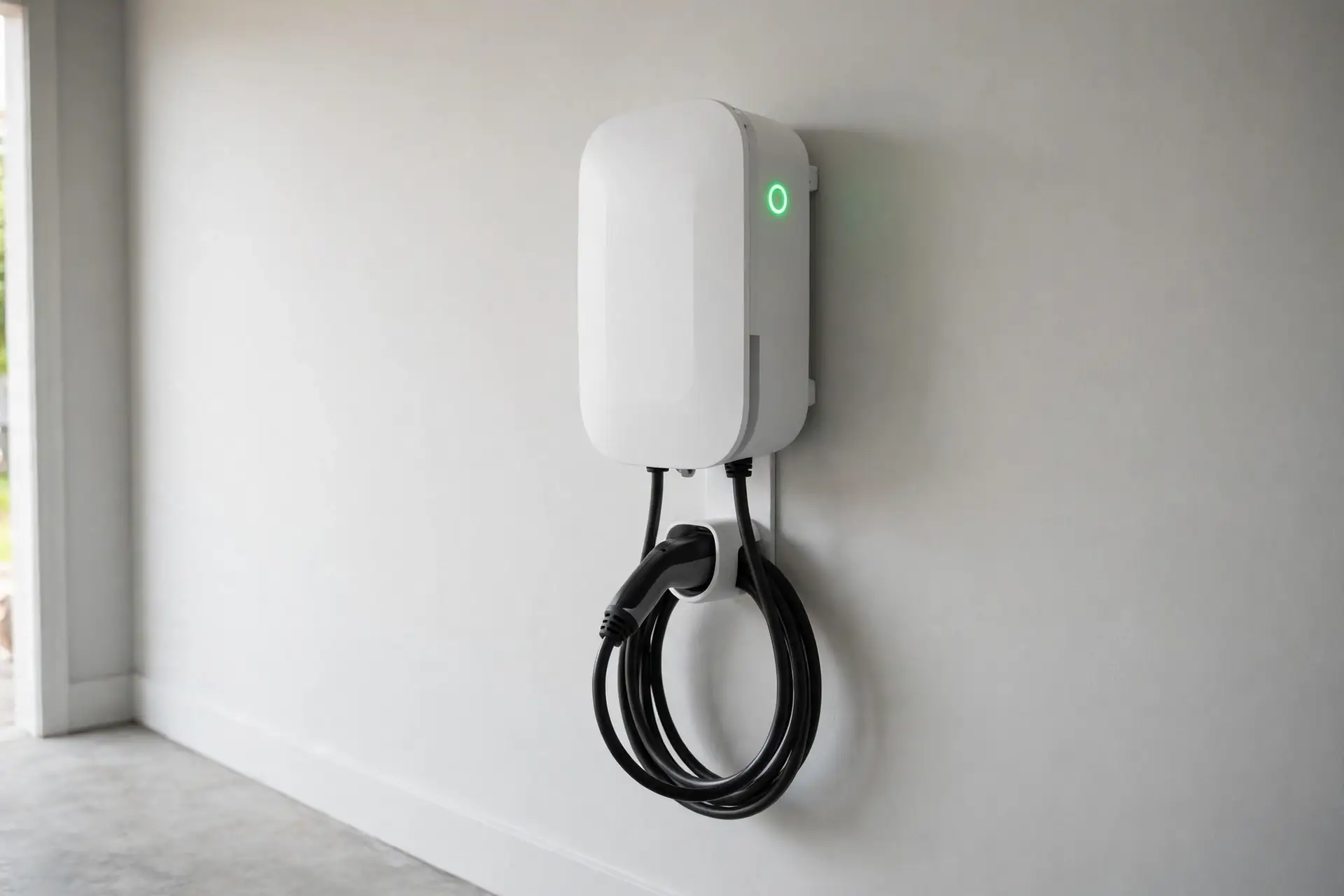
Florida's net metering lets solar customers export surplus production for credit, and the details — how credits carry, how they settle at true-up — vary by utility. The practical consequences for EV owners are three. First, an EV is the best thing that can happen to an oversized array: a car is a large, flexible, schedulable load that can absorb production your house would otherwise export cheaply. Second, the value of charging on solar depends on your utility's credit terms, which is a question your assessment should answer with your actual bill in hand. Third, growing the array to cover the car is a solar conversation, not a charger conversation — chargers are sized to panels (the electrical kind), and arrays are sized to roofs and loads.
Solar-Aware Chargers: What the Feature Really Does
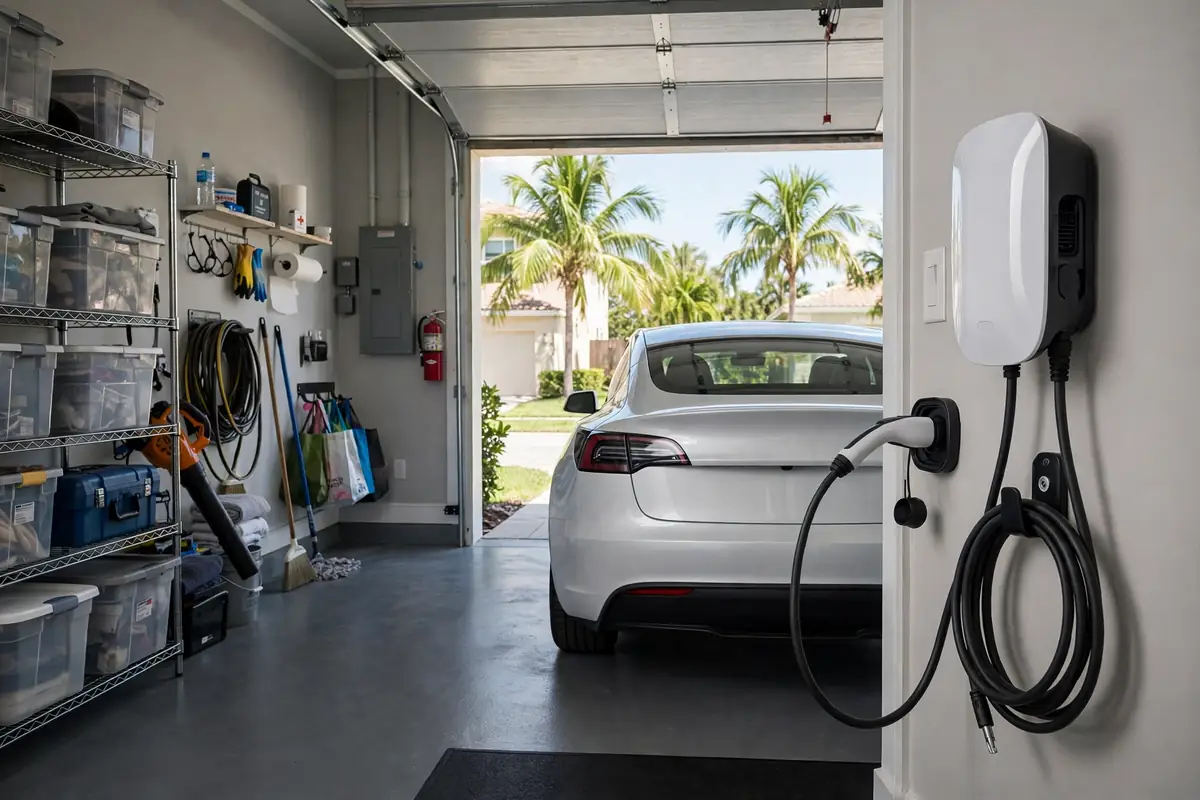
Several chargers sold in Florida — Emporia and Wallbox are the names homeowners ask about most — offer modes that watch your solar production through a meter on the panel and throttle the car charger to match the surplus. The honest description: on a day the car is home, the charger sips production as the roof makes it, pauses under clouds, and resumes in sun. What it is not: a way to charge a car that is at work all day from a roof that produces at noon, or any form of off-grid operation. For commuters, the winning setup is usually dumber and better — a full-speed overnight charge, with the array's daytime export crediting the household account. For work-from-home households, retirees, and second cars that live at home, surplus-matching is genuinely delightful and genuinely useful. Your driving pattern decides which one you are, and the assessment should ask about it before recommending hardware.
The FPL EVolution Exclusion: Solar Homes Are Not Eligible
Here is the fact that surprises solar homeowners most, and it settles the charger question for a large slice of Florida: FPL's EVolution Home program is not open to solar net-metering customers. If your FPL home has rooftop solar, the utility's subscription charger is not an option to weigh — the door is closed by the program's own rules. Duke Energy and TECO territories have their own program landscapes, but for the FPL majority of solar Florida, the conclusion is simple: solar households install their own charger, on their own circuit, under their own control. Given the timing features above, most conclude that was the better fit anyway — but it should be a choice made with the fact on the table, not discovered after a sales call.
The Outage Question, Answered Honestly
After every Florida storm season, the question arrives in the same form: if the power goes out, can my EV charge from my panels — or power my house from its battery? The honest answers, in order. A standard grid-tied solar system shuts down during an outage by design, to protect line crews — so no, a standard charger cannot charge from it while the grid is down. A standard EV charger is one-directional: it cannot feed your house. Both capabilities exist in the wider world — islanding solar setups with batteries, and bidirectional vehicle-to-home equipment for specific vehicles and hardware — and both are deliberate, separately engineered projects, not features a charger install quietly includes. Any installer who implies otherwise in a sales conversation has told you something important about the installer. Our V2H coverage on the Orlando sister site tracks the bidirectional landscape; for most Florida homes today, the resilient plan is a house battery or generator for the home, and a car that left the storm with a full charge because it fills every night.
Sizing the Pair: Car First, Charger Second, Roof Third
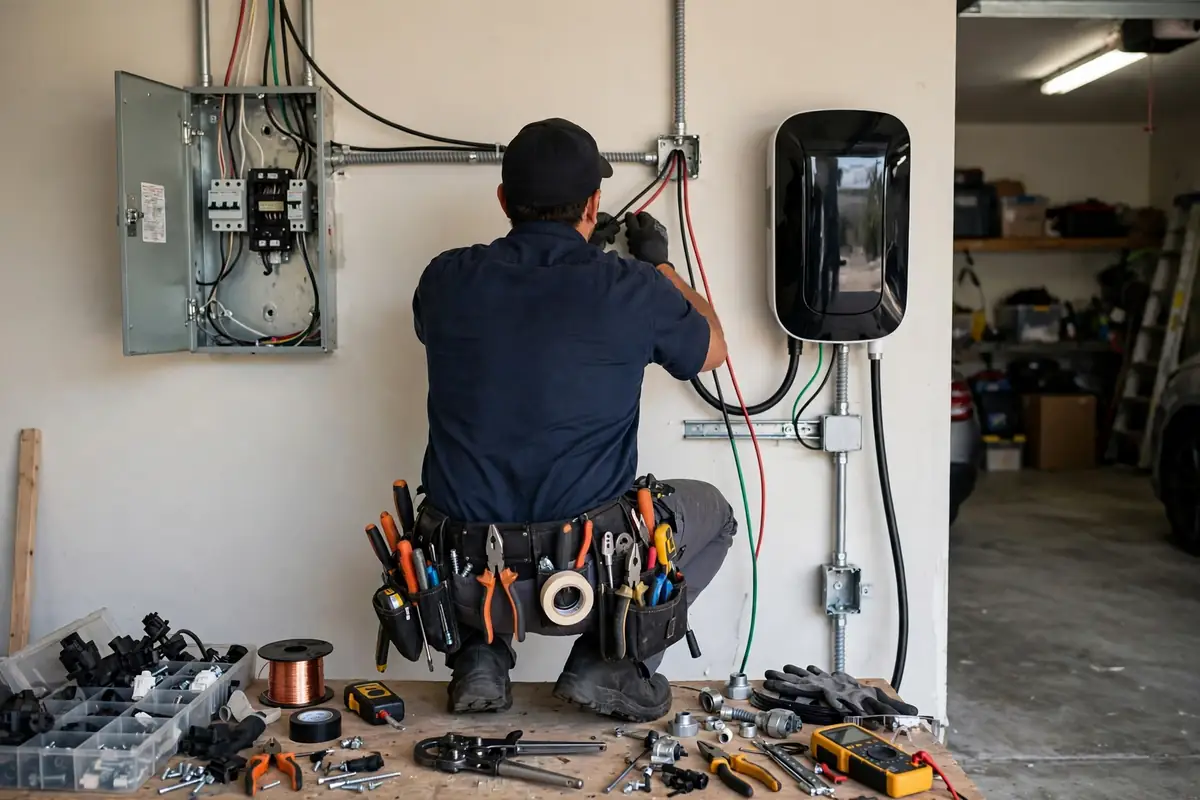
The order that works: the car's battery and your daily miles set the charging need. The electrical panel's honest capacity — established by a load calculation, not a guess — sets the charger circuit. The roof's production then decides how clever the scheduling gets. Households adding solar for the car should bring the charger installer and the solar installer into the same arithmetic early: panel capacity bought once, with headroom for the car and the array both, is the cheapest capacity in the whole project. Households adding a charger to existing solar need only one discipline: never let a charger quote skip the load calculation because "the solar handles it." Solar does not add a single amp of panel capacity. The charger still runs on the service you own.
What a Solar-Paired Install Looks Like With Us

The assessment reads like the others — panel open, load calculation, circuit route — with three solar additions: your production system's paperwork reviewed, the charging schedule designed around your driving pattern (surplus-matching for the home-based car, overnight speed for the commuter), and the charger's solar features configured and demonstrated before we leave, not left in a manual. The permit closes the same way, the configuration lands in your folder the same way, and the result is the pairing Florida promises when it is done honestly: a roof that makes fuel, a car that drinks it, and paperwork that proves both were installed like it.
Frequently Asked Questions
Can my EV charge only from my solar panels, with no grid power at all?
With a solar-aware charger in surplus mode, the car charges from whatever your roof produces beyond the house's own use — pausing when clouds pass. In practice the session is grid-blended at the edges, and a car that has to be full by morning should charge at full speed overnight instead. Both patterns are legitimate; your driving decides.
Why can solar customers not join FPL EVolution?
Because the program's rules exclude net-metering customers — the subscription's billing and its off-peak unlimited window do not coexist with exported solar production under its terms. It is a program-design fact, not a judgment on solar homes; those households install privately, with solar-aware scheduling as the consolation that is arguably the better prize.
Will adding an EV charger change my net metering agreement?
The charger itself is a load like any other large appliance and does not alter your interconnection. What changes is your consumption pattern — more of your production gets used on site, which under most Florida credit terms is the favorable direction. Growing the array is the change that reopens interconnection paperwork, and that is a solar installer's filing, not a charger's.
Can my EV power my Florida home during a hurricane outage?
Not with standard equipment. Vehicle-to-home requires a bidirectional charger, a vehicle that supports it, and transfer equipment engineered for the purpose — a deliberate project today, not a charger feature. The practical outage plan remains a full battery earned by nightly charging, plus whatever home backup the household chooses separately.
Should I size a new solar array to cover my EV too?
Usually yes, if the roof and budget allow: the car is typically a household's largest single new load, and covering its miles with production is the strongest version of the solar case. Bring the driving numbers — daily miles, not hopes — to both installers, and size once.
Do solar-aware chargers cost more to install in Florida?
The charger hardware carries a modest premium and the install adds a production meter on the panel plus configuration time. The circuit, permit, and inspection are identical to any other charger install — the solar layer is an addition to a normal job, not a different job.
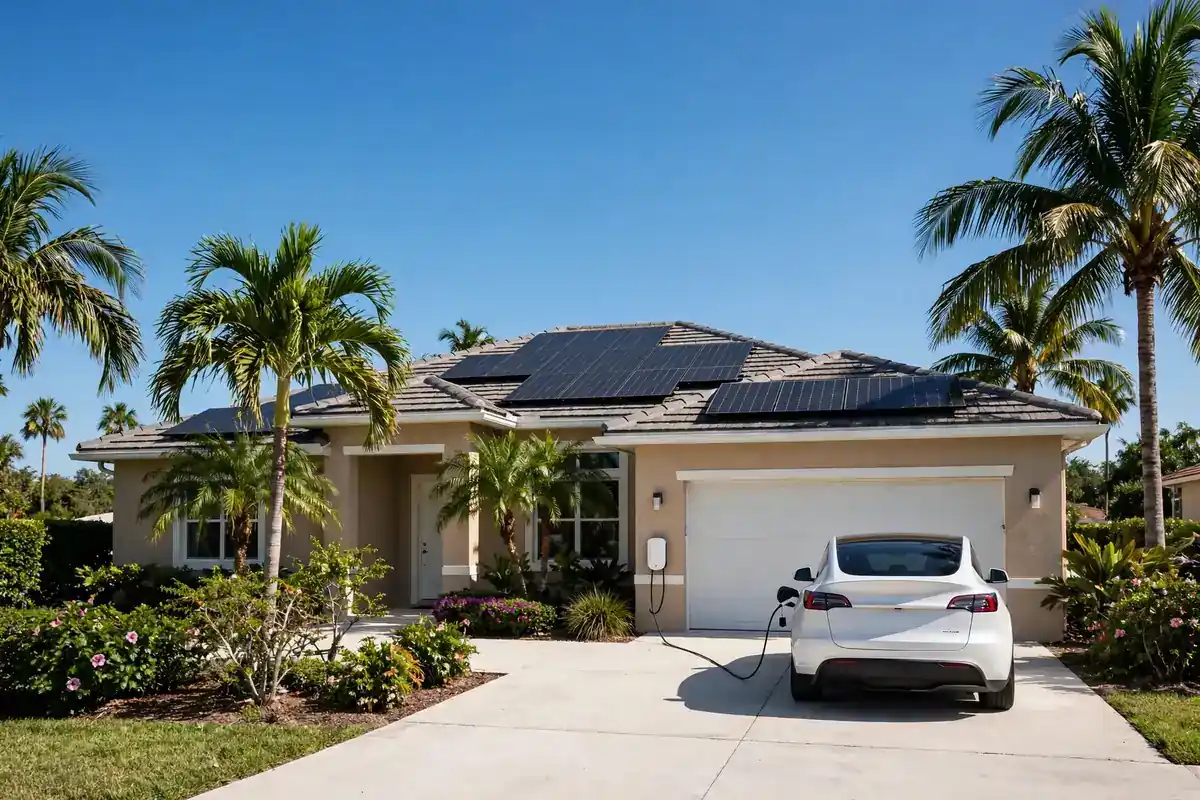
Pair Your Florida Roof and Your EV Properly
One call gets the assessment booked — load calculation, solar paperwork, and a charging schedule designed around how you actually drive.
(407) 557-4153 · Mon–Fri 7:00 AM – 10:00 PM · Sat 8:00 AM – 10:00 PM · Sun 7:00 AM – 9:00 PM ET