Speed Is a System, Not a Setting
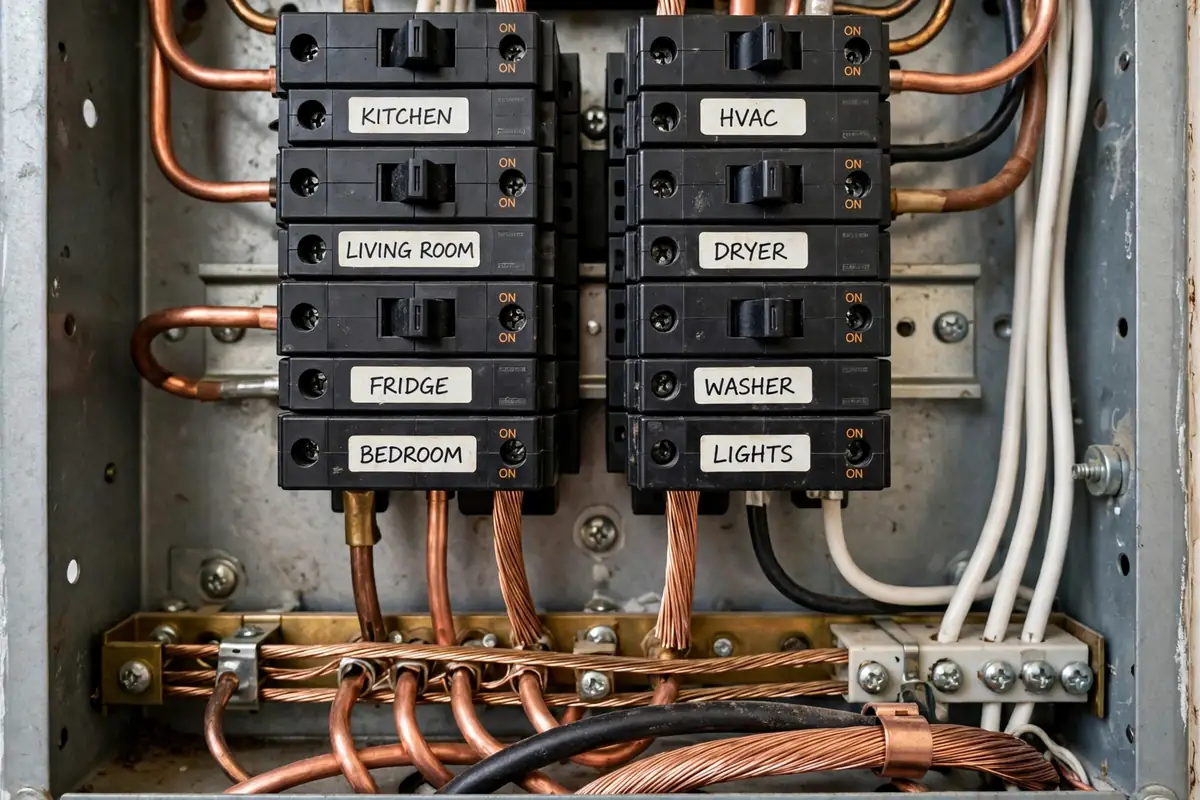
Owners shop for 48 amps and imagine the number lives in the charger. It lives in the system: panel capacity, wire gauge, breaker, configuration, and the car's own acceptance rate, multiplied by nothing — the weakest link is the speed. In Fort Lauderdale, Waterfront homes are usually renovated with modern 200-amp service; the shared-garage condo installs are the planning-heavy ones — metering, load studies, and association sign-off all come before the drill. Our job is to find your system's honest number and build exactly to it: sometimes the full 60-amp circuit, sometimes a 40-amp configuration that still fills the car hours before morning, sometimes a conversation about load management or panel work that makes the big number real instead of theatrical.
Where the Wall Connector Wants to Live
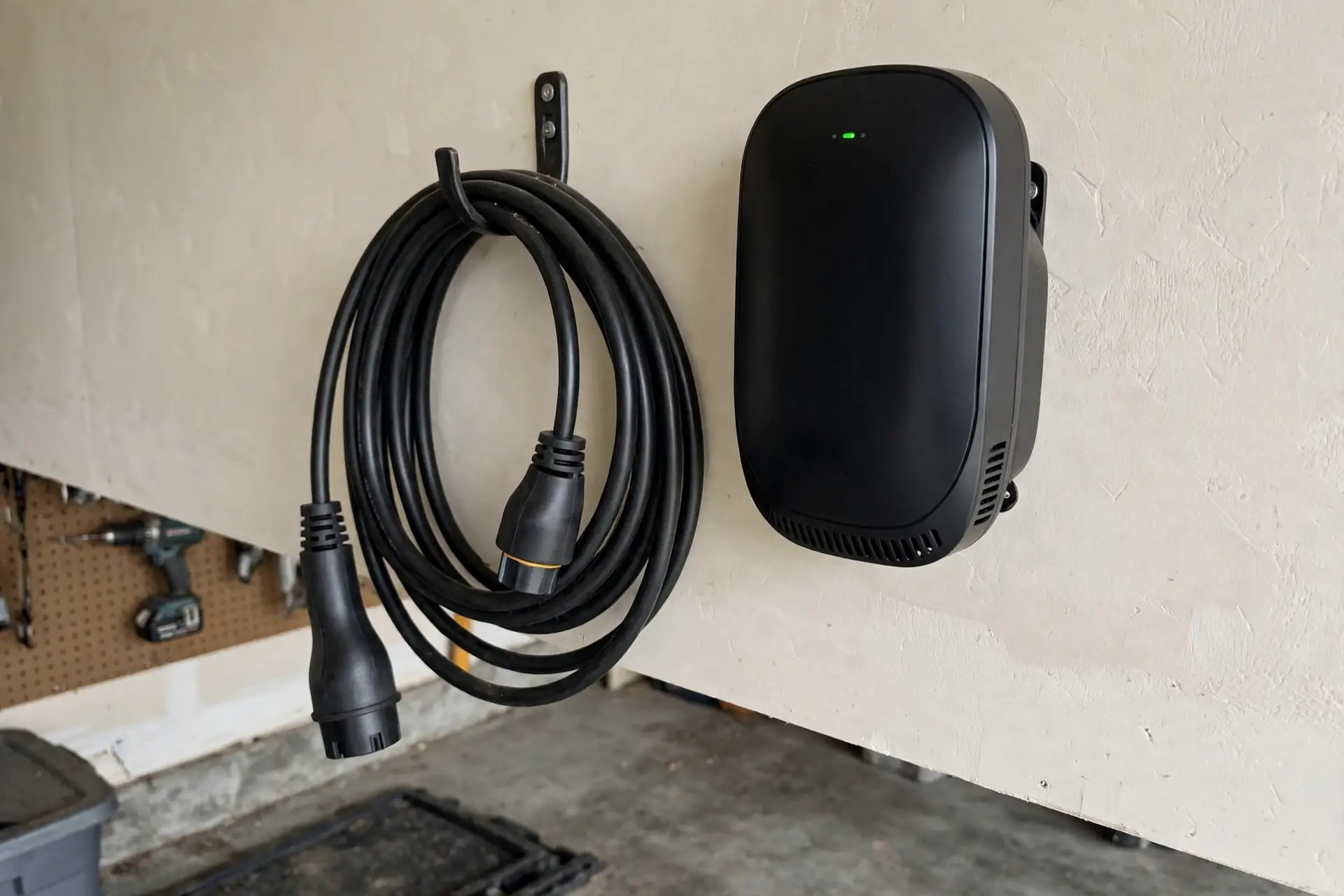
Placement is ergonomics disguised as electrical work. The unit belongs on the wall the car actually faces, within a cable's graceful reach of the charge port, clear of the door swing, the mower's path, and the puddle that forms in your driveway every August. In Fort Lauderdale garages we also plan around hurricane-season storage — the charger you cannot reach in October is a charger mis-placed in March. Five minutes with a tape measure at the assessment buys a decade of thoughtless plug-ins.
Two Teslas, One Circuit, Zero Drama
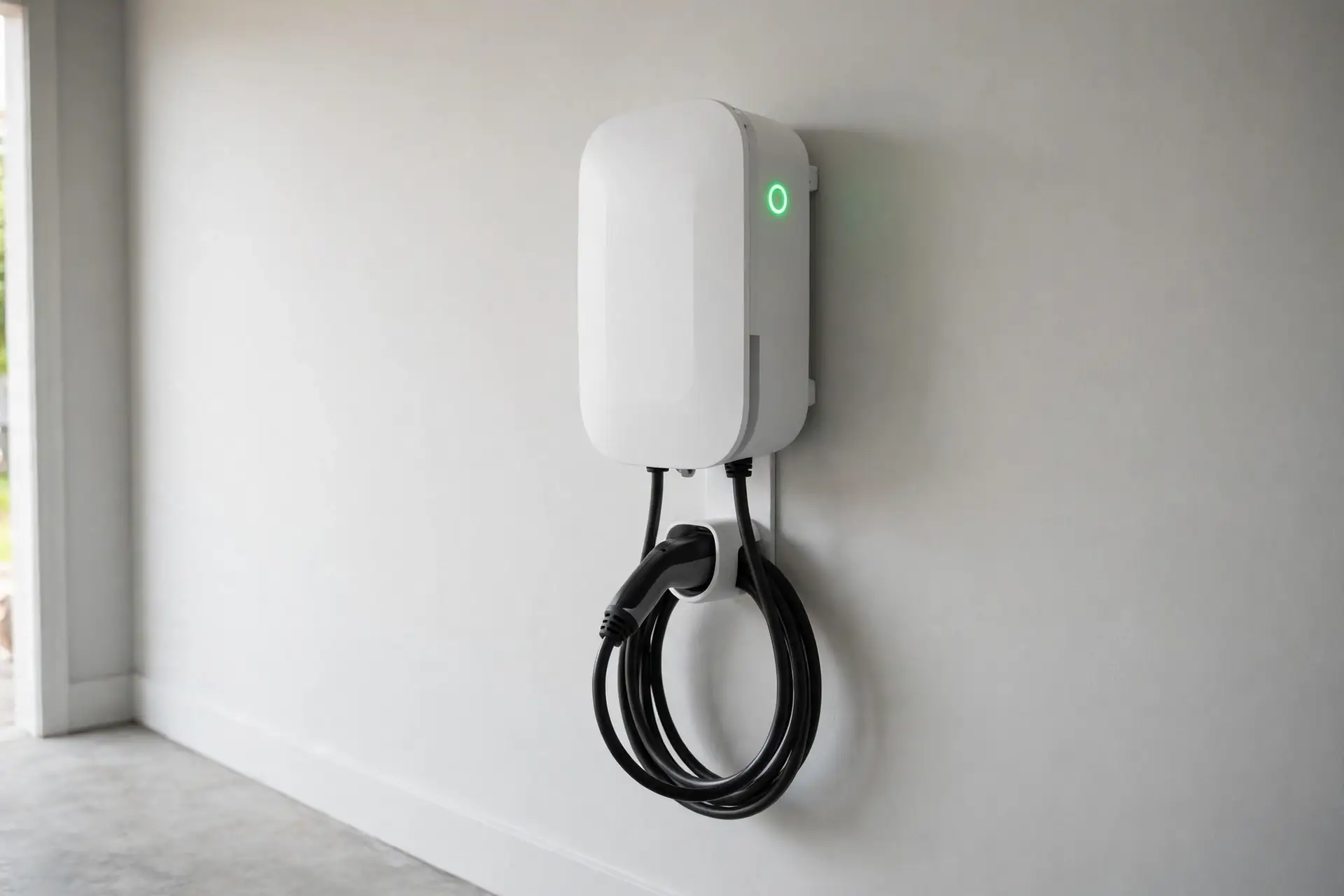
Power sharing is the Wall Connector's party trick and the answer to Fort Lauderdale's most common two-EV problem: a panel with room for one serious circuit and a household with two serious cars. Paired units split the available amperage dynamically — the car that needs more, gets more — and both finish overnight. We configure the pair as a system and label the panel accordingly, so the arrangement is legible to the next electrician who opens the box.
Florida Hardening for a California Charger
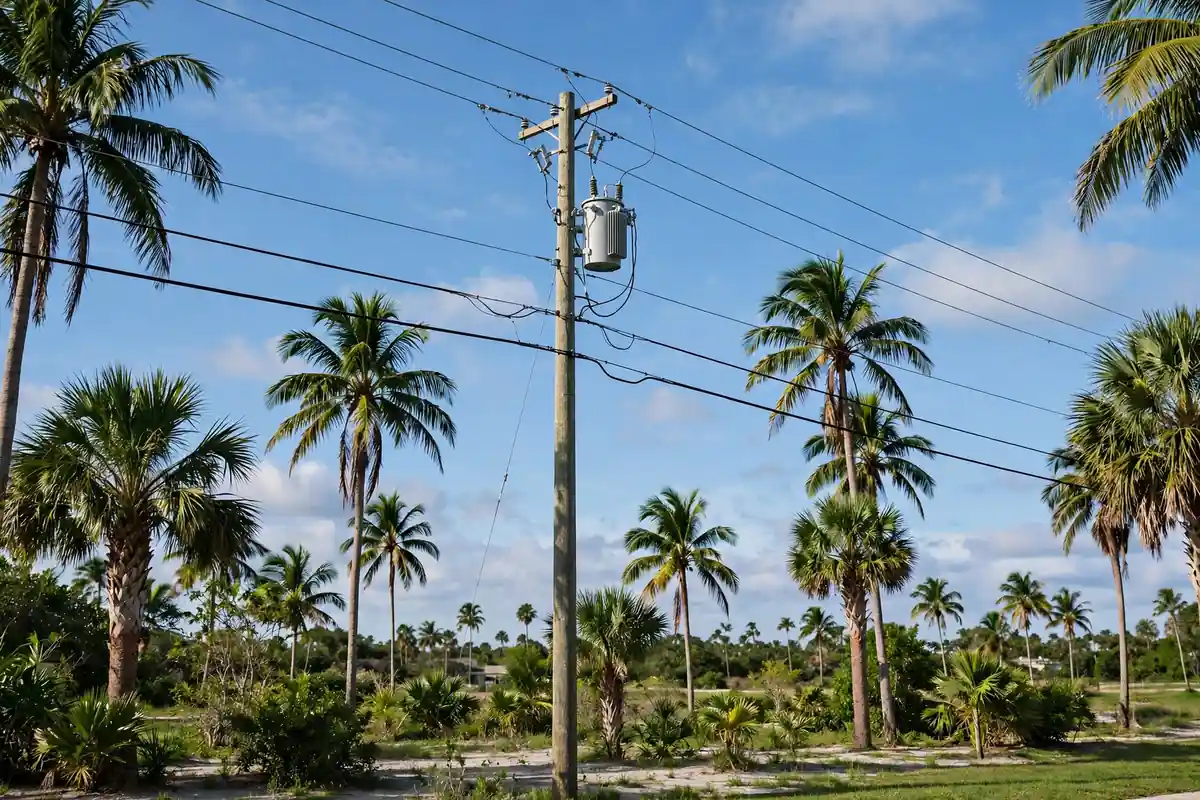
The Wall Connector was designed in California; it will live in Florida. The localization is ours to add: surge protection sized for lightning season, sealed entries against sideways rain, mounting that respects Fort Lauderdale's sun, and — near the coast — hardware choices that shrug at salt air. FPL offers optional time-of-use rates for residential customers, and every modern charger can be scheduled to run after midnight, when the grid is quietest. None of it is exotic. All of it is the difference between a charger that ages like the house and one that ages like patio furniture.
How It Works
Step 1: A short call with the right questions
Car, parking spot, panel — three facts that shape the whole job. A photo of your panel, breakers visible, is the most useful thing you can send ahead.
Step 2: The assessment visit
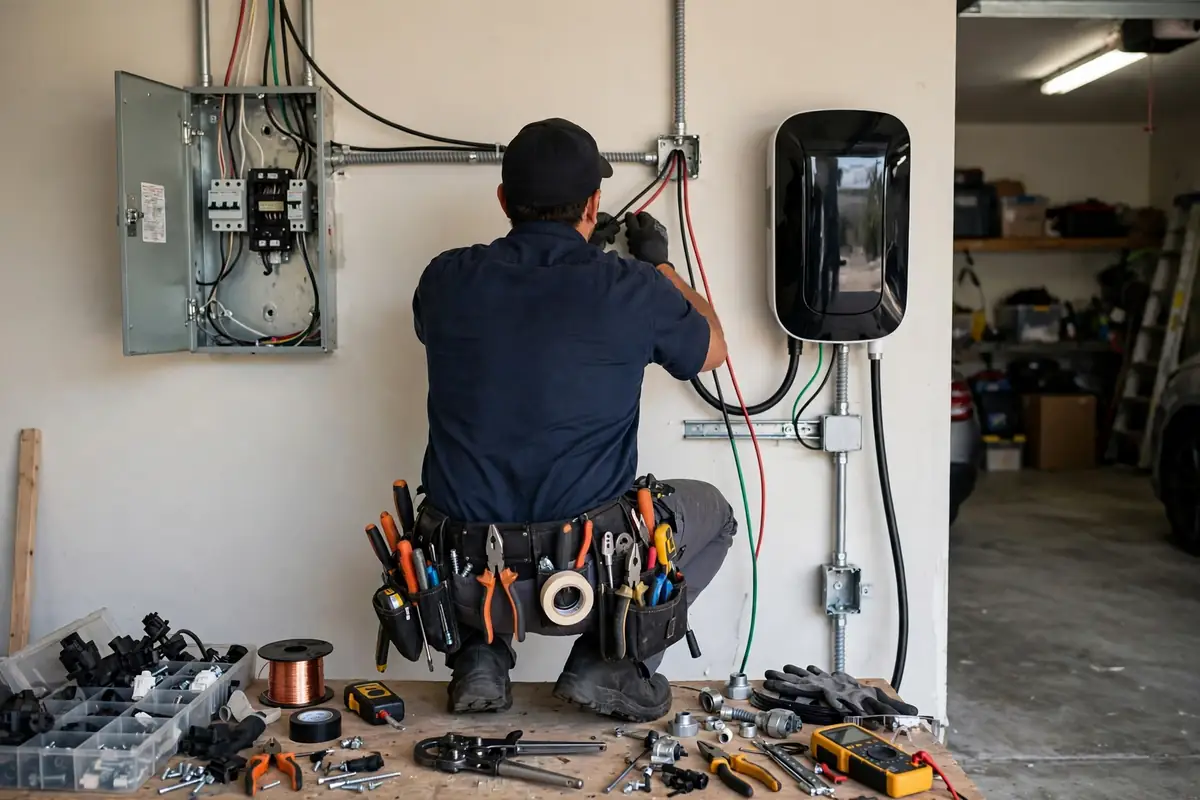
An electrician measures the run, opens the panel, and runs the NEC load calculation on site. You hear the verdict plainly: room to spare, room with load management, or panel work first.
Step 3: Permitted installation

Permit filed, circuit run, equipment mounted and configured to the breaker that feeds it. Outdoor work is sealed as it is installed, not after.
Step 4: Inspection, then your first charge
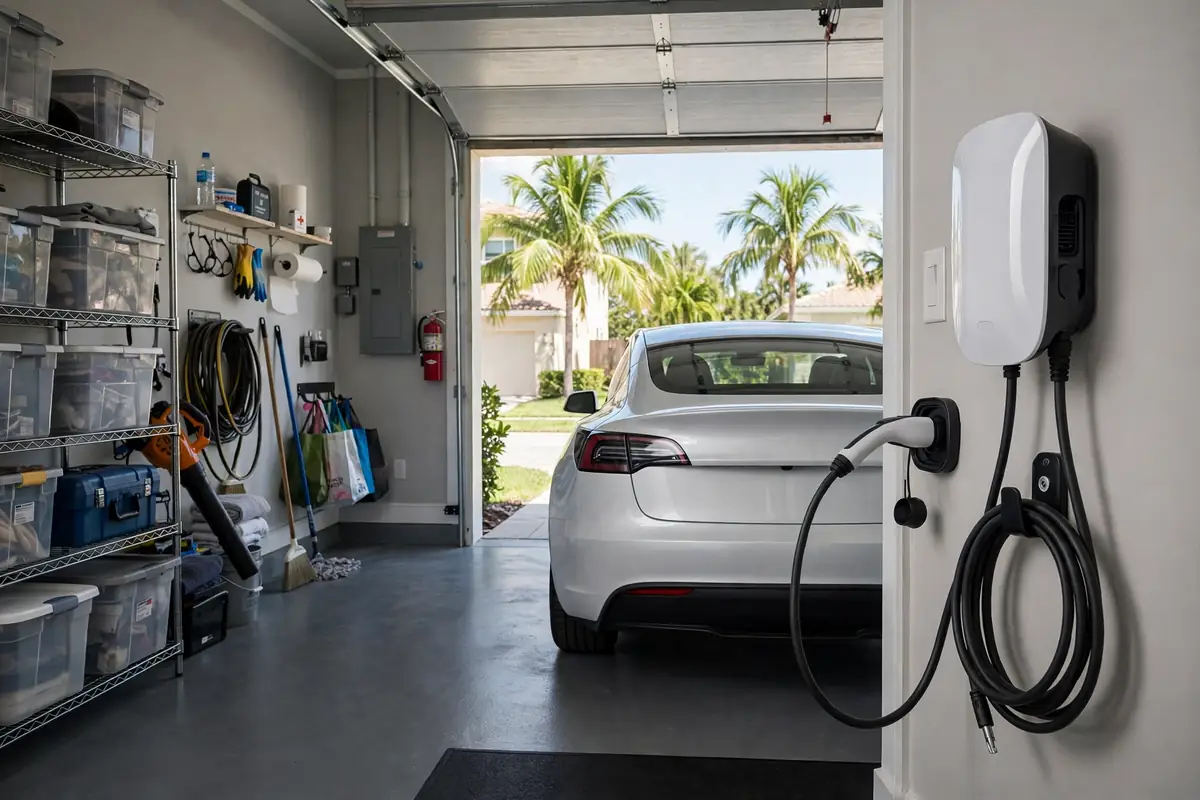
The inspector closes the permit; we close the loop with a test charge, the app set up, and the overnight schedule aimed at your utility's off-peak window.
On the Ground in Fort Lauderdale
Installs in Fort Lauderdale cluster in neighborhoods like Victoria Park, Coral Ridge, Las Olas Isles, Rio Vista, Harbor Beach, Wilton Manors, Flagler Village, Imperial Point — and each pocket of the city writes its own version of the job. The constant is the landscape: canal-front docks, Las Olas palms, and downtown towers. Add Broward County permitting, Florida Power & Light (FPL) service, and daily driving shaped by I-95, Las Olas Boulevard, and the Intracoastal, and you have the real specification sheet for a Fort Lauderdale charger — the one we work from on every assessment, rather than a generic national checklist. Waterfront homes are usually renovated with modern 200-amp service; the shared-garage condo installs are the planning-heavy ones — metering, load studies, and association sign-off all come before the drill.
Two-EV Households in Fort Lauderdale
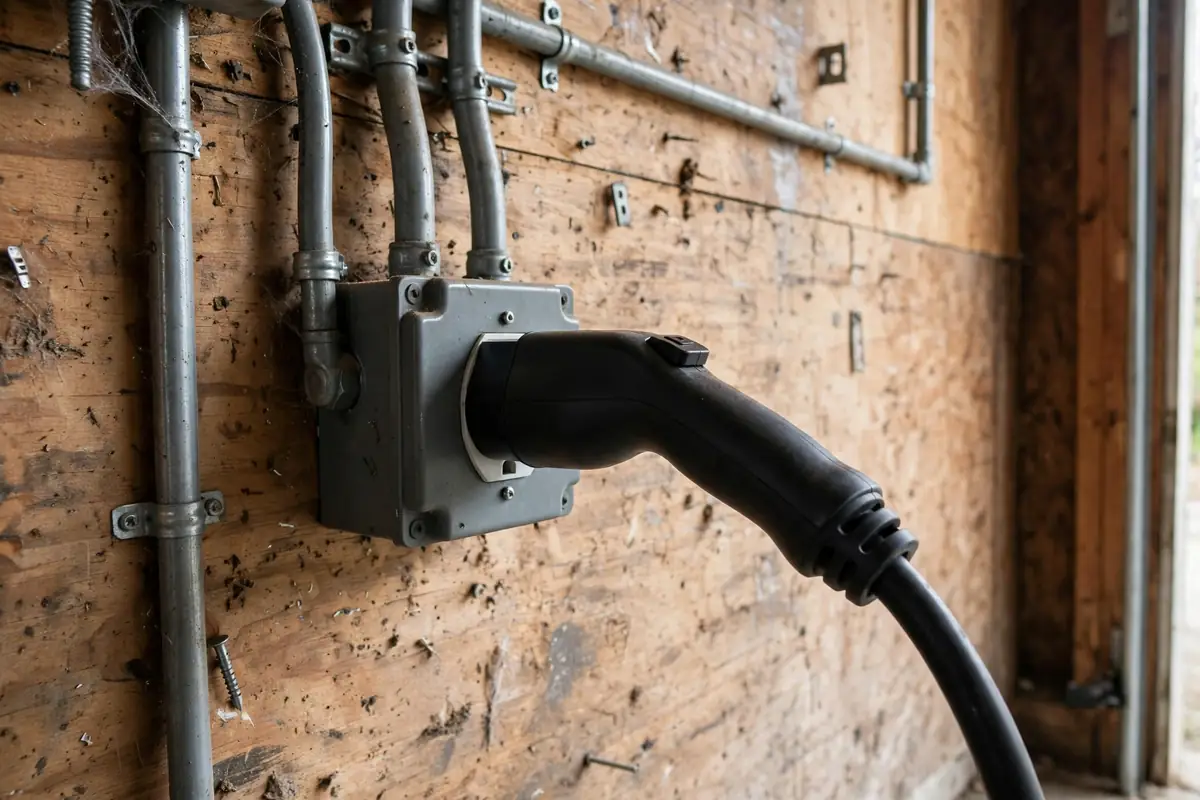
The second EV is the moment home charging gets interesting. Two cars can share one circuit with power-sharing chargers that divide the amperage between them — both full by morning on infrastructure sized for one. Or the household adds a second circuit, which is where the load calculation starts earning its fee in earnest, especially in Fort Lauderdale's older panels. Either pattern works. What does not work is the daisy-chain of adapters and shared dryer outlets that two-EV households improvise in month one. If a second EV is even a rumor in your household, tell us on the first install — the conduit and panel decisions are cheap now and annoying later.
Renters, Landlords, and Seasonal Homes in Fort Lauderdale
Fort Lauderdale has every housing arrangement Florida offers, and each has a charging answer. Renters: with written landlord permission, a permitted NEMA 14-50 outlet plus your own plug-in charger is the portable pattern — the expensive part (the circuit) is documented work that stays, and the charger leaves with you. Landlords: a permitted charger circuit is becoming a listing feature in Broward County, not a concession. Seasonal owners — a real constituency in Fort Lauderdale — should ask about surge protection and remote-monitoring chargers, because a home that sits empty through storm season wants equipment that reports its own health.
Keeping a Charger Healthy in Florida
A Florida charger asks little: keep the connector docked, glance at the cable jacket each season for UV wear, rinse salt film off coastal enclosures, and know that a breaker that starts tripping is a message, not an annoyance to reset nightly. After any storm that flickered your power hard, check the charger's status light before the next session. Surge protection at the panel does the heavy lifting silently. And when something does misbehave — speeds sagging, connectors running warm, Wi-Fi dropping — a diagnostic visit early is cheaper than a replacement later. Our repair team covers Fort Lauderdale for exactly these calls.
Wall Connectors Across Fort Lauderdale's Neighborhoods
Our Fort Lauderdale Tesla installs run from Victoria Park, Coral Ridge, Las Olas Isles, Rio Vista to the city's edges, and the neighborhood writes the work order. Homes near Victoria Park tend to pair the Wall Connector with panel conversations — Waterfront homes are usually renovated with modern 200-amp service; the shared-garage condo installs are the planning-heavy ones — metering, load studies, and association sign-off all come before the drill. Newer subdivisions flip the script: capacity is easy, and the craft is in the finish — invisible conduit, a charger placed where the charge port lands without a cable across the walkway. Permits for every one of them run through City of Fort Lauderdale Development Services (electrical permit; Broward County for unincorporated addresses), and the commissioning is identical: amperage matched to the breaker, Wi-Fi joined, access set, and a test charge on your car before the truck rolls. FPL offers optional time-of-use rates for residential customers, and every modern charger can be scheduled to run after midnight, when the grid is quietest. It is the routine your Tesla was designed around — and the reason Fort Lauderdale owners who install one stop thinking about charging entirely.
The Second Year of a Fort Lauderdale Wall Connector
Year one of a Wall Connector is honeymoon: the car is full, the app is a toy, the cable is still coiled like the brochure. Year two is the review that matters — and well-installed units pass it invisibly. The connector still seats with the same click, the configuration still matches the breaker it was commissioned against, and the permit file still answers any question the house gets asked. The Fort Lauderdale installs that age badly share a biography: configured by guess, mounted where the sun cooks the cable, and documented nowhere. Ours are built against that biography — sealed where Fort Lauderdale weather demands it, labeled at the panel, and boring in exactly the way electrical work should be by its second year.
The Fort Lauderdale Brief
The facts that frame every job like this one in Fort Lauderdale: permits run through City of Fort Lauderdale Development Services (electrical permit; Broward County for unincorporated addresses); the service territory is Florida Power & Light (FPL); the housing is canal-front homes with docks out back and garages up front, walkable 1940s streets in Victoria Park, and a fast-growing wall of downtown high-rises where the parking is a shared garage several floors below the front door; and the panel reality is this — Waterfront homes are usually renovated with modern 200-amp service; the shared-garage condo installs are the planning-heavy ones — metering, load studies, and association sign-off all come before the drill
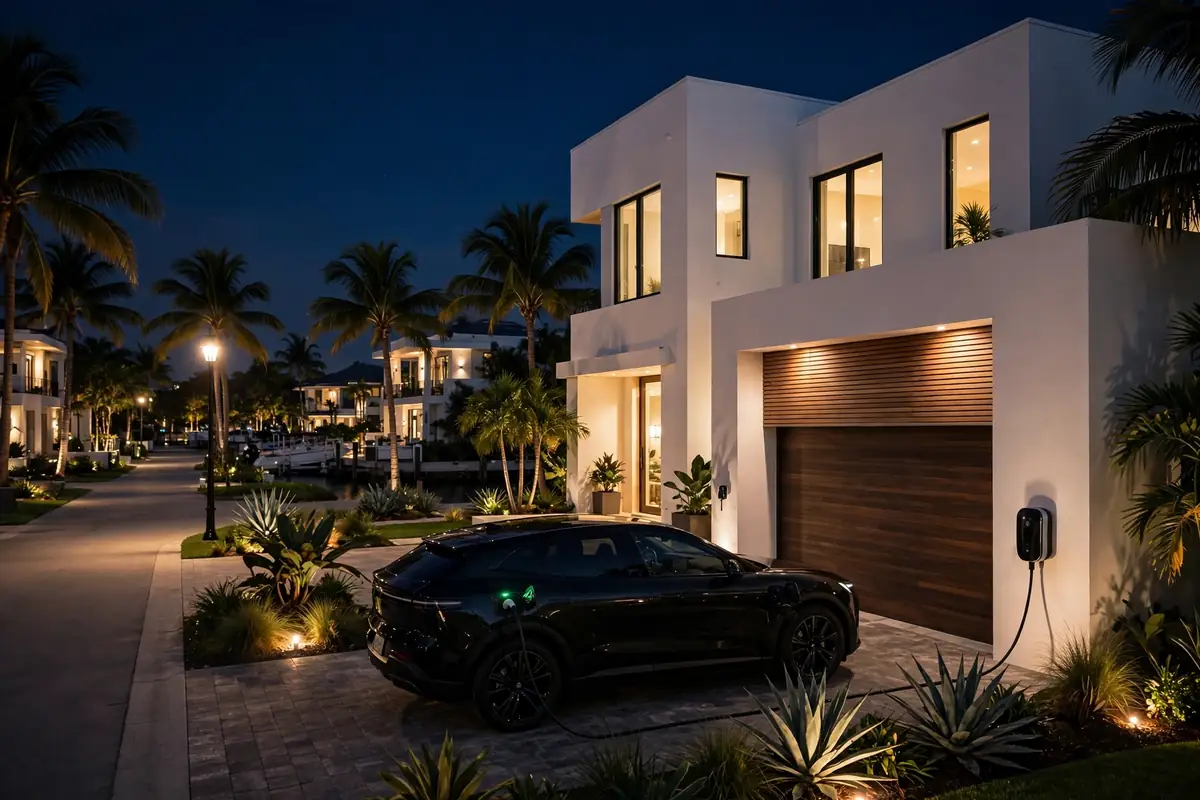
For a Wall Connector specifically, the local twist is placement culture: Fort Lauderdale Tesla owners split between garage households that will never see the unit and driveway households whose charger is part of the home's face. The first group optimizes for the charge port's side; the second adds weather detailing and, often, access control. Both groups end at the same commissioning checklist — amperage matched, Wi-Fi joined, test charge witnessed.
Frequently Asked Questions
Does the Wall Connector need a neutral wire in Fort Lauderdale?
No — the Wall Connector runs on the two hot legs and ground. It is one of the reasons the install is cleaner than an outlet-based setup of the same capacity.
What if my Fort Lauderdale HOA restricts visible equipment?
Wall Connectors mount inside garages in most HOA cases, which sidesteps visibility rules entirely. Where exterior mounting is the only option, we help document the install for the association's architectural review.
Does a Tesla Wall Connector in Fort Lauderdale need its own circuit?
Yes — a dedicated circuit, always, sized to the amperage the unit is configured for. Up to a 60-amp breaker serves 48-amp charging. The only sanctioned sharing is a configured power-sharing pair, where two units share one circuit by design.
Can my Fort Lauderdale Wall Connector charge my spouse's non-Tesla?
With the Universal Wall Connector, yes — its built-in adapter serves J1772 cars directly. The standard unit needs a separate NACS-to-J1772 adapter for other brands.
What breaker size will my Fort Lauderdale home support for a Wall Connector?
The load calculation answers that. 200-amp panels usually take the full 60-amp circuit; many 100-amp homes land at 40 or 32 amps of configured charging, or reach higher with load management. The NEC 80 percent continuous-load rule governs every option.
Is the Wall Connector safe to mount outside in Fort Lauderdale?
Yes — it carries an outdoor rating. We add sealed fittings, shade where possible, and panel surge protection, because Fort Lauderdale weather tests installations harder than the rating assumes.
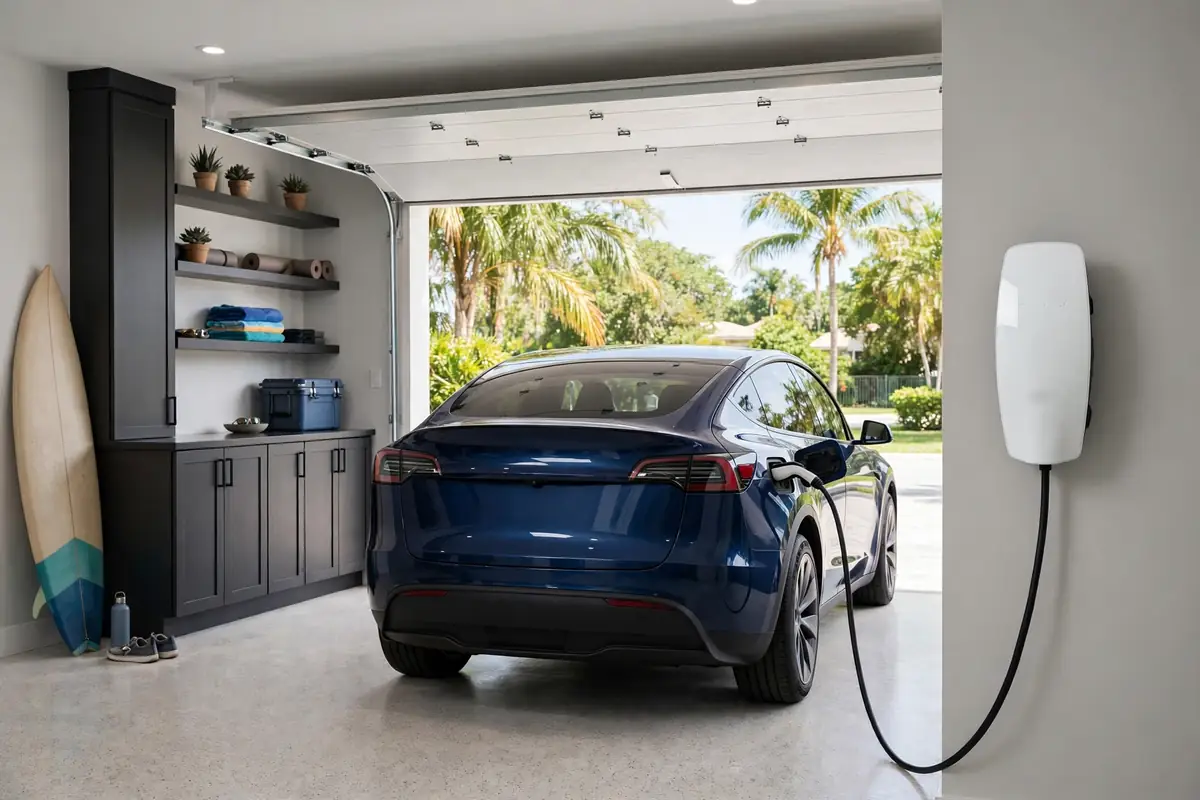
Book Your Wall Connector Install in Fort Lauderdale
Tell us your Tesla model and where it parks in Fort Lauderdale — we will size the circuit and book the assessment.
(407) 557-4153 · Mon–Fri 7:00 AM – 10:00 PM · Sat 8:00 AM – 10:00 PM · Sun 7:00 AM – 9:00 PM ET