Level 2, Defined by Your Morning
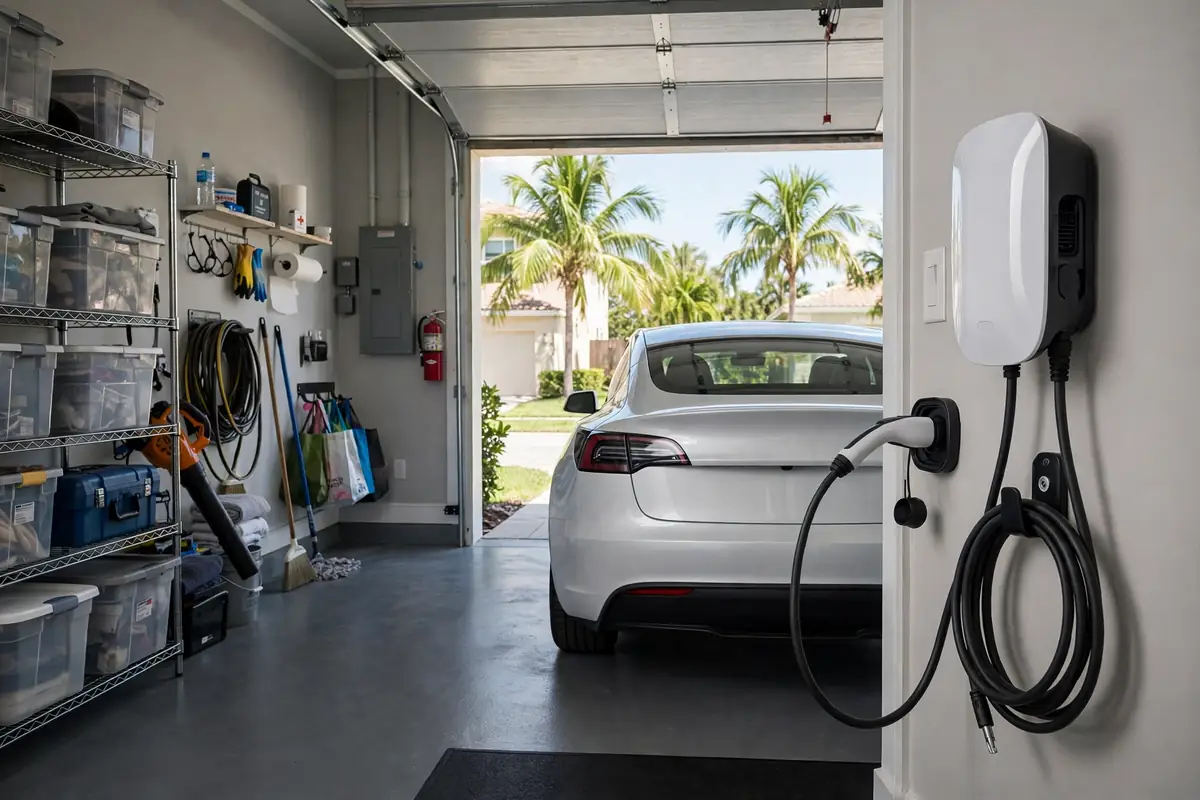
Forget the spec sheet for a second. Level 2 means the car charges at 240 volts while you sleep and is simply full — every morning, without a plan, a detour, or a queue. The rate behind that feeling is roughly 25 to 45 miles of range per hour, set by your circuit and your car's onboard charger. For West Palm Beach routines — I-95 and the Turnpike commutes, school runs, beach weekends — that arithmetic is not close: the overnight window holds three to five days of driving.
The Three Circuits and How Yours Gets Picked
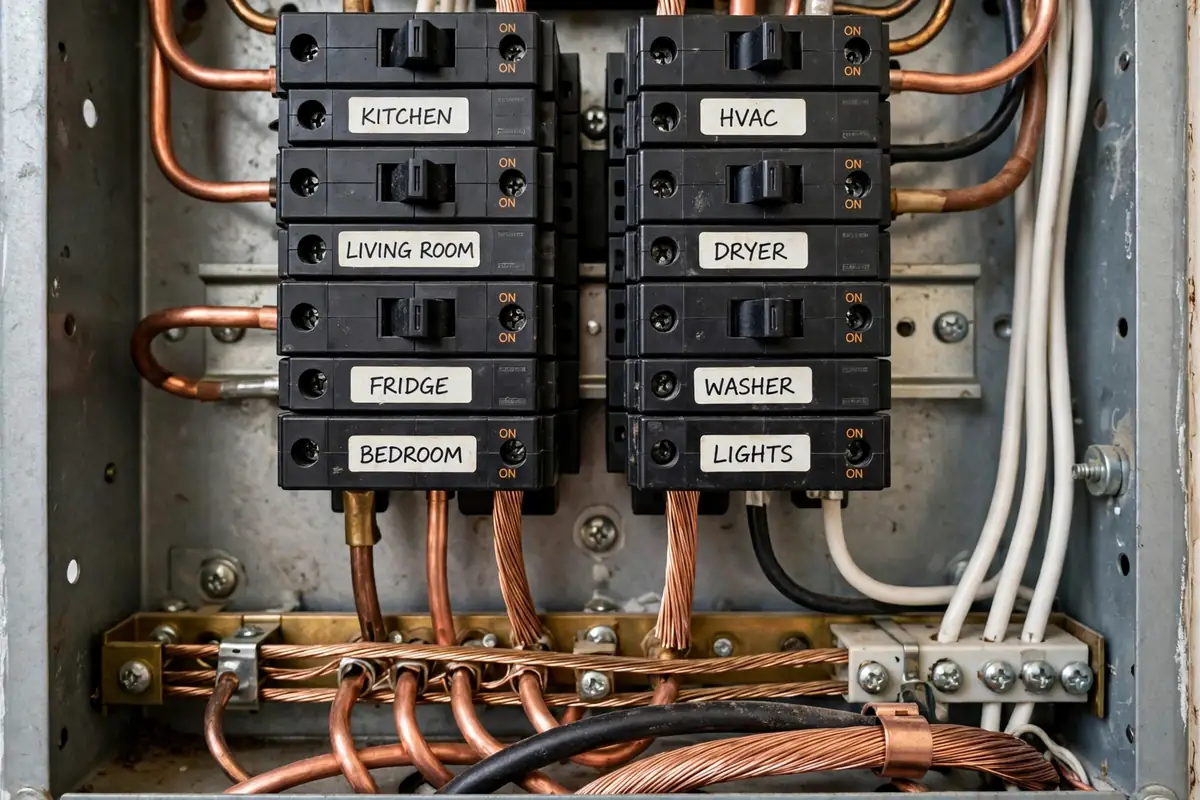
Home Level 2 installs land on 40-, 50-, or 60-amp circuits, delivering 32, 40, or 48 amps of charging under the NEC's continuous-load rule. The pick is not a preference; it is an output — of your car's acceptance rate on one side and your panel's spare capacity on the other. In West Palm Beach, Historic-district homes often run 100-amp or even older fuse-era panels, while the western subdivisions were built with 200-amp service and garage subpanels — the load calculation, not the postcode, decides which conversation we have. We compute both numbers in front of you and install to the smaller one's verdict.
Hardwired or Plug-In: A Decade-Long Decision

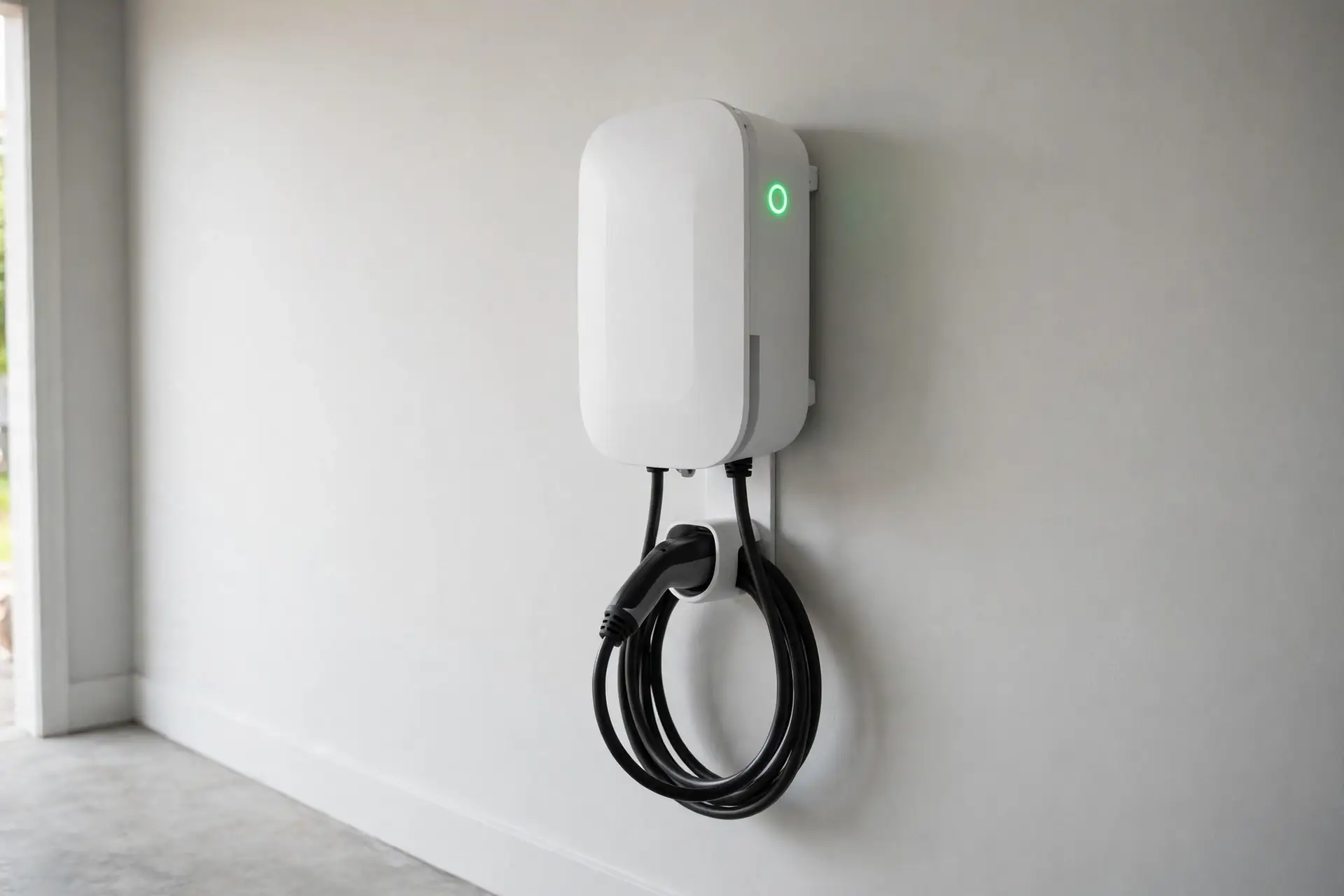
Hardwired units reach the full 48 amps, present the fewest connections to the weather, and stay put. Plug-in units on a NEMA 14-50 outlet cap at 40 amps and can leave with you — the renter's friend and the mover's hedge. Both are Level 2; both are code-compliant when installed properly. The right answer follows your housing horizon more than your car: staying a decade, hardwire; possibly moving in three years, plug in.
Placement and the Daily Ritual
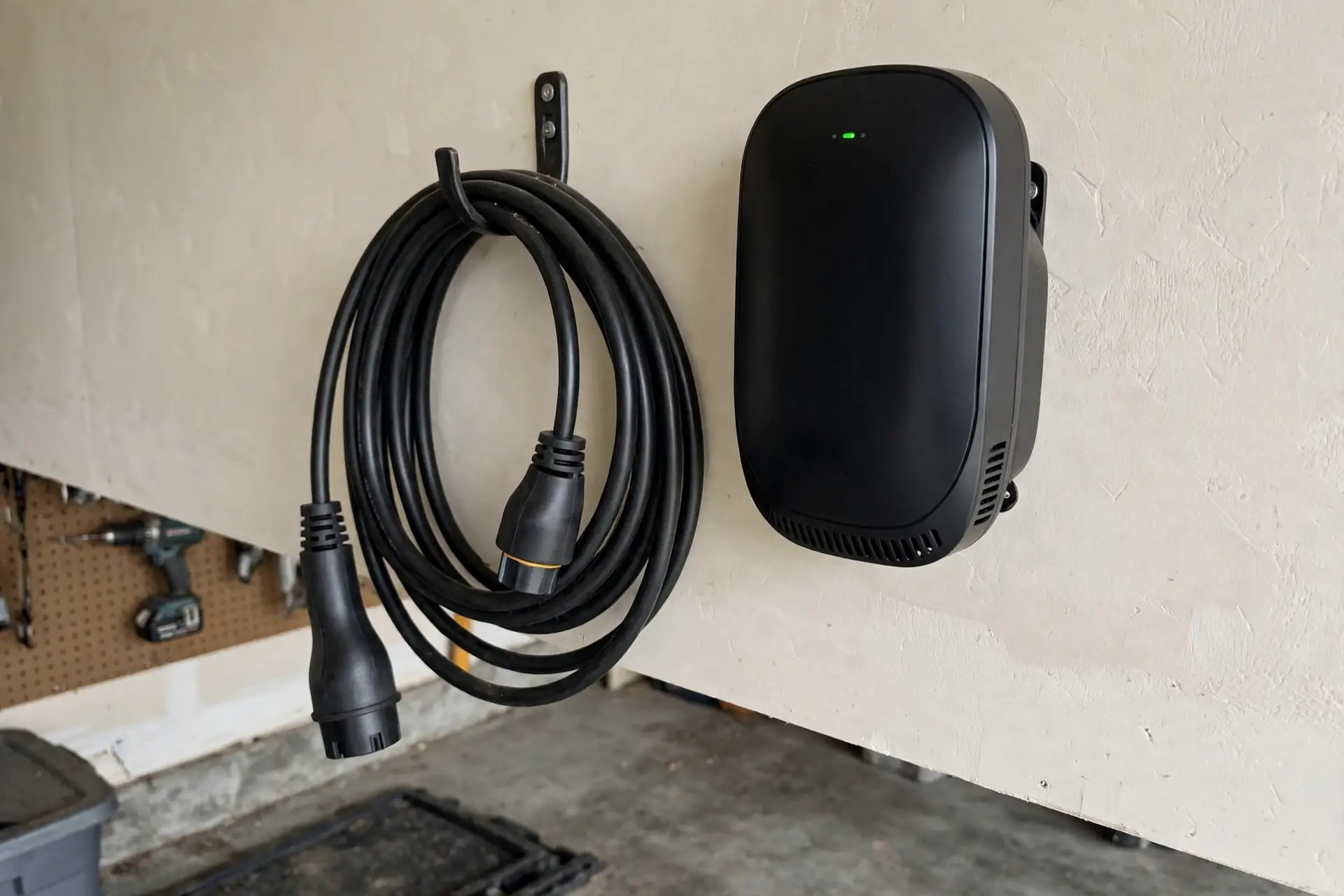
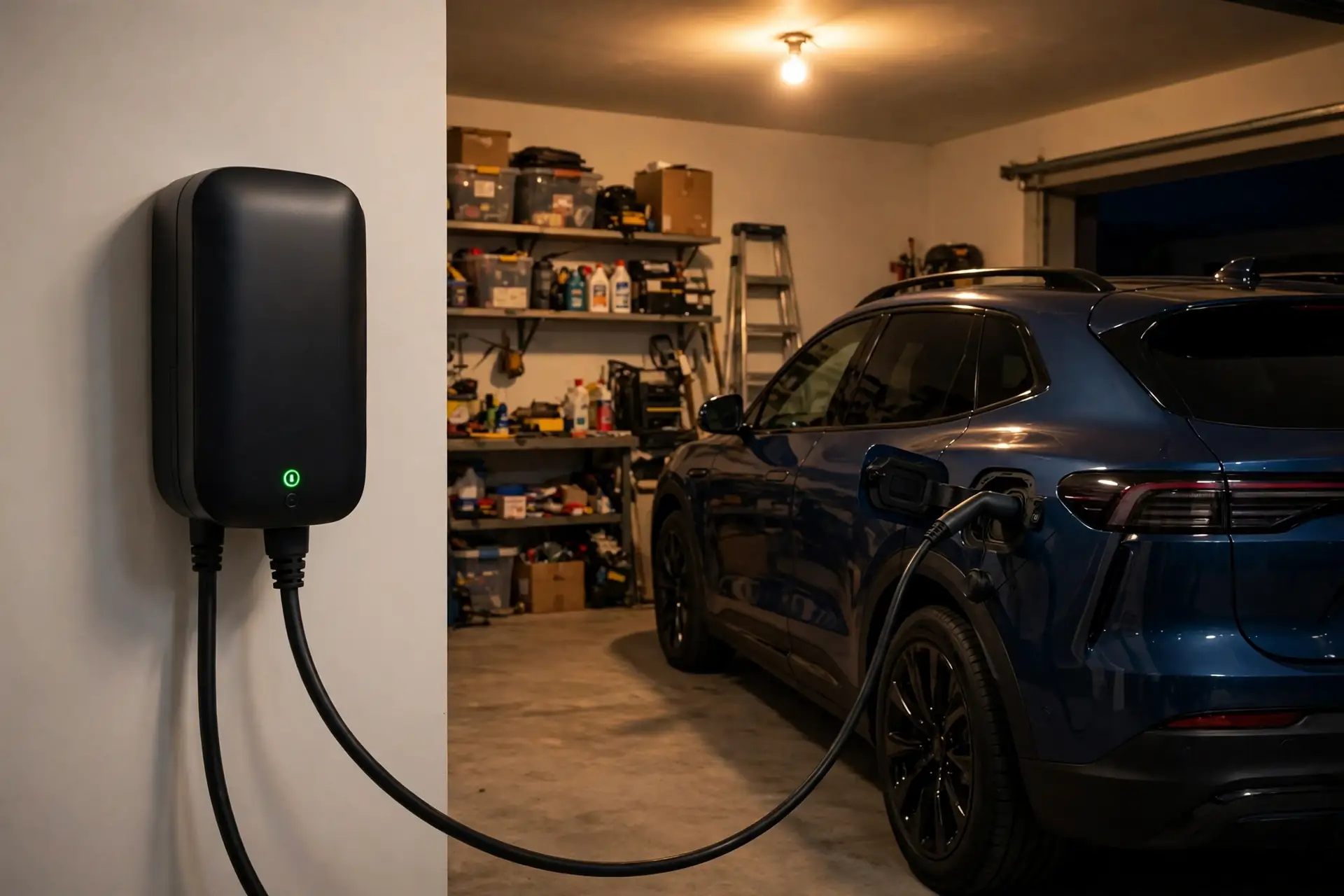
A charger earns its keep in seconds saved daily: the port side the car presents, the cable that reaches without crossing the walkway, the dock at a height your future self thanks you for. In West Palm Beach garages we route around hurricane storage and second cars; outdoors we add rain, sprinklers, and sun to the checklist. These are small decisions with ten-year compounding.
How It Works
Step 1: The five-minute version
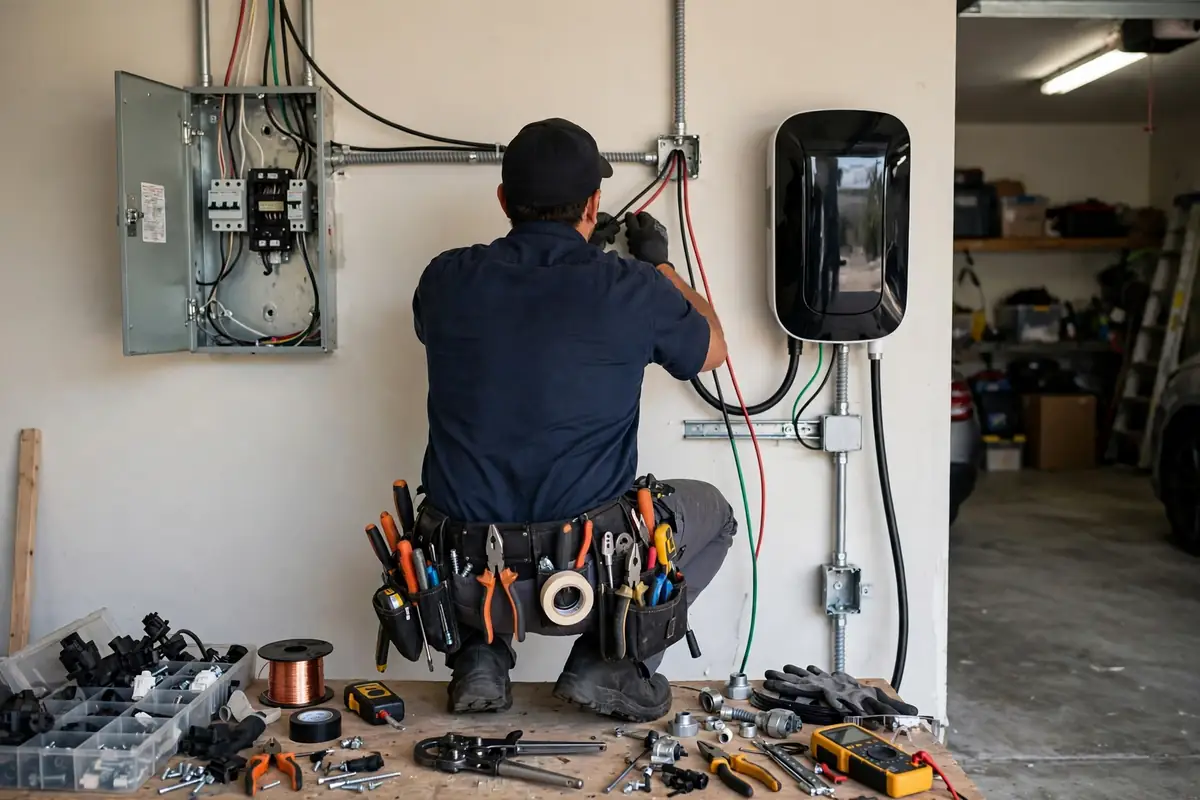
What you drive, where it sleeps, what your panel looks like. Most installs are scoped from that conversation plus one panel photo.
Step 2: Verification on site
We confirm the load calculation with the panel open, walk the circuit route with you, and fix the final scope before a single hole is drilled.
Step 3: Build it right
Dedicated circuit, correct breaker, sealed outdoor work where it applies, charger configured to the circuit it is actually on. A test charge ends the visit.
Step 4: The file closes
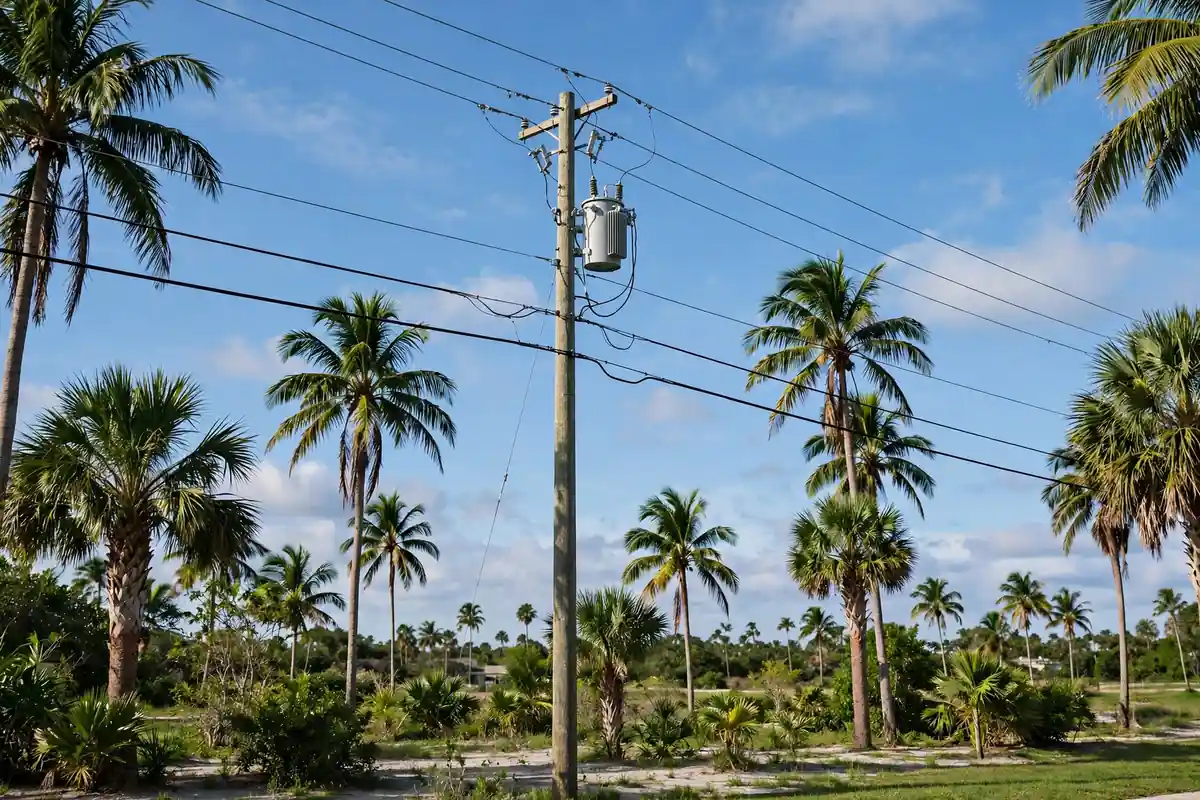
City or county inspection, paperwork to you, off-peak schedule set in the app. From here the charger is furniture — the good kind, the kind that works.
On the Ground in West Palm Beach
Installs in West Palm Beach cluster in neighborhoods like El Cid, Flamingo Park, Grandview Heights, Northwood Shores, Prospect Park, Ibis Golf & Country Club, Villages of Palm Beach Lakes, Palm Beach Lakes — and each pocket of the city writes its own version of the job. The constant is the landscape: waterfront condos along Flagler Drive and single-family streets under royal palms. Add Palm Beach County permitting, Florida Power & Light (FPL) service, and daily driving shaped by I-95 and the Turnpike, and you have the real specification sheet for a West Palm Beach charger — the one we work from on every assessment, rather than a generic national checklist. Historic-district homes often run 100-amp or even older fuse-era panels, while the western subdivisions were built with 200-amp service and garage subpanels — the load calculation, not the postcode, decides which conversation we have.
Keeping a Charger Healthy in Florida
A Florida charger asks little: keep the connector docked, glance at the cable jacket each season for UV wear, rinse salt film off coastal enclosures, and know that a breaker that starts tripping is a message, not an annoyance to reset nightly. After any storm that flickered your power hard, check the charger's status light before the next session. Surge protection at the panel does the heavy lifting silently. And when something does misbehave — speeds sagging, connectors running warm, Wi-Fi dropping — a diagnostic visit early is cheaper than a replacement later. Our repair team covers West Palm Beach for exactly these calls.
Questions to Ask Any West Palm Beach Installer
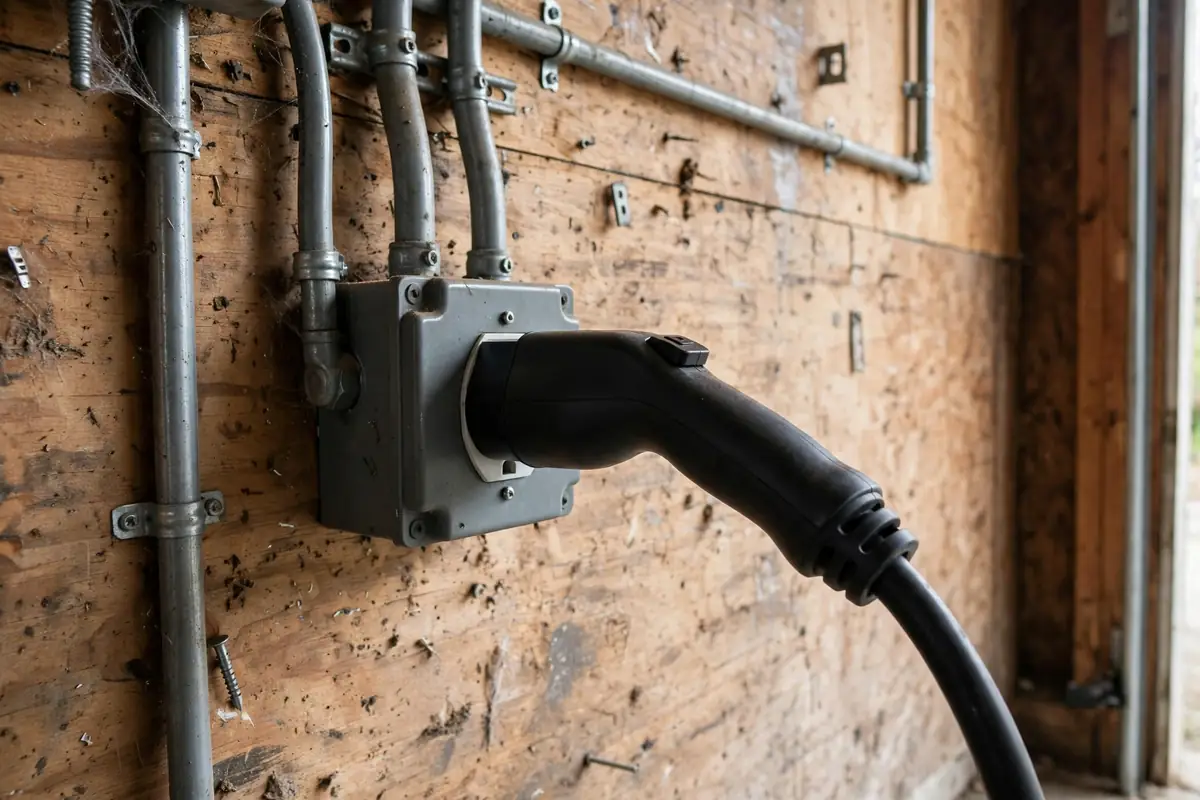
Five questions separate electricians from dabblers, anywhere in Palm Beach County: Will you run a load calculation before quoting? Who pulls the permit, and will I get the closed permit record? What amperage will the charger be configured to, and what breaker and wire support it? Is the outlet (if any) industrial-grade? Is surge protection included or offered? A qualified installer answers all five without blinking, because they are the job. We built our whole process in West Palm Beach around answering them before you think to ask.
Placement: The Five-Foot Decision That Lasts a Decade
Chargers live where they are mounted for years, and small placement choices compound daily. In West Palm Beach garages we plan around the charge port's actual side, the door you walk through with groceries, the hurricane-season storage shuffle, and the second car's door swing. Outdoors, we add sun path, sprinkler arcs, and where water stands after a storm. Five minutes of tape-measure honesty at the assessment buys a decade of plugging in without thinking — which is the entire point of the purchase.
Level 2 Routines Around West Palm Beach
The Level 2 pattern settles differently across West Palm Beach's neighborhoods. Around El Cid, the charger feeds a classic commute — out early, home by dinner, a 40-amp session topping the car before the evening news ends. In the condo and townhome pockets, the win is quieter: a permitted, metered charger in an assigned space that ends the public-station era for that household. And across the family suburbs, Level 2's overnight window absorbs everything from school runs to weekend beach miles without a single midweek thought. Underneath every version sits the same discipline: a load calculation for the specific panel, a permit from City of West Palm Beach Development Services (electrical permit, with Palm Beach County handling unincorporated addresses), and a charger configured to the circuit it actually has. Routine is the product; the hardware is just how we ship it.
Level 2 and the West Palm Beach Grid: Being a Good Neighbor
Thousands of West Palm Beach chargers switching on at 6 p.m. would be a genuine problem for Florida Power & Light (FPL) — which is precisely why utilities here reward the overnight pattern, and why every install we do ends with scheduled charging configured rather than suggested. Your car does not care whether it fills at dinner or at 2 a.m.; the grid cares enormously, and your rate plan may too. It is a small civic feature of home charging done properly: the same habit that saves you money flattens the peak for everyone on your street. We set it up as a default, and you can change it any night life intervenes.
The West Palm Beach Brief
The facts that frame every job like this one in West Palm Beach: permits run through City of West Palm Beach Development Services (electrical permit, with Palm Beach County handling unincorporated addresses); the service territory is Florida Power & Light (FPL); the housing is a split personality: 1920s Mediterranean revivals and historic bungalows in El Cid and Flamingo Park, mid-century ranches across the south end, and large newer subdivisions west of I-95 where two- and three-car garages are the norm; and the panel reality is this — Historic-district homes often run 100-amp or even older fuse-era panels, while the western subdivisions were built with 200-amp service and garage subpanels — the load calculation, not the postcode, decides which conversation we have
For Level 2 specifically, the local twist is the commute map: West Palm Beach drivers' daily miles decide circuit sizes more honestly than any vehicle specification. A household crossing the county twice a day and a household working from a home office both 'need Level 2' — at different amperages, on different schedules, with different definitions of a full morning.
Frequently Asked Questions
How much faster is Level 2 than the cord that came with my car in West Palm Beach?
Level 1 adds roughly 3 to 5 miles of range per hour; Level 2 adds roughly 25 to 45. The overnight difference is a car that is full every morning versus one that is always catching up.
What size circuit does a Level 2 charger need in West Palm Beach?
Most installs land on a 40-, 50-, or 60-amp circuit for 32, 40, or 48 amps of charging. Your car's acceptance rate and your panel's load calculation pick the size.
Hardwired or plug-in Level 2 in West Palm Beach — which should I choose?
Hardwired for full speed, outdoor durability, and permanence; plug-in (NEMA 14-50) for portability and renter-friendliness. Both are code-compliant when installed correctly.
Can any EV use a Level 2 charger installed in West Palm Beach?
Yes. Level 2 speaks J1772 and NACS, and every EV on Florida roads charges at Level 2 through its onboard charger. One universal unit serves a mixed garage.
Do Level 2 installs in West Palm Beach need a permit?
Yes — the new 240-volt circuit is permitted through City of West Palm Beach Development Services (electrical permit, with Palm Beach County handling unincorporated addresses), and we handle the filing and inspection.
Will Level 2 charging hurt my battery in West Palm Beach?
No. Level 2 AC charging is the gentle everyday method home charging is designed around; the car manages its own curve. Heat and repeated DC fast charging are the stresses, not overnight Level 2.
Get Level 2 Charging at Home in West Palm Beach
Tell us the car and the commute — we will size the circuit and book your West Palm Beach assessment.
(407) 557-4153 · Mon–Fri 7:00 AM – 10:00 PM · Sat 8:00 AM – 10:00 PM · Sun 7:00 AM – 9:00 PM ET