The Overnight Window Is the Whole Product
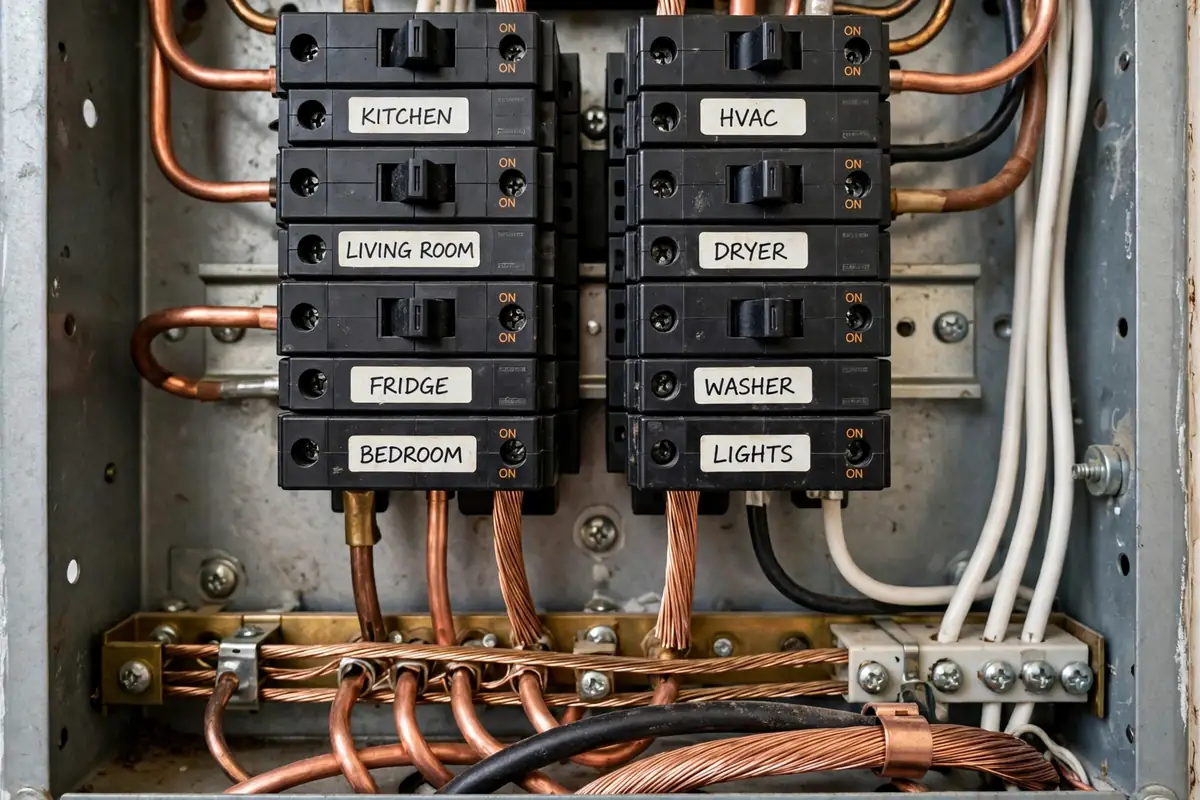
Strip away the hardware and Level 2 sells one thing: the hours your car already spends parked. Ten to twelve hours in a Tampa driveway or garage is a fueling station with no line, no weather, and no markup — if the circuit can deliver meaningful amperage across it. That is why the install conversation is really about your panel: the window is free, but filling it takes capacity, and capacity is what the load calculation measures.
What Can Go Wrong at 240 Volts

Level 2's failure modes are all in the installation, not the concept: an outlet grade that loosens under continuous load, a breaker that does not match the charger's configuration, a circuit borrowed from a dryer through a splitter. Each is a shortcut somebody sold as savings. The professional version — dedicated circuit, industrial-grade components, matched configuration, permit and inspection — is not gold-plating; it is the baseline the code describes, and the only version we install in Tampa.
Level 2 in Condos and Rentals
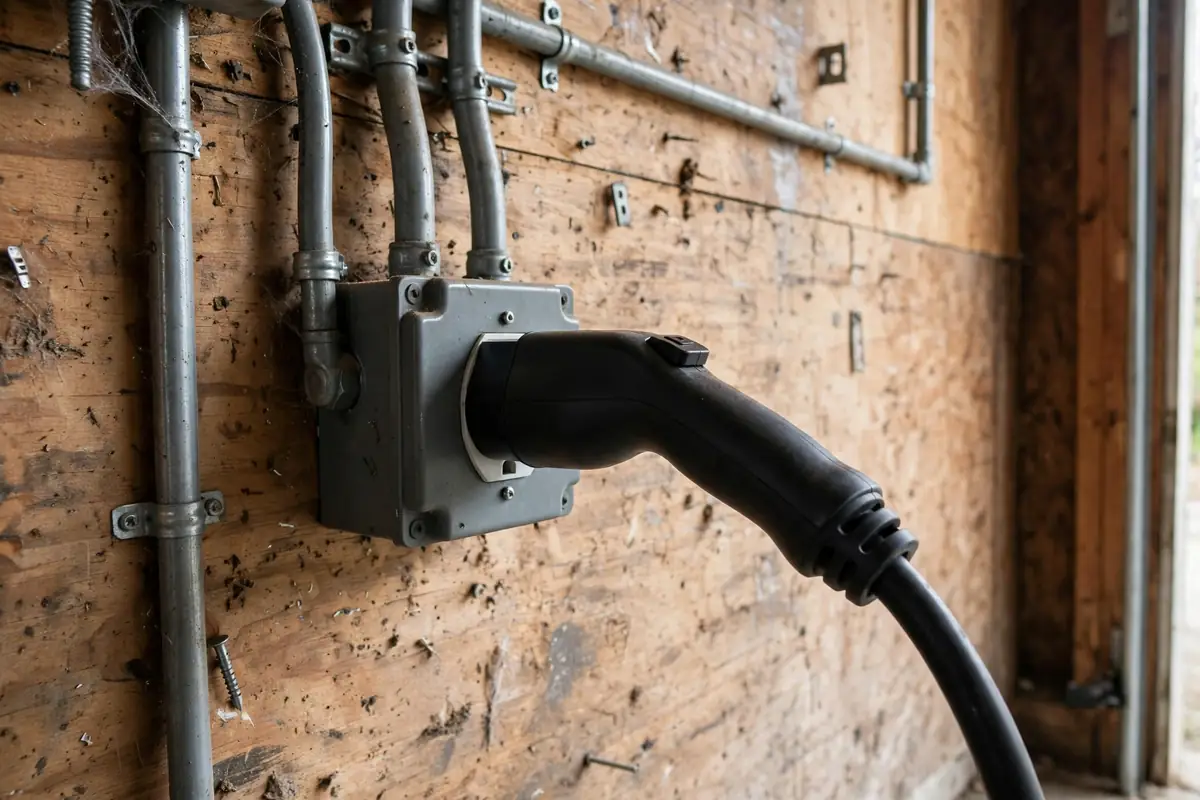
Tampa's housing mix means Level 2 regularly lands in assigned condo spaces and permitted rental installs. Florida's condo statute protects the owner's right to install with reasonable association conditions; renters need the landlord's written yes, and the plug-in pattern keeps the charger portable. In both cases the electrical discipline is identical — dedicated circuit, load calculation, permit — and the paperwork is the difference, which we handle as part of the job.
When Level 2 Is Not Enough (Rarely)
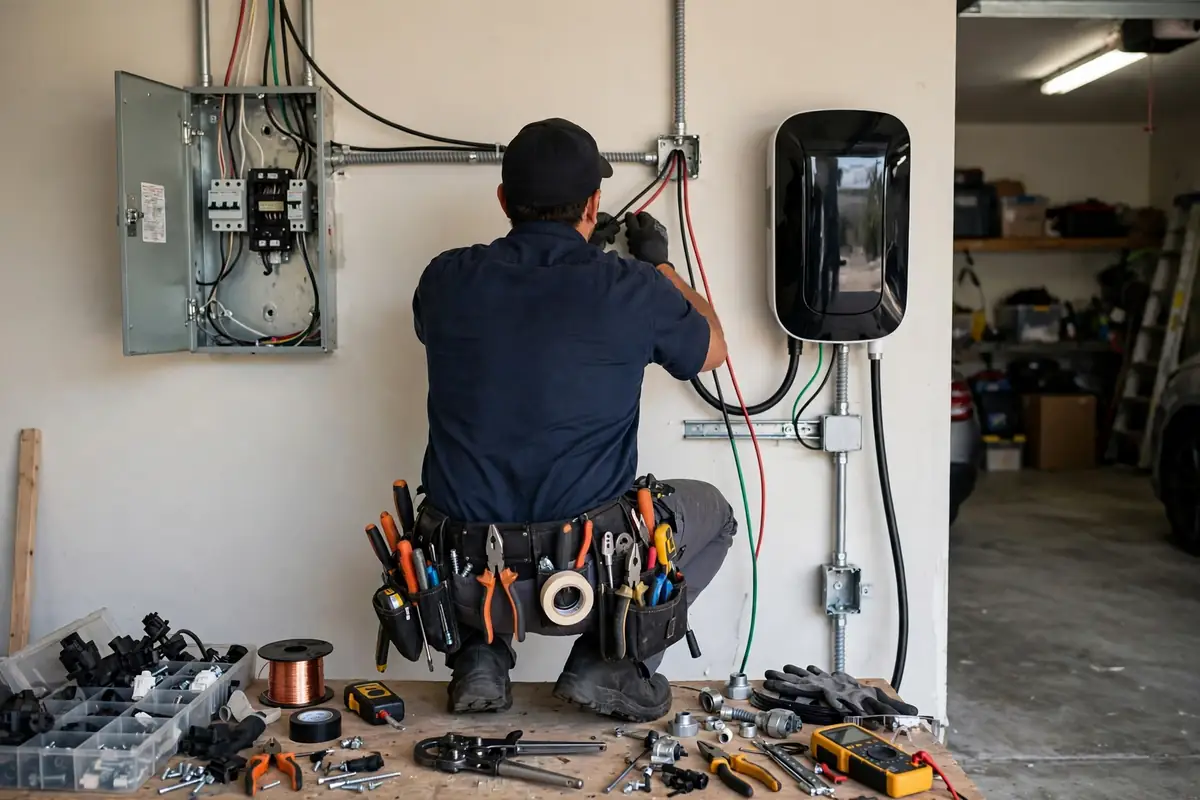
Honesty section: a household driving 200-plus miles daily on a car with a modest onboard charger can outrun a small Level 2 circuit — the fix is the 60-amp configuration or power-shared dual units, not public charging. Genuinely DC-fast home needs do not exist; that equipment is commercial for reasons of cost and grid impact. For essentially every Tampa household, a properly sized Level 2 install closes the fueling question permanently.
How It Works
Step 1: Recon over the phone
EV model, parking reality, panel basics — the call sorts the job into standard or interesting before anyone drives out. Panel photos welcome.
Step 2: The panel gets its say
Load calculation first, hardware second. You will see the spare capacity as a number, and every option on the table will trace back to it.
Step 3: Install day
Permit in hand, the circuit goes in, the charger goes on the wall, and the configuration is set to the circuit — then proven with your car plugged in.
Step 4: Paperwork and goodbye
Inspection closes the permit; your folder gets the permit record, the configuration, and the panel labeling. The charger disappears into your routine, which is the point.
On the Ground in Tampa
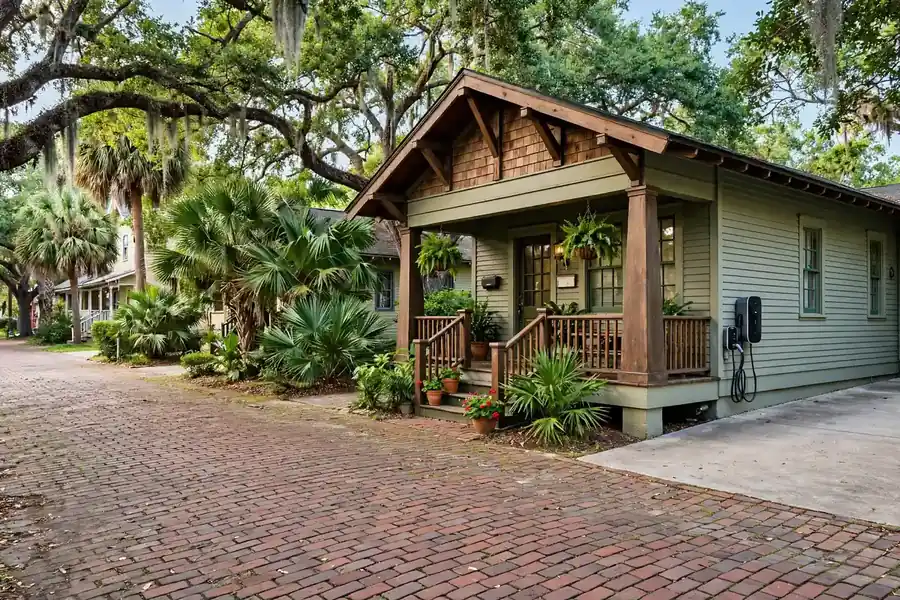
Installs in Tampa cluster in neighborhoods like Ybor City, Seminole Heights, Hyde Park, South Tampa, New Tampa, Westchase, Carrollwood, Temple Terrace — and each pocket of the city writes its own version of the job. The constant is the landscape: brick streets in Ybor, oak-shaded bungalows, and Bayshore's waterfront. Add Hillsborough County permitting, Tampa Electric (TECO) service, and daily driving shaped by I-275, I-4, and the Crosstown, and you have the real specification sheet for a Tampa charger — the one we work from on every assessment, rather than a generic national checklist. The bungalow belt frequently runs 100-amp panels with full breaker boxes, so load management earns its keep; post-2000 suburbs usually have 200-amp service and garage space to spare.
Renters, Landlords, and Seasonal Homes in Tampa
Tampa has every housing arrangement Florida offers, and each has a charging answer. Renters: with written landlord permission, a permitted NEMA 14-50 outlet plus your own plug-in charger is the portable pattern — the expensive part (the circuit) is documented work that stays, and the charger leaves with you. Landlords: a permitted charger circuit is becoming a listing feature in Hillsborough County, not a concession. Seasonal owners — a real constituency in Tampa — should ask about surge protection and remote-monitoring chargers, because a home that sits empty through storm season wants equipment that reports its own health.
Keeping a Charger Healthy in Florida
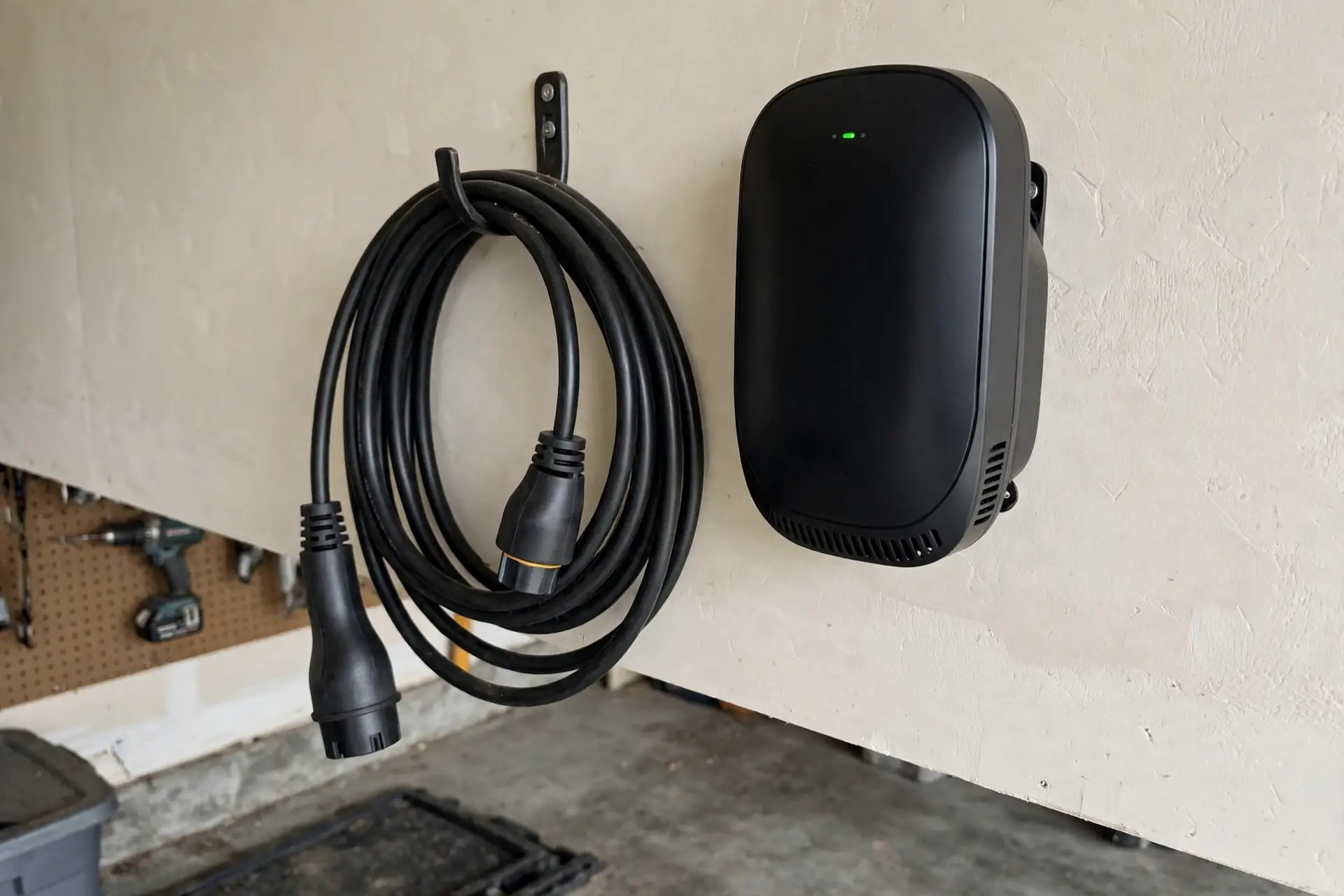
A Florida charger asks little: keep the connector docked, glance at the cable jacket each season for UV wear, rinse salt film off coastal enclosures, and know that a breaker that starts tripping is a message, not an annoyance to reset nightly. After any storm that flickered your power hard, check the charger's status light before the next session. Surge protection at the panel does the heavy lifting silently. And when something does misbehave — speeds sagging, connectors running warm, Wi-Fi dropping — a diagnostic visit early is cheaper than a replacement later. Our repair team covers Tampa for exactly these calls.
Questions to Ask Any Tampa Installer
Five questions separate electricians from dabblers, anywhere in Hillsborough County: Will you run a load calculation before quoting? Who pulls the permit, and will I get the closed permit record? What amperage will the charger be configured to, and what breaker and wire support it? Is the outlet (if any) industrial-grade? Is surge protection included or offered? A qualified installer answers all five without blinking, because they are the job. We built our whole process in Tampa around answering them before you think to ask.
Level 2 Routines Around Tampa
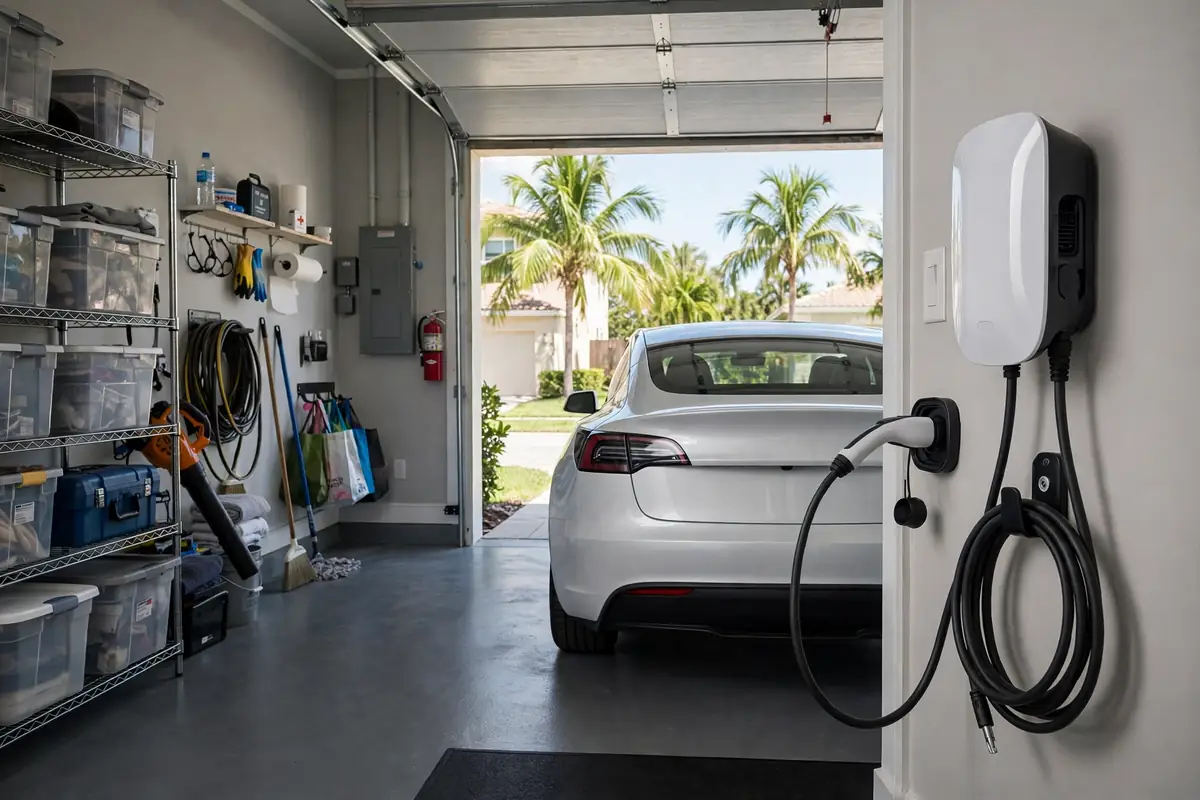
The Level 2 pattern settles differently across Tampa's neighborhoods. Around Ybor City, the charger feeds a classic commute — out early, home by dinner, a 40-amp session topping the car before the evening news ends. In the condo and townhome pockets, the win is quieter: a permitted, metered charger in an assigned space that ends the public-station era for that household. And across the family suburbs, Level 2's overnight window absorbs everything from school runs to weekend beach miles without a single midweek thought. Underneath every version sits the same discipline: a load calculation for the specific panel, a permit from City of Tampa Construction Services (electrical permit; Hillsborough County for unincorporated addresses), and a charger configured to the circuit it actually has. Routine is the product; the hardware is just how we ship it.
Level 2 and the Tampa Grid: Being a Good Neighbor
Thousands of Tampa chargers switching on at 6 p.m. would be a genuine problem for Tampa Electric (TECO) — which is precisely why utilities here reward the overnight pattern, and why every install we do ends with scheduled charging configured rather than suggested. Your car does not care whether it fills at dinner or at 2 a.m.; the grid cares enormously, and your rate plan may too. It is a small civic feature of home charging done properly: the same habit that saves you money flattens the peak for everyone on your street. We set it up as a default, and you can change it any night life intervenes.
The Tampa Brief
The facts that frame every job like this one in Tampa: permits run through City of Tampa Construction Services (electrical permit; Hillsborough County for unincorporated addresses); the service territory is Tampa Electric (TECO); the housing is 1920s bungalows in Ybor City and Seminole Heights, classic South Tampa homes, and master-planned suburbs in New Tampa and Westchase — three different housing eras, three different panel stories, one city; and the panel reality is this — The bungalow belt frequently runs 100-amp panels with full breaker boxes, so load management earns its keep; post-2000 suburbs usually have 200-amp service and garage space to spare
For Level 2 specifically, the local twist is the commute map: Tampa drivers' daily miles decide circuit sizes more honestly than any vehicle specification. A household crossing the county twice a day and a household working from a home office both 'need Level 2' — at different amperages, on different schedules, with different definitions of a full morning.
Frequently Asked Questions
Do Level 2 installs in Tampa need a permit?
Yes — the new 240-volt circuit is permitted through City of Tampa Construction Services (electrical permit; Hillsborough County for unincorporated addresses), and we handle the filing and inspection.
Will Level 2 charging hurt my battery in Tampa?
No. Level 2 AC charging is the gentle everyday method home charging is designed around; the car manages its own curve. Heat and repeated DC fast charging are the stresses, not overnight Level 2.
Will Level 2 raise my Tampa electric bill?
You will see the car's energy on the bill — typically well below the gasoline it replaces, and lower still when scheduled into off-peak hours, which we set up with you.
Can Level 2 work on my 100-amp panel in Tampa?
Often yes, at 32 or 40 amps or with load management. The load calculation gives your home's specific verdict.
How long does a Level 2 installation take in Tampa?
A few hours once the permit is issued, for a standard garage install. Panel work, trenching, or condo coordination extend the timeline; your assessment states it plainly.
Can a Level 2 charger be installed on a carport or exterior wall in Tampa?
Yes — weather-rated units and sealed fittings are made for exactly that. Placement plans around rain, sprinklers, and where you stand while plugging in.
Get Level 2 Charging at Home in Tampa
Tell us the car and the commute — we will size the circuit and book your Tampa assessment.
(407) 557-4153 · Mon–Fri 7:00 AM – 10:00 PM · Sat 8:00 AM – 10:00 PM · Sun 7:00 AM – 9:00 PM ET