Start With What the Charger Actually Needs
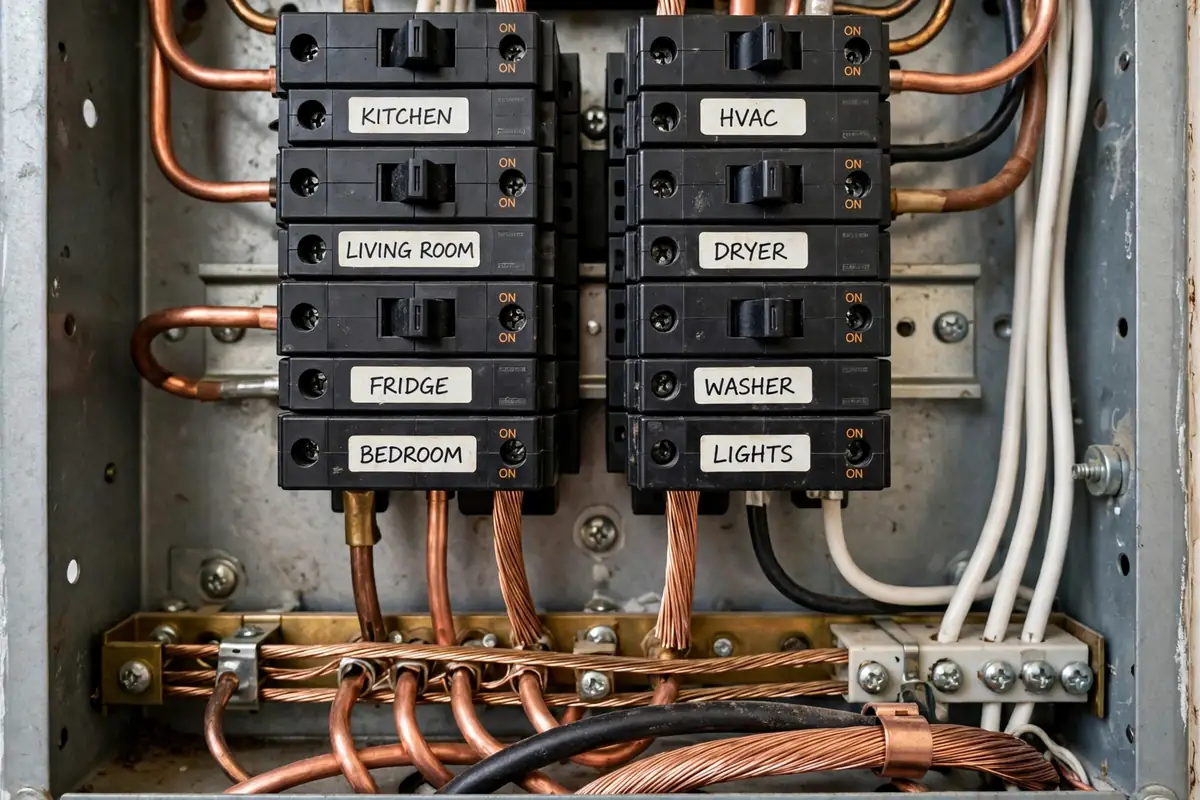
A Level 2 charger at full song draws 48 amps continuously; configured modestly, 32. That 16-amp gap is where most Tampa panel decisions live. The bungalow belt frequently runs 100-amp panels with full breaker boxes, so load management earns its keep; post-2000 suburbs usually have 200-amp service and garage space to spare If your driving is ordinary — commute, errands, home by dinner — the modest configuration fills the car with hours to spare, and the panel you own may be the panel you keep. The upgrade conversation should begin from your odometer, not from a catalog's maximum.
Reading the Warning Signs
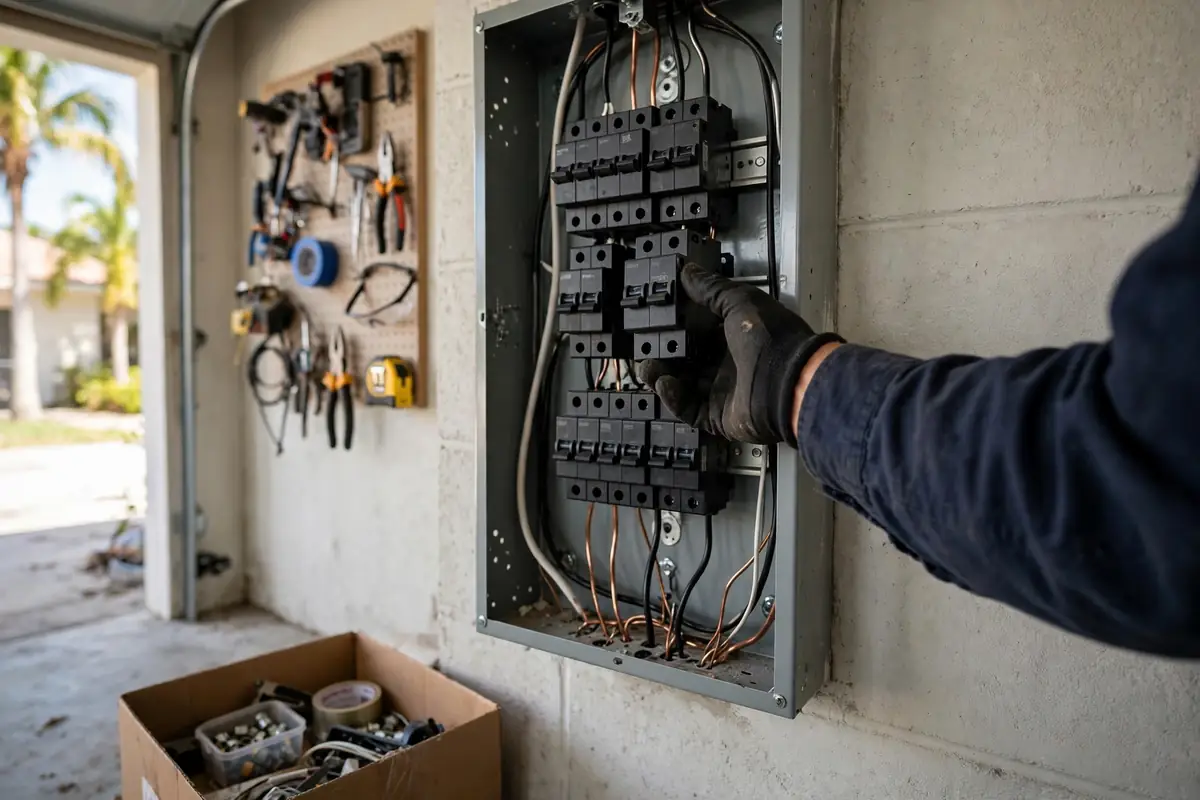
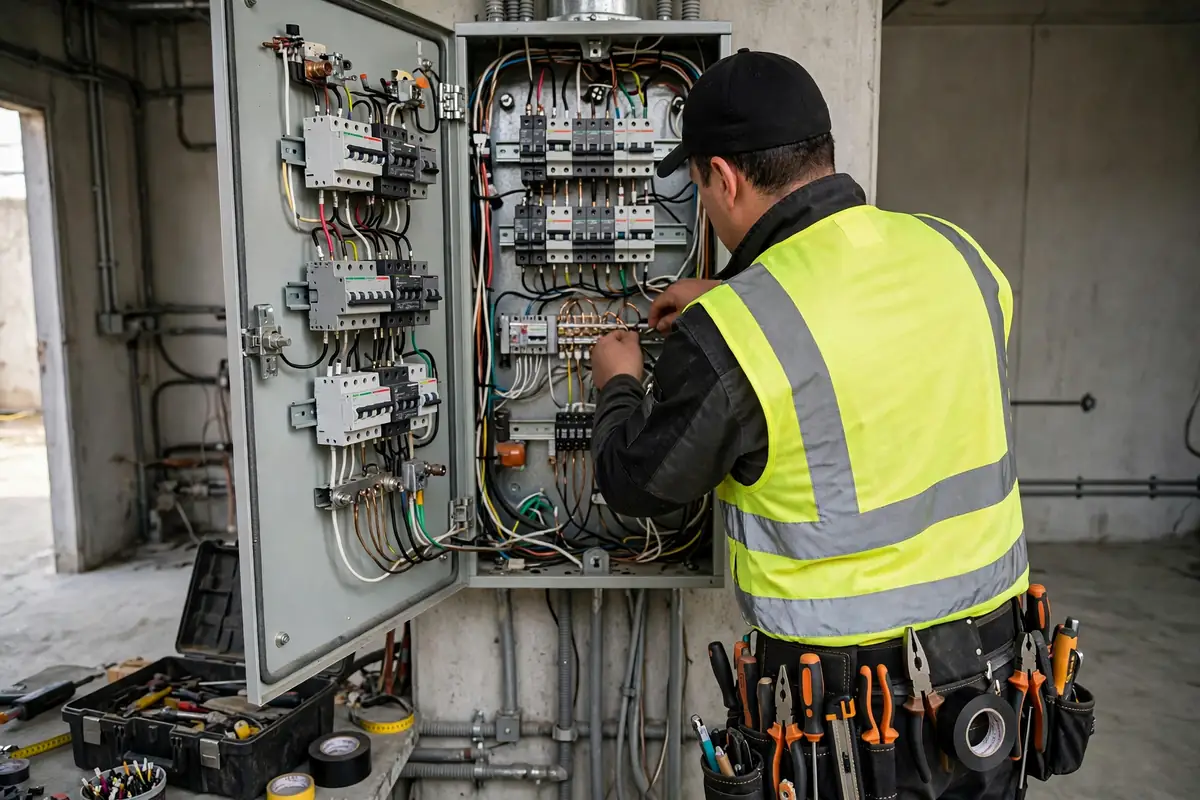
Some panels announce themselves: breakers that trip under combined loads, a box warm to the touch, lights that dip when the AC starts, tandem breakers doubled into single slots. Others fail silently — capacity consumed by additions nobody calculated. Either way, the assessment names what it finds in plain language and separates the safety items (fix regardless of the EV) from the capacity items (your choice, your timeline). Nobody should learn their panel's condition from a charger that trips at 2 a.m.
Subpanels: The Middle Architecture
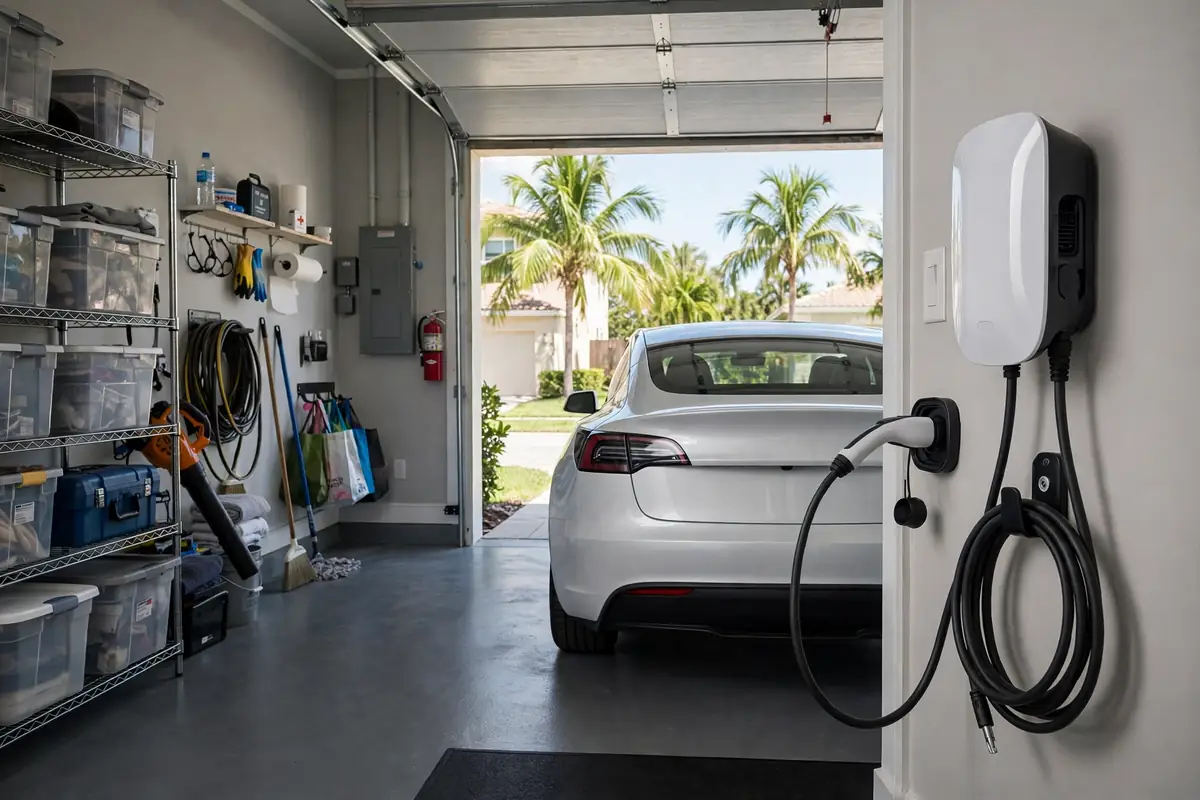
Between 'do nothing' and 'replace the service' sits the subpanel: a secondary panel, often in the garage, fed from a healthy main. For Tampa homes with detached garages — a pattern all over the older neighborhoods — a subpanel shortens the charger run, organizes the garage's circuits, and leaves room for the workshop and the second charger. It organizes capacity rather than creating it, which is exactly what some houses need and others do not. The load calculation sorts out which.
Surge Protection Rides Along
A panel project in Florida that does not discuss surge protection is unfinished. The same visit that opens your panel is the cheapest possible moment to add a whole-home surge protective device — the guard that stands between lightning season and everything you own, the new charger included. In Hillsborough County, we treat it as part of the upgrade's definition, and we will tell you plainly if your existing protection is already adequate.
How It Works
Step 1: A short call with the right questions
Car, parking spot, panel — three facts that shape the whole job. A photo of your panel, breakers visible, is the most useful thing you can send ahead.
Step 2: The assessment visit
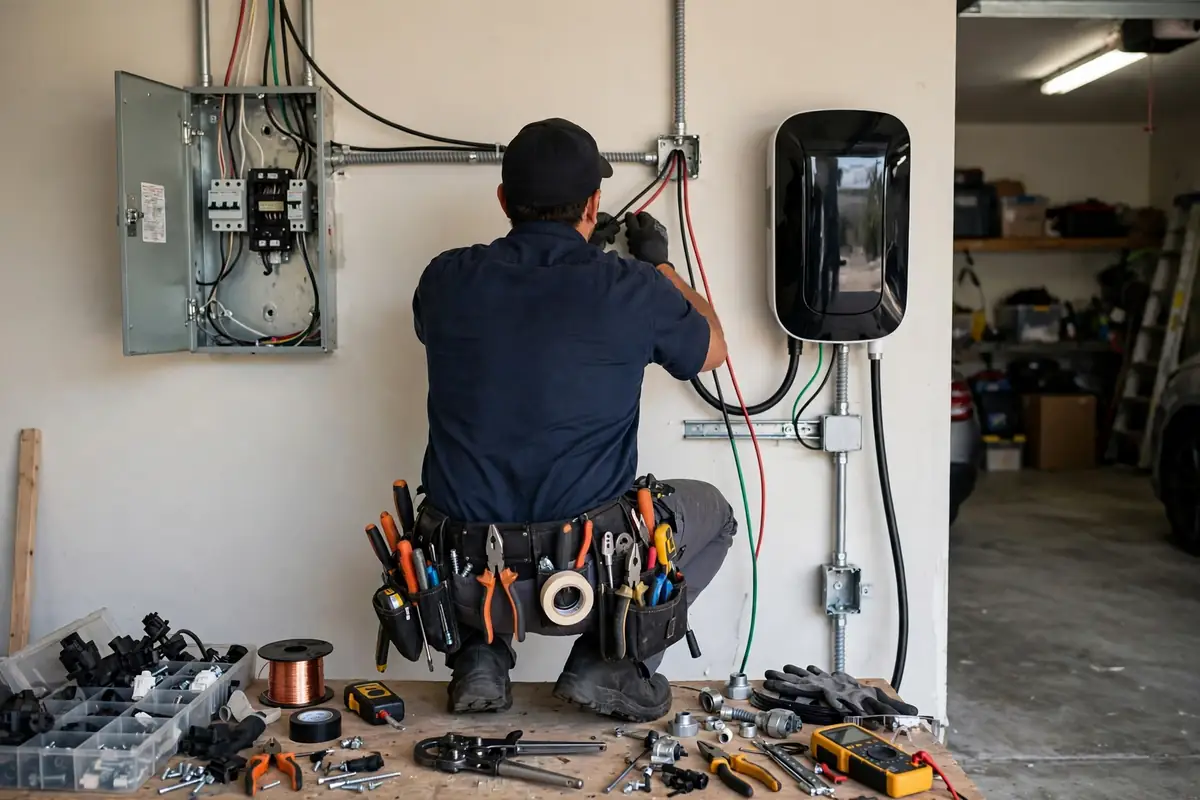
An electrician measures the run, opens the panel, and runs the NEC load calculation on site. You hear the verdict plainly: room to spare, room with load management, or panel work first.
Step 3: Permitted installation

Permit filed, circuit run, equipment mounted and configured to the breaker that feeds it. Outdoor work is sealed as it is installed, not after.
Step 4: Inspection, then your first charge
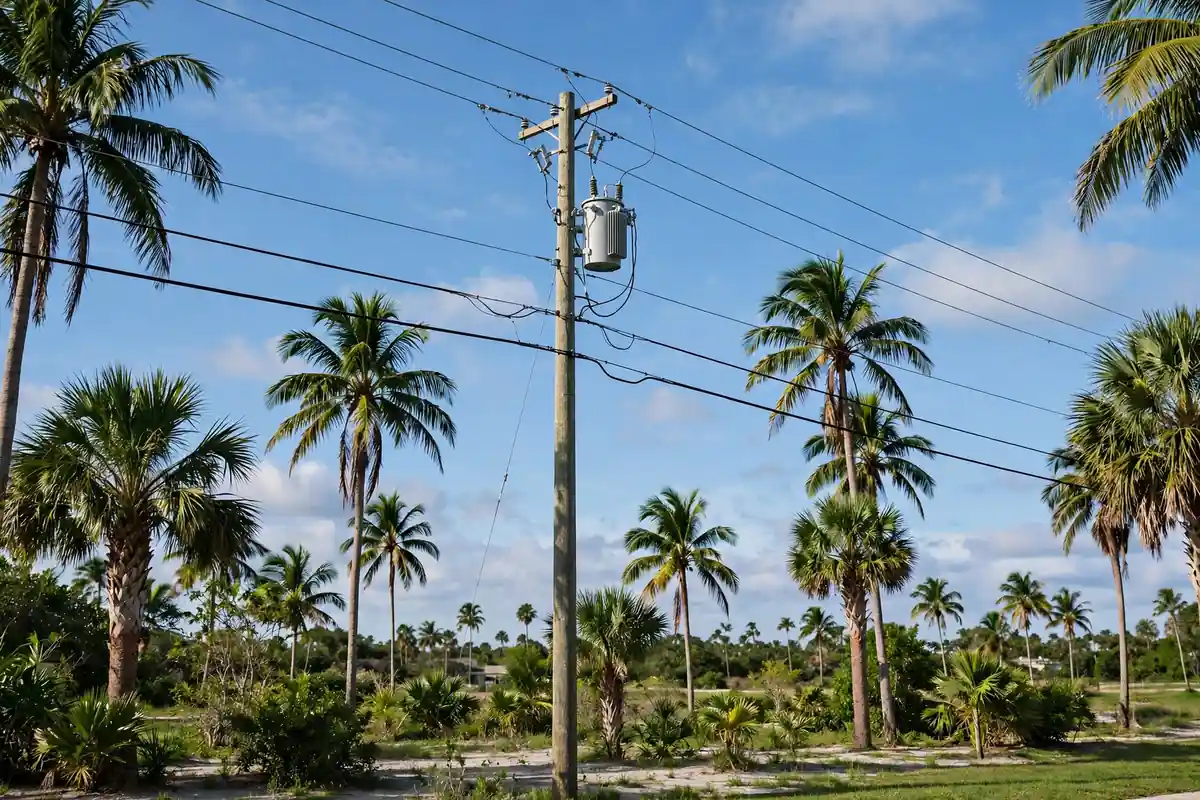
The inspector closes the permit; we close the loop with a test charge, the app set up, and the overnight schedule aimed at your utility's off-peak window.
On the Ground in Tampa
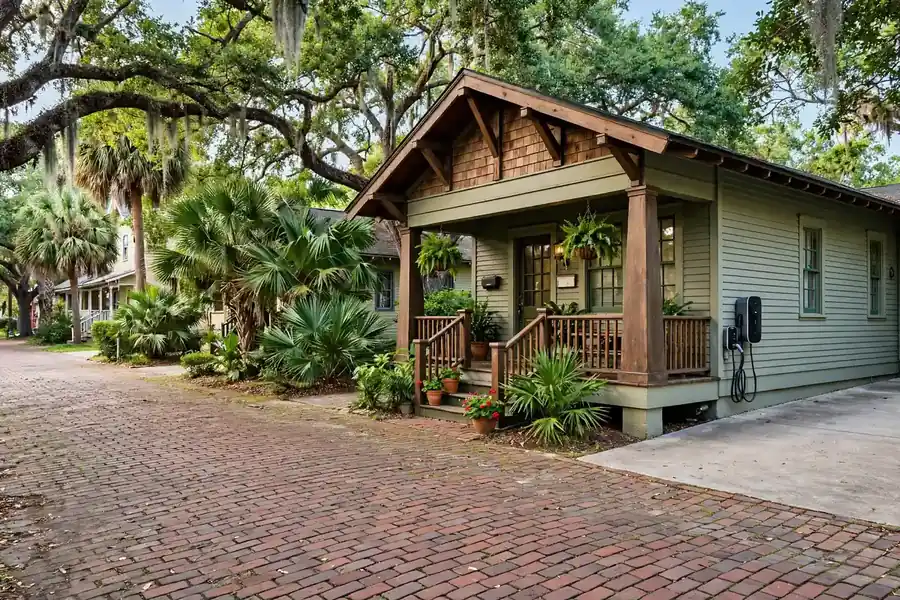
Installs in Tampa cluster in neighborhoods like Ybor City, Seminole Heights, Hyde Park, South Tampa, New Tampa, Westchase, Carrollwood, Temple Terrace — and each pocket of the city writes its own version of the job. The constant is the landscape: brick streets in Ybor, oak-shaded bungalows, and Bayshore's waterfront. Add Hillsborough County permitting, Tampa Electric (TECO) service, and daily driving shaped by I-275, I-4, and the Crosstown, and you have the real specification sheet for a Tampa charger — the one we work from on every assessment, rather than a generic national checklist. The bungalow belt frequently runs 100-amp panels with full breaker boxes, so load management earns its keep; post-2000 suburbs usually have 200-amp service and garage space to spare.
What a Bad Install Looks Like — and How to Refuse One
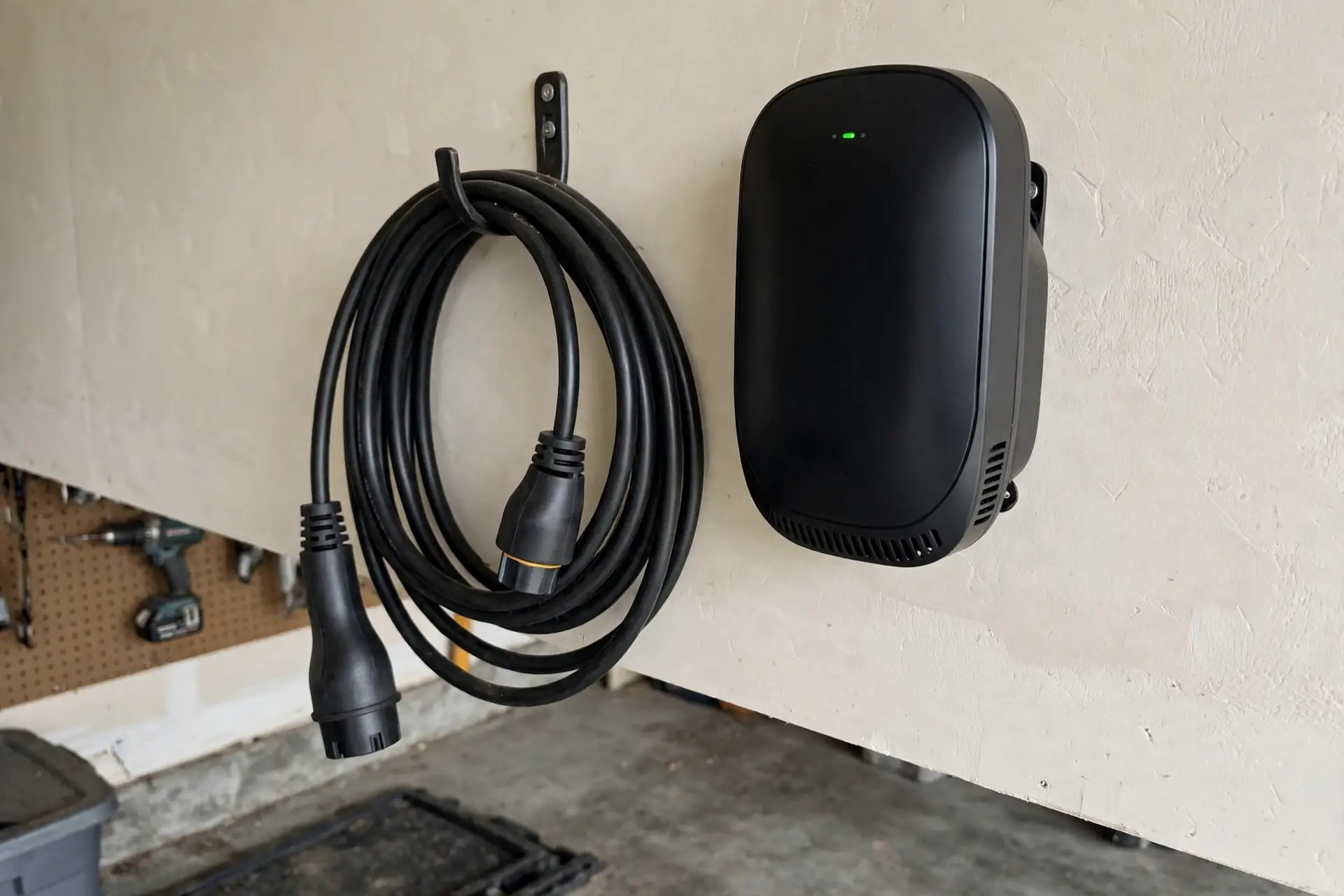
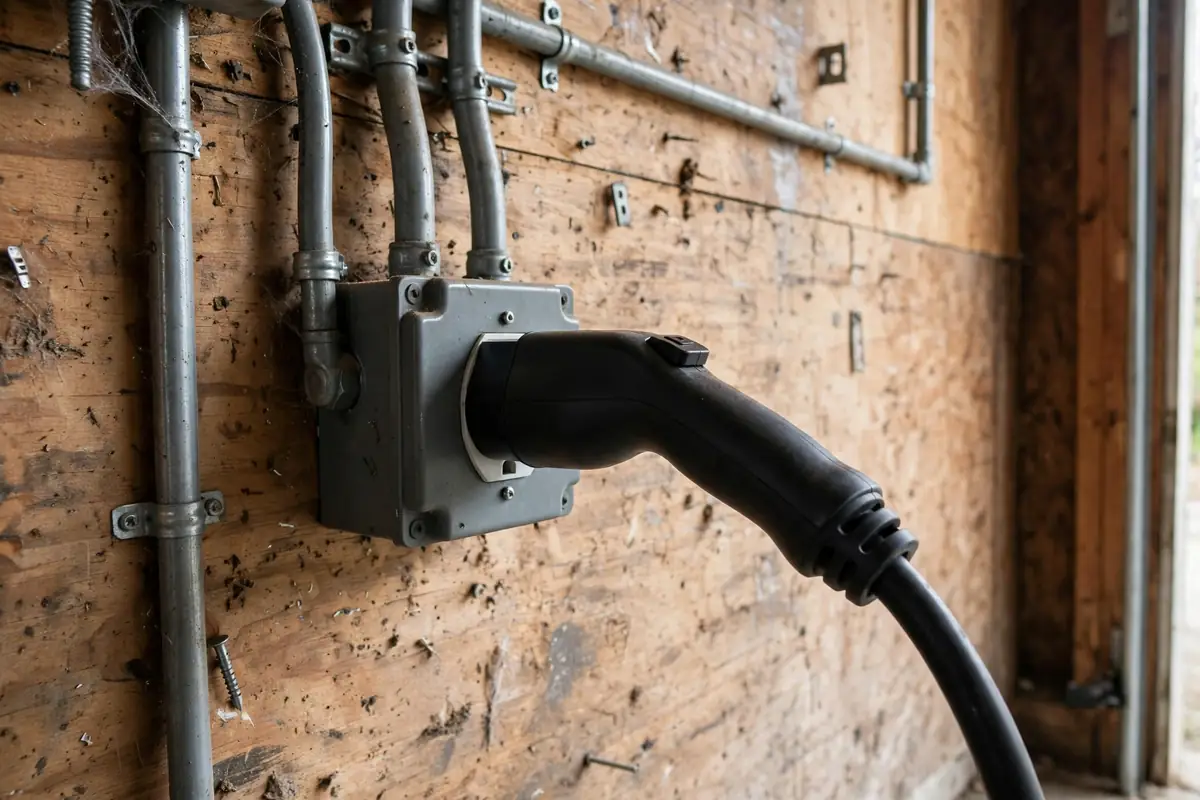
Florida's charger boom attracted every handyman with a drill, and Tampa homeowners inherit their work at resale. The signatures of a bad install: a charger configured to a higher amperage than its breaker, because it 'worked on the day'; a residential-grade outlet melting slowly under continuous load; no permit, which means no inspector ever saw any of it; and a cable run draped where a lawn crew will find it. Refusing one is simple: ask for the load calculation, the permit number, and the configured amperage in writing. Any installer who cannot produce all three is telling you who they are.
Two-EV Households in Tampa
The second EV is the moment home charging gets interesting. Two cars can share one circuit with power-sharing chargers that divide the amperage between them — both full by morning on infrastructure sized for one. Or the household adds a second circuit, which is where the load calculation starts earning its fee in earnest, especially in Tampa's older panels. Either pattern works. What does not work is the daisy-chain of adapters and shared dryer outlets that two-EV households improvise in month one. If a second EV is even a rumor in your household, tell us on the first install — the conduit and panel decisions are cheap now and annoying later.
Renters, Landlords, and Seasonal Homes in Tampa
Tampa has every housing arrangement Florida offers, and each has a charging answer. Renters: with written landlord permission, a permitted NEMA 14-50 outlet plus your own plug-in charger is the portable pattern — the expensive part (the circuit) is documented work that stays, and the charger leaves with you. Landlords: a permitted charger circuit is becoming a listing feature in Hillsborough County, not a concession. Seasonal owners — a real constituency in Tampa — should ask about surge protection and remote-monitoring chargers, because a home that sits empty through storm season wants equipment that reports its own health.
Three Tampa Panels, Three Different Answers
Walk Tampa with a load-calculation worksheet and the city sorts itself. The first panel: a healthy 200-amp service in a newer subdivision — the charger circuit goes in and the 'upgrade' conversation ends in five minutes. The second: a mid-century panel in Seminole Heights territory, full but sound — load management carries the charger, and the panel lives to fight another decade. The third: an older box around Ybor City, breakers doubled up, bus showing heat history — here the upgrade is not about the car at all, and we say so plainly. Same city, same charger, three honest scopes. The worksheet, not the sales target, decides which one is yours — and in Hillsborough County, that discipline is the whole service.
After the Upgrade: Living on 200 Amps in Tampa
Homeowners underestimate the after-story of a panel upgrade. The charger stops being a negotiation with the house: the AC, the range, and a 48-amp session run together without choreography. The next project — a heat pump, an induction conversion, a workshop, a second EV in Tampa's two-car households — stops beginning with an electrician's apology. There is also a paperwork after-story: the closed permit and the labeled panel become part of the home's record in Hillsborough County, the kind of documentation that answers insurers and buyers before they finish asking. Capacity is the product; calm is the dividend.
The Tampa Brief
The facts that frame every job like this one in Tampa: permits run through City of Tampa Construction Services (electrical permit; Hillsborough County for unincorporated addresses); the service territory is Tampa Electric (TECO); the housing is 1920s bungalows in Ybor City and Seminole Heights, classic South Tampa homes, and master-planned suburbs in New Tampa and Westchase — three different housing eras, three different panel stories, one city; and the panel reality is this — The bungalow belt frequently runs 100-amp panels with full breaker boxes, so load management earns its keep; post-2000 suburbs usually have 200-amp service and garage space to spare
For panel work specifically, the local twist is era density: Tampa's mix means our electricians open everything from modern 200-amp services to legacy boxes within the same week, sometimes on the same street. That is why the load calculation here is a craft, not a form — the worksheet is standard, but reading the panel in front of it is local knowledge.
Frequently Asked Questions
How long will my power be off during a Tampa panel upgrade?
Part of one day for the swap itself, inside a schedule we set with you in advance. The inspection follows on the city's calendar.
Will a panel upgrade help beyond EV charging in Tampa?
Almost always. The capacity serves the next heat pump, induction range, pool equipment, or second EV — which is why many Tampa owners choose it over the workaround.
Can a subpanel solve my Tampa problem instead?
Often, especially with detached garages. A subpanel organizes and relocates capacity; the main panel's total still governs. The assessment shows both routes.
What if my panel is corroded or damaged in Tampa?
Then the conversation changes from capacity to condition, and we will show you exactly what we found. Safety findings come before charger plans, always.
Does Duke's Charger Prep Credit apply to panel work in Tampa?
In Duke Energy Florida territory, the Charger Prep Credit (up to 819 dollars) covers preparation work including wiring and panel readiness — permit fees excluded. Customers of other utilities should ask us what applies at their address.
How much disruption should I expect on upgrade day in Tampa?
Power off for part of one day, a crew in and around the panel, and a short list of things to plan around — fridge closed, work calls rescheduled. Everything else about the house stays exactly as it was, with a better panel at the end of it.
Get a Straight Answer About Your Tampa Panel
One assessment tells you whether you need an upgrade, load management, or neither. Call and book it.
(407) 557-4153 · Mon–Fri 7:00 AM – 10:00 PM · Sat 8:00 AM – 10:00 PM · Sun 7:00 AM – 9:00 PM ET