Dwell Time Is the Design Document
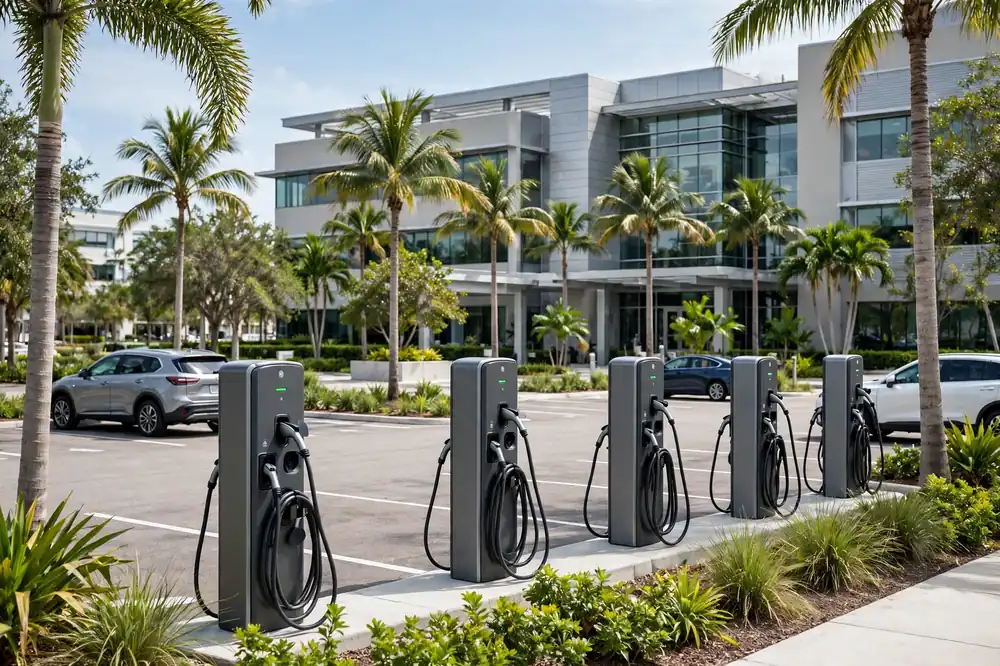
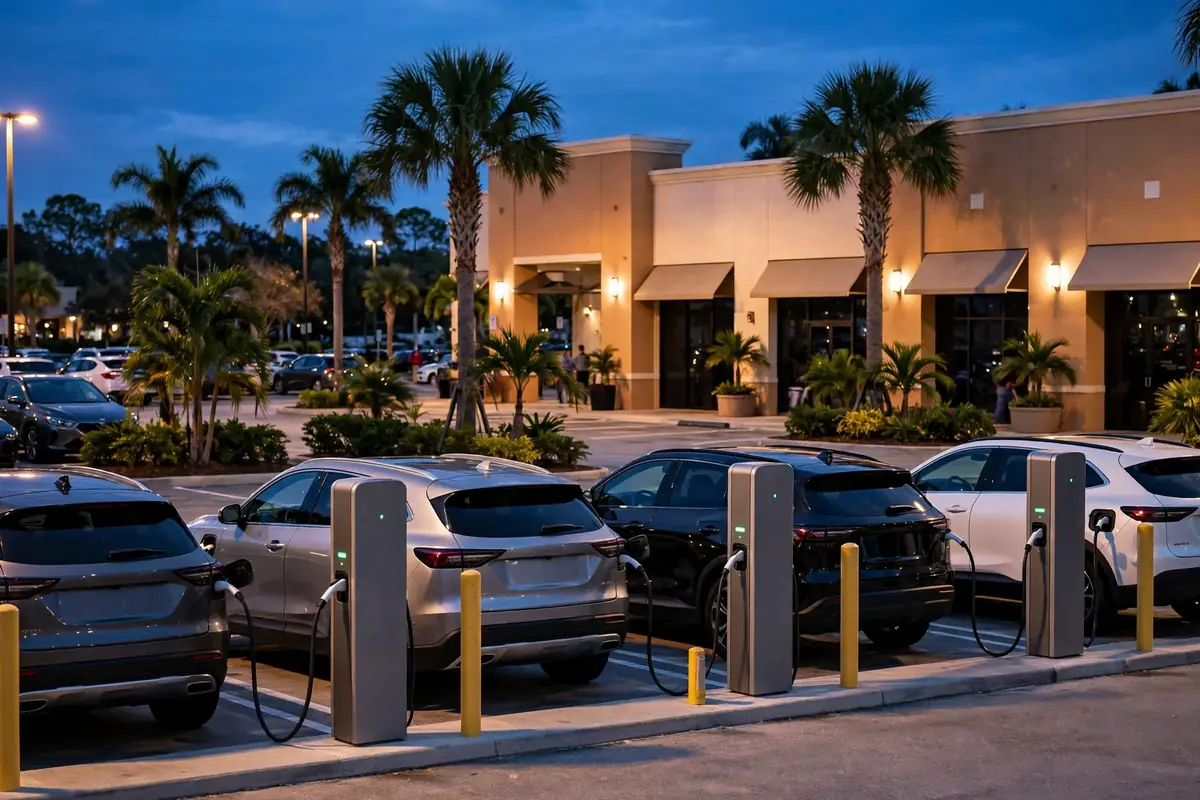
Commercial charging succeeds or fails on one question: how long do cars sit here? Employees sit eight hours, hotel guests ten, gym members one, diners two. Station count and power follow from those numbers — a workplace needs many modest ports, a restaurant fewer, faster ones. In West Palm Beach, we start every engagement with the dwell census of your actual users, because a system designed for imaginary users serves nobody.
Load Management: Capacity Without Construction
Your building's service was not sized for a row of chargers, and it does not need to be. Load management pools the available capacity across every station and deals it out by need — the car leaving in an hour outranks the car leaving at dawn. Properties in Palm Beach County routinely double or triple their station count on existing service with management in place. It is the highest-value line item in commercial charging, and the one most often missing from cheap proposals.
Multifamily: The Metering Makes the Project

For West Palm Beach condos and apartments, the electrical work is the easy half. The project is metering: who pays for each kilowatt-hour, how access is controlled, how the association documents it all. Modern networked stations bill users directly and report to the property; the design work is choosing the model — amenity, cost-recovery, or revenue — and writing it into the association's rules before the first trench. Florida's condo charging statute gives individual owners rights in assigned spaces; a property-wide system is usually the board's cleaner answer.
Phasing: Build the Backbone Once
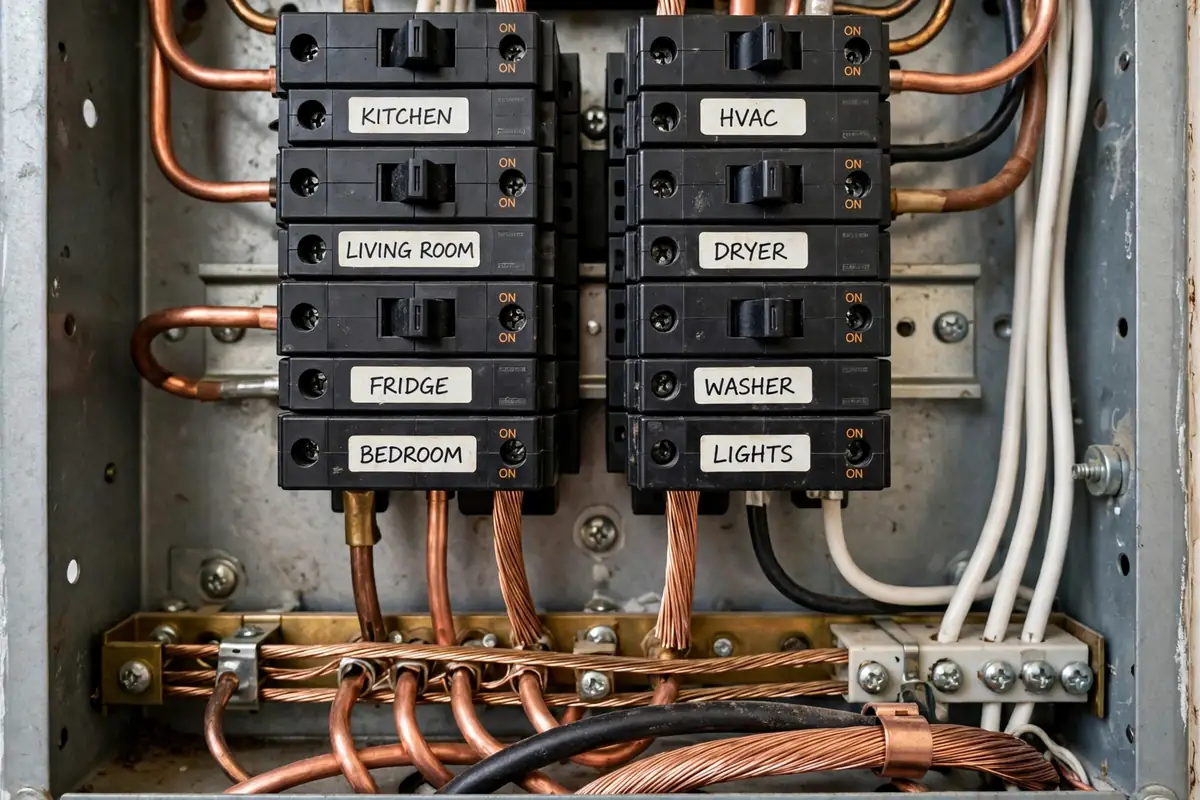
EV adoption at your property will grow; construction budgets prefer it didn't have to. The professional pattern: conduit, capacity headroom, and panel space for the end state in phase one — stations added in tranches as utilization proves out. Retrofitting the backbone is the expensive version of the same project, paid twice.
How It Works
Step 1: Recon over the phone
EV model, parking reality, panel basics — the call sorts the job into standard or interesting before anyone drives out. Panel photos welcome.
Step 2: The panel gets its say
Load calculation first, hardware second. You will see the spare capacity as a number, and every option on the table will trace back to it.
Step 3: Install day
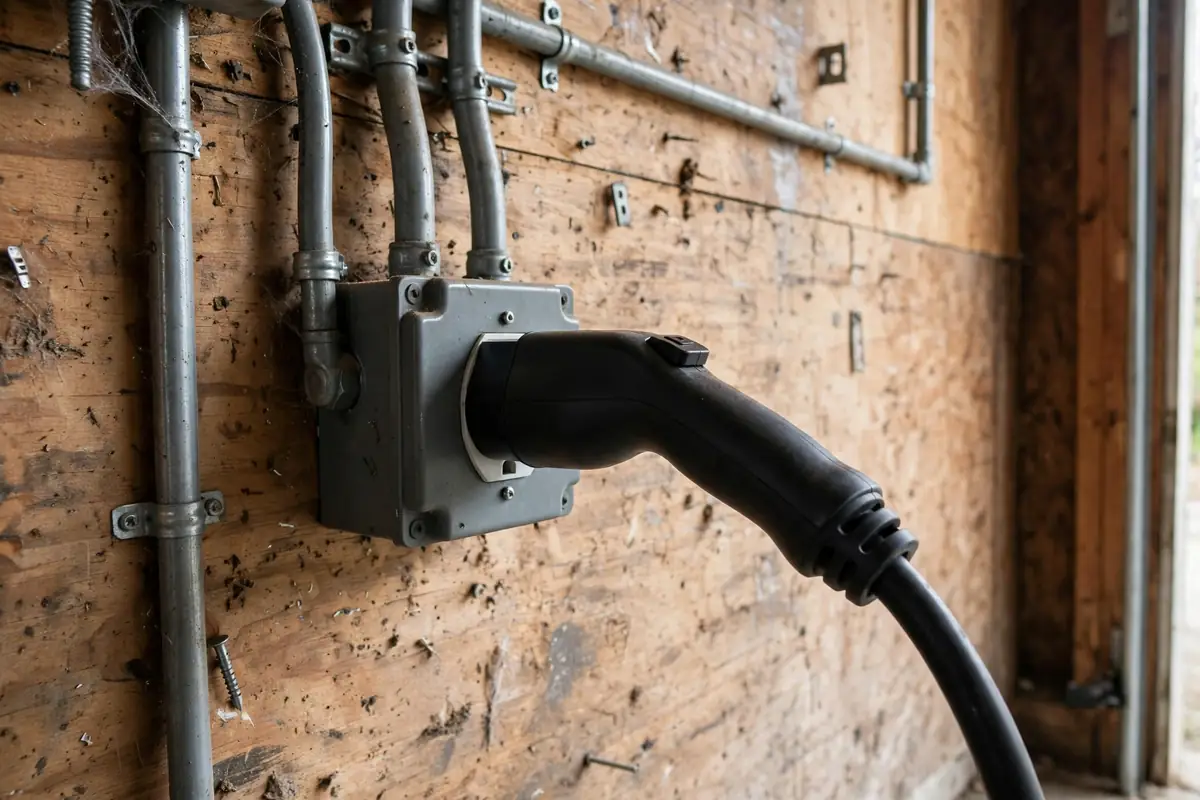
Permit in hand, the circuit goes in, the charger goes on the wall, and the configuration is set to the circuit — then proven with your car plugged in.
Step 4: Paperwork and goodbye
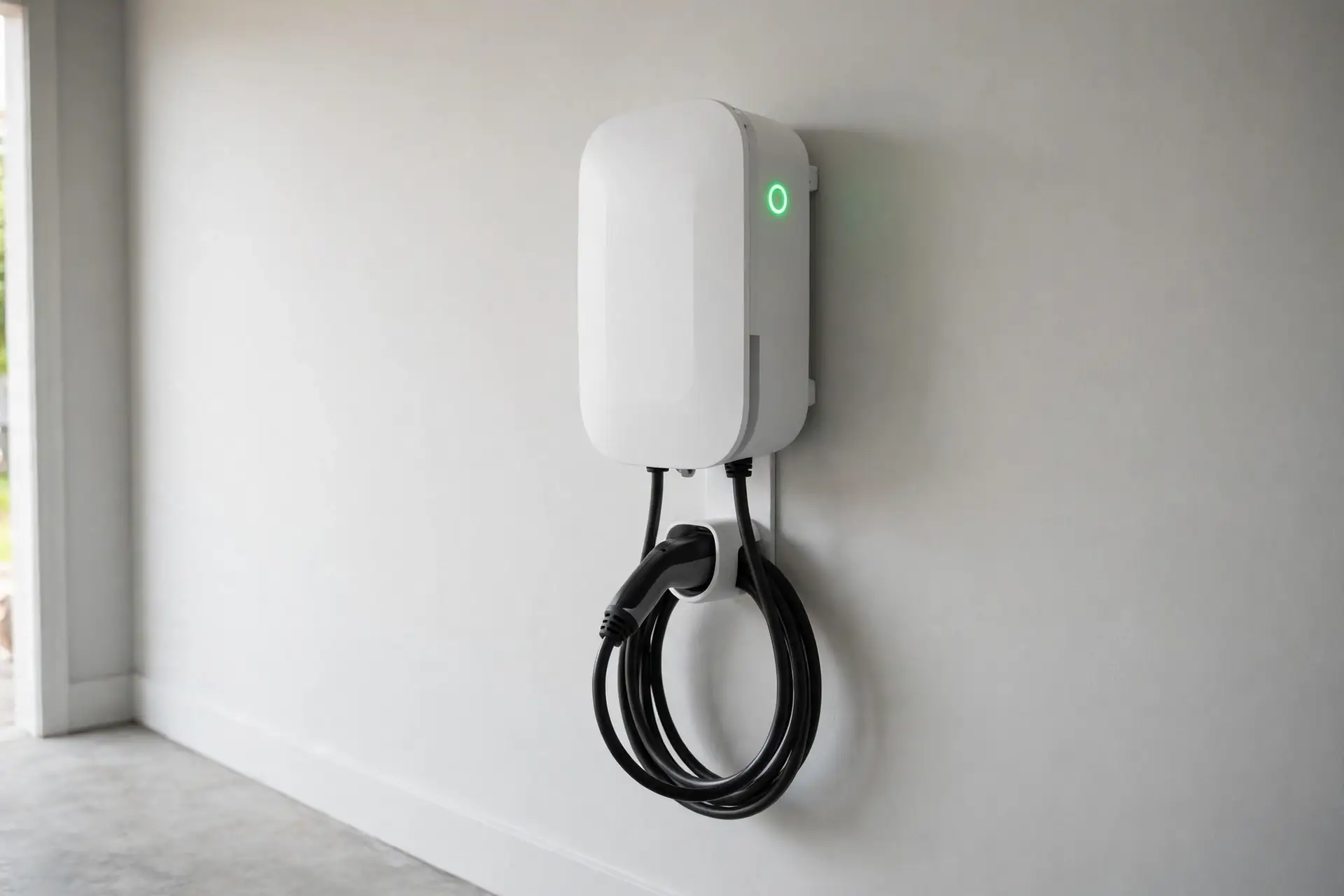
Inspection closes the permit; your folder gets the permit record, the configuration, and the panel labeling. The charger disappears into your routine, which is the point.
On the Ground in West Palm Beach
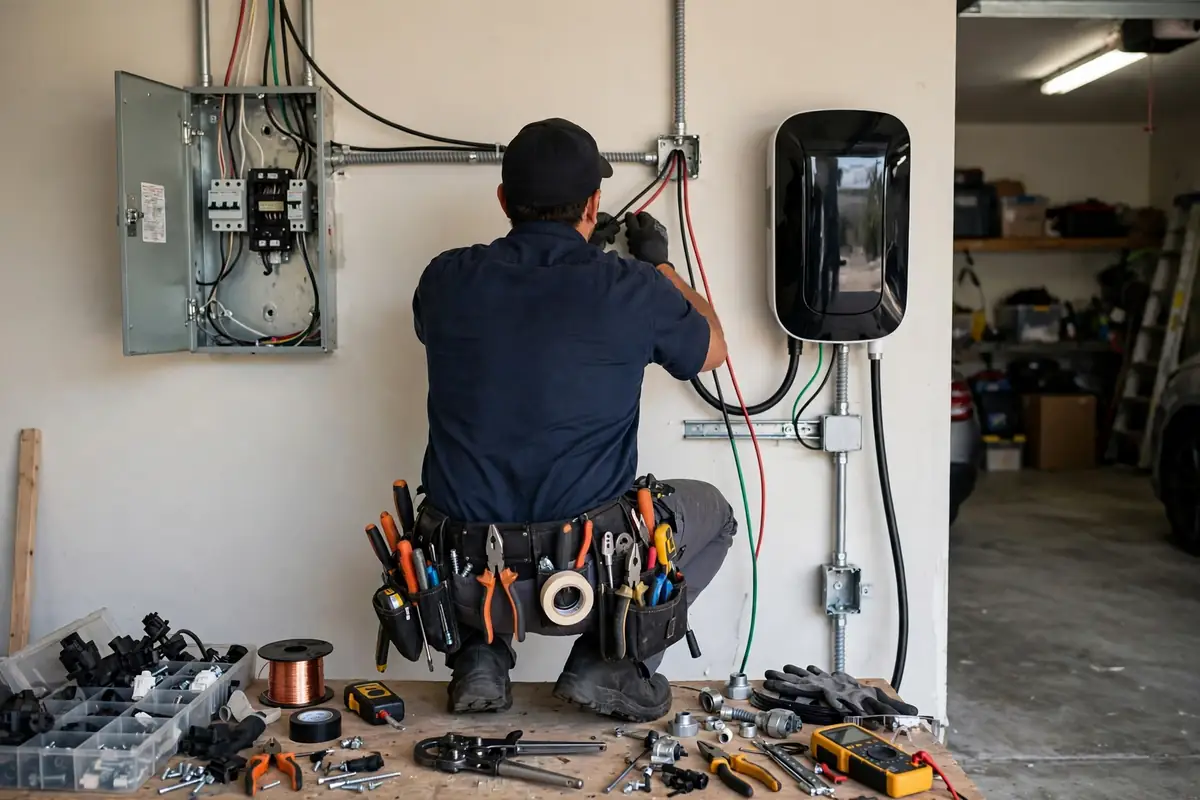
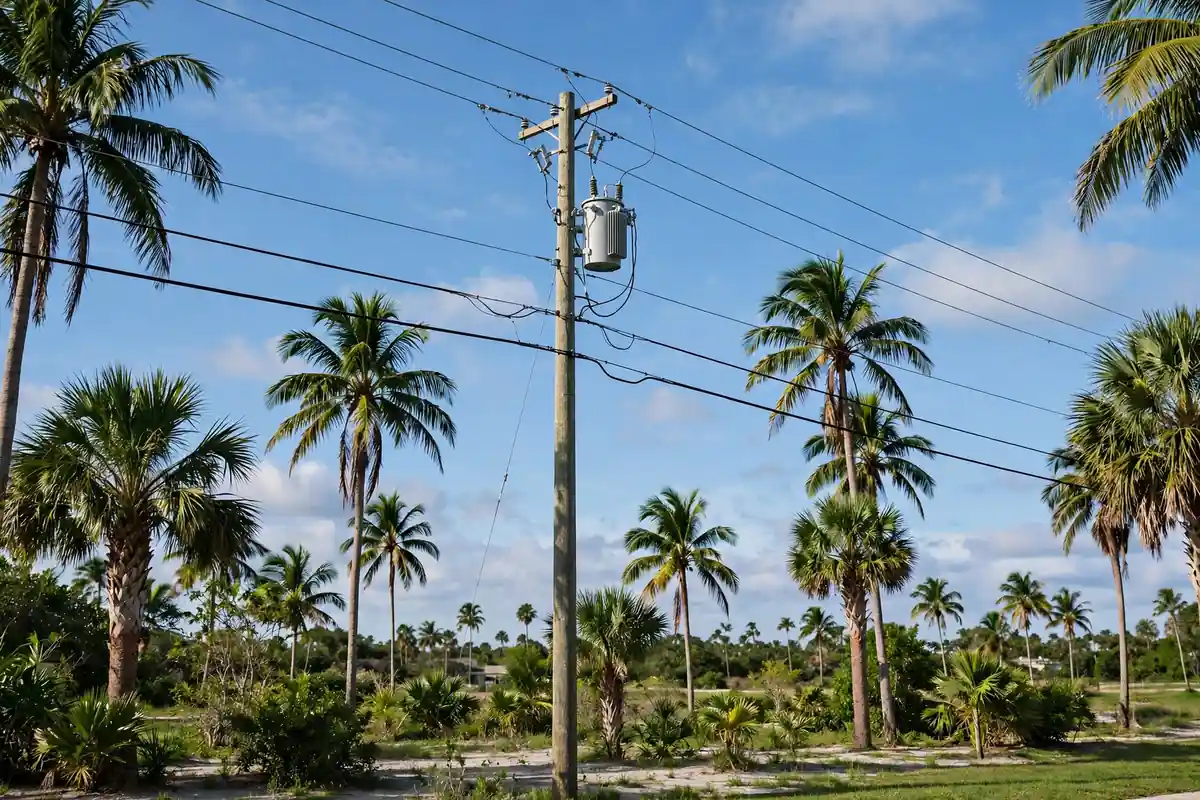
Installs in West Palm Beach cluster in neighborhoods like El Cid, Flamingo Park, Grandview Heights, Northwood Shores, Prospect Park, Ibis Golf & Country Club, Villages of Palm Beach Lakes, Palm Beach Lakes — and each pocket of the city writes its own version of the job. The constant is the landscape: waterfront condos along Flagler Drive and single-family streets under royal palms. Add Palm Beach County permitting, Florida Power & Light (FPL) service, and daily driving shaped by I-95 and the Turnpike, and you have the real specification sheet for a West Palm Beach charger — the one we work from on every assessment, rather than a generic national checklist. Historic-district homes often run 100-amp or even older fuse-era panels, while the western subdivisions were built with 200-amp service and garage subpanels — the load calculation, not the postcode, decides which conversation we have.
Renters, Landlords, and Seasonal Homes in West Palm Beach
West Palm Beach has every housing arrangement Florida offers, and each has a charging answer. Renters: with written landlord permission, a permitted NEMA 14-50 outlet plus your own plug-in charger is the portable pattern — the expensive part (the circuit) is documented work that stays, and the charger leaves with you. Landlords: a permitted charger circuit is becoming a listing feature in Palm Beach County, not a concession. Seasonal owners — a real constituency in West Palm Beach — should ask about surge protection and remote-monitoring chargers, because a home that sits empty through storm season wants equipment that reports its own health.
Keeping a Charger Healthy in Florida
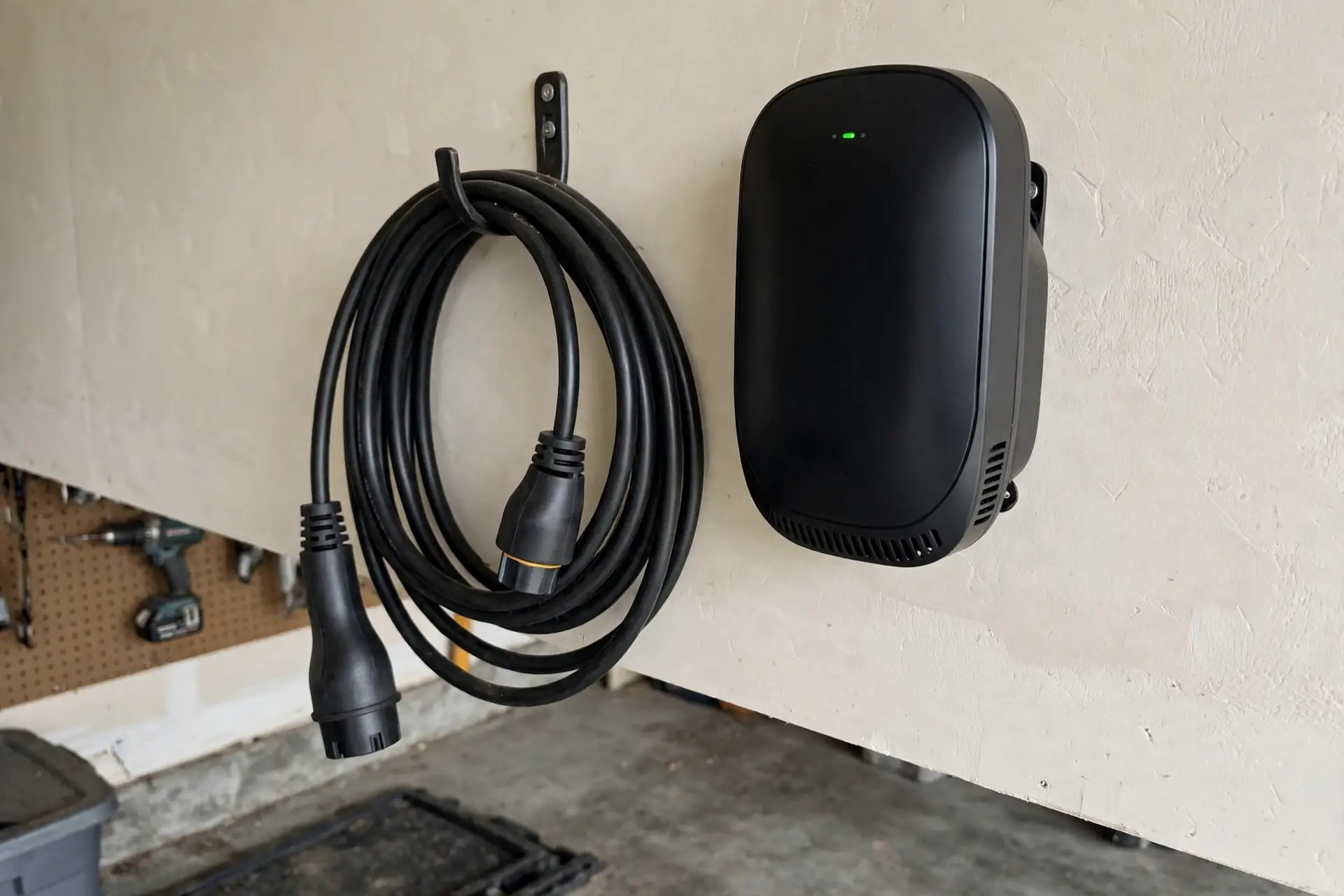
A Florida charger asks little: keep the connector docked, glance at the cable jacket each season for UV wear, rinse salt film off coastal enclosures, and know that a breaker that starts tripping is a message, not an annoyance to reset nightly. After any storm that flickered your power hard, check the charger's status light before the next session. Surge protection at the panel does the heavy lifting silently. And when something does misbehave — speeds sagging, connectors running warm, Wi-Fi dropping — a diagnostic visit early is cheaper than a replacement later. Our repair team covers West Palm Beach for exactly these calls.
Questions to Ask Any West Palm Beach Installer
Five questions separate electricians from dabblers, anywhere in Palm Beach County: Will you run a load calculation before quoting? Who pulls the permit, and will I get the closed permit record? What amperage will the charger be configured to, and what breaker and wire support it? Is the outlet (if any) industrial-grade? Is surge protection included or offered? A qualified installer answers all five without blinking, because they are the job. We built our whole process in West Palm Beach around answering them before you think to ask.
What West Palm Beach Properties Ask Us First
Three questions open nearly every West Palm Beach commercial conversation. 'What will the utility do for us?' — here that is Florida Power & Light (FPL): FPL's EVolution Home program is the big one here: for 36 dollars a month on a 10-year agreement, FPL supplies the Level 2 charger, arranges the installation, and covers maintenance. 'What does the association or the city need to see?' — a load study, a site plan, and permits through City of West Palm Beach Development Services (electrical permit, with Palm Beach County handling unincorporated addresses). And 'how do we not do this twice?' — the phasing answer: conduit and capacity for the end state, stations in tranches. Properties around El Cid, Flamingo Park, Grandview Heights, Northwood Shores are asking these questions now because their tenants and guests already have. The ones who answer them with a plan get charging that photographs well, inspects cleanly, and still makes sense when the second tranche lands.
Measuring Success at a West Palm Beach Property
A commercial install in West Palm Beach should be judged a year in, not at the ribbon-cutting. The metrics that matter: utilization per station across the week (are the counts right?), fault-free months (is the hardware holding up in Florida weather?), tenant and guest feedback (did the amenity land?), and the electric bill's shape (is load management doing its invisible work?). We hand over every property with those four numbers defined and the reporting switched on, because a system in Palm Beach County that cannot show its own performance will be doubted at the first budget review — and one that can, gets its second phase approved.
The West Palm Beach Brief
The facts that frame every job like this one in West Palm Beach: permits run through City of West Palm Beach Development Services (electrical permit, with Palm Beach County handling unincorporated addresses); the service territory is Florida Power & Light (FPL); the housing is a split personality: 1920s Mediterranean revivals and historic bungalows in El Cid and Flamingo Park, mid-century ranches across the south end, and large newer subdivisions west of I-95 where two- and three-car garages are the norm; and the panel reality is this — Historic-district homes often run 100-amp or even older fuse-era panels, while the western subdivisions were built with 200-amp service and garage subpanels — the load calculation, not the postcode, decides which conversation we have
For commercial work specifically, the local twist is seasonality: West Palm Beach properties plan around tenant calendars, tourist peaks, and hurricane season rather than around our schedule. Phasing plans here are drawn so construction never collides with a property's highest-value weeks — a constraint that shapes conduit routes and tranche timing as much as any electrical limit.
Frequently Asked Questions
Who uses commercial EV charging in West Palm Beach?
Office parks retaining tenants, hotels and retail earning dwell, multifamily properties competing for residents, and fleets electrifying routes. In West Palm Beach, multifamily and hospitality lead the request list.
Can a West Palm Beach condo or apartment property add charging to shared parking?
Yes — it is a design exercise: load study, metering and billing model, assigned versus shared stations, and association approvals. Florida law also protects individual owners installing in assigned spaces.
Do commercial chargers in West Palm Beach need permits?
Yes — permitted through City of West Palm Beach Development Services (electrical permit, with Palm Beach County handling unincorporated addresses) and inspected, with ADA placement, signage, and parking rules scoped into public-facing site plans.
What is load management on a commercial install in West Palm Beach?
Software and hardware sharing a fixed capacity pool across all stations, so many cars charge within a service that could never run that many full-speed circuits. It is what makes large installs affordable.
Can commercial charging make money for a West Palm Beach property?
Stations can bill per kilowatt-hour or per session under Florida rules, with the network handling payments. Whether it pencils out depends on your traffic — we model it before you commit.
How long does a commercial charging project take in West Palm Beach?
Assessment and design first (load study, layout, metering model), then permits, then installation in phases if the property is large. Your scoped plan carries the timeline; we do not guess it here.
Plan Charging for Your West Palm Beach Property
Bring us the property and the goal — we will bring the load study and a scoped plan.
(407) 557-4153 · Mon–Fri 7:00 AM – 10:00 PM · Sat 8:00 AM – 10:00 PM · Sun 7:00 AM – 9:00 PM ET