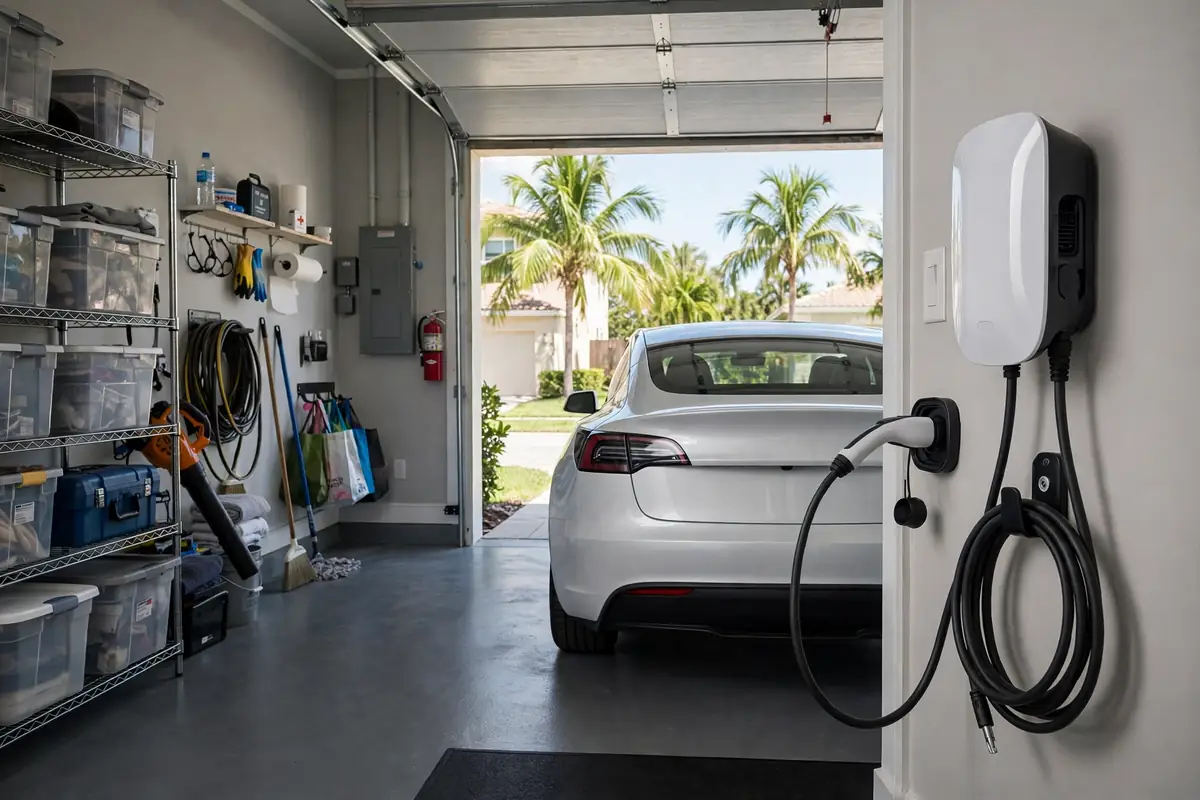
Step 1: The Call (15 Minutes That Save Everyone Time)
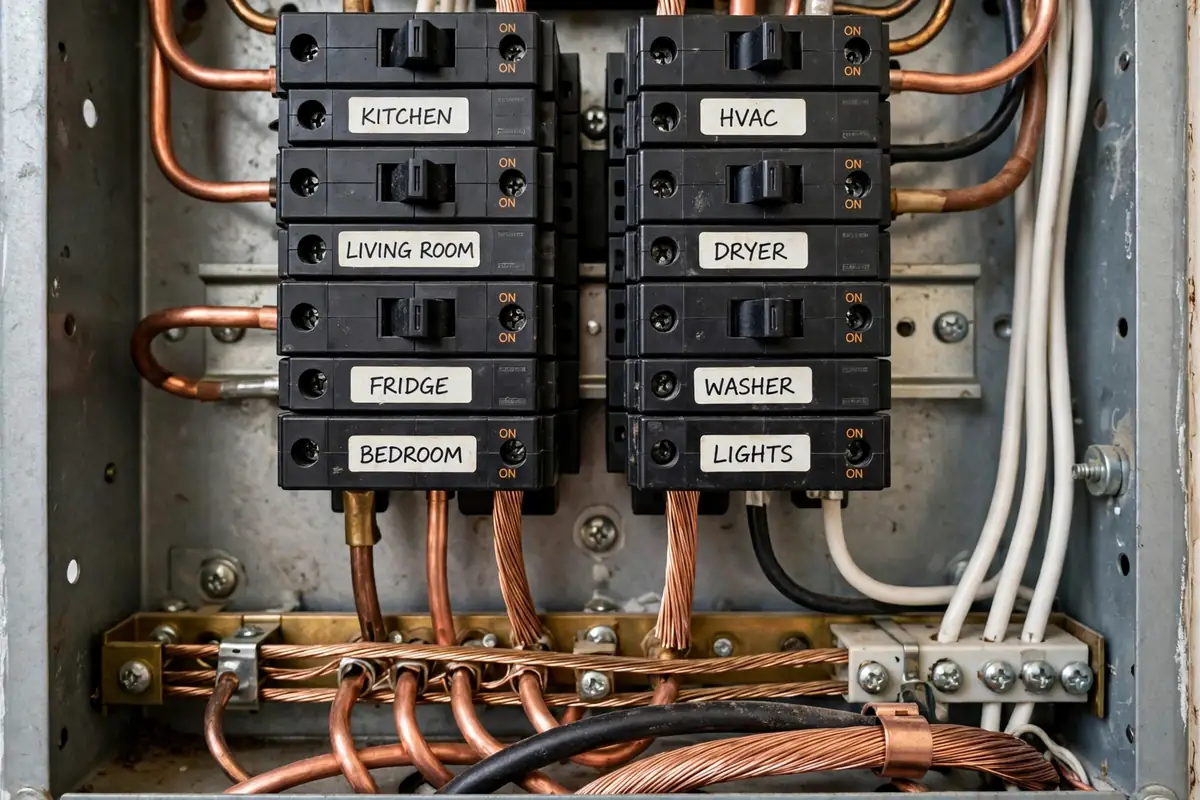
You describe the car, the home, and where you park. Panel age and location, garage versus carport versus driveway, condo or single-family — five facts that shape the whole job. Photos of your electrical panel (door open, breakers visible) are the single most useful thing you can send ahead; they let the assessment arrive half-finished.
Step 2: The Assessment and Load Calculation

A qualified electrician examines your panel, runs the NEC load calculation, measures the circuit route, and confirms the charger placement with you. Outcomes you might hear:
- "Your panel has room" — the simple path: circuit, charger, permit.
- "Room, with load management" — a device shares capacity safely.
- "The panel comes first" — an upgrade or subpanel precedes the charger.
You receive a scoped description of the work. No scope, no start — that is the rule.
Step 3: The Permit
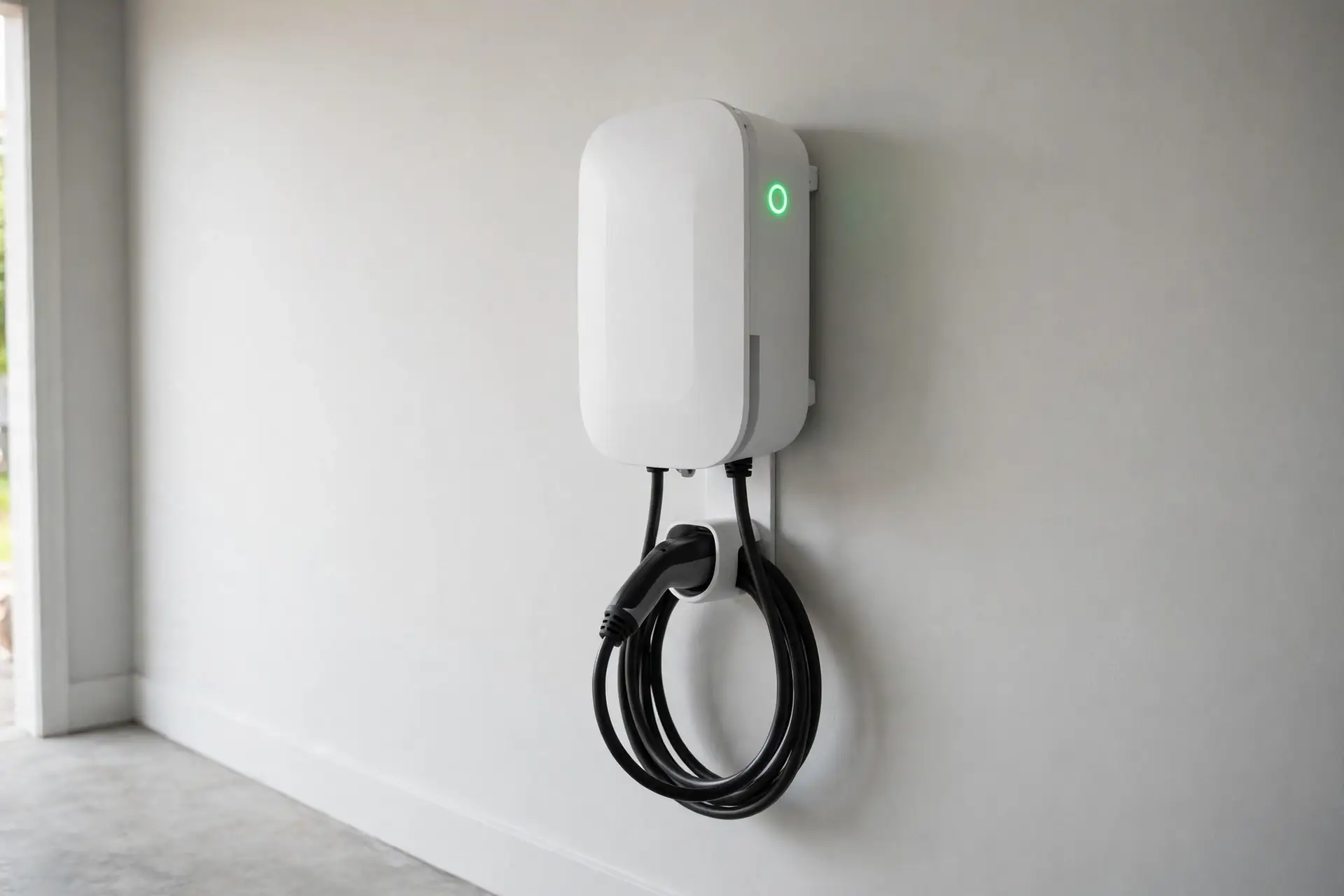
Your electrician files the electrical permit with your city or county. In an HOA or condo, the association application goes in parallel — Florida condo owners have statutory rights here, and the paperwork is routine when it is complete. Permit timelines vary by desk; you will hear the current expectation for your city, not a statewide average.
Step 4: Installation Day
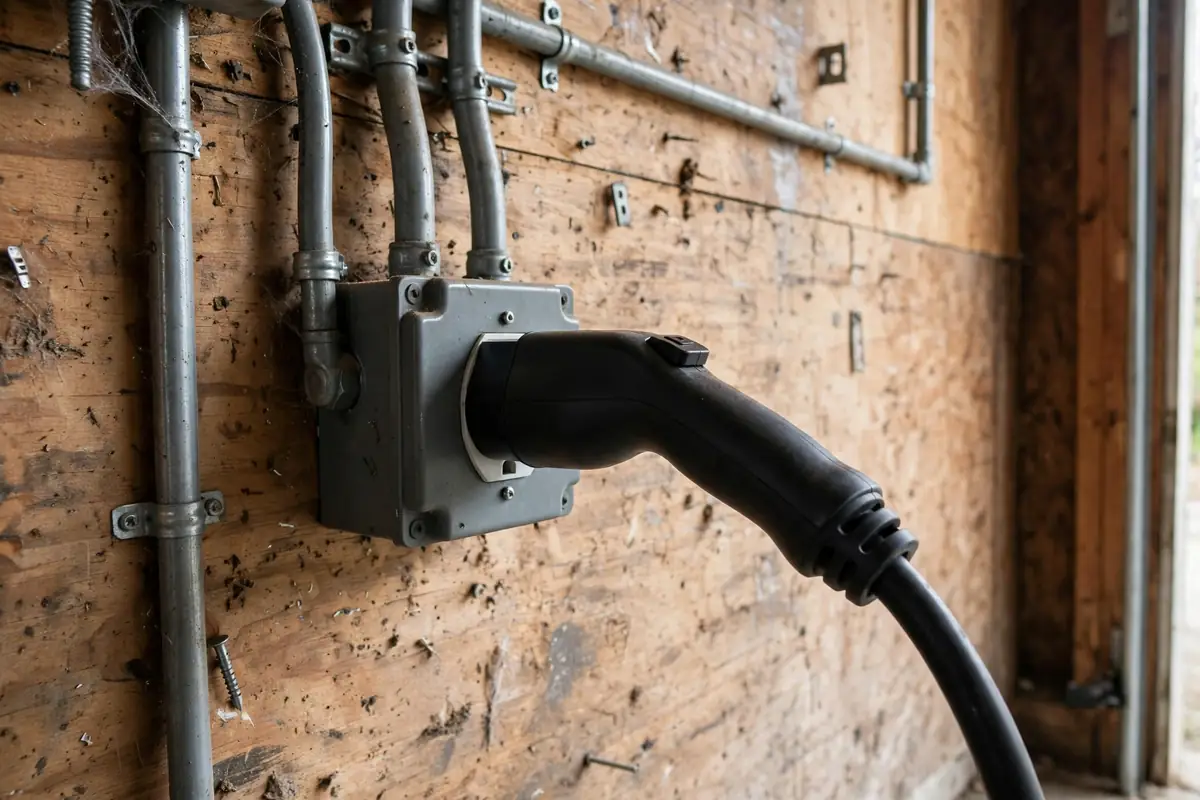
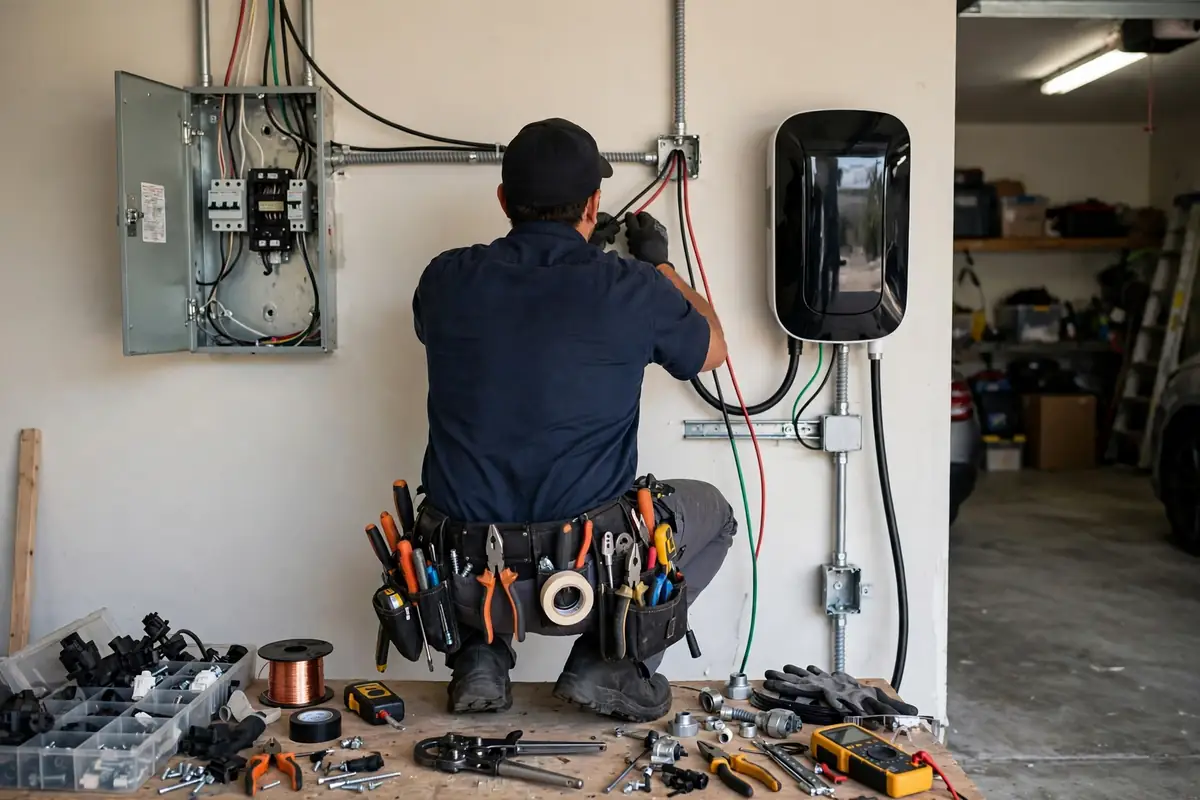
What a good install day looks like: power off to the affected circuits, the run installed neatly (conduit where exposed, sealed where outdoors), the charger or outlet mounted at the planned spot, connections torqued to spec, the breaker labeled, and the unit configured to the circuit it is actually on — that last step is the one sloppy installs skip, and it is the one that matters most for safety. Most garage installs complete in a few hours.
Florida specifics on the day: attic runs happen early (a Florida attic at 2 p.m. is a furnace), outdoor sealing happens before the afternoon storm, and surge protection goes in at the panel if you chose it — you did, if we advised you.
Step 5: Inspection and First Charge
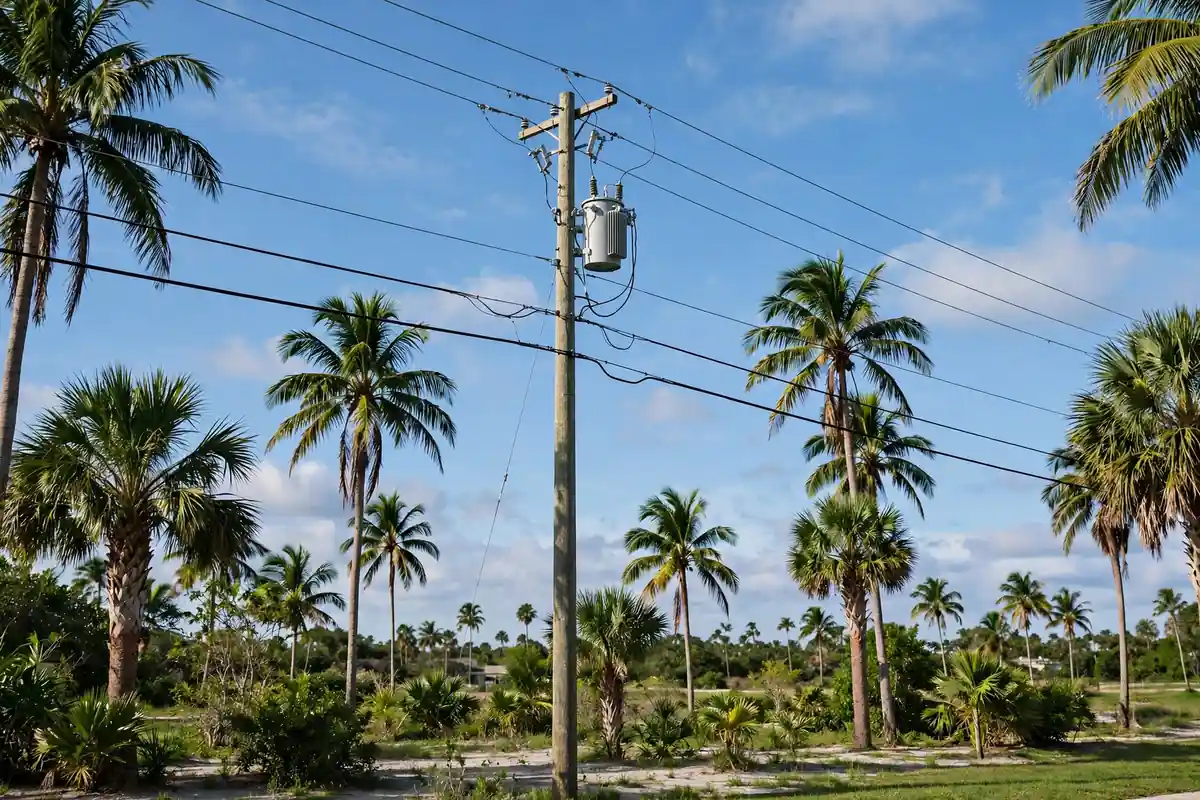
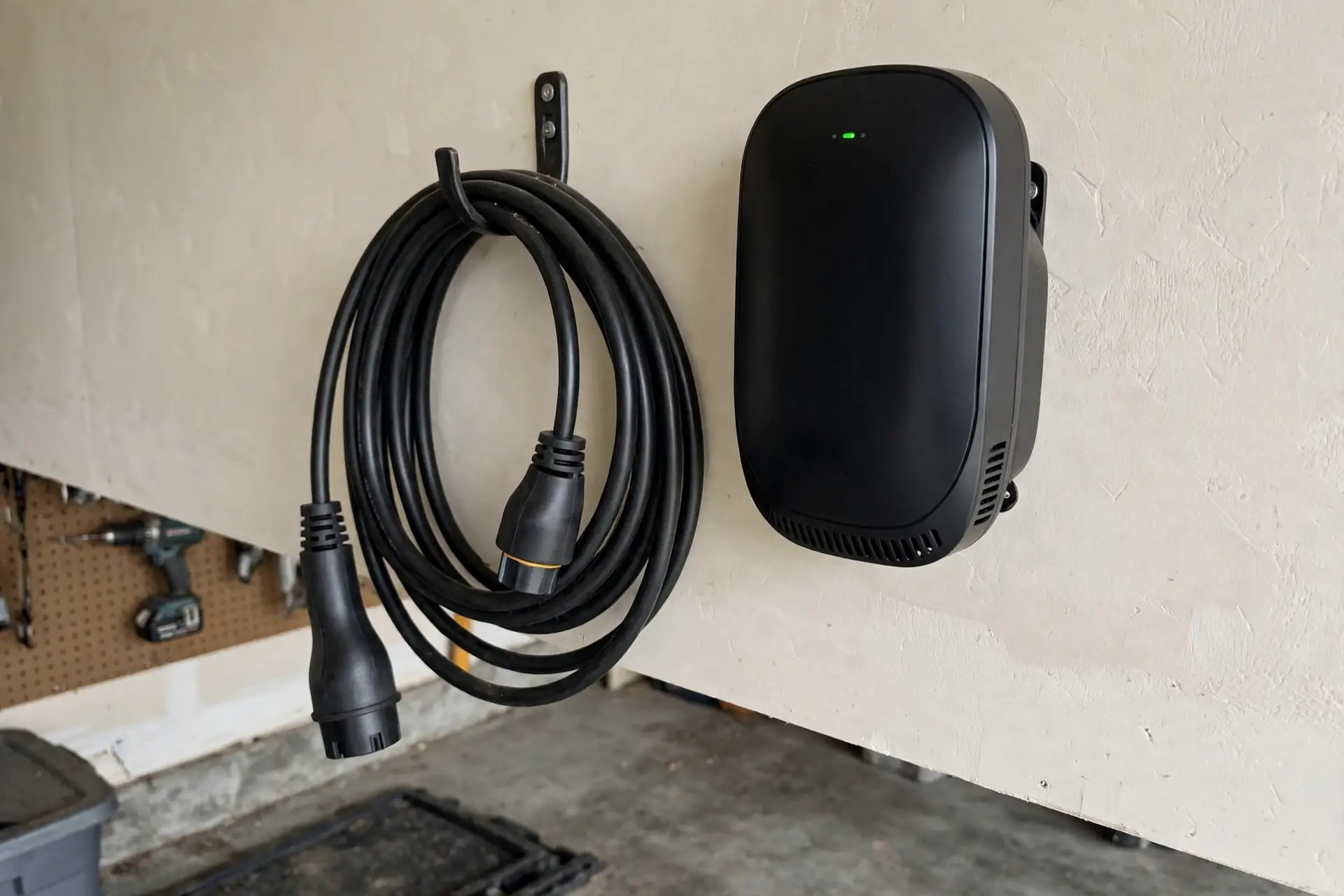
The city or county inspector verifies the work and closes the permit. Then the part everyone actually cares about: we plug in your car together, confirm the charging rate matches the plan, set up the app and the overnight schedule (aimed at your utility's off-peak window), and walk through daily use — cable care, connector docking, what the status lights mean.
After: Living With It
The charger should disappear into your routine within a week: home, plug, morning, full. Keep the permit paperwork with your home documents. If anything misbehaves — a tripped breaker, a hot connector, a speed drop — that is a repair call, not a wait-and-see.
The Two Conversations That Matter Most
Of everything said during an install, two exchanges decide your satisfaction. The first is at the assessment: 'show me the load calculation' — the moment the job becomes engineering instead of salesmanship. The second is at the walkthrough: 'show me the schedule working' — the charger actually starting a charge at the off-peak hour, in the app, with your car. Insist on both. Everything else — conduit runs, breaker labels, permit stickers — supports those two proofs: the math was real, and the system does what the math promised.
What 'Done' Looks Like: A Checklist for Your Fridge Door
Breaker labeled with the charger's circuit. Permit closed, paperwork in the house file. Charger configured to the breaker's amperage — and you know the number. App installed, schedule set to your utility's off-peak window, first charge witnessed. Cable docked, connector holstered, walkway clear. Surge protection present at the panel (in Florida, this line is not optional). If every box checks, you do not have an installation — you have infrastructure. Welcome to the easiest fueling routine you have ever owned.
If Something Feels Off, It Probably Is: Red Flags at Any Step
Trust the process, but audit it. A quote with no load calculation behind it. A start date offered before the permit exists. A charger configured to an amperage nobody will state out loud. A final bill with no permit number on the paperwork. Each is a small thing; together they describe an installer riding on your trust instead of on documentation. The steps in this guide are the normal shape of a professional job in Florida — if your experience diverges sharply from them, asking why is not confrontation. It is the homeowner's version of an inspection.
The First Week: What Normal Feels Like
New owners sometimes call in week one with a worry that turns out to be the system working: the charger 'pausing' during a peak (that is load management, doing its job), the car finishing at slightly different times nightly (the car manages its own curve), or the app reporting a session in two parts (the schedule window opened twice). Knowing the normal rhythms prevents both anxiety and its opposite — ignoring a real fault. Your walkthrough covers the top few; after a week of mornings with a full battery, the whole subject quietly leaves your mind, which is the true end of the installation process.
Frequently Asked Questions
How long does the whole process take in Florida?
From call to charging: the assessment and permit set the pace. Straightforward jobs move in days to a couple of weeks depending on the permit desk; panel upgrades and condo approvals extend it. Your assessment gives you your timeline.
Do I need to be home for the installation?
For the assessment and the walkthrough, yes. For the install itself, access to the panel, the parking spot, and the route between them is what the crew needs — arrangements are made at booking.
Will the power be off?
Only the affected circuits during the install, and the whole panel briefly if panel work is part of your job. Refrigeration survives a normal install window comfortably.
What should I prepare before the crew arrives?
Clear access to the panel and the parking area, know where your car will sit, and have your Wi-Fi password handy if your charger is a connected model. The panel photos you sent ahead do the rest.
What paperwork do I get at the end?
The closed permit record, the electrician's documentation of the work, and your charger configuration details. File them with your home records — they answer future buyers' and insurers' questions before they are asked.
What if the inspector finds an issue?
The electrician corrects it and the inspection is re-run. It is a normal part of the process, not a crisis — permits exist precisely so issues are caught on paper, not in smoke.